
Reviewed · BUENOS AIRES
Buenos Aires for curious people
Buenos Aires reveals its most interesting stories when you stop treating the city center as a collection of grand buildings. This three-hour walk uses streets, churches, parks, markets, and government landmarks to ask how the capital became the city you see today. The focus is anthropology and conversation, not a fast recital of dates.
I like the route’s wide historical range, from the city’s first inhabitants and African-descendant population to British ambitions, immigration, Perón, Evita, and the desaparecidos. I also like the chance to question the guide as you walk, especially if you join a private or small group. The main consideration is pace: three hours on foot, with several short stops, can feel demanding in hot weather or if you prefer a traditional sightseeing tour with less discussion.
Key points at a glance
- Start at Bar Británico and finish near Casa Rosada: The route crosses historic San Telmo and ends at three central drop-off choices.
- The tour asks difficult questions: Expect discussion of British invasions, African heritage, political power, military repression, immigration, and the US dollar.
- Nicolás has led an especially strong version of the walk: His approach has been described as clear, engaging, and open to questions.
- San Telmo Market provides a 20-minute pause: It breaks up the walking and gives you time to look around without a formal talk.
- The route includes both famous and less familiar stops: Lezama Park, Club Atlético, Plaza Dorrego, Puente de la Mujer, and Casa Rosada all play different roles.
- The $30 price is reasonable for a small-group history walk: The value depends on how much you enjoy discussion rather than simply taking photographs.
Why this walk is different from a standard city tour
Many city walks point out a cathedral, a palace, and a famous square, then move on. This one asks you to connect those places with the people and conflicts behind them. The buildings are evidence, but the real subject is how Buenos Aires changed over time.
You might discuss who lived here before Buenos Aires became a major immigrant capital, why Britain wanted influence in the region, and what happened to the city’s African-descendant population. The guide also addresses later questions: how Argentina became a nation of immigrants, why Perón and Evita still matter, who the desaparecidos were, and why the US dollar carries such weight in the local economy.
That makes this a good first or second-day activity for you if you want context before exploring the city on your own. It gives you ideas to carry into later visits to museums, political sites, markets, and neighborhoods.
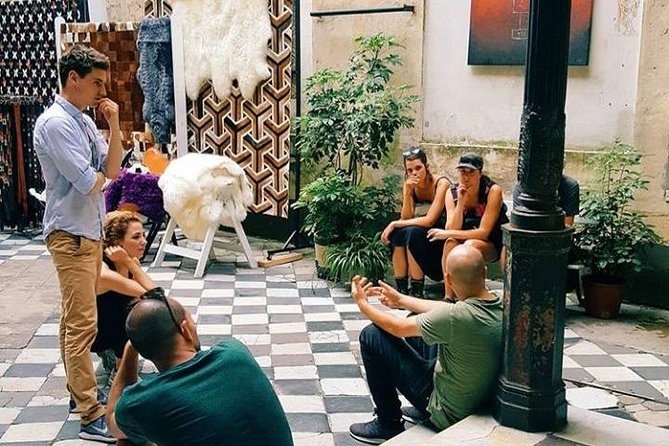
The format is deliberately conversational. You can ask questions, disagree, and follow a subject that catches your attention. That is particularly useful in a private group, where the guide can adjust the conversation. In a larger group, you may have less time to shape the discussion, but the main themes still provide a useful framework.
Other Buenos Aires bookings people pair with this one:
- Buenos Aires Hop-On Hop-Off Bus, Free Walking Tours & Discounts
★ 4.5 · 2,218 reviews - Buenos Aires: Piazzolla Tango Show with Optional Dinner
★ 4.4 · 2,122 reviews - Buenos Aires: City Highlights Guided Tour with Transfer
★ 4.7 · 1,946 reviews
Beginning at Lezama Park and the Russian Orthodox Church
Meet by Bar Británico, beside Parque Lezama. This is a practical starting point because the walk begins away from the most familiar central sights and gradually leads you toward the political heart of the city.
The guided portion at Lezama Park lasts about 15 minutes. Here, the guide introduces the city’s early story and the question of its first inhabitants. The park gives the discussion room to begin before the route moves onto narrower streets and more tightly packed historic sites.
The next stop is the Russian Orthodox Church of the Holy Trinity. You spend about 10 minutes here for sightseeing, walking, and explanation. Its presence helps show the many communities that became part of Buenos Aires. You should not expect a long interior visit or a formal religious tour. The value is in placing the church within the city’s changing population and cultural identity.
Bring a camera if you enjoy architectural details, but keep your attention on the guide. The route is designed to make buildings part of a larger story rather than treat each one as an isolated photo stop.
Swedish connections and the Club Atlético memorial
The walk continues to Club Sueco Restaurante, with roughly 10 minutes for the guide’s explanation and the transition to the next stop. This stop adds another layer to the city’s international character. Buenos Aires is often described through its Spanish and Italian roots, but the route encourages you to notice other foreign connections too.
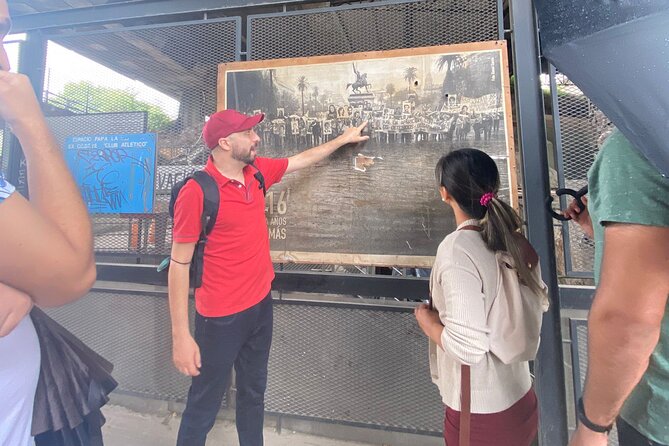
You then reach Espacio para la Memoria ex CCD Club Atlético. This is one of the most serious points on the route. The site relates to Argentina’s recent political violence and the desaparecidos, people who were forcibly disappeared during the country’s military dictatorship.
The stop is brief, about 10 minutes, but its subject is not light. You should be ready for a thoughtful discussion rather than a cheerful sightseeing pause. This part matters because it connects national memory with ordinary city streets. It also helps explain why political history remains present in Buenos Aires, not only in museums and textbooks.
For me, this is one of the strongest reasons to choose this experience over a basic architecture walk. The guide does not limit the city to attractive facades. You are asked to consider what happened behind them and how the past still affects public life.
San Telmo church, Plaza Dorrego, and market time
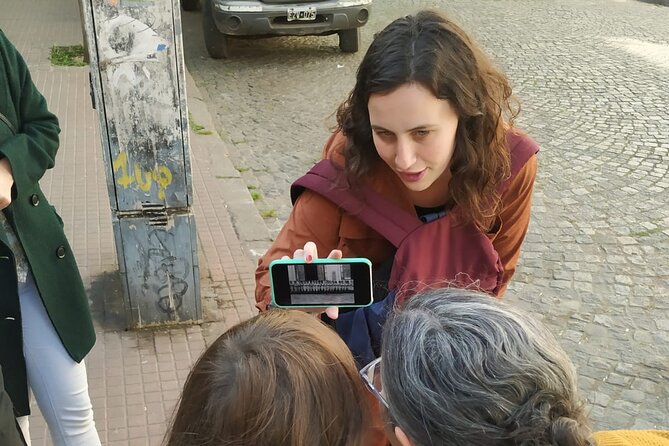
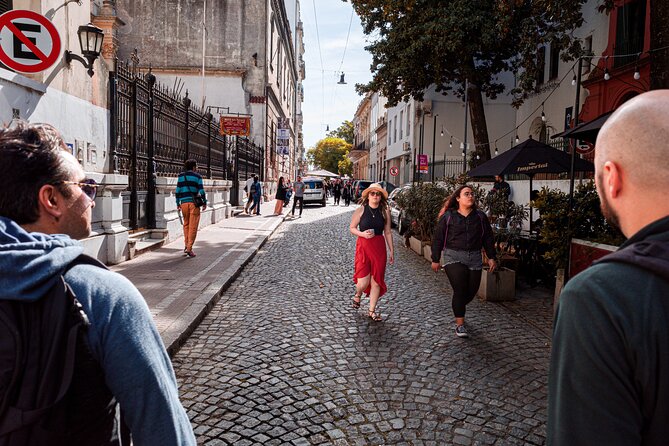
At Parroquia de San Pedro González Telmo, the guide spends around 10 minutes discussing the church and its place in the historic district. San Telmo is one of the most recognizable areas on the route, but this visit gives it more meaning than a quick stroll through old streets.
The walk then reaches Plaza Dorrego for about five minutes. This is a short stop, so do not expect a long guided presentation. Instead, the square works as a visual bridge between the neighborhood’s history and its present-day public life.
San Telmo Market follows, with a 20-minute break. This is the only planned pause of real length, and it comes at a useful point in the three-hour walk. You can look around, take photographs, and get something to eat or drink at your own expense. Meals and drinks are not included, so carry water and budget for anything you buy.
The market break also gives you a chance to reset before the route heads toward Puerto Madero and the central political district. Comfortable shoes matter here. Even though individual talks are short, the total experience includes steady walking between stops.
Same city, an entirely different evening:
- Buenos Aires: Hop-On Hop-Off City Bus Tour
★ 4.2 · 1,855 reviews - Buenos Aires Hop-On Hop-Off Bus and Exclusive Benefits
★ 4.4 · 1,714 reviews - Buenos Aires: La Boca Guided Walking Tour in English
★ 4.8 · 1,587 reviews - Buenos Aires: 9-Course Argentine Meat Tasting at Fogón Asado
★ 4.9 · 826 reviews
Engineering, the waterfront, and Puente de la Mujer
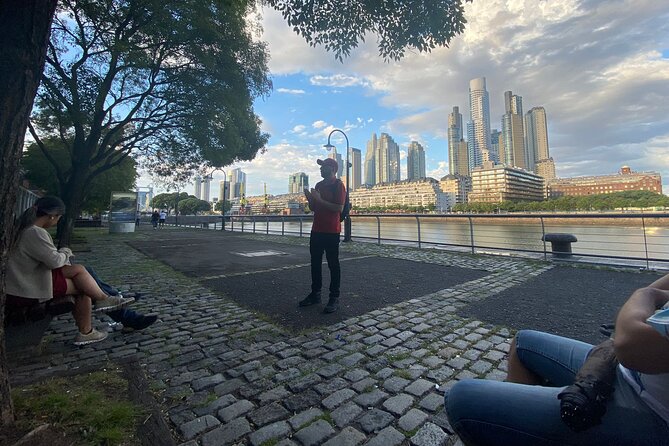
After San Telmo Market, the route stops briefly at Facultad de Ingeniería. The guided portion lasts about five minutes. This is a compact architectural and urban stop, useful for seeing how Buenos Aires combines older civic buildings with institutions tied to modern education and public life.
The route then continues to UCA Santa María de los Buenos Aires, where you spend about 10 minutes. The guide uses the site to continue the conversation about the city’s development and its social institutions. Since this is a discussion-led walk, the value comes less from a long formal explanation and more from how this stop fits into the larger story.
Puente de la Mujer receives about 15 minutes of guided attention. The bridge is one of the modern landmarks on the route, and it gives you a clear change of setting after San Telmo’s older streets. This is a good place for photographs, but the stop is not only visual. It shows how the tour moves from historic districts into newer parts of Buenos Aires before ending near the government center.
The full route is not a short loop. You should plan for changing surfaces, outdoor conditions, and a mixture of walking and standing. The activity is wheelchair accessible, but it is still sensible to confirm current route conditions when booking, since access can depend on temporary street or site conditions.
Arriving at Casa Rosada and Plaza de Mayo
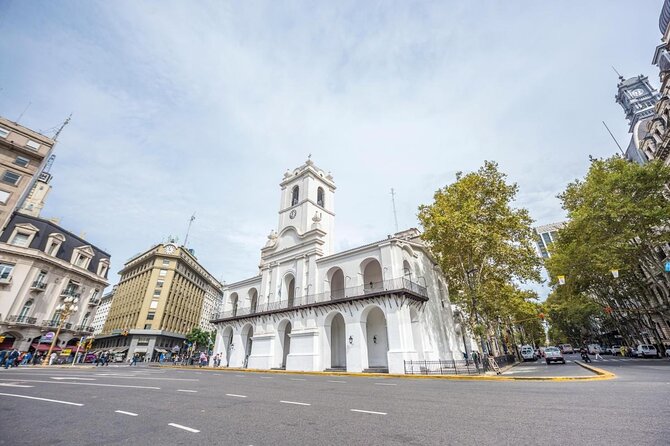
The walk concludes at the area around Casa Rosada. You can finish at Museo Casa Rosada, Casa Rosada, or Plaza de Mayo. These three drop-off points keep you in the center, so you can continue sightseeing after the tour rather than retrace your steps.
Casa Rosada is the right ending for a discussion about political leaders. The guide can bring earlier subjects together here: immigration, national identity, Perón and Evita, military rule, the desaparecidos, and Argentina’s continuing economic questions. The building is famous, but the conversation helps explain why it matters beyond its pink exterior.
Plaza de Mayo also gives you a useful base for further exploration. If you want to continue the history lesson, the nearby museum option may suit you. If you simply want to photograph the square and move on, you can do that too.
One practical point: the tour does not include transportation to Bar Británico, and it is fundamentally a walking experience. Plan your route to the meeting point before the start time. The tour is offered in Spanish, French, English, and Portuguese, which makes it accessible to a wide range of visitors.
What the guide’s style means for you
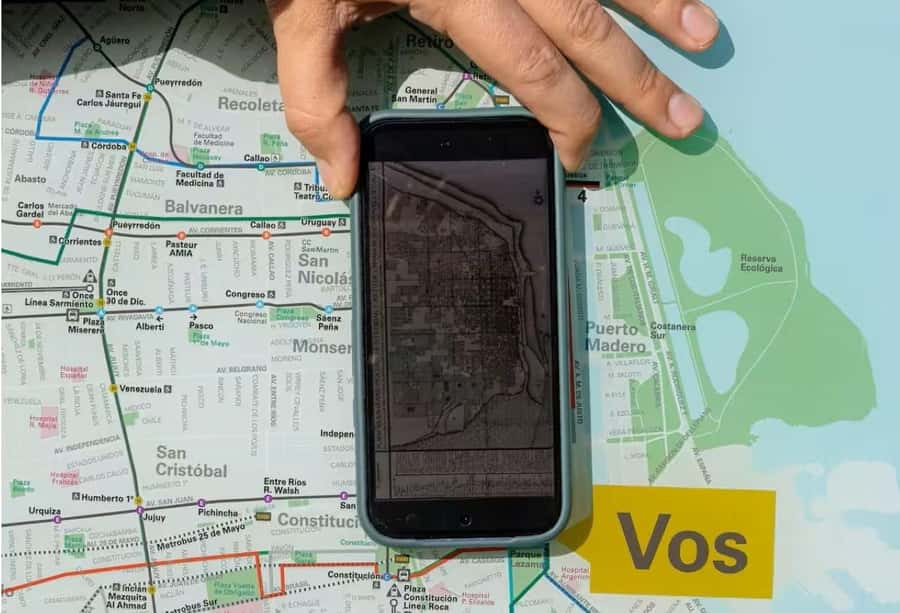
The strongest version of this experience depends on the guide’s ability to explain sensitive subjects clearly and invite discussion. Nicolás is the guide named in the available feedback, and his sessions have been described as interesting, striking, and open to questions. One private tour ended earlier than expected because the group was small, but that also gave the participant plenty of time to ask questions.
That detail is worth considering. A private or small-group format may give you more control over the conversation, while a larger group may provide a broader mix of questions and viewpoints. The booking options list both private and small groups, so choose based on how much interaction you want.
The tour is available with a live guide in four languages. That is important for a subject involving political terms, historical trauma, and economic ideas. You will get more from the walk if you select the language in which you can comfortably ask follow-up questions.
Do not expect a script aimed only at entertaining you. The discussion may ask you to think about uncomfortable subjects, including colonial ambitions, racial history, dictatorship, and economic dependence. That is a strength if you want a serious introduction to Argentina, but it may not suit you if you want a light orientation walk.
Is $30 a fair price?
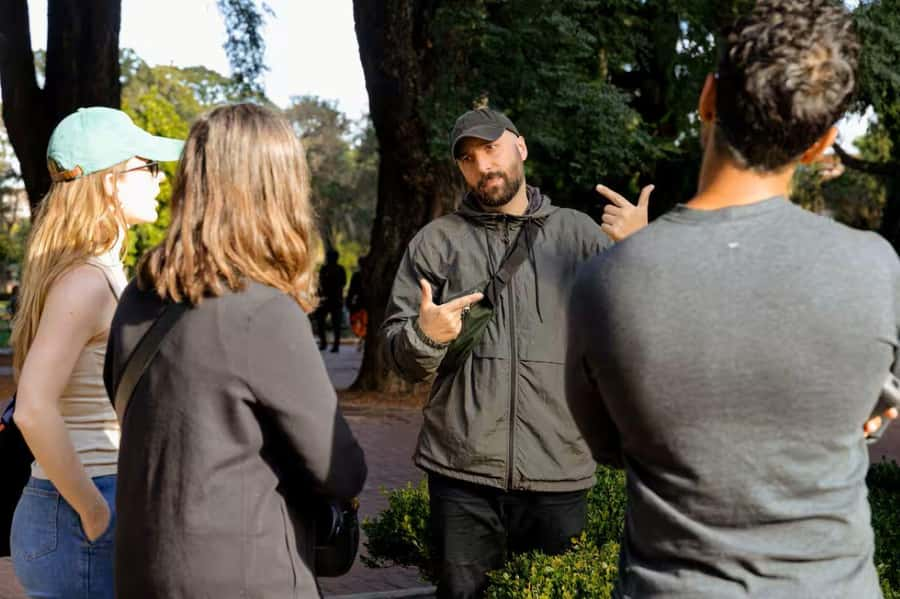
At $30 per person, the cost is fair for a three-hour guided walk that covers several historic districts and includes structured historical discussion. You are paying for a guide, interpretation, and the chance to ask questions, not for meals, tickets, or transport.
The value is highest in a private or small group, where you can direct the conversation toward subjects that interest you. If you only want landmark photographs, you could explore many of these areas independently for less. If you want help connecting the sites, the price makes more sense.
The 20-minute market break is useful, but it is not an included meal. Carry water, wear comfortable shoes, and bring sunscreen. Buenos Aires weather can change, and much of the experience takes place outdoors, so prepare for sun or less comfortable conditions.
Free cancellation up to 24 hours before the activity and the reserve-now-pay-later option give you some flexibility. Those policies are useful if you are arranging a longer Argentina trip with changing plans.
Who should book this experience?
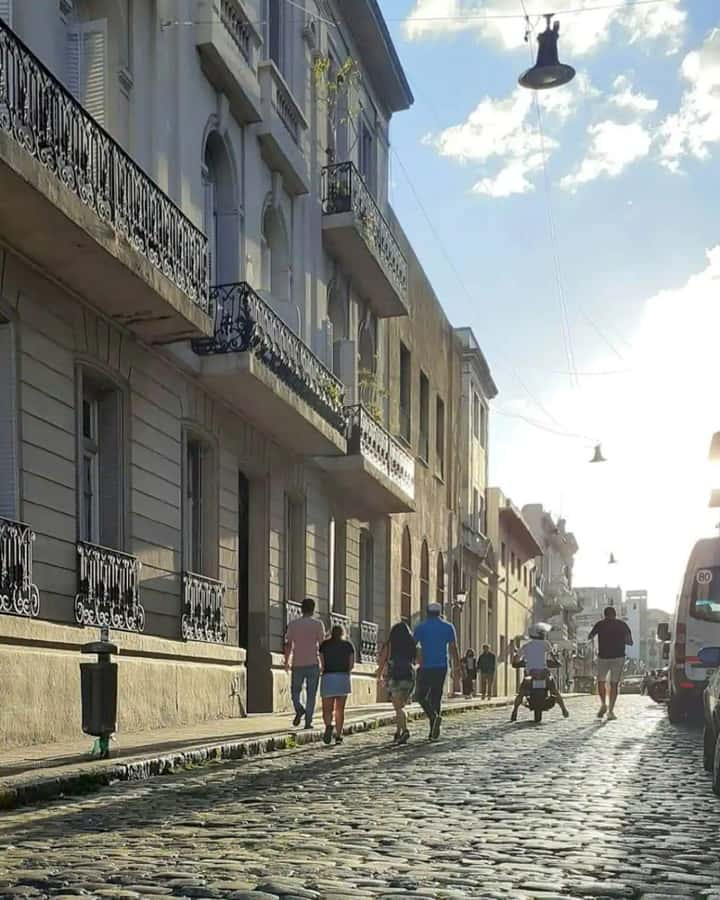
I would choose this walk if you want to understand Buenos Aires through people, politics, migration, and memory. It suits first-time visitors who want a serious orientation and returning visitors who feel they have seen the main sights but still lack context.
It is also a good fit for anyone who enjoys asking questions. The route is built around discussion, so you should not feel obliged to remain silent while the guide talks. Families with older children, students, and visitors interested in modern Argentine politics may find the subject matter especially useful.
I would hesitate if you dislike walking, need frequent seated breaks, or prefer a tour focused only on architecture. The route includes several short explanations, but the total time is three hours and the conversation can be more demanding than a simple sightseeing circuit.
Should you book Buenos Aires for curious people?
Book it if you want the city to make more sense after you leave. The best parts are the connected themes, the stop at Club Atlético, the questions about African-descendant communities and immigration, and the final approach to Casa Rosada. Nicolás appears to be a particularly strong guide choice if he is assigned to your tour, though guide availability can vary.
Skip it if you want a short, easy introduction with little political discussion. For everyone else, $30 buys a thoughtful route through San Telmo and the city center, with enough structure to keep you oriented and enough freedom to ask the questions that matter to you.
FAQ
Where does the tour meet?
The meeting point is by Bar Británico.
Where does the tour finish?
The tour finishes at one of three stated drop-off points: Museo Casa Rosada, Casa Rosada, or Plaza de Mayo.
How long does the experience last?
The walking experience lasts three hours.
What languages are available?
The live guide is available in Spanish, French, English, and Portuguese.
Is the tour wheelchair accessible?
Yes, the activity is listed as wheelchair accessible.
Are food and drinks included?
No. Meals and drinks are not included. You can use the 20-minute break at San Telmo Market to purchase something at your own expense.
What should I bring?
Bring comfortable walking shoes, water, sunscreen, and a camera. You should also be prepared for changing weather.
Can I cancel for a full refund?
Yes. You can cancel up to 24 hours in advance for a full refund. The activity also offers reserve now and pay later booking.
Just added around Buenos Aires
- Tango Show at El Querandi with optional Dinner★ 4.2 · 3 reviews
- Wine Tasting in Buenos Aires★ 4.2 · 4 reviews
- Walking Tour: Buenos Aires bookstores★ 4.3 · 12 reviews
- Private Underground Tango Immersion★ 5.0 · 31 reviews
- Velez Sarsfield Football Match★ 5.0 · 3 reviews
- Unique Tigre and Delta Private Day Cruise Navegation★ 5.0 · 3 reviews
- Transfers from or to the airport In Argentina Your Best Choice★ 5.0 · 28 reviews
- Tour Buenos Aires in one day on Electric Scooters★ 5.0 · 33 reviews