
Reviewed · BUENOS AIRES BIKE TOURS
Buenos Aires: North or South Buenos Aires Bike Tour
Buenos Aires is huge, flat, and spread across districts that feel quite different from one another. A four-hour bike tour lets you connect those places far faster than walking, while still moving slowly enough to notice the streets, buildings, statues, and daily life between the major sights. You choose the North or South circuit, then follow a local guide through a compact group of no more than eight people.
I like two things in particular. First, the tour gives you a useful city overview without reducing Buenos Aires to a string of photo stops. Guides such as Ana, Pilar, Santiago, Florencia, and Dilson are praised for clear storytelling and good local tips. Second, the comfortable cruiser bikes and mostly bike-lane riding make a large city feel manageable, even if you are not a regular cyclist.
The main consideration is traffic. You may ride beside cars on some busy streets, especially on the North route, and the four-hour schedule means you stop briefly rather than fully explore every neighborhood. La Boca and Recoleta, in particular, deserve extra time if you want museums, shopping, or a cemetery visit.
Key points to know before you book
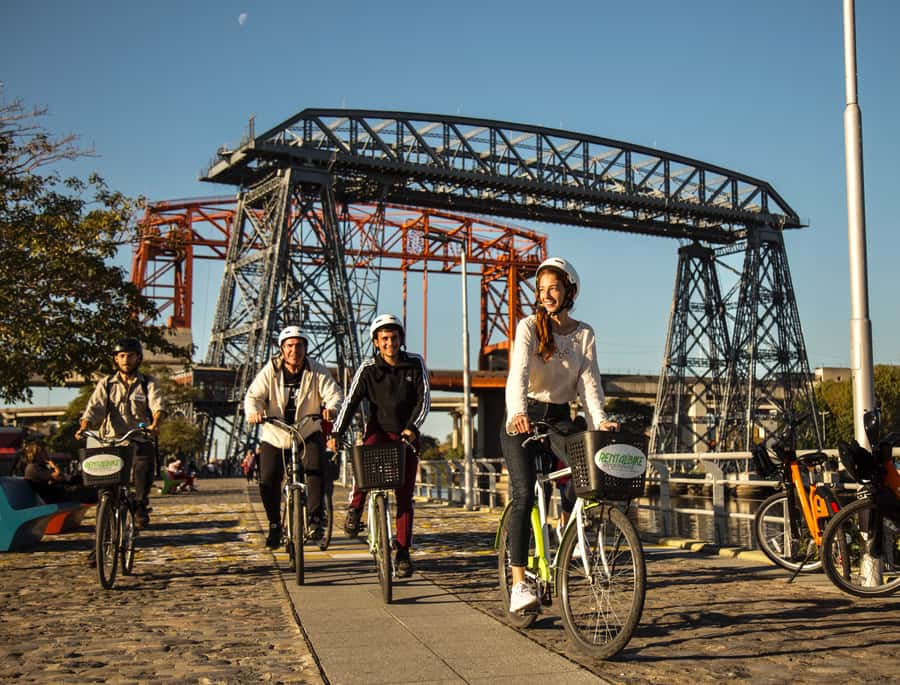
- Choose your city story: The South circuit focuses on San Telmo, La Boca, Puerto Madero, the Ecological Reserve, and Plaza de Mayo.
- The North route is about grand Buenos Aires: Ride through Retiro, Recoleta, Palermo, the Rose Garden, and the parks of Tres de Febrero.
- Small groups make a real difference: The maximum is eight people, and some departures may feel nearly private.
- Expect an overview, not a deep neighborhood visit: Caminito gets free time, but the tour does not enter Recoleta Cemetery.
- The ride is generally easy but not traffic-free: Buenos Aires is flat, yet a few sections use open roads beside cars.
- Plan around the weather: The Ecological Reserve closes on Mondays and may be skipped after rain or during unsafe conditions.
Why a bike is a smart way to see Buenos Aires
Buenos Aires rewards wandering, but its major districts are not all close together. San Telmo, La Boca, Puerto Madero, Plaza de Mayo, Recoleta, and Palermo form a wide sweep across the city. On foot, you would spend much of your day moving between them. By bike, you can cover that ground while still getting a feel for the streets.
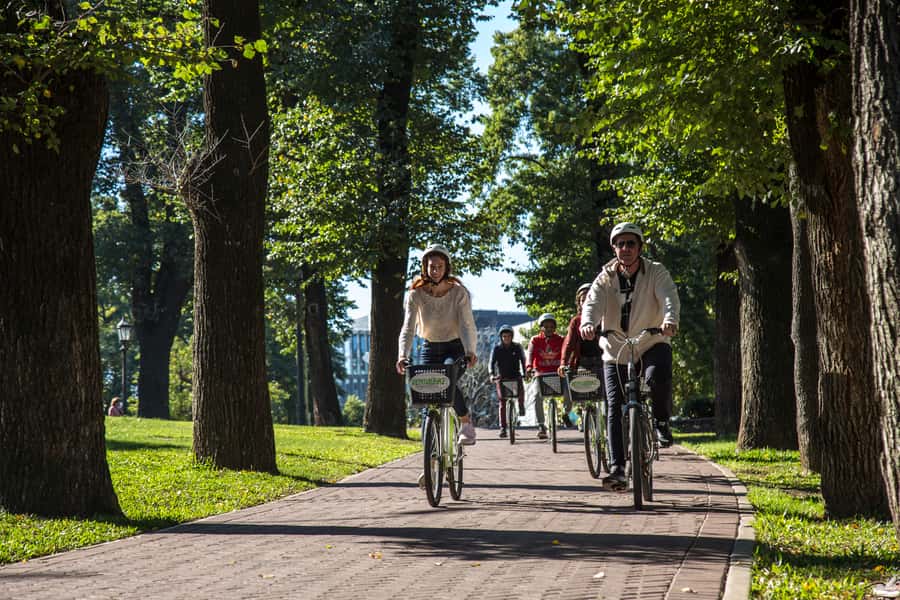
The pace is not presented as a race. You receive a safety briefing, helmet, cruiser bike, bell, basket, and access to a water refilling machine before setting off. Guides keep the group together and adjust the pace to the riders. That matters if your group includes people with different levels of cycling experience.
The route uses bike lanes for much of the ride, although you should not expect a protected lane at every turn. A few blocks can place you in open traffic. If riding beside cars makes you uneasy, the South route may feel like the better choice, since the North circuit reaches farther into the city and can include busier roads.
The group limit of eight is one of the strongest features. A guide can answer questions, pause for a photo, or adjust the pace without losing a large crowd. Some departures have only two or three people, which gives the ride a private-tour feel without the usual private-tour price.
More bike tours in Buenos Aires:
- Buenos Aires: Full Day Bike Tour with Lunch
★ 4.9 · 152 reviews - Buenos Aires Bike Tour: North Districts, Recoleta and Palermo
★ 4.5 · 91 reviews - Buenos Aires in a Day – All Inclusive Bike Tour
★ 5.0 · 89 reviews
The South circuit: old neighborhoods, football, and the river
The South route begins near the tour shop on Chile Street in Montserrat. It is the better choice if your first priorities are early Buenos Aires, immigrant neighborhoods, football culture, public squares, and modern Puerto Madero.
San Telmo and Parque Lezama
The ride heads toward San Telmo, the old quarter where colonial streets, older facades, and a slower rhythm give you a sense of Buenos Aires before its grand avenues were built. The guide uses this part of the route to explain the city’s foundations, immigration, and the development of tango.
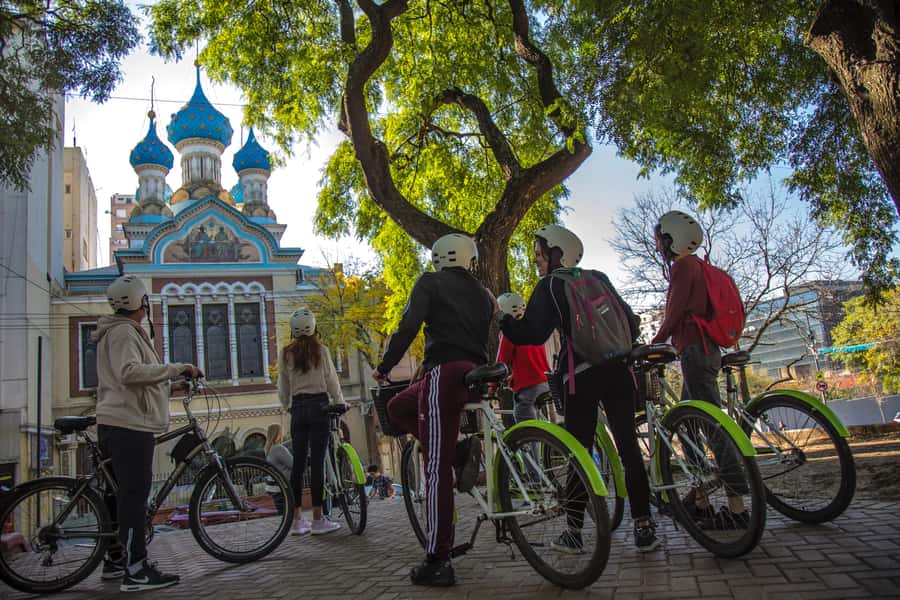
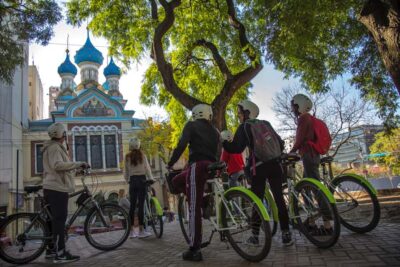
At Parque Lezama, you stop for about 20 minutes. The park is tied to the story of Buenos Aires’s first foundation, and it gives the guide room to connect geography with the city’s early growth. You also pass the Russian Orthodox Church of the Holy Trinity, a striking stop for a quick photograph and a glimpse of the city’s immigrant communities.
This section is more useful for context than for a long list of monuments. Listen closely here, because the guide’s explanation helps make sense of what you see later in La Boca and around Plaza de Mayo.
La Boca and La Bombonera
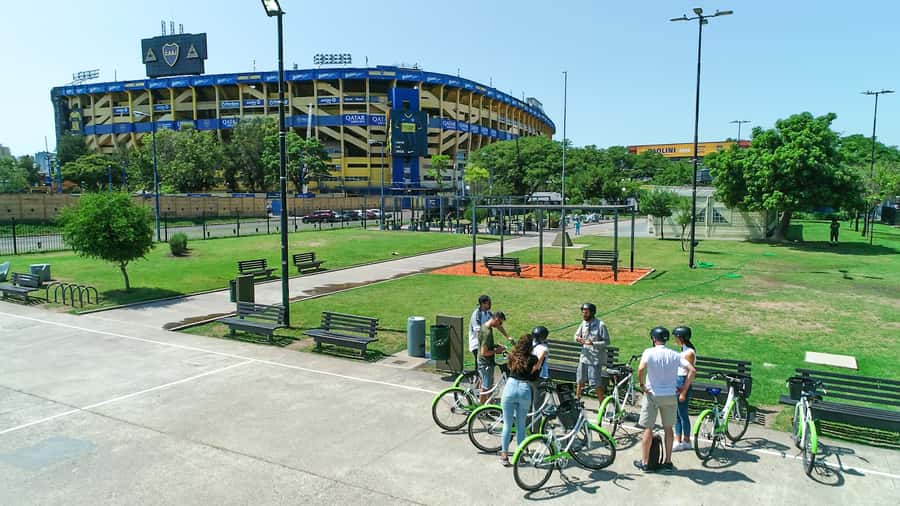
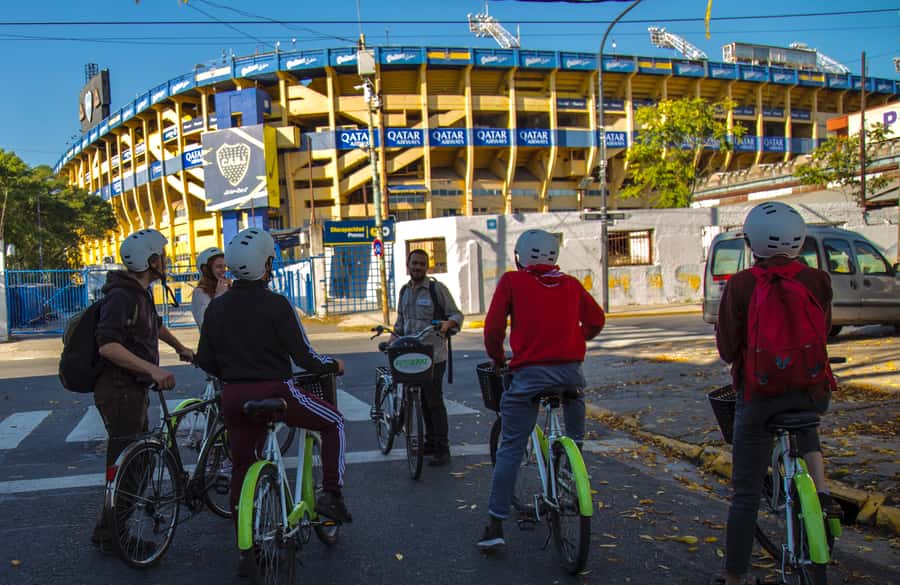
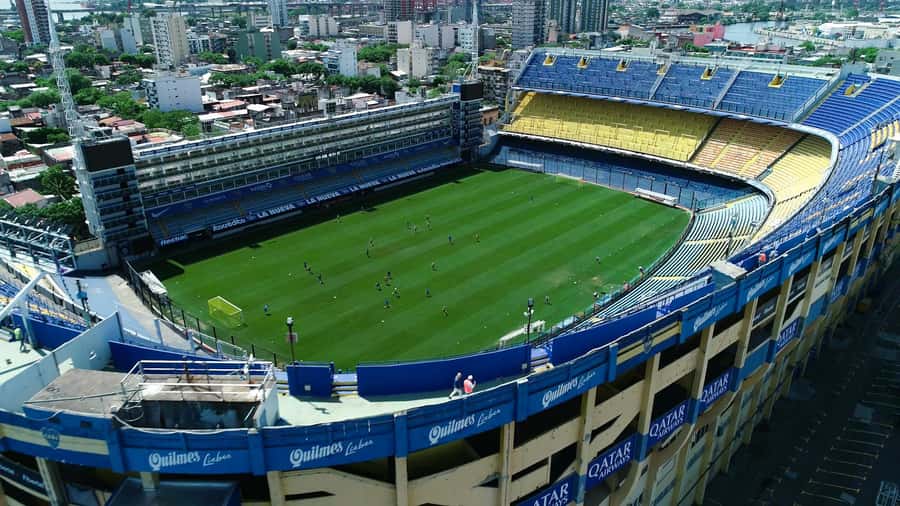
The South circuit then follows the edge of La Boca. The neighborhood is known for its colorful buildings, working-port past, tango associations, and strong football identity. You stop at La Bombonera, the stadium of Boca Juniors, where football is not just a sport but part of the neighborhood’s public character.
You do not need to be a football fan to appreciate the stop. The stadium helps explain the passion of La Boca, and your guide can place it in the wider story of local identity. The visit is a sightseeing stop rather than a full stadium tour, although one particularly flexible departure included a stadium visit when the rider was alone. Do not count on that option, but you can ask your guide what is possible on the day.
Same city, an entirely different evening:
- Buenos Aires Hop-On Hop-Off Bus, Free Walking Tours & Discounts
★ 4.5 · 2,218 reviews - Buenos Aires: Piazzolla Tango Show with Optional Dinner
★ 4.4 · 2,122 reviews - Buenos Aires: City Highlights Guided Tour with Transfer
★ 4.7 · 1,946 reviews - Buenos Aires: Hop-On Hop-Off City Bus Tour
★ 4.2 · 1,855 reviews
Caminito and the old port
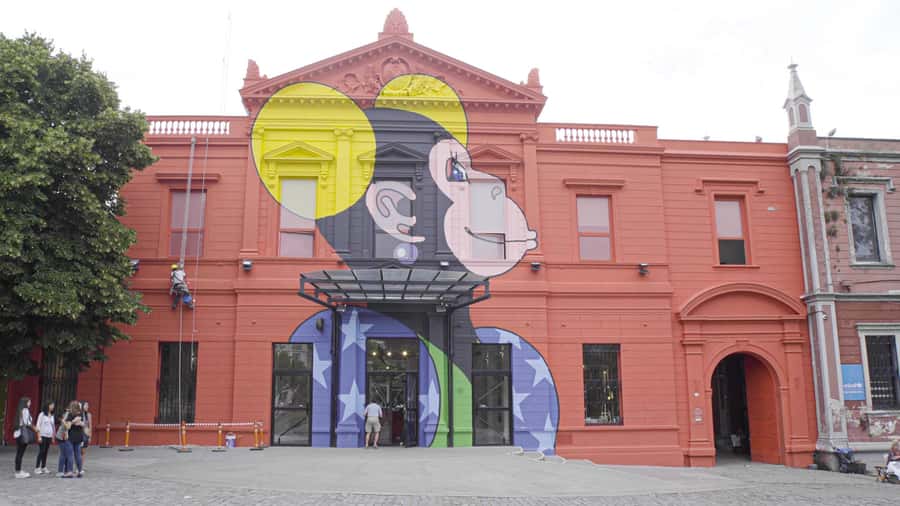
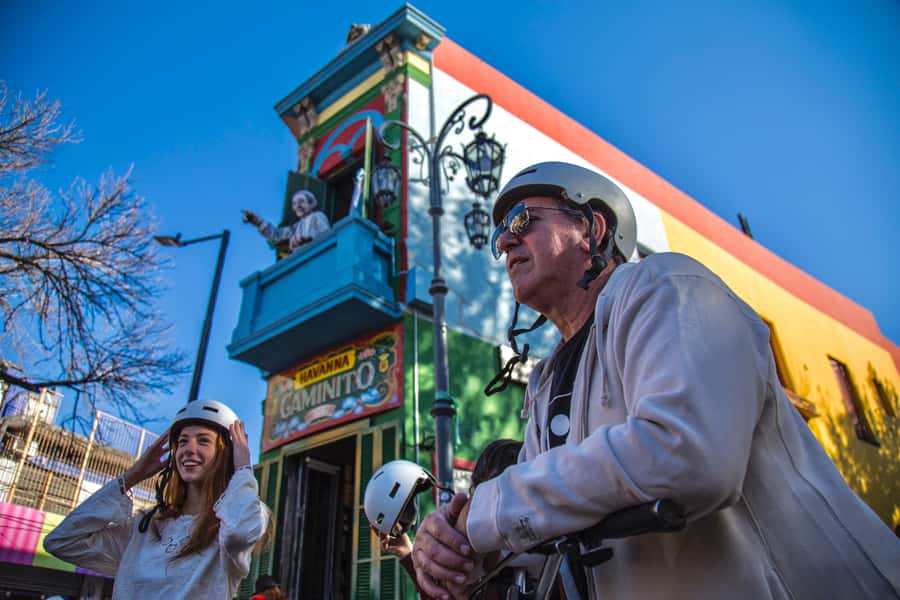
Caminito is the most colorful stop on the South route. Its painted facades, street art, tango associations, and local art stalls make it one of the most immediately recognizable parts of Buenos Aires. You get about 20 minutes here, including some free time to look around.
That short pause is useful, but it is also the clearest limit of the tour. If you want to browse every shop, study the murals, eat nearby, or watch a tango performance, you will need to return on your own. Bring some cash if you plan to buy small street-art items or local souvenirs.
The guide helps you see past the bright colors. Caminito is linked to the area’s port history and the immigrant communities that shaped the neighborhood. The result is a stop that works best when you listen to the explanation rather than treating it as a quick backdrop for photographs.
Puerto Madero and the Ecological Reserve
From La Boca, the route shifts sharply. Puerto Madero was once a harbor area and is now the city’s modern waterfront district, with newer buildings and a different feel from San Telmo and La Boca. The contrast is part of the appeal. In a single morning, you move from old port streets to a redeveloped district that changed the city’s view of the Río de la Plata.
The nearby Ecological Reserve adds another change of pace. This 865-acre nature reserve lies between the city and the river, offering open views and the chance to see wildlife. A guided stop of about 20 minutes lets you experience a patch of nature without leaving Buenos Aires.
There are two important cautions. The reserve is closed on Mondays, and wet weather can prevent the group from cycling through it. Heavy rain or unsafe wind can also lead to a route change or rescheduling. The tour may run in light to moderate rain, so bring weatherproof clothing rather than assuming a forecast will cancel the ride.
Plaza de Mayo and the city’s political heart
The final South stops are among the most important in the city. Plaza de Mayo is where Buenos Aires was definitively founded in 1580 and remains the symbolic center of national politics.
You see the Casa Rosada, the pink presidential offices, along with the Cabildo and the Metropolitan Cathedral. The cathedral was once associated with Pope Francis, and its position beside the square gives the stop extra weight. The old Cabildo helps you picture the colonial government, while the Casa Rosada connects the square to modern Argentine political life.
This is a satisfying end to the South circuit because the route has moved through several versions of Buenos Aires: old quarter, immigrant port, football neighborhood, restored harbor, nature reserve, and political center.
The North circuit: palaces, Recoleta, and Palermo parks
Choose the North route if you are more interested in late nineteenth-century architecture, grand public spaces, Recoleta, Palermo, and the city’s Belle Époque character. The route is slightly farther from the starting point, so expect more cycling and somewhat less time at individual stops.
Downtown, Retiro, and Plaza San Martín
The ride crosses the central business district before reaching Retiro. Here, the city’s scale changes again. Broad streets, formal buildings, palaces, and older architectural landmarks reflect the period when Buenos Aires looked to European capitals for inspiration.
Plaza San Martín is a key pause. The square offers a good setting for the guide to explain the city’s late nineteenth-century growth, while nearby monuments and buildings show how wealth and political power shaped this part of town.
You pass or stop near the Monument to the Fallen in the Malvinas, the Kavanagh Building, the Basilica of the Most Holy Sacrament, and the Torre Monumental. These stops are short, often five to ten minutes, so you should think of them as a guided introduction. The guide supplies the connections, while your camera handles the detail.
Recoleta without a cemetery visit
Recoleta is one of Buenos Aires’s most polished districts, known for its cemetery, cafes, ice cream shops, museums, and grand buildings. The North circuit passes through the area and gives you time to appreciate its streets and architecture.
One point needs to be clear: the tour does not enter Recoleta Cemetery. The itinerary includes the cemetery as a guided sightseeing point, but the tour description specifies that the visit stays outside. If you want to see the mausoleums and famous graves inside, plan a separate visit.
This is not a major flaw if you want a broad introduction to the city. It is a real limitation if Recoleta Cemetery is at the top of your list. The bike tour helps you locate it and understand the neighborhood, but it cannot replace an on-foot visit inside.
Floralis Genérica and Palermo
The route continues north to the Floralis Genérica, the giant metal flower. You get a short break and free time for photos, making this one of the more relaxed stops on the circuit.
You also pass the house associated with General San Martín, the Israeli Embassy square, and a contemporary art museum. The stops mix national history, public art, and modern city life instead of focusing only on colonial buildings.
Palermo brings a greener, more open section of the ride. You pass through the large parks, the Planetario Galileo Galilei, and the Rose Garden in Tres de Febrero Park. The parks are a welcome change after the central streets, and the wide open spaces make this part of the North route especially pleasant for cycling.
The Rose Garden itself is listed as a pass-by stop, so do not expect a long garden visit. One departure allowed extra time to wander through the park, but the standard schedule has to keep moving. If you want to explore Palermo’s cafes, museums, or parks at leisure, return later.
Congress Square on the way back
The ride finishes its North loop at Congress Square, next to the grand building that houses Argentina’s legislative power. This is an effective final stop because it brings the route back to national institutions after a long look at parks and residential districts.
The square can also be a good place for end-of-day photographs. After four hours of riding, you return to the Chile Street shop. You may be dropped at Chile 1141, Chile 1145, or the bike rental location, depending on the booking arrangement.
Guides, pace, and the feel of the ride
The guide can make or break a city bike tour, and this operation gets strong marks for its people. Ana is praised for adapting to different abilities. Pilar is described as attentive and helpful. Santiago is repeatedly noted for his calm manner, useful explanations, and local suggestions for tango, food, and evening plans.
Other guides, including Florencia, Flo, Dilson, Martina, and Nicole, bring different strengths. Some focus on historical detail, others on local curiosities or practical recommendations. English and Spanish are offered, and the guide may explain parts of the tour in both languages when the group calls for it.
The riding style is generally relaxed. You stop often enough to hear the story of a place, then continue through the surrounding streets. The bikes have baskets, which are handy for a water bottle and small personal items.
You need to arrive 15 minutes early. The maximum wait is 10 minutes after the scheduled departure, with no refund after that point. Wear comfortable shoes, dress for the weather, and bring your own reusable bottle. Water refilling is available, but the bottle itself is not supplied.
The tour is for people at least 1.50 meters tall and age 12 or older. It is not suitable for pregnant people, people with mobility, back, heart, respiratory, or seizure conditions, recent surgery, or other medical concerns listed by the operator. The weight limit is 118 kilograms, and the activity is not designed for people with visual impairment or those over 95.
Price, weather, and overall value
At $38 per person, this is a strong-value way to get your bearings in Buenos Aires. You receive a four-hour guided ride, a cruiser bike, helmet, bell, basket, and a small-group experience. A taxi or public transport could move you between districts, but it would not give you the same running commentary or sense of how the neighborhoods connect.
The real value depends on how you use the tour. If you have only a day or two in Buenos Aires, the bike gives you a fast overview and helps you decide where to return. If you have a full week, it still works well as an orientation ride on your first day.
Weather can affect the experience. The tour may run in light or moderate rain, and guides have handed out ponchos during wet departures. Heavy rain, strong winds, or an official weather alert can stop the ride or lead to rescheduling. Winter riders should bring extra layers, especially for the North route.
Free cancellation is available up to 24 hours before departure, and you can reserve now and pay later. Tips are not included, so plan to tip the guide separately if the service merits it.
Should you book the Buenos Aires bike tour?
Book it if you want a broad, active introduction to Buenos Aires and are comfortable riding in a large city. The South circuit is best for San Telmo, La Boca, football, tango context, Puerto Madero, nature, and Plaza de Mayo. The North circuit is better for grand architecture, Retiro, Recoleta, Palermo, and the parks.
I would choose the South route for a first visit if colorful neighborhoods and city origins matter most. Choose the North route if you prefer architecture and open parkland, and do not mind more cycling beside traffic.
This is not the right tour if you want long museum visits, a full La Boca exploration, or entry to Recoleta Cemetery. For most active visitors, though, the combination of small groups, strong local guides, comfortable bikes, and a $38 price makes it an efficient way to see how Buenos Aires fits together.
FAQ
How long is the Buenos Aires bike tour?
The tour lasts four hours, including riding, guided explanations, photo stops, and short periods of free time.
Can I choose between a North and South route?
Yes. You can choose the South circuit or the North circuit when booking. The South route includes San Telmo, La Boca, Puerto Madero, the Ecological Reserve, and Plaza de Mayo. The North route includes Retiro, Recoleta, Palermo, and the city parks.
What is included in the tour?
The price includes a bilingual Spanish and English guide, cruiser bike, bell, basket, helmet, and access to a water refilling machine.
Does the tour enter Recoleta Cemetery?
No. The North circuit passes by and explains the area, but it does not enter Recoleta Cemetery.
Is the Ecological Reserve always included?
The reserve is closed on Mondays and may be skipped because of rain or poor conditions. The route can also be changed if heavy rain, strong winds, or an official weather alert creates a safety concern.
What are the age and height requirements?
Participants must be at least 12 years old and at least 1.50 meters tall. The activity is not suitable for children under 12.
Just added around Buenos Aires
- Tango Show at El Querandi with optional Dinner★ 4.2 · 3 reviews
- Wine Tasting in Buenos Aires★ 4.2 · 4 reviews
- Walking Tour: Buenos Aires bookstores★ 4.3 · 12 reviews
- Private Underground Tango Immersion★ 5.0 · 31 reviews
- Velez Sarsfield Football Match★ 5.0 · 3 reviews
- Unique Tigre and Delta Private Day Cruise Navegation★ 5.0 · 3 reviews
- Transfers from or to the airport In Argentina Your Best Choice★ 5.0 · 28 reviews
- Tour Buenos Aires in one day on Electric Scooters★ 5.0 · 33 reviews
Buenos Aires Bike Tours, compared.
Buenos Aires Bike Tour: North Districts, Recoleta and Palermo
Read our review →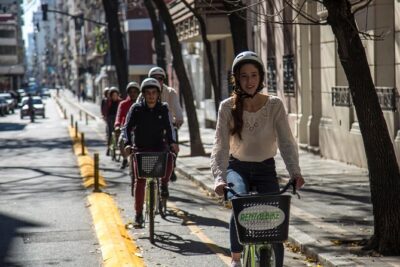
Buenos Aires Bike Tour: San Telmo and La Boca Districts
Read our review →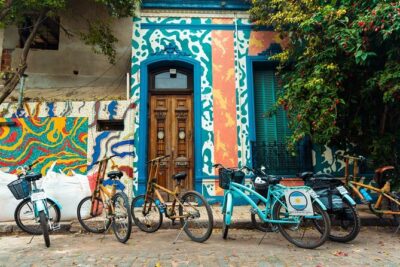
Private Off the Beaten Path: Hidden Urban Art Bike Tour
Read our review →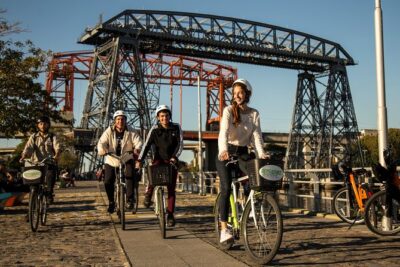
Cultural Experience by Bike around Palermo and Recoleta Max 6 ppl
Read our review →Browse the lists this tour appears in