
Reviewed · SAN TELMO TOURS
Buenos Aires: San Telmo and Market Guided Walking Tour
San Telmo gives you Buenos Aires in a compact, wonderfully untidy package: cobbled streets, old churches, grand facades, cartoon characters, tango, and a food market under one roof. This two-hour walk connects those sights with the story of Argentina, from colonial Buenos Aires to the immigrant culture that shaped the city you see today.
I like the mix of serious history and playful street art, especially the stops devoted to Mafalda and Clemente. I also like the price: at $13, you get an English-speaking guide and a useful introduction to one of Buenos Aires’ most atmospheric neighborhoods. The main drawback is the group size, which can feel large on narrow streets. One group had more than 30 people, and another found the crowd awkward in tight spaces.
Key points to know
- Mafalda and Clemente bring Argentine culture to the pavement, making the history walk more than a parade of old buildings.
- The San Telmo Market adds food and daily life, with time to see traditional Argentine products and dishes.
- The Sunday fair is a major part of the experience, with stalls, music, art, and street activity.
- Guides including Juan, Santiago, and Jorge explain history with humor and context, not just dates and names.
- The walk begins at San Ignacio de Loyola and ends in San Telmo, covering several important sights in two hours.
- The tour runs rain or shine, so bring suitable clothing and shoes.
Why San Telmo makes such a good first walk
San Telmo is Buenos Aires’ oldest neighborhood, and its streets show several layers of the city at once. Colonial-era religious buildings sit near 19th-century collective houses, while murals and comic-strip figures add a very modern Argentine touch.
That contrast is the point. You are not simply looking at preserved architecture. You are watching Buenos Aires change from a colonial settlement into a large immigrant city, then into the creative, social place it is now.
The guide helps connect those layers. You hear about the foundation of Buenos Aires, the role of immigration, Argentine customs, and the people who shaped national identity. The walk is short enough to fit into a busy city break, but it gives you a useful framework for later exploring on your own.
I would use it early in a Buenos Aires visit. After two hours, the old streets, market, and public art will make more sense, and you will have a better idea of where to return for food, photographs, or a longer wander.
More San Telmo tours:
- San Telmo: Historical Guided Tour with Street Food & Drinks
★ 5.0 · 87 reviews - Buenos Aires Bike Tour: San Telmo and La Boca Districts
★ 4.5 · 74 reviews - BA Flavors Food Tour in San Telmo and Boca With Local Guide
★ 5.0 · 67 reviews
Starting at San Ignacio de Loyola
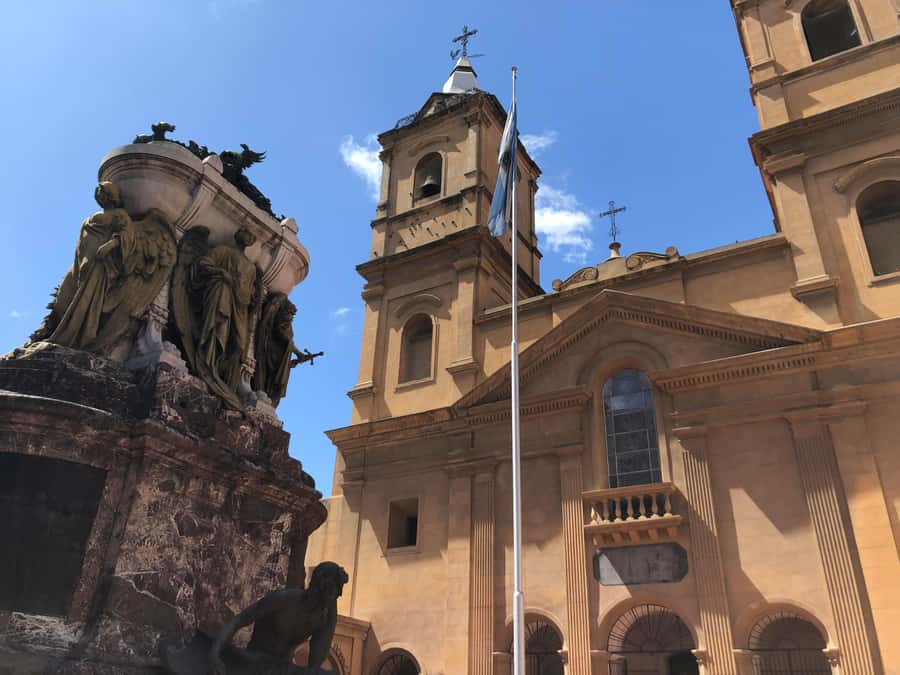
The meeting point is Parroquia San Ignacio de Loyola, one of the city’s important historic churches. It gives the tour a fitting beginning because the story starts with Buenos Aires as a colonial settlement, long before San Telmo became known for its antique shops, street performers, and Sunday crowds.
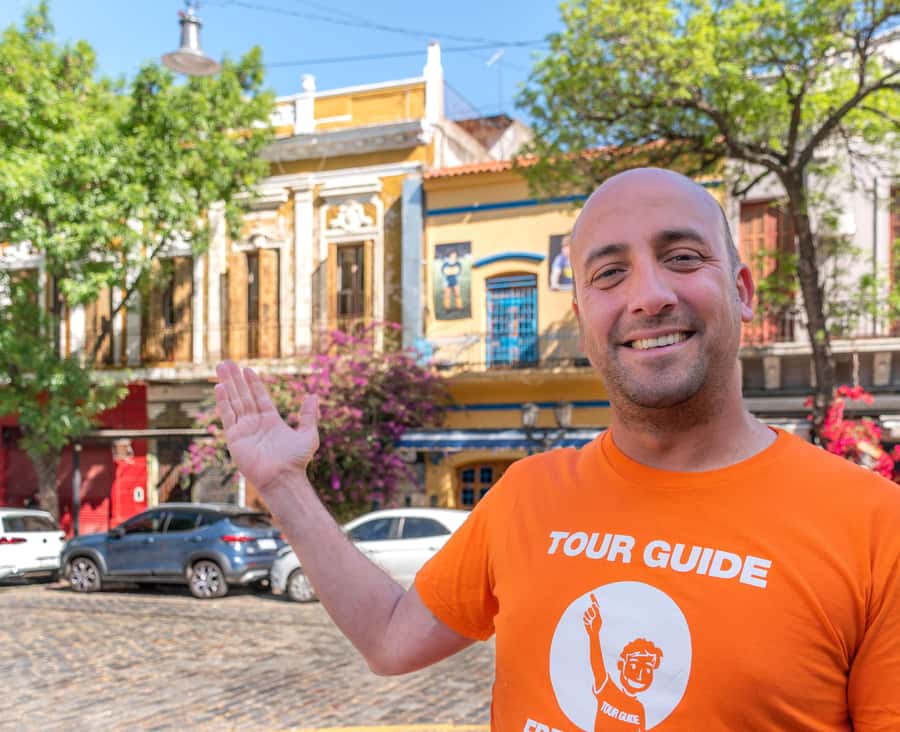
Your guide uses an orange T-shirt or an orange umbrella to help the group find the meeting point. That is a small detail, but it matters in a busy city, especially if you arrive alone or are joining the walk at a crowded time.
From here, the guide sets up the wider story. Expect an explanation of how the city developed and how architecture reflects changing periods in Argentine life. The value is not just seeing an old church. It is learning what the building tells you about the city around it.
San Francisco and the city’s colonial past
The next major stop is Iglesia y Convento de San Francisco. The church and convent offer another look at Buenos Aires’ religious and colonial architecture, with the guide explaining why this site matters.
This is where a good guide earns the modest ticket price. A facade can be attractive on its own, but context turns it into something you can read. You learn to notice the age of the building, its religious role, and its place in the development of the neighborhood.
The walk does not treat San Telmo as a museum sealed off from modern life. Instead, the guide links old buildings with the city’s later growth. That approach works well for visitors who want more than a list of architectural terms.
Juan is particularly good at combining history, architecture, art, and local stories. Santiago has also been praised for his warmth, humor, and ability to answer questions. Jorge is another guide who explains the walk in considerable detail. The exact guide may vary, but the experience depends heavily on who leads your group.
The people behind Argentine identity
The route includes a stop connected with the creator of the Argentine flag. This gives the walk a national focus beyond San Telmo’s streets and buildings.
Argentine history can feel complicated if you encounter it only through names and monuments. A guide makes it easier to understand how national symbols connect with the country’s political and cultural development. You will hear about an important figure in Argentina’s story and why that person remains part of the public memory.
This part will appeal most to visitors who want their sightseeing tied to the country, not just the neighborhood. It also helps balance the lighter stops later in the walk. San Telmo is entertaining, but it is not only a backdrop for photographs.
More walking tours in Buenos Aires:
- Buenos Aires Hop-On Hop-Off Bus, Free Walking Tours & Discounts
★ 4.5 · 2,218 reviews - Buenos Aires: La Boca Guided Walking Tour in English
★ 4.8 · 1,587 reviews - Nazis in Buenos Aires: a historical walking tour
★ 4.9 · 193 reviews - Buenos Aires: Personalized 2 to 8-Hour Private Walking Tour
★ 4.7 · 149 reviews
Meeting Clemente and Mafalda
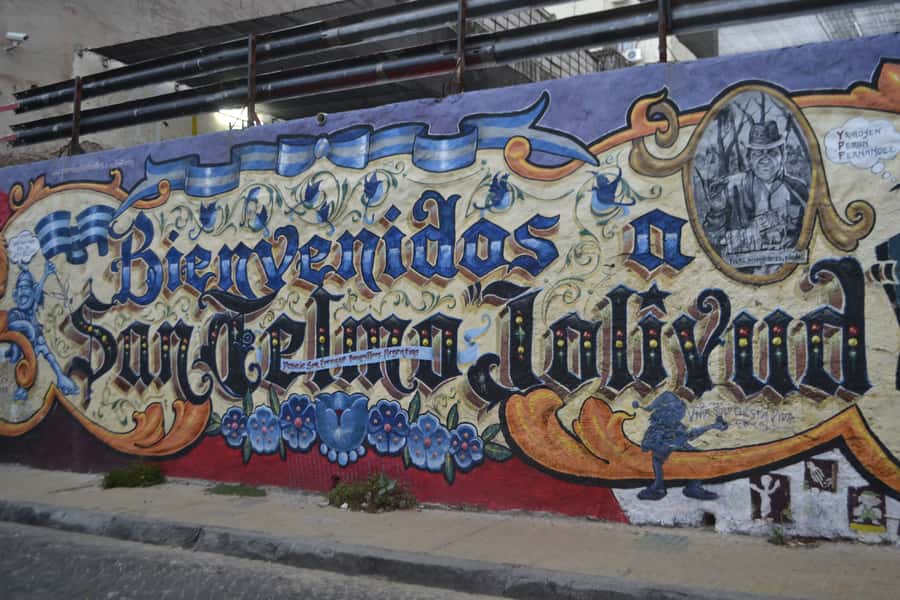
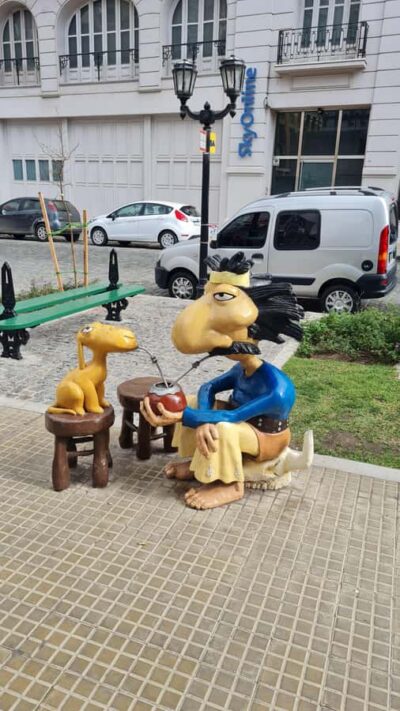
The Paseo de la Historieta gives the tour a different mood. This public art route celebrates classic Argentine comic-strip characters, including Clemente and Mafalda.
Mafalda is especially important in Buenos Aires. She is not simply a cute statue for a quick photograph. The character is closely tied to Argentine popular culture, and the stop gives your guide a chance to explain why these comics matter to local identity.
The Mafalda statue is one of the most memorable points on the route because it makes culture visible in an informal way. You can see how the city honors its artists and characters in ordinary public spaces, alongside working streets and old houses.
I like this section because it prevents the walk from becoming too solemn. You move from churches and national history to humor, drawing, and everyday commentary. The combination gives you a fuller sense of Argentine life than a tour focused only on grand monuments.
Expect the statue and comic figures to attract attention. The tour includes guided explanations, but you may need to move carefully and keep close to the guide when the area is crowded.
San Telmo’s 19th-century houses
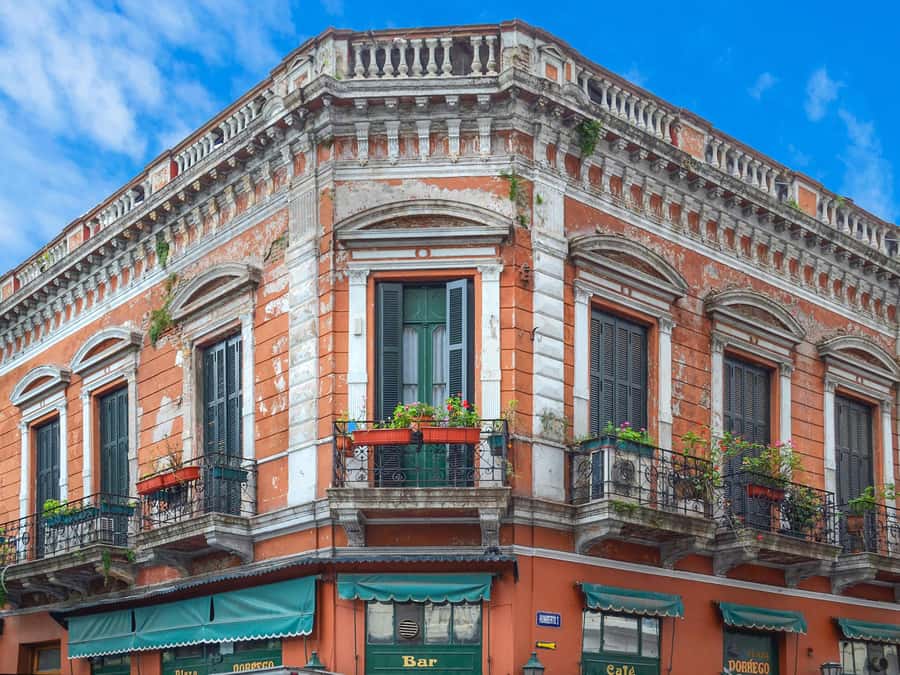
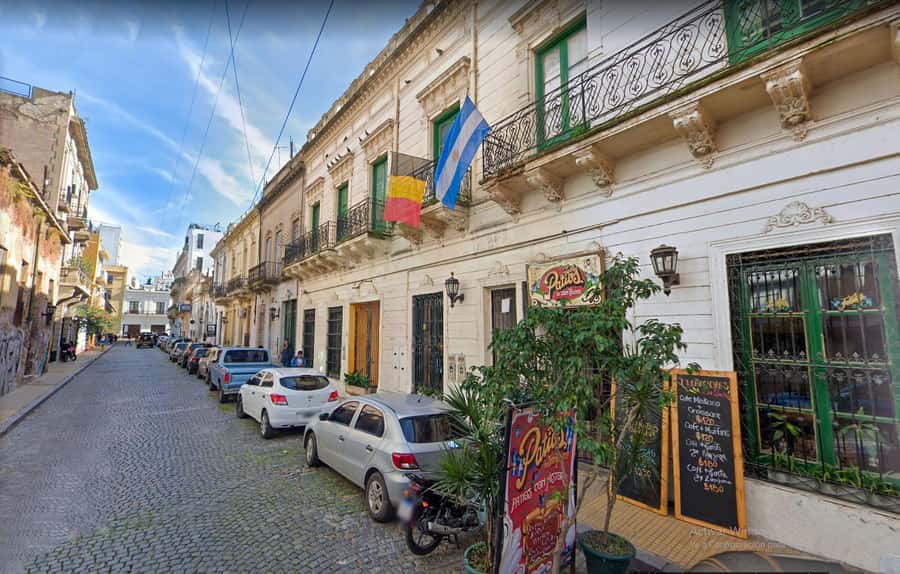
As you continue through the neighborhood, the guide points out the facades of picturesque 19th-century collective houses. These buildings are a key part of San Telmo’s character.
Their importance is not limited to decoration. The houses help explain how the neighborhood changed as Buenos Aires grew and new arrivals shaped urban life. The architecture reflects a city becoming denser and more socially mixed.
This is also where the size of the group can affect the experience. Narrow streets are not ideal for a large crowd, and one group found that the walk felt cramped. A guide can keep everyone together and project a strong voice, but you should still expect some pauses and movement around other pedestrians.
Madison, who took the tour alone, found that the guide managed a large English-speaking group well and answered questions as they came up. That is useful if you are traveling solo. You do not need to arrive with a companion to get something from the walk.
Inside the San Telmo Market
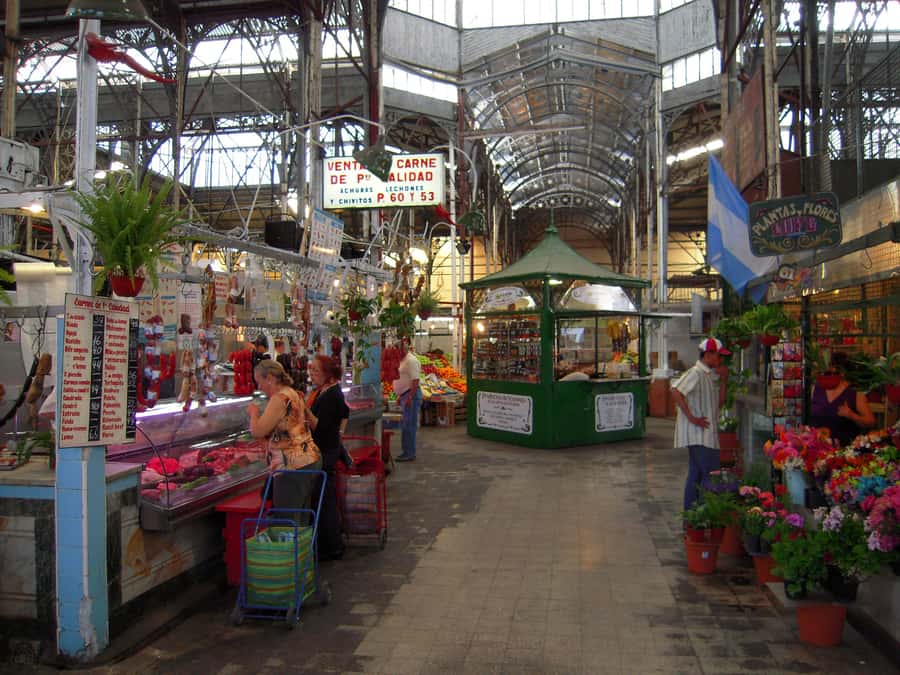
The Mercado San Telmo is one of the tour’s most practical stops. This traditional indoor food market lets you see another side of the neighborhood, away from the exterior facades and public sculptures.
You can expect the guide to explain the market’s place in local life and point out traditional Argentine food. The market is also a useful place to notice how Buenos Aires combines daily shopping, social life, and tourism in one setting.
Do not treat this as a dedicated food tour with a long tasting menu. The experience is primarily a guided neighborhood walk, and the market is one stop among several. You may find food to sample or buy, but the supplied details do not promise a particular tasting or meal.
Still, the market adds an important sensory element. After hearing about colonial buildings and national history, you get a more immediate feel for what people eat and how the neighborhood functions. If you want a second visit, the market is easy to place on your own schedule after the tour.
The Sunday fair and San Telmo Square
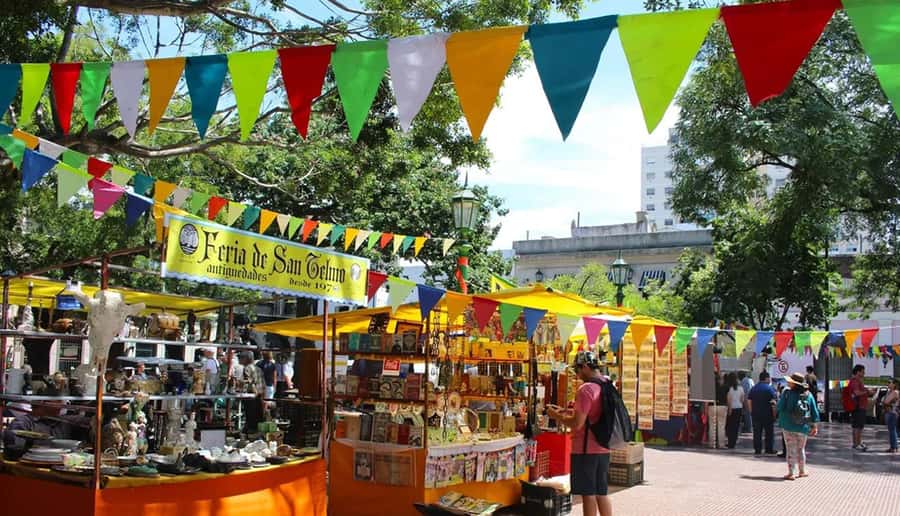
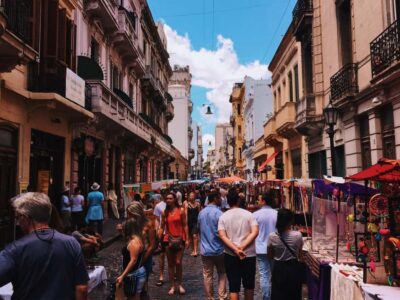
The Sunday street fair is likely to be the most energetic part of the walk. Stalls, art, music, and street activity fill the area, turning the neighborhood into a moving public show.
One guest called the fair chaotic but considered the insider view worth the effort. That is a useful warning. The fair is not a quiet stroll through an empty historic district. You may need to follow closely, watch your belongings, and accept that the pace can slow in crowded sections.
The reward is a stronger sense of San Telmo as a living neighborhood. You see how antiques, crafts, performance, food, and local culture meet in the streets. The guide helps you understand what you are seeing rather than leaving you to push through the crowd without context.
The walk finishes in San Telmo, and the area can be a good place to continue your afternoon. One particularly nice possibility is watching tango dancers in San Telmo Square, an experience that fit naturally after the historical walk for one group. Tango is not listed as a formal part of the tour, so consider it a nearby bonus rather than a guaranteed activity.
How the two-hour format works
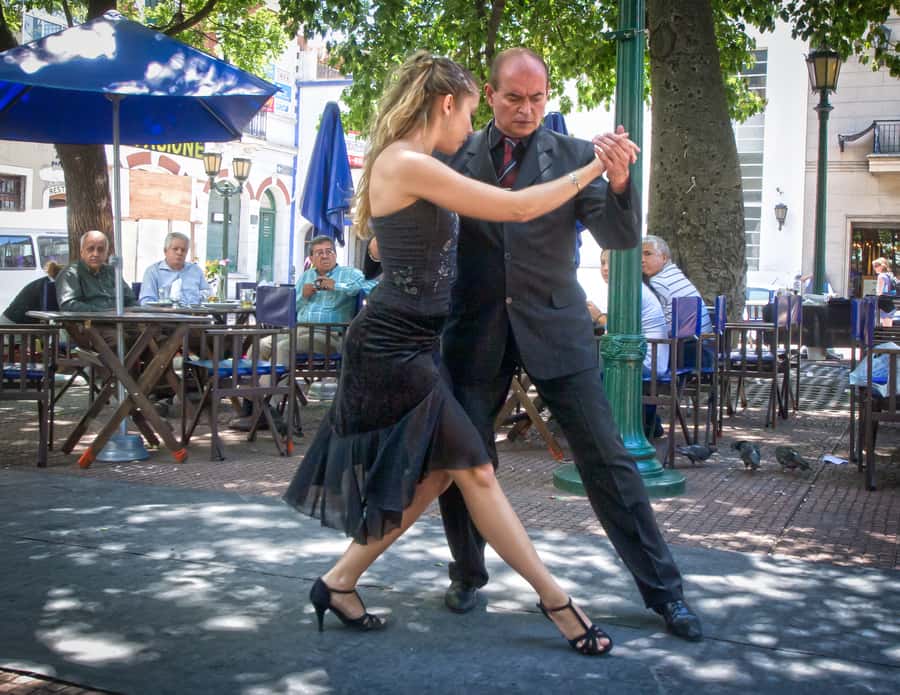
Two hours is enough time for an introduction, not enough for a slow examination of every church, market stall, and side street. The pace should suit you if you want a focused orientation before exploring further.
You will spend the time walking and standing, often on cobblestones and among other pedestrians. Wear comfortable shoes. Since the tour takes place rain or shine, check the forecast and carry protection from rain or sun as needed.
The English-language format is useful for visitors who want historical explanation without having to translate signs or guidebooks. The guides are described as warm, friendly, humorous, and well-informed, with Juan, Santiago, and Jorge receiving especially strong praise for their ability to explain complex subjects clearly.
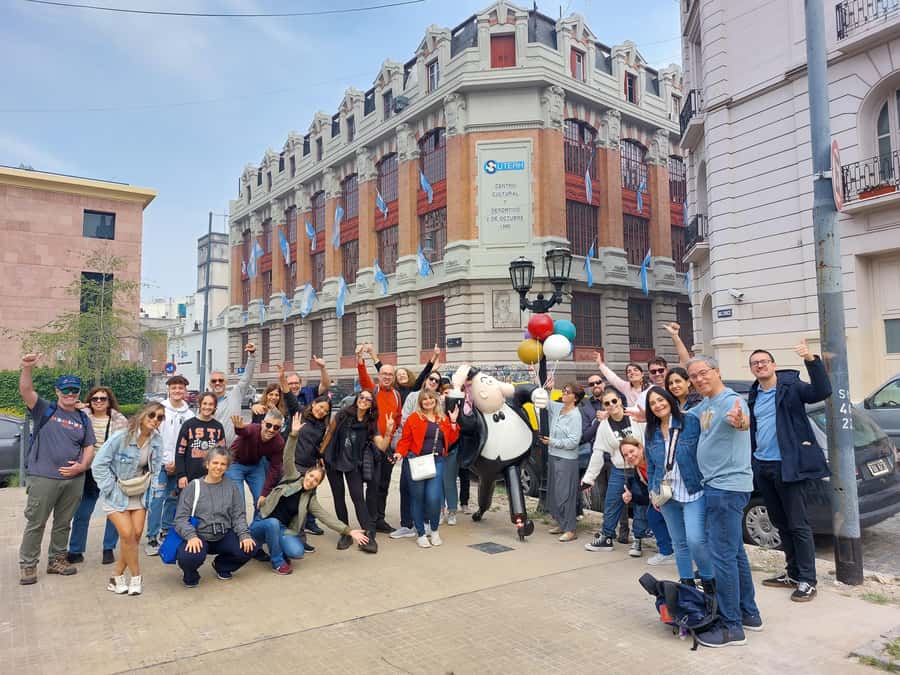
Large groups are the main practical compromise. One group exceeded 30 people, while another found the narrow streets difficult with so many people. A large group can also make questions harder to hear, even when the guide projects well.
If you prefer intimate tours, this may not be your ideal format. If you care more about price and broad coverage, the group size is easier to accept.
Is $13 good value?
Yes, provided you want an introduction rather than a private deep look at every stop. For $13, you receive two hours with an English-speaking guide and see a church, convent, national-history site, comic characters, historic houses, the indoor market, and the San Telmo fair.
The value comes from the connections. You could pass many of these places independently, but you would miss some of the links between immigration, architecture, popular culture, and Argentine identity.
The tour also reduces the guesswork of a first visit. You get a clear sense of the neighborhood and can decide where to spend more time later. That makes the price especially fair for solo visitors, first-time visitors, and anyone with only a short stay in Buenos Aires.
The limitation is that the price does not buy a private experience or a meal. You are paying for a guided walk, not extensive food sampling or exclusive access.
Who should book this San Telmo walk?
I would recommend it to first-time visitors, history fans, architecture lovers, and anyone who wants to see a traditional market and a Sunday street fair without wandering blindly through the crowds.
It also suits solo visitors. Madison took the walk alone and found the large group manageable, while the guide kept people together and handled questions. The comic-strip stops make it a good choice for families and for adults who prefer cultural sightseeing with some humor.
You may want something else if you dislike crowds, need a slow pace, or want a private guide. The fair and narrow streets can be hectic, and two hours leaves little room for lingering.
Booking and meeting details
The tour is offered in English and lasts two hours. Meet at Parroquia San Ignacio de Loyola and look for the guide’s orange T-shirt or orange umbrella.
You can cancel up to 24 hours before the start for a full refund, and the reserve-now, pay-later option keeps your plans flexible. The tour runs rain or shine, so do not book it assuming poor weather will automatically cancel the walk.
Final verdict: a smart introduction to old Buenos Aires
Book this tour if you want San Telmo explained through several lenses: colonial buildings, national history, immigration, food, street art, comic characters, and the Sunday fair.
Its strongest feature is the guide. Juan, Santiago, and Jorge are praised for warmth, humor, clear explanations, and strong answers to questions. Its main weakness is crowding, especially on narrow streets and during the fair.
At $13, I think it is a sound choice for a first look at San Telmo. You will not see everything, and you should not expect a private or food-heavy tour. But you will leave with a better sense of why this neighborhood matters and a useful plan for what to explore next.
FAQ
How long does the San Telmo walking tour last?
The tour lasts two hours.
What language is the tour conducted in?
The tour is conducted in English by a live English-speaking guide.
Where does the tour begin?
The meeting point is Parroquia San Ignacio de Loyola.
How do I find the guide?
Look for a guide wearing an orange T-shirt or carrying an orange umbrella.
Where does the tour finish?
The walk finishes in San Telmo.
Does the tour include the San Telmo Market?
Yes. The route includes a guided visit to Mercado San Telmo, the traditional indoor food market.
Does the tour include the Sunday street fair?
The experience includes the lively Sunday street fair as part of its San Telmo route.
What happens if it rains?
The tour takes place rain or shine, so you should come prepared for the weather.
Just added around Buenos Aires
- Tango Show at El Querandi with optional Dinner★ 4.2 · 3 reviews
- Wine Tasting in Buenos Aires★ 4.2 · 4 reviews
- Walking Tour: Buenos Aires bookstores★ 4.3 · 12 reviews
- Private Underground Tango Immersion★ 5.0 · 31 reviews
- Velez Sarsfield Football Match★ 5.0 · 3 reviews
- Unique Tigre and Delta Private Day Cruise Navegation★ 5.0 · 3 reviews
- Transfers from or to the airport In Argentina Your Best Choice★ 5.0 · 28 reviews
- Tour Buenos Aires in one day on Electric Scooters★ 5.0 · 33 reviews
San Telmo Tours, compared.
Historical Guided Tour with Street Food & Drinks
Read our review →
Buenos Aires Bike Tour: San Telmo and La Boca Districts
Read our review →
BA Flavors Food Tour in San Telmo and Boca With Local Guide
Read our review →
Experience The Essence of Buenos Aires in San Telmo
Read our review →
Browse the lists this tour appears in