
Reviewed · BUENOS AIRES FOOTBALL TOURS
Buenos Aires: Visit to the Diego Armando Maradona Stadium
Argentinos Juniors is more than a Buenos Aires football club. Its stadium is where Diego Maradona made his professional debut at 15, and where Lionel Messi scored his first goals for Argentina. I like that this tour connects those famous names to a real neighborhood club, not just a giant national stadium. I also like the fan-built museum, filled with shirts, trophies, photos, and donated keepsakes.
The tour includes hotel pickup and drop-off, which makes the trip simple, especially if you are unfamiliar with Buenos Aires. The main consideration is price: at $80 per person, it costs more than a basic museum visit, though the small group, private transport, guide, and access to several stadium areas add real value.
Key points at a glance
- Maradona’s first professional stadium: See where Diego Armando Maradona debuted for Argentinos Juniors at age 15.
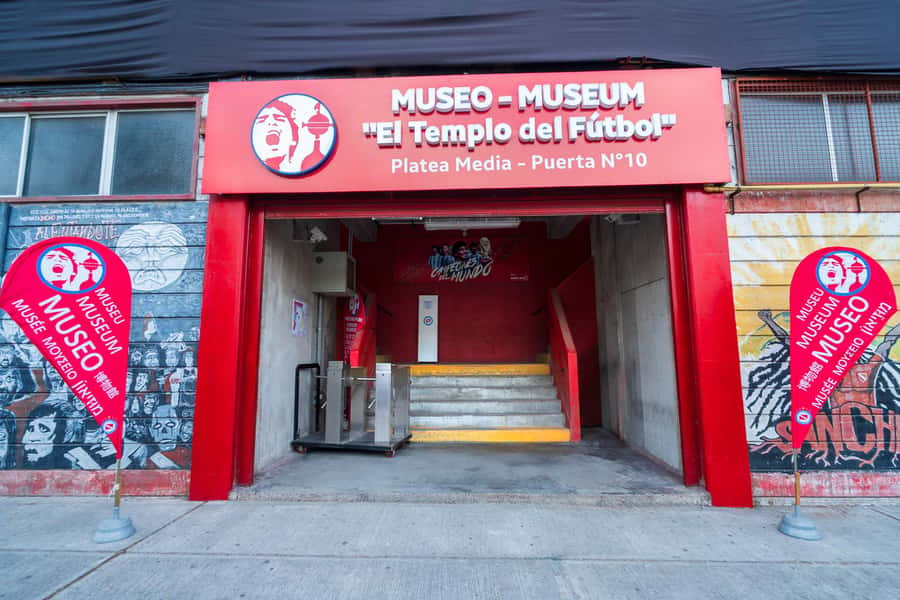
- A museum made by supporters: The Temple of Soccer Museum displays donated shirts, cards, trophies, photographs, and club memorabilia.
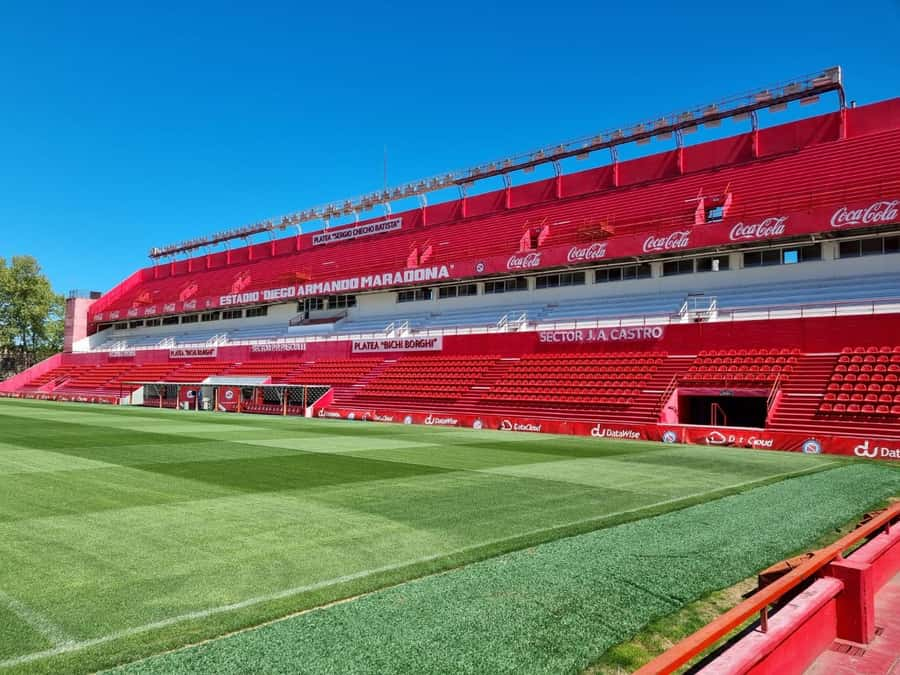
- More than a trophy room: The visit includes the field, changing rooms, central hall, press room, and stadium stands.
- A personal guide matters: Fernando, Carmela, Agustin, and other bilingual guides bring the club’s story to life in English or Spanish.
- Small groups and hotel transfers: Groups are limited to 10, with pickup and return at your hotel in Buenos Aires City.
- A compact football experience: Allow 150 minutes for the full activity, including transport arrangements and the guided stadium visit.
Why this small stadium tells a big Argentine story
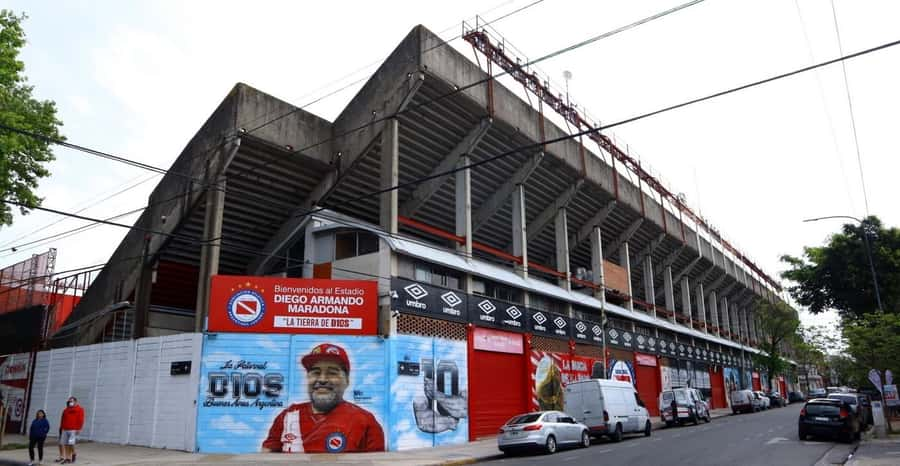
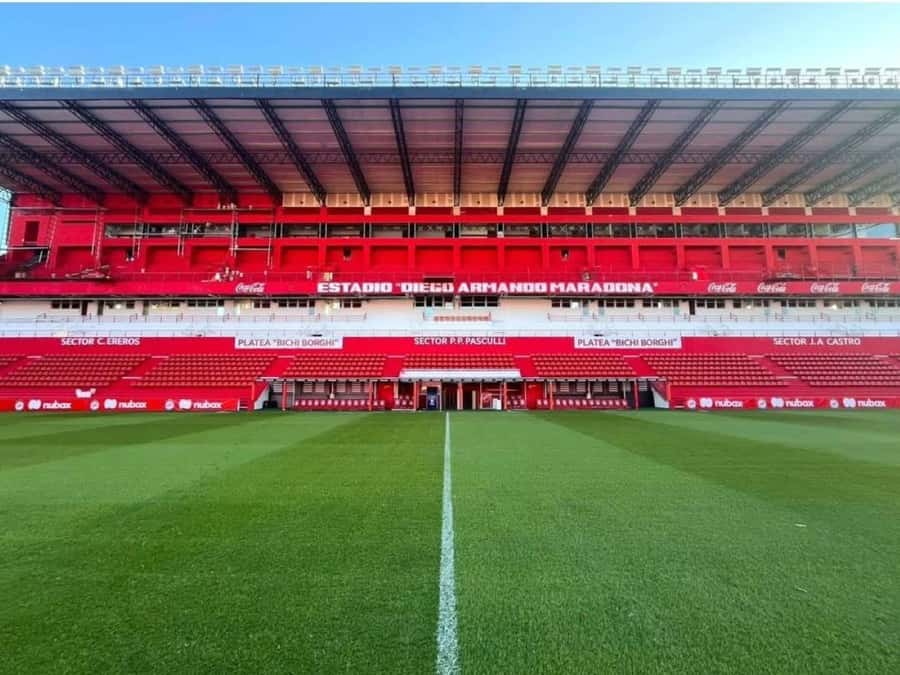
The Diego Armando Maradona Stadium sits in La Paternal, a Buenos Aires neighborhood tied closely to Argentinos Juniors. The club is famous for developing young players, and its connection to Maradona gives the stadium unusual importance for football fans.
Maradona arrived here as a teenager and made his professional debut at just 15. That fact changes the way you see the ground. You are not simply looking at seats, walls, and a pitch. You are looking at the place where one of the sport’s most famous careers began.
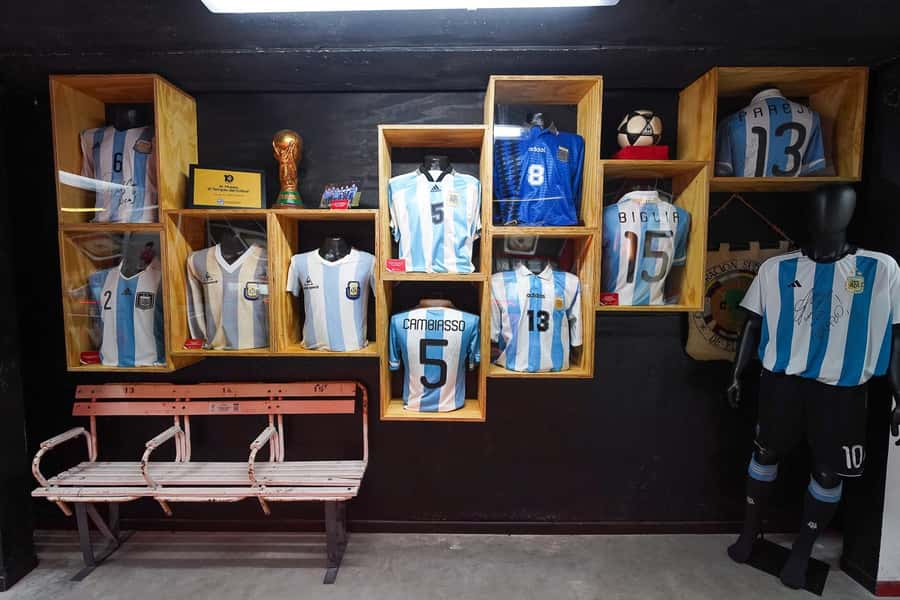
The stadium also links to Lionel Messi. The information presented here connects Argentinos Juniors with Messi’s first goals for the Argentine national team. For anyone interested in Argentine football, that pairing gives the visit a strong sense of scale: one club helped launch both a local legend and the country’s modern icon.
I like that this is not presented as a tour of Buenos Aires football in general. It focuses on one club and the people who shaped it. That narrower story can feel more personal than a large, polished stadium attraction.
More football tours in Buenos Aires:
- Buenos Aires: Tickets to Boca Juniors Museum & Stadium
★ 4.5 · 581 reviews - Soccer Match in Buenos Aires with Transfers and Local Guide
★ 5.0 · 103 reviews - Buenos Aires: Boca Juniors and River Plate Football Tour
★ 4.3 · 82 reviews
Arriving in La Paternal by hotel transfer
Your driver picks you up at the door of your hotel in Buenos Aires City and returns you there after the visit. That is useful because La Paternal may not be part of your usual sightseeing route, and you do not need to work out the transport on your own.
The transfer is also part of the tour’s value. Fernando has been especially involved in keeping guests informed through WhatsApp, sending pickup details and arrival times before the visit. Raul has also been praised for being helpful and flexible with drop-off arrangements. Those details matter when you are trying to fit a football visit into a busy Buenos Aires day.
The activity lasts 150 minutes, while the guided stadium portion is listed as about 1.5 hours. The exact balance depends on pickup and traffic, so avoid booking another important appointment immediately afterward. The tour includes no food or drinks, but the duration is short enough that this is easy to plan around.
Transport is by small group rather than a large coach. The group limit is 10 people, which helps keep the visit personal. It also means the guide can answer questions without turning every stop into a formal presentation.
Inside the Temple of Soccer Museum
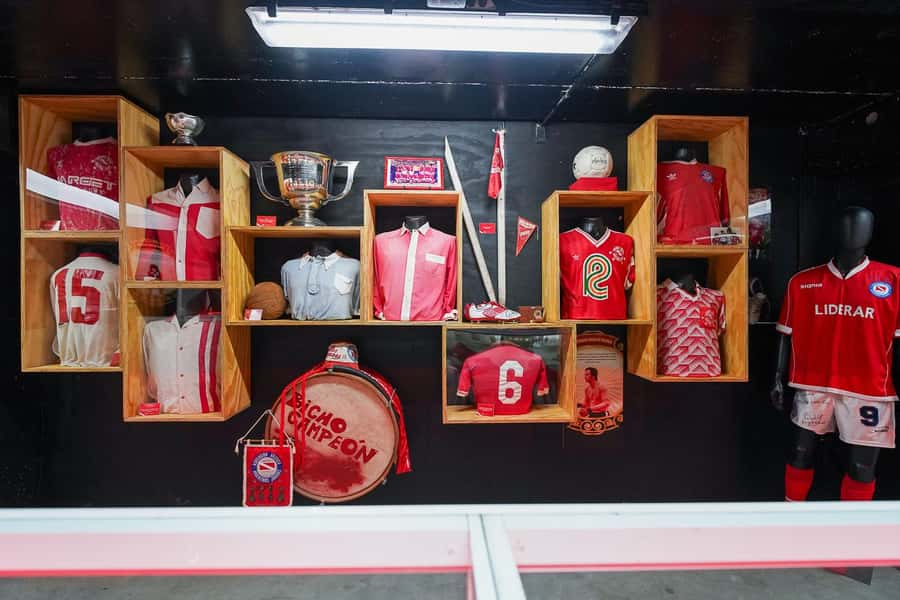
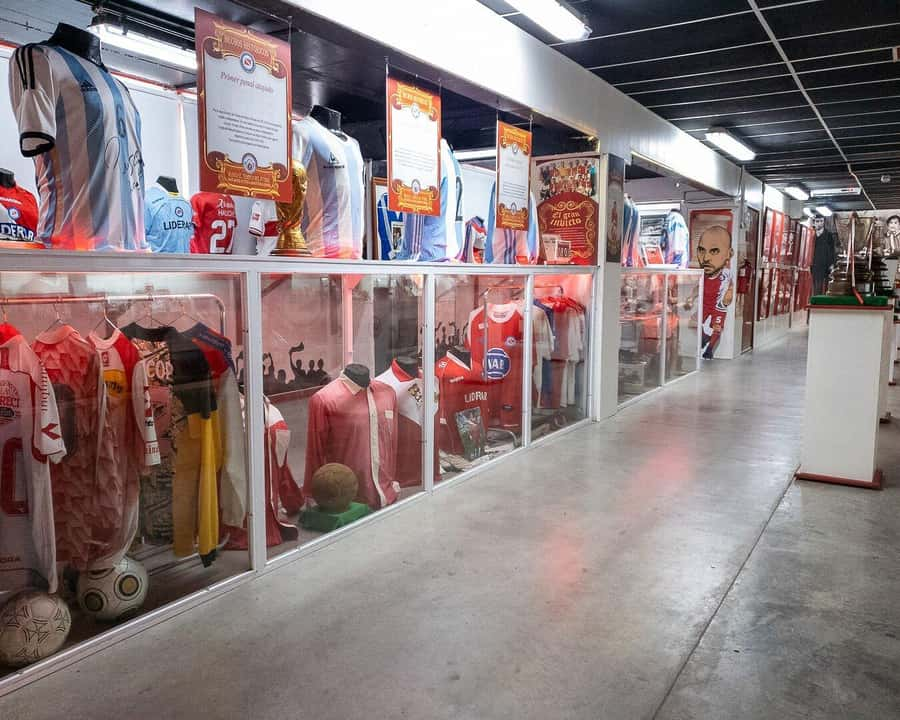
The Temple of Soccer Museum is the heart of the visit. Its unusual feature is its origin: supporters and club members created it through voluntary work. Objects were donated by fans, so the collection feels connected to the club community rather than assembled only for tourists.
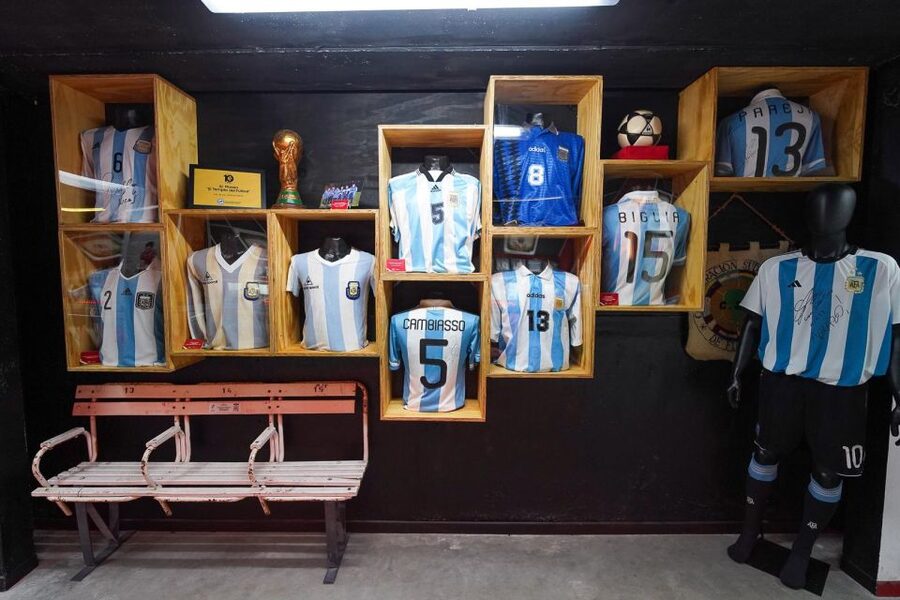
You can expect photographs, player cards, trophies, shirts from different campaigns, and other club items. The exact displays may change, but the purpose is clear. This is a place where Argentinos Juniors supporters have gathered the objects that help explain their club.
I find fan-built museums appealing because they often preserve small details that a large commercial museum might overlook. A shirt from a memorable season, an old photograph, or a personal donation can say as much about a club as a major trophy.
The museum also gives useful context for the stadium tour. Before you walk onto the field or into the changing rooms, you get a sense of how Argentinos Juniors developed its identity. The club’s youth system is a major part of that identity, and the Maradona story gives it a powerful human focus.
If you are not a serious football fan, the museum may be the section that requires the most attention from your guide. You will get the most from it if you ask questions about the players, campaigns, and objects on display. The bilingual format helps, with tours offered in English and Spanish.
Walking through the stadium beyond the seats
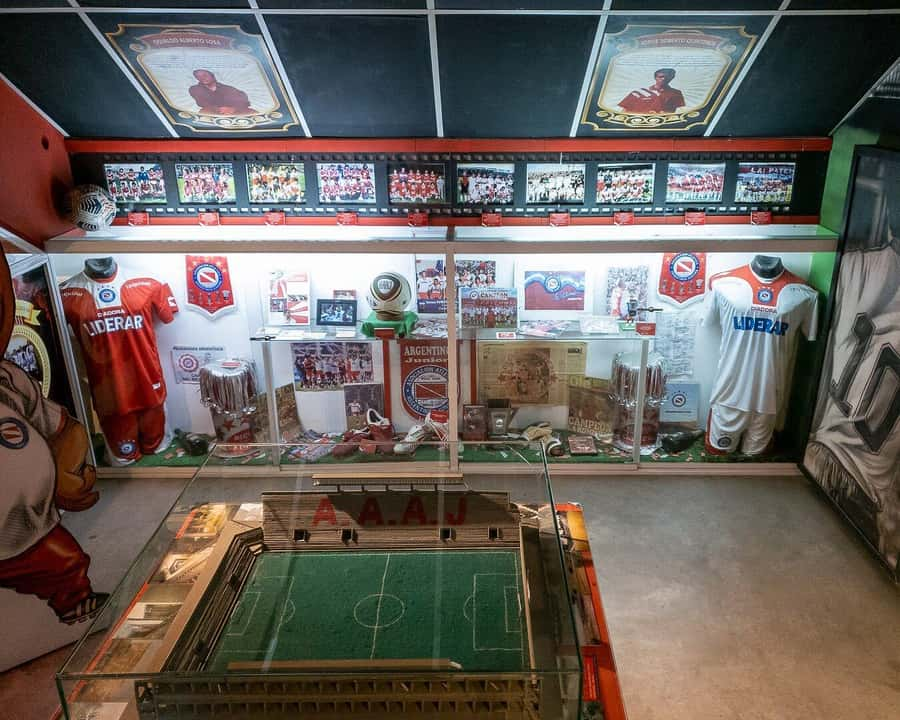
The tour continues beyond the museum, taking you through parts of the stadium that are normally more interesting than simply viewing the outside.
You visit the playing field, where the guide can connect the physical space to Maradona’s early career. You also see the changing rooms, central hall, press room, and stadium stands. Each area offers a different angle on how a football club works.
The changing rooms give you a practical sense of the players’ routine before a match. The press room shows the public side of the club, where players and coaches face questions after the action. The central hall connects these areas and helps you understand the stadium as a working place, not only a match-day backdrop.
The stands are important because they show the relationship between the club and its supporters. At Argentinos Juniors, the fan connection is central to the museum itself. Seeing the seating areas after learning about the donated objects gives the club’s support base a physical setting.
One limitation is that this is a compact neighborhood stadium, not a giant arena with a long list of high-tech attractions. If you want a large-scale stadium spectacle, this may feel modest. If you prefer a closer look at a working club with a strong local identity, that smaller scale is part of the appeal.
Same city, an entirely different evening:
- Buenos Aires Hop-On Hop-Off Bus, Free Walking Tours & Discounts
★ 4.5 · 2,218 reviews - Buenos Aires: Piazzolla Tango Show with Optional Dinner
★ 4.4 · 2,122 reviews - Buenos Aires: City Highlights Guided Tour with Transfer
★ 4.7 · 1,946 reviews - Buenos Aires: Hop-On Hop-Off City Bus Tour
★ 4.2 · 1,855 reviews
The Maradona Sanctuary
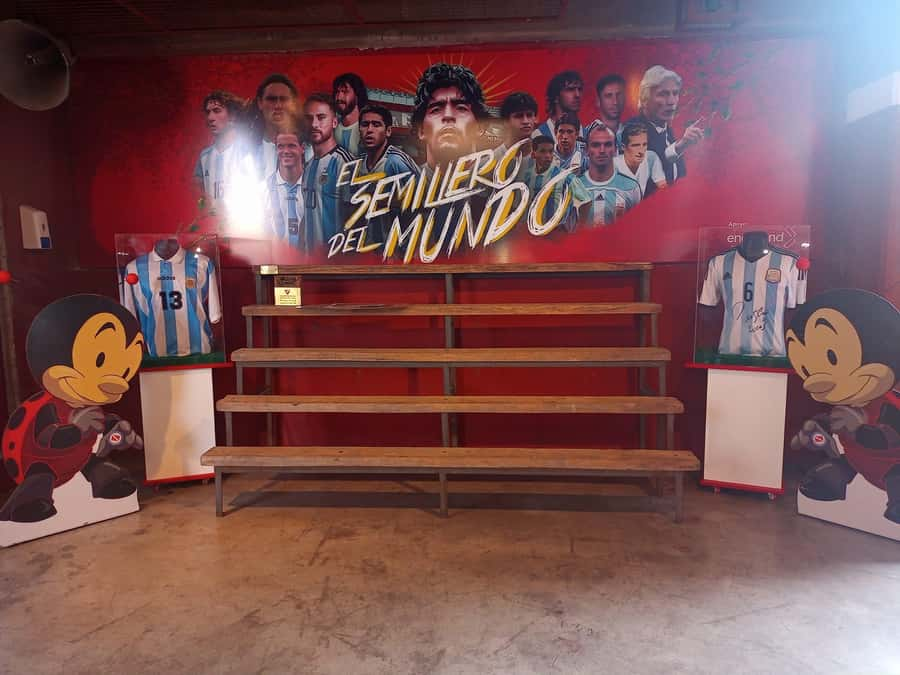
The final stop is the Maradona Sanctuary. This gives the tour a clear ending and places the entire visit back around the player who made the stadium famous around the world.
The sanctuary is not simply another display room. It is a place of respect for Maradona and his link to Argentinos Juniors. By the time you reach it, you have already seen the field, museum, and club spaces connected to his early career. That makes the final stop feel like a conclusion to the story rather than a random collection of memorabilia.
The guide is important here. Fernando is known for his strong personal connection to Argentinos Juniors and Maradona, while Carmela has been praised for explaining the club’s story in an engaging way that works well for families. Agustin has also been singled out for bringing real excitement to the club.
Guide quality can vary on any group experience, but this tour gives you a good chance of a more personal conversation because the group is limited to 10. If you have questions about Maradona’s time at the club, ask them. The visit is much better when you treat it as a conversation rather than just a walk from room to room.
The guides shape the experience
The strongest part of this tour is the human side. The guides are not only there to point out rooms. They explain why Argentinos Juniors matters and how the club fits into Argentine football.
Fernando handles both the practical and storytelling sides of the experience. He has contacted people before pickup, provided clear details, supplied water during the drive, and shared football footage during the journey. His enthusiasm for the club comes through strongly.
Carmela has a family-friendly style. If you are visiting with children, her approach can help keep younger members interested during the museum sections. She presents the club’s story in a lively way rather than treating every display as a dry date and name.
Agustin has also been praised for creating a strong sense of excitement around the club. The exact guide you receive may depend on the day, but English and Spanish are both available.
Raul is associated with the driving side of the experience and has been noted for being courteous and helpful with drop-off arrangements. That can make a real difference when you have plans elsewhere in Buenos Aires after the stadium visit.
Is $80 good value?
At $80 per person, this is not the cheapest way to see a football stadium. The price makes more sense when you add up what is included: hotel pickup and drop-off, entrance to the museum, a guided visit through several stadium areas, and a bilingual guide.
You are paying for convenience as well as admission. A self-guided visit would likely cost less if available, but it would not give you the same club context or door-to-door transport. The group limit of 10 also keeps this from feeling like a mass excursion.
The value is strongest for three types of people:
- Fans of Maradona who want to see where his professional career began.
- Football followers who have already seen larger stadiums and want a more local club story.
- Families or first-time visitors who prefer a planned transfer and a guide in English or Spanish.
The value is weaker if you only want to see the pitch for a few minutes or if you are not interested in football history. The museum and storytelling make up much of the experience, so a casual visitor should know that this is a club-focused tour, not a general Buenos Aires sightseeing trip.
How it compares with a major Buenos Aires stadium visit
Buenos Aires has several famous football grounds, and a visit to a larger stadium may offer more scale. Argentinos Juniors offers a different kind of experience.
Here, the emphasis is on Maradona’s beginning, the club’s youth development, and the work of supporters who built the museum. The tour is less about size and more about connection. You are seeing a place tied to a player’s early days, before global fame changed everything.
That makes this a good second stadium visit if you have already seen a major Buenos Aires football venue. It can also be the better first choice if Maradona is your main reason for coming.
I would not choose this tour simply because you want the biggest stands or the most polished museum. I would choose it because you want to understand why Argentinos Juniors matters and how a neighborhood club helped shape Argentine football.
Who should book this stadium tour?
This experience suits Maradona fans, football historians, and anyone curious about Argentina’s club culture. It also works well for families because the visit is short, the group is small, and the guide can explain the story in an accessible way.
You do not need to know every Argentinos Juniors player before arriving. The guide provides the context, and the museum gives you plenty of visual material to follow. Still, you will enjoy it more if you have at least some interest in football or Maradona.
The tour is less suited to someone who wants a long museum day, a full match-day atmosphere, or a food-focused activity. There is no meal or drink included, and the total visit is designed as a compact football outing.
Book with the flexible cancellation option if your schedule is still changing. You can cancel up to 24 hours in advance for a full refund, and the reserve-now, pay-later option lets you keep your plans open without paying at once.
My verdict on the Diego Armando Maradona Stadium visit
I would book this tour if Maradona, Argentine football, or local club culture is high on your Buenos Aires list. The museum is personal, the stadium access goes beyond a quick photo stop, and hotel transfers remove much of the hassle.
The best reason to go is not the size of the venue. It is the story. You see where Maradona started, learn why Argentinos Juniors is respected for its young players, and finish at a sanctuary devoted to the club’s most famous son.
At $80, it is a considered purchase rather than an automatic bargain. But with transport, a small group, bilingual guidance, and access to the museum and stadium, it offers solid value for football fans who want more than a generic arena tour.
FAQ
Where is the Diego Armando Maradona Stadium?
The stadium is in the La Paternal neighborhood of Buenos Aires Province, Argentina.
What does the tour include?
The tour includes hotel pickup and drop-off, entrance to the Temple of Soccer Museum, a guided stadium and museum visit, and a bilingual guide in English or Spanish.
How long does the activity last?
The full activity lasts 150 minutes. The guided stadium visit itself is listed as approximately 1.5 hours.
Is hotel pickup included?
Yes. Pickup is included from the door of your hotel in Buenos Aires City, with drop-off after the visit.
What languages are available?
The tour is offered in English and Spanish.
How large is the group?
The group is limited to 10 participants.
What can I see inside the stadium?
The visit includes the playing field, changing rooms, central hall, press room, and stadium stands.
What is the Temple of Soccer Museum?
It is a museum inside the Diego Armando Maradona Stadium that presents the history of Argentinos Juniors and Diego Maradona. It was created through voluntary work by supporters and club members.
Is food included?
No. Food and drinks are not included.
Can I cancel the booking?
Yes. You can cancel up to 24 hours in advance for a full refund. The reserve-now, pay-later option is also available.
Just added around Buenos Aires
- Tango Show at El Querandi with optional Dinner★ 4.2 · 3 reviews
- Wine Tasting in Buenos Aires★ 4.2 · 4 reviews
- Walking Tour: Buenos Aires bookstores★ 4.3 · 12 reviews
- Private Underground Tango Immersion★ 5.0 · 31 reviews
- Velez Sarsfield Football Match★ 5.0 · 3 reviews
- Unique Tigre and Delta Private Day Cruise Navegation★ 5.0 · 3 reviews
- Transfers from or to the airport In Argentina Your Best Choice★ 5.0 · 28 reviews
- Tour Buenos Aires in one day on Electric Scooters★ 5.0 · 33 reviews
Buenos Aires Football Tours, compared.
Soccer Match in Buenos Aires with Transfers and Local Guide
Read our review →

La Boca, a collective creation: Port, immigrants, arts and football
Read our review →
River Plate Monumental Stadium and Museum Guided Tour
Read our review →
Boca Juniors Game at La Bombonera with Local & Transport
Read our review →Browse the lists this tour appears in