
Reviewed · FOOD & DRINK
N1 Coffee Tasting Experience in Buenos Aires
Coffee here is treated less like a quick caffeine stop and more like a small science lesson you can taste. At Al Diablo Coffee Roasters, Lyubov guides you through single-origin coffees, roasting, aromas, and the path from seed to cup. The centerpiece is a sensory workshop using the Le Nez du Café aroma kit, followed by a tasting of rare coffees from Buenos Aires roasters.
I especially like the hands-on format and the private setting. You smell, touch, compare, and taste rather than sit through a lecture. I also like that the lessons have a useful payoff: you learn how to read a coffee bag and spot the flavors that fit your own palate. The main consideration is the price, $85 per person, which is a serious spend for 2.5 hours unless coffee is a real interest for you.
Key points at a glance
- Aroma training comes first: Use the Le Nez du Café kit to practice identifying scents before tasting.
- Four or more coffees may be sampled: The experience focuses on rare, single-origin specialty coffees from top Buenos Aires roasters.
- Lyubov leads the session: Her teaching combines coffee production, tasting terms, personal stories, and practical advice.
- Private means personal: Your group receives the guide’s full attention, with time for questions and palate comparisons.
- Morning or afternoon departures: You can fit the workshop around a day of sightseeing in Buenos Aires.
- It ends where it begins: Meet at Al Diablo Coffee Roasters, Costa Rica 4752, and return there after the session.
A coffee class disguised as a tasting
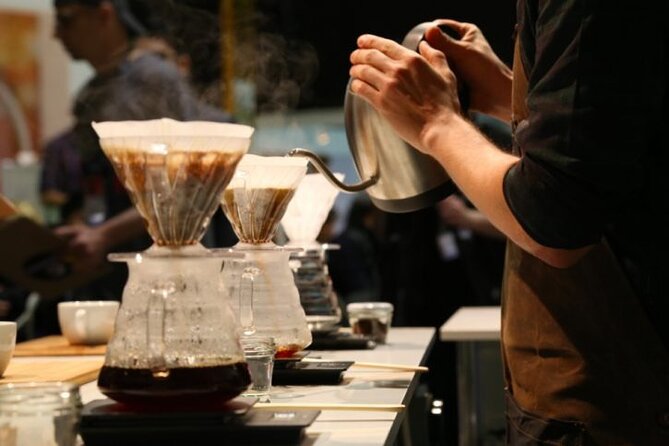
The best way to understand this experience is to think of it as a small coffee master class, not a café visit with a few sample cups. You are there to learn how coffee is grown, processed, roasted, described, and tasted.
That distinction matters. Many tastings hand you a flight of drinks and expect you to notice the difference. Here, Lyubov gives you a vocabulary for those differences. You learn how aroma, acidity, roast level, origin, and preparation affect what reaches your cup.
The class is designed for both serious coffee drinkers and people who simply enjoy a morning brew. You do not need to arrive with a trained palate. In fact, the session may be most useful if coffee labels and tasting notes usually leave you puzzled.
The teaching is practical. Instead of telling you that one coffee has a certain note and moving on, Lyubov connects the smell or flavor to the coffee’s background. You begin to see why two beans can taste so different even when both are served as coffee.
Other Buenos Aires bookings people pair with this one:
- Buenos Aires Hop-On Hop-Off Bus, Free Walking Tours & Discounts
★ 4.5 · 2,218 reviews - Buenos Aires: Piazzolla Tango Show with Optional Dinner
★ 4.4 · 2,122 reviews - Buenos Aires: City Highlights Guided Tour with Transfer
★ 4.7 · 1,946 reviews
Meeting Lyubov at Al Diablo Coffee Roasters
The experience begins at Al Diablo Coffee Roasters, at Costa Rica 4752 in Buenos Aires. It is near public transportation, which makes the meeting point workable for a city day, though you should still allow enough time to arrive without rushing.
You can choose a morning or afternoon departure. That flexibility is useful, especially if you are arranging the workshop around museums, neighborhood walks, or a late dinner the night before. A morning session can set up the rest of your day with a new way to judge every café cup. An afternoon departure may work better if you prefer a slower start.
Lyubov, also referred to by some participants as Luba or Lyubi, is central to the experience. Her role is not simply to pour coffee. She explains the subject, asks you to make your own observations, and adjusts the discussion to your questions.
That personal approach is one reason the private format matters. The activity is for your group alone, so you are not competing with a large class for attention. If you want to ask about roast levels, home preparation, bean labels, or a flavor you cannot identify, you have room to do so.
Learning the language of coffee with your nose
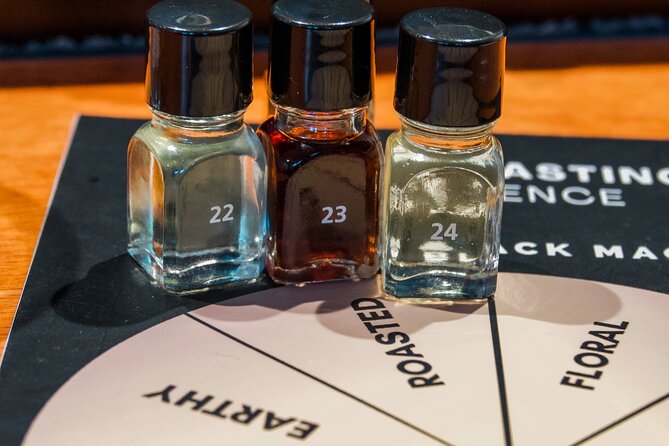
The aroma exercise is one of the most distinctive parts of the workshop. You work with the Le Nez du Café sommelier kit, which contains separate scents used to train your sense of smell.
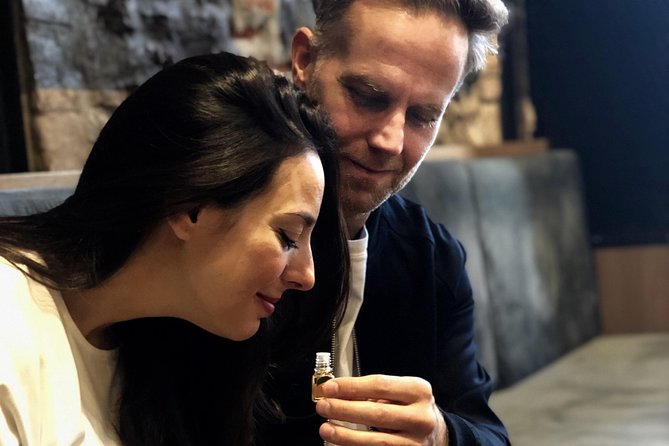
The point is not to prove that you have an unusually sharp nose. It is to show you how much of tasting begins before the coffee reaches your tongue. You smell, guess, compare, and gradually build a set of reference points.
This can be a playful part of the session. One participant described it as a game, and that is a fair way to approach it. You may recognize some aromas quickly and miss others completely. That is normal. The exercise helps you stop treating tasting notes as mysterious expert code.
Coffee descriptions often use words such as fruit, spice, nuts, flowers, or chocolate. Those words can sound vague when printed on a bag. After working with the aroma kit, you have a better chance of understanding what those descriptions are trying to tell you.
I like this part because it gives the tasting a clear purpose. You are not just being told what to smell. You are practicing the skill yourself, then applying it to the coffees that follow.
From seed to roasted bean
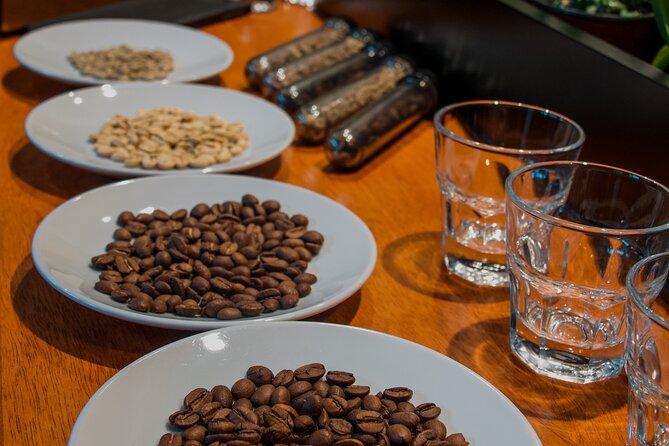
Lyubov explains the coffee chain from the planted seed through cultivation, harvesting, processing, roasting, and preparation. This broad view helps you understand that flavor is shaped long before a barista pours the drink.
The lesson also puts the phrase specialty coffee into plain language. You learn what makes production and quality different from a standard commodity coffee, and how origin and processing can affect the final taste.
This section is useful for anyone who has bought beans based on an attractive package and then wondered what the printed terms meant. You learn how to look at a coffee bag with more confidence, paying attention to information rather than treating every label as marketing decoration.
The workshop also connects production choices to the cup. A bean’s origin is not just a travel story. It can help explain its character, though the final result also depends on roasting and preparation. That is a more useful lesson than simply memorizing coffee-growing countries.
For coffee fans, this part gives needed context. For beginners, it provides a basic map without forcing you to study technical material before enjoying the drink.
More food and drink tours in Buenos Aires:
- Buenos Aires: 9-Course Argentine Meat Tasting at Fogón Asado
★ 4.9 · 826 reviews - Buenos Aires: Local Foodie Adventure with Sherpa Food Tours
★ 4.9 · 670 reviews - Buenos Aires: Wine Tasting and Lunch at Bodega Gamboa
★ 4.8 · 177 reviews - Buenos Aires Food Tour: Local Dishes, Steak, Empanada & More
★ 5.0 · 118 reviews
Comparing single-origin coffees from Buenos Aires roasters
The tasting focuses on freshly roasted single-origin coffees, including rare and less familiar varieties. Several participants describe tasting around four coffees, with samples selected to show a broad range of flavors.
The value of the comparison is in the side-by-side format. One cup on its own may taste simply good. Several cups together help you notice contrasts in aroma, body, acidity, sweetness, and finish.
You are encouraged to decide what you like instead of accepting a fixed ranking. A coffee described as complex or exotic may not be your favorite, and that is perfectly fine. The goal is to discover your own preferences.
Lyubov guides you through the tasting and helps connect your reactions to the coffee’s origin, roast, and production. If you notice fruit, spice, or another aroma, she can help you describe it more clearly. If you do not notice the same thing, that is part of the learning process rather than a wrong answer.
This is also where the private setting earns its keep. Your group can move at its own pace, ask follow-up questions, and spend more time on a coffee that sparks interest. A larger public tasting might be cheaper, but it would likely give you less individual attention.
A useful lesson in coffee labels and home choices
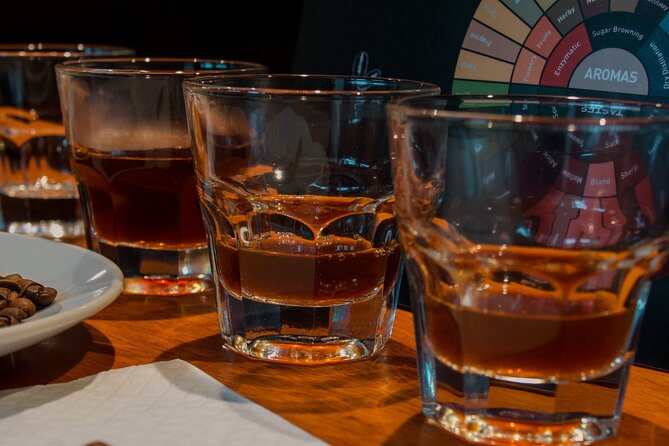
One of the strongest practical benefits is learning how to choose beans after the workshop. The session aims to make coffee-bag descriptions less confusing, and that knowledge can follow you home.
You begin to understand which details matter to your taste. If you prefer a certain level of acidity, sweetness, roast character, or fruitiness, you have a better starting point for future purchases. You may also become less likely to buy a bag only because its design looks appealing.
The experience does not promise to turn you into a professional coffee judge in a single afternoon. What it can do is give you a working set of questions. What flavors do I notice? How does this coffee compare with the last one? Do I prefer this roast? What does the label tell me about what is inside?
That is a good travel souvenir because it costs nothing to carry and remains useful long after you leave Buenos Aires. Several people found the lessons helpful for changing how they prepare or drink coffee at home.
The workshop also discusses brewing methods and how preparation affects the final cup. The supplied information does not name a particular method as the required result, so you should see this as guidance rather than a hands-on equipment course built around one fixed recipe.
Why the private format matters
This is a private activity, and that changes the tone. You are not part of a crowded rotation where each person receives the same short explanation. Lyubov can respond to your level, from complete beginner to committed coffee drinker.
For a solo visitor, that means you can ask basic questions without feeling out of place. For couples or friends, it becomes a shared experiment. You may discover that one person prefers a bright, aromatic coffee while another favors a darker, fuller style.
The private structure also suits people who learn by doing. You can handle beans, smell samples, taste several coffees, and talk through your reactions. The reviews repeatedly praise the friendly, patient teaching style, and that fits the format: the class is serious about coffee but not stiff.
The experience can run close to three hours, even though the stated duration is about 2 hours 30 minutes. If you have a firm reservation or transport plan afterward, leave some breathing room.
Is $85 a fair price?
At $85 per person, this is not a casual coffee stop. You are paying for a private session, a substantial tasting, the aroma kit, and an extended lesson with a guide who brings personal expertise and attention to the group.
The value depends on how you travel. If you want a low-cost introduction to Argentine café culture, this is too expensive for that purpose. Buenos Aires offers plenty of ordinary coffee moments at a far lower cost.
If you like coffee, though, the calculation changes. You are not only drinking several samples. You are learning how to judge them, how to read labels, and how to identify your own preferences. The lesson can shape your future purchases and brewing choices.
I would consider the price reasonable for a private, education-focused tasting, especially for a couple or small group that would make full use of the questions and discussion. I would hesitate if you have little interest in coffee, though the format is welcoming enough for a novice who enjoys interactive classes.
Who should book this Buenos Aires experience?
This is a strong choice for coffee drinkers who want more than a polished café photograph. It suits people who enjoy tastings, food workshops, and classes where they can take part rather than simply watch.
You do not need prior coffee training. The instruction begins with basic ideas and builds toward more precise tasting. Several comments describe the experience as friendly for beginners while still offering enough detail for people who already know the difference between a light and dark roast.
It is also a good fit for solo visitors. The private structure gives you direct time with Lyubov, and the format does not depend on having a large group to create energy.
Families and friends can enjoy it too, provided everyone is interested in tasting and discussion. It may be less suitable for anyone who wants a fast, purely social activity or who does not drink coffee at all. Tea drinkers may still find the aroma work interesting, but the central subject remains specialty coffee.
Practical details before you book
The activity begins and ends at Al Diablo Coffee Roasters, Costa Rica 4752, C1414 Buenos Aires. It is near public transportation, and the tour returns to the same meeting point.
The listed duration is approximately 2 hours 30 minutes, with some sessions reaching about three hours. Choose the morning or afternoon option that best fits your plans, and avoid scheduling something immediately afterward.
Confirmation is provided when you book. You can cancel for a full refund up to 24 hours before the start time. Cancellations or changes made inside that window are not accepted for a refund, and cut-off times follow local Buenos Aires time.
Should you book it?
Book this experience if you want to understand why coffees taste different and you like learning through smell, touch, comparison, and conversation. Lyubov’s personal guidance, the Le Nez du Café aroma kit, and the selection of single-origin coffees give the session more substance than a standard tasting flight.
Skip it if you are looking for a cheap café visit, a quick introduction, or a tour centered on Buenos Aires history. At $85, the experience asks you to care about the subject.
For the right person, it is a practical investment in better coffee judgment. You leave with more than a pleasant memory: you have a clearer idea of what to buy, what to taste for, and how to choose a cup that suits you.
FAQ
Where does the coffee tasting begin?
The experience begins at Al Diablo Coffee Roasters, Costa Rica 4752, C1414 Buenos Aires, Argentina.
Where does the activity end?
The activity ends back at the same meeting point at Al Diablo Coffee Roasters.
How long does the experience last?
The stated duration is approximately 2 hours 30 minutes. Some sessions have lasted about three hours.
Is the coffee tasting private?
Yes. This is a private activity, and only your group participates.
Can I choose a morning or afternoon departure?
Yes. The experience offers a choice of morning or afternoon departure.
What happens if I need to cancel?
You can cancel up to 24 hours before the experience for a full refund. Cancellations or changes made less than 24 hours before the start time are not accepted for a refund.
Just added around Buenos Aires
- Tango Show at El Querandi with optional Dinner★ 4.2 · 3 reviews
- Wine Tasting in Buenos Aires★ 4.2 · 4 reviews
- Walking Tour: Buenos Aires bookstores★ 4.3 · 12 reviews
- Private Underground Tango Immersion★ 5.0 · 31 reviews
- Velez Sarsfield Football Match★ 5.0 · 3 reviews
- Unique Tigre and Delta Private Day Cruise Navegation★ 5.0 · 3 reviews
- Transfers from or to the airport In Argentina Your Best Choice★ 5.0 · 28 reviews
- Tour Buenos Aires in one day on Electric Scooters★ 5.0 · 33 reviews
Food & Drink, compared.

Buenos Aires Food Tour: Local Dishes, Steak, Empanada & More
Read our review →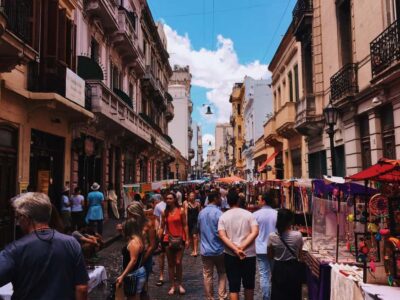
Historical Guided Tour with Street Food & Drinks
Read our review →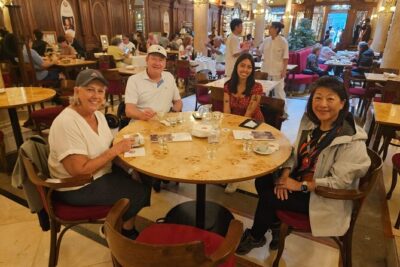

BA Flavors Food Tour in San Telmo and Boca With Local Guide
Read our review →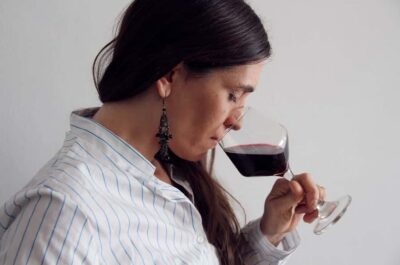
Premium Argentinian Wines and Malbec Tasting Experience
Read our review →Browse the lists this tour appears in