
Reviewed · BUENOS AIRES
Buenos Aires for curious people
Buenos Aires reveals its character best on foot, and this tour takes you well beyond the standard photo stops. You move from Bar Británico and Parque Lezama through San Telmo, a former detention site, Plaza Dorrego, the San Telmo Market, Puerto Madero, and Casa Rosada while connecting old buildings to Argentina’s complicated political past.
I especially like the small maximum of eight people, which gives you room to ask about politics, food, architecture, and daily life. I also like the guides’ range: Nicolás is a history museum employee, Ignacio is a history professor, and several guides bring local family knowledge and personal experience to the walk. The main drawback is that this is a serious walking tour with difficult subjects, not a quick parade of photo stops.
Key points to know before booking
- A compact history lesson on foot: The walk links Buenos Aires’ colonial beginnings with dictatorship, democracy, immigration, and current social issues.
- San Telmo beyond the usual market: You see Plaza Dorrego and Mercado San Telmo, but also churches, a Swedish church, old streets, and less familiar corners.
- A stop at a former detention center: The Memory Walk adds a sober look at Argentina’s 1976 to 1979 dictatorship.
- Small groups make questions easy: No more than eight people join, so the guide can adjust the discussion to your interests.
- A useful first or second day activity: The route gives you a strong framework for understanding Buenos Aires before exploring on your own.
- Good value at $33: For two to three hours with several major districts and a history-focused guide, the price is modest.
Why this walk is different from a standard city tour
Many Buenos Aires walks focus on grand avenues, famous politicians, and a few polished landmarks. This one takes a less tidy route through the city’s past. You get the expected landmarks, including Plaza de Mayo and Casa Rosada, but the walk also pauses at places that explain how Buenos Aires was built, who lived there, and how political power shaped ordinary lives.
The tone is academic without needing to feel like a lecture. Nicolás, Ignacio, Sophia, and the other guides are described as clear, engaging, and open to questions. Nicolás works at a history museum, while Ignacio teaches history. That background matters because Argentina’s past can be hard to explain in a simple timeline.
You may hear about colonial settlement, Italian immigration, military rule, economics, food, architecture, and present-day social issues in the same afternoon. The best part is the connection between those subjects. A market is not just a market, and a government building is not just a government building.
This is a good choice if you want to understand Buenos Aires rather than simply collect photographs. It also suits curious couples, solo visitors, families, and small groups who enjoy asking questions. One especially useful feature is the guides’ willingness to suggest ways to spend the rest of your time in the city.
Other Buenos Aires bookings people pair with this one:
- Buenos Aires Hop-On Hop-Off Bus, Free Walking Tours & Discounts
★ 4.5 · 2,218 reviews - Buenos Aires: Piazzolla Tango Show with Optional Dinner
★ 4.4 · 2,122 reviews - Buenos Aires: City Highlights Guided Tour with Transfer
★ 4.7 · 1,946 reviews
Starting at Bar Británico and Parque Lezama
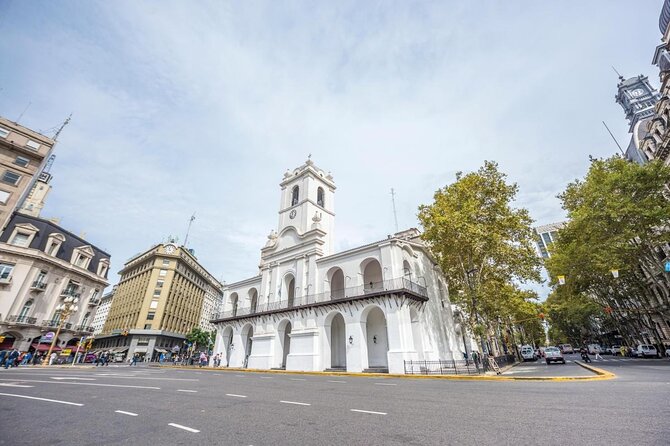
The walk begins at Bar Británico in the old part of Buenos Aires and then moves to Parque Lezama. The park is important because the first fort was established here in 1536. That gives the opening section a clear purpose: you start with the city’s earliest foundations rather than jumping straight to its most famous square.
Parque Lezama is scheduled for about 30 minutes. It is a sensible place to begin because a park gives the guide room to set the scene and explain how Buenos Aires developed. You can expect the early history to be presented alongside the physical setting, rather than as a string of dates detached from the city around you.
The brief stop at Bar Británico is more of a meeting point and old-town introduction than a major sightseeing visit. If you are hoping to sit down for a full drink or meal, that is not part of the stated plan. The tour is built around walking and talking.
One practical note: the full walk lasts two to three hours, and the group may move at different speeds. A past experience included an older couple who had trouble keeping pace, which affected the group. If you need frequent rest stops, this may not be the best fit. On the other hand, guides have included coffee and bathroom breaks on some walks, so a short pause can be arranged as part of the flow when needed.
San Telmo’s lesser-known corners
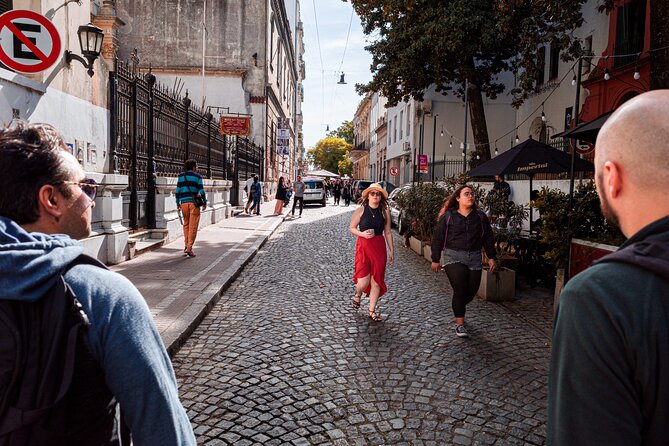
From Parque Lezama, the route continues through San Telmo, one of Buenos Aires’ oldest districts. The neighborhood is famous for antiques, tango associations, old facades, and the Sunday market, but this walk aims for a broader picture.
You stop at Club Sueco Restaurante, connected with a Swedish church built in 1944. The visit lasts about 10 minutes and shows how immigrant and international communities became part of the city’s story. It is a small stop, but it helps you see San Telmo as more than an old colonial quarter.
Next comes Parroquia de San Pedro González Telmo, a colonial Catholic church, with about 15 minutes set aside. The church adds architectural and religious context to the walk. It also provides a change of pace after the political and urban history introduced earlier.
The guide’s role is important here. The value is not only in looking at a church or a facade. It is in understanding what these places say about the people who settled in the area, the institutions they built, and the ways Buenos Aires changed over time.
The Memory Walk and Argentina’s difficult past
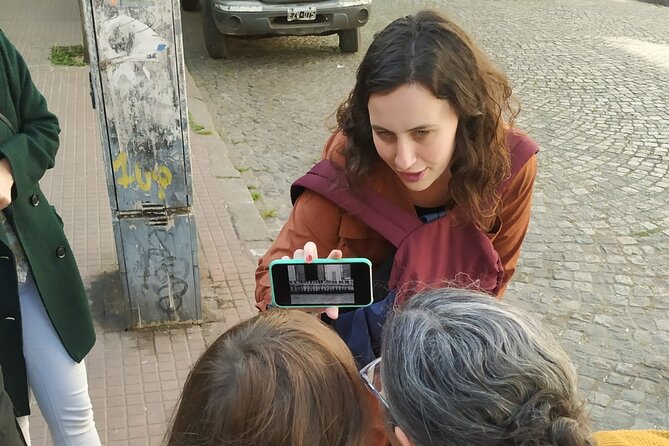
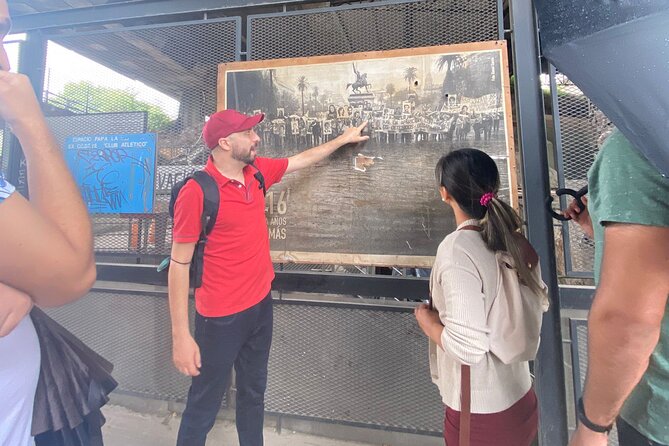
The Memory Walk is one of the most serious stops. It marks a former clandestine center for detention, torture, and extermination used from 1976 to 1979. The scheduled visit lasts about 20 minutes.
This section will not suit everyone, but it gives the tour moral weight. Argentina’s modern history cannot be understood through colonial buildings and elegant squares alone. The dictatorship left painful scars, and the Memory Walk gives the guide a place to discuss that period directly.
You should expect the subject matter to be distressing at times. One guide was praised for explaining both centuries-old events and more recent political history without turning the walk into a standard tourist presentation. That balance is useful, but you should still come prepared for difficult material.
I see this as one of the main reasons to choose the tour. You are not only learning when the city was founded or who held office. You are also being asked to understand the forces that shaped Argentina in living memory.
Same city, an entirely different evening:
- Buenos Aires: Hop-On Hop-Off City Bus Tour
★ 4.2 · 1,855 reviews - Buenos Aires Hop-On Hop-Off Bus and Exclusive Benefits
★ 4.4 · 1,714 reviews - Buenos Aires: La Boca Guided Walking Tour in English
★ 4.8 · 1,587 reviews - Buenos Aires: 9-Course Argentine Meat Tasting at Fogón Asado
★ 4.9 · 826 reviews
Plaza Dorrego and the San Telmo Market
Plaza Dorrego is San Telmo’s main square, and the walk allows about 15 minutes there. This is one of the neighborhood’s classic points, but the earlier stops make it more meaningful. By the time you reach the square, you have some context for the district’s age, institutions, and immigrant connections.
The San Telmo Market receives about 30 minutes, making it one of the longer stops. The market was built by Italian immigrants, and that detail gives the visit a clear human angle. Buenos Aires is often described through monuments and politics, but food, trade, and migration are just as important to understanding the city.
You may find this part of the tour more relaxed than the Memory Walk. It is also where food comes naturally into the conversation. One guide was singled out for discussing local food as well as less familiar political history. If you have questions about what to eat or where to continue after the walk, this is a useful time to ask.
Do not expect a dedicated food tasting based on the information available. The market is a stop for observation and explanation, not a promised meal. Bring your own interest in local life, and you will get more from it than if you treat the market as a quick shopping stop.
From Puente de la Mujer to Casa Rosada
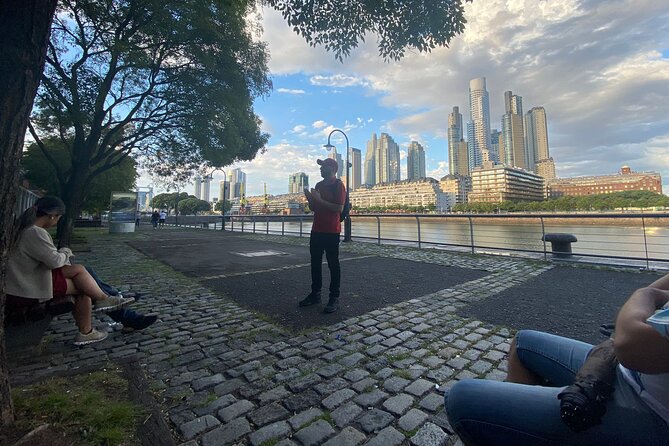
The route later reaches Puente de la Mujer, the Woman’s Bridge, designed by Spanish architect and structural engineer Santiago Calatrava. The stop lasts about 15 minutes.
This modern bridge creates a sharp contrast with San Telmo’s older streets and colonial church. That contrast is useful. Buenos Aires is not a museum frozen in its early history. The city continues to build, change, and argue about its future.
The final stop is Casa Rosada, the president’s office, with about 25 minutes planned. This is one of the city’s essential landmarks and a natural place to finish a political and historical walk. The tour ends at Balcarce 78, near Casa Rosada.
Admission to Casa Rosada is not included. The tour provides an exterior and historical visit rather than promising entry inside. If seeing the interior matters to you, check separately before booking or plan another visit.
Ending here also works well for independent sightseeing. You finish in a central area with one of Buenos Aires’ best-known civic buildings nearby. The walk does not leave you at an isolated attraction or require a special transfer at the end.
How the guides shape the experience
The guide can make or break a history walk, and the people leading this one bring different strengths. Nicolás has been described as a Buenos Aires local with family roots in the city going back at least three generations. His background allows him to combine historical facts with personal knowledge of local life.
Ignacio is a history professor who focuses on factual context and clear explanations. Another guide, Sophia, was praised for patience and for handling many questions in a small group. Santiago has also led the route, with an easygoing style that kept the discussion friendly.
English ability has been praised repeatedly. One guide was also patient when a visitor practiced Spanish. In another case, an additional guide was brought along so one person could follow in English while another practiced Spanish. That kind of flexibility is not guaranteed for every departure, but it shows the provider’s effort to make the discussion work for the group.
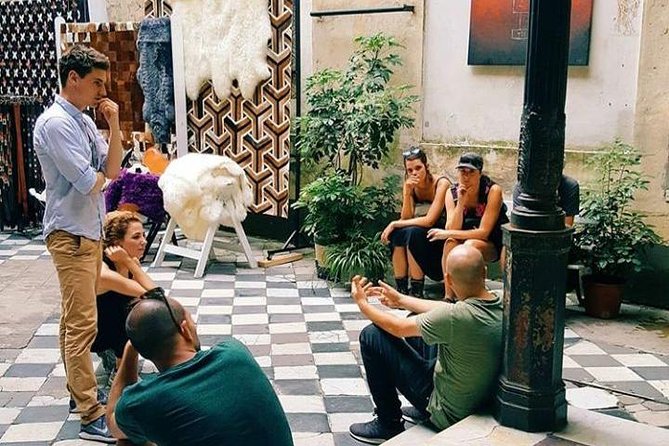
The style is conversational rather than theatrical. You can ask about politics, economics, architecture, food, or current challenges. The guides also use maps and old photographs on some walks, which helps you picture how the city changed.
The only recurring caution is structure. One person found the information fascinating but wished the route had a firmer shape. That is fair. The tour’s strength is its openness, but a discussion that follows questions can feel less tightly organized than a scripted sightseeing walk.
Price, pace, and practical value
At $33 per person, this is good value if you want context rather than transport or admission tickets. The price covers roughly two to three hours of guiding, a route through several parts of Buenos Aires, and a group capped at eight people.
The small group is important. In a large tour, questions about Argentina’s politics or recent history can get lost. Here, the guide can make space for individual interests and adjust the explanation. That is especially helpful if you want more than a basic introduction.
The tour is offered near public transportation, and most people can take part. Service animals are allowed. Wear comfortable shoes and plan for steady walking, since this is not a bus sightseeing circuit.
The weather also matters. The activity requires good conditions, so poor weather may lead to a new date or a full refund. You can cancel for a full refund up to 24 hours before the start time. Changes or cancellations inside that window are not accepted for a refund.
Because the tour is often booked about 35 days ahead, popular dates may fill early. That does not mean you need to plan every detail months in advance, but it is sensible to reserve it once you know your Buenos Aires dates.
Who should book this Buenos Aires walk?
I would choose this tour if you enjoy history, politics, architecture, migration, and candid discussion. It is especially useful early in a stay because it gives you a framework for later visits to San Telmo, Plaza de Mayo, and other parts of the city.
It also suits people who have already seen the postcard landmarks and want more explanation. The Memory Walk, Swedish church, colonial parish, Italian market, and modern bridge keep the route from feeling repetitive.
I would not choose it if you want a light, purely scenic walk or a short route with little discussion. The dictatorship section can be upsetting, and the broad subject range may feel intense if you only want tango, food, or architecture.
Pace is another factor. Most people can participate, but you should be comfortable walking for several hours. If you know you need regular seated breaks, ask about the expected pace before booking.
Should you book Buenos Aires for Curious People?
Yes, if your idea of a good city tour includes questions, context, and a few uncomfortable truths. At $33, the experience offers a lot for the money, especially with no more than eight people and guides such as Nicolás or Ignacio who can connect street scenes to national history.
Book it early in your stay if you want help making sense of Buenos Aires. Choose another activity if you prefer a quick landmark checklist or do not want a tour that includes dictatorship-era history. For curious visitors who want to understand the city beyond its handsome squares, this is a strong choice.
FAQ
How long does Buenos Aires for Curious People last?
The experience lasts approximately two to three hours.
What is the price?
The price is $33 per person.
Where does the tour begin?
It begins at Bar Británico, Brasil 399, Buenos Aires.
Where does the tour finish?
The tour ends at Casa Rosada, Balcarce 78, Buenos Aires.
How many people can join?
The maximum group size is eight people.
Is admission to Casa Rosada included?
No. Admission to Casa Rosada is not included.
Does the tour visit San Telmo?
Yes. The route includes San Telmo, Plaza Dorrego, Parroquia de San Pedro González Telmo, and Mercado San Telmo.
Does the tour include political history?
Yes. The walk covers Argentina’s social and political history, including a former clandestine detention, torture, and extermination center used from 1976 to 1979.
Is the tour offered near public transportation?
Yes. The experience is listed as being near public transportation.
Can I cancel for a full refund?
Yes. You can cancel at least 24 hours before the start time for a full refund. If poor weather causes the tour to be canceled, you will be offered another date or a full refund.
Just added around Buenos Aires
- Tango Show at El Querandi with optional Dinner★ 4.2 · 3 reviews
- Wine Tasting in Buenos Aires★ 4.2 · 4 reviews
- Walking Tour: Buenos Aires bookstores★ 4.3 · 12 reviews
- Private Underground Tango Immersion★ 5.0 · 31 reviews
- Velez Sarsfield Football Match★ 5.0 · 3 reviews
- Unique Tigre and Delta Private Day Cruise Navegation★ 5.0 · 3 reviews
- Transfers from or to the airport In Argentina Your Best Choice★ 5.0 · 28 reviews
- Tour Buenos Aires in one day on Electric Scooters★ 5.0 · 33 reviews