Reviewed · TOURS
From Buenos Aires: Magical and Mysterious Campanopolis Tour
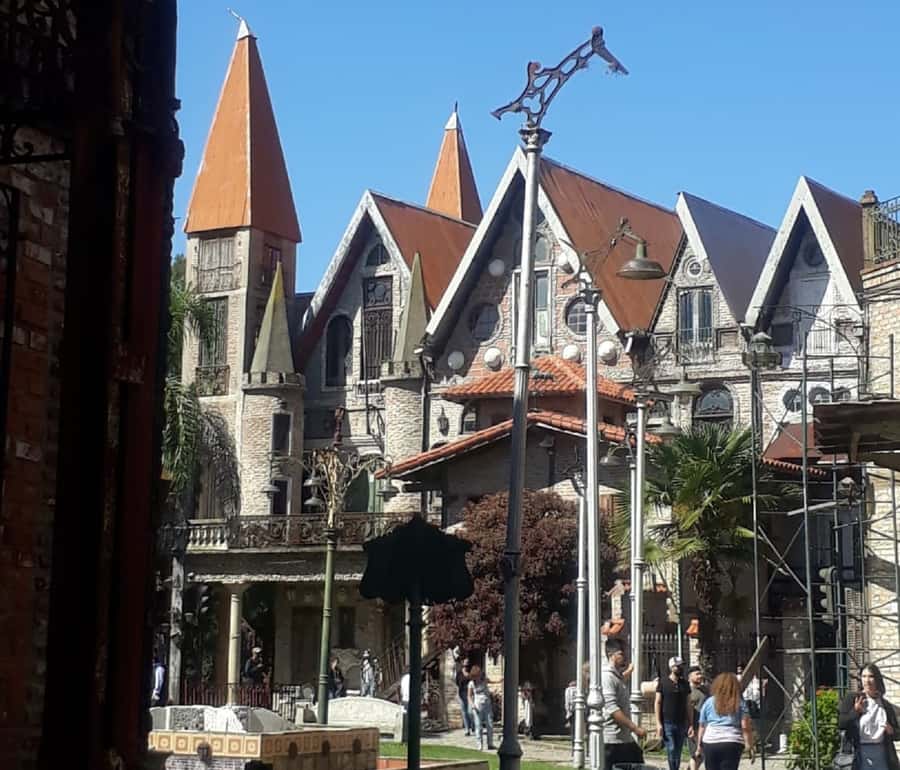
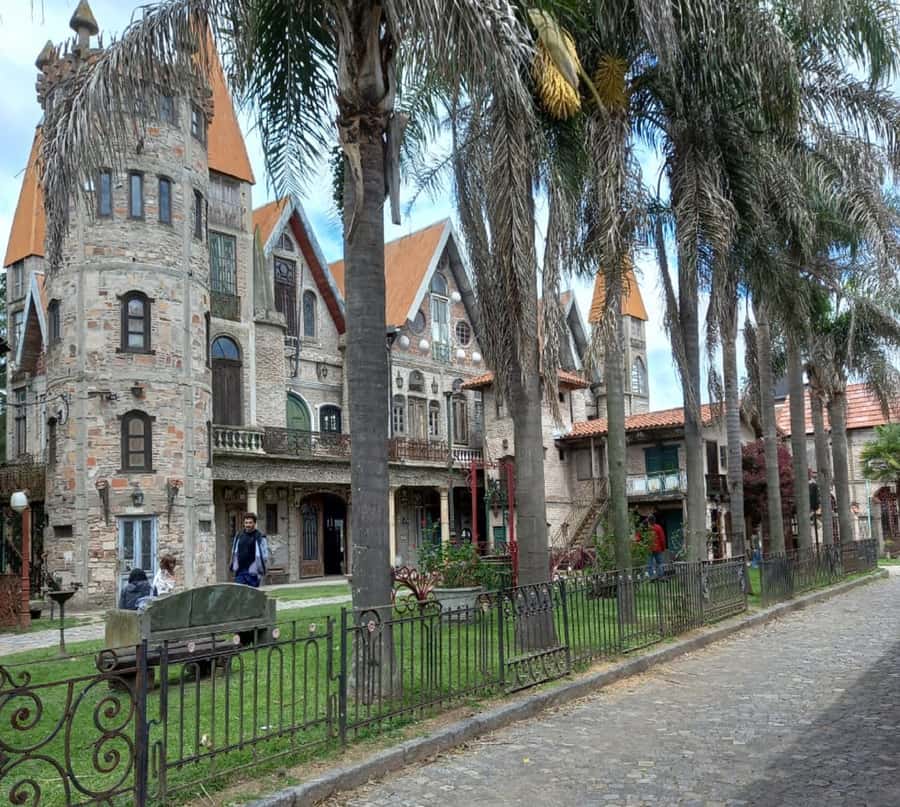
Campanópolis is one of those places that sounds invented until you see the pictures: a medieval-style village built from recycled architectural fragments, hidden among trees near the Ezeiza forests. Don Antonio Campana created its castles, alleys, towers, and stone houses without formal plans or architects, turning old demolition and auction finds into a very personal fantasy.
I like two things here. First, the odd details reward slow looking: an old gate from the Palermo Hippodrome, iron columns from the Galerías Pacífico, and clocks and lights connected with Plaza de Mayo. Second, the outing gives you a full half-day beyond central Buenos Aires, with transport, admission, and time to explore included. The main caution is language: the park’s guided tour is conducted in Spanish or Portuguese, while English-speaking visitors receive a general overview and key explanations.
Key things to know before visiting
- A handmade medieval village near Buenos Aires: Campanópolis contains about 40 buildings connected by alleys, passages, and secluded corners.
- Built from salvaged pieces: Look for old iron columns, gates, clocks, lights, bricks, stone, and other antique materials worked into the buildings.
- Three unusual museums: Your visit includes the Museum of Wood, the Iron Museum, and the Caireles Museum.
- A long coach ride: Plan on roughly 75 minutes each way between the Colón Theater and Campanópolis.
- Language matters: The local guided visit is offered in Spanish and Portuguese. English support is more limited.
- Bring your own snack and water: Food choices at the site are limited, and the walking portion can be tiring.
Why Campanópolis feels unlike a normal day trip
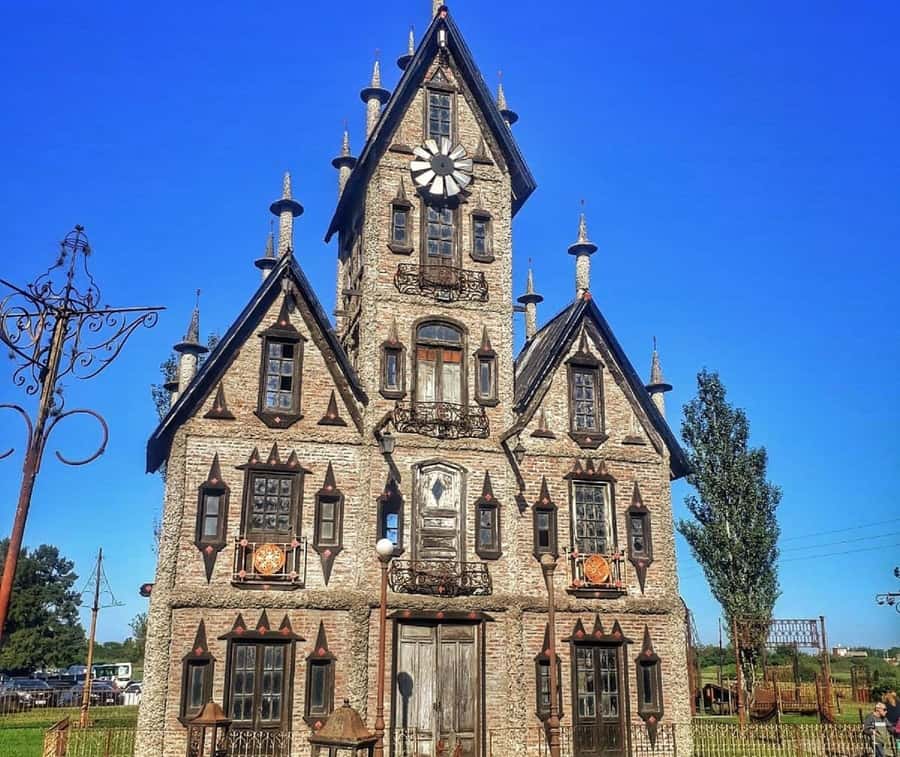
Most excursions from Buenos Aires take you to a historic town, a grand estate, or a familiar cultural attraction. Campanópolis is different. It is a large-scale personal project, part architectural puzzle and part fairy-tale set, made by Antonio Campana from materials that had already lived another life.
The result is not a perfectly preserved medieval village. It was not built in the Middle Ages, and it does not pretend to be one in a strict historical sense. It is a modern fantasy made to look old, with a strong emphasis on craftsmanship, reuse, and atmosphere. That distinction matters. You come here for imagination and visual detail, not for authentic European architecture.
The setting adds to the effect. The village sits in a natural area near the Ezeiza forests, away from the central city. Alleys lead between buildings, passages create small surprises, and the irregular collection of towers, stone walls, bricks, and ironwork gives the place a storybook mood.
I find the most rewarding part is looking closely at the materials. A doorway is not just a doorway here. It may have come from a well-known Buenos Aires building or public site. The fun is noticing how old parts were given a new role.
Other Buenos Aires bookings people pair with this one:
- Buenos Aires Hop-On Hop-Off Bus, Free Walking Tours & Discounts
★ 4.5 · 2,218 reviews - Buenos Aires: Piazzolla Tango Show with Optional Dinner
★ 4.4 · 2,122 reviews - Buenos Aires: City Highlights Guided Tour with Transfer
★ 4.7 · 1,946 reviews
Leaving from Cerrito 628 at the Colón Theater
The meeting point is on the sidewalk at Cerrito 628, beside the Teatro Colón. This is a central and recognizable location, but you should arrive ready for an early start on some days.
On Wednesdays, Thursdays, and Fridays, the meeting time is 11:30 AM. On Saturdays and Argentine public holidays, departure is at 8:00 AM. The park has a morning-only schedule on March 24 and April 7, with the departure set for 8:00 AM, so check the date carefully when booking.
The coach ride takes about 75 minutes in each direction. That makes transportation a significant part of the six-hour outing. It is not a quick hop outside the city, but the included pickup and return from the central meeting point spare you the trouble of arranging your own transport to a location outside Buenos Aires.
The ride also shapes the day. An early departure gets you back to Buenos Aires in the early afternoon, leaving time for other plans. On the bus, the guide may explain some background about Campanópolis, but do not expect a long running commentary throughout the journey. One account specifically noted that the escort gave only a short introduction and was quiet for much of the drive.
That can be a drawback if you want a guide talking constantly. It can also be welcome after a busy few days in Buenos Aires. You may want to use the ride to rest, especially on the early departure.
Entering the 40-building citadel
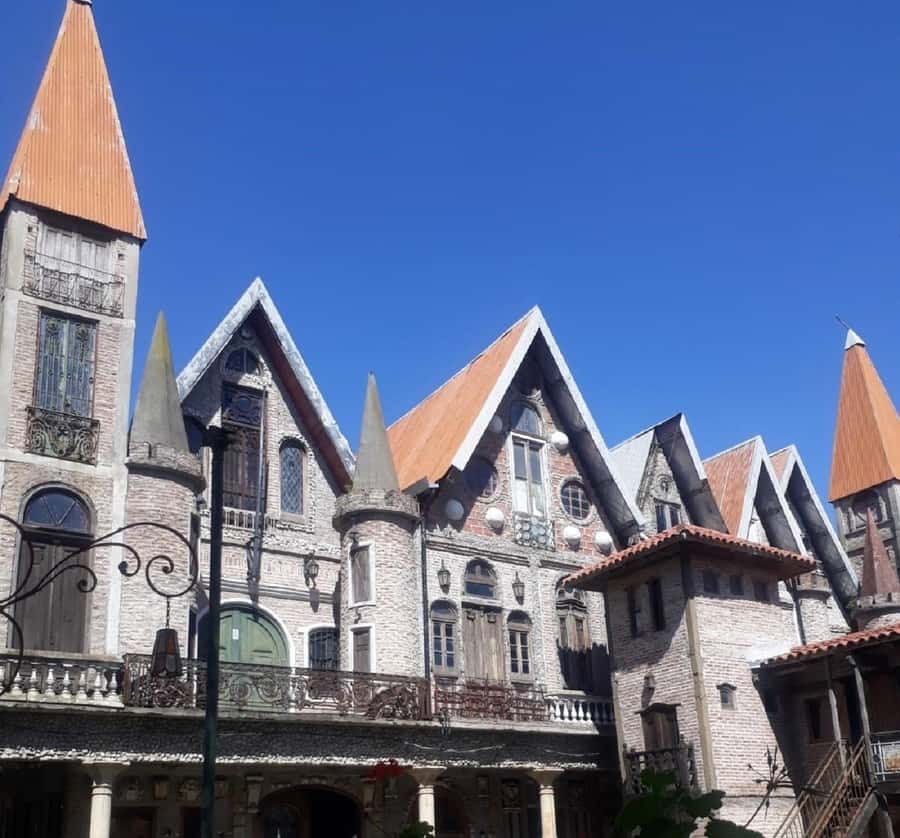
The first view of Campanópolis gives you the basic idea: a group of castle-like structures joined by narrow routes, unusual corners, and passages. The buildings are not arranged like a standard museum campus. The pleasure comes from moving through a place that keeps changing shape as you walk.
You get time for sightseeing and photographs, along with a guided visit inside the park. The full time at Campanópolis is about three hours. That is enough to see the main collections and walk through the village without turning the outing into a rushed photo stop.
The setting is especially useful for anyone who enjoys unusual architecture or photography. The buildings offer irregular lines, aged-looking stone, brickwork, iron details, and storybook forms. You will find plenty to frame, but the site is more than a backdrop. The guide explains the story of Campana’s project and points out important features that are easy to miss on your own.
The walking deserves honest attention. You move through several buildings and outdoor areas, and the route includes alleys and passages. One visitor found the walk tiring and felt the outing was not well suited to small children, especially because children can make it difficult to hear the guide. The available information does not describe the site in detail for visitors with mobility needs, so ask the operator before booking if walking conditions are a concern.
The recycled details that make the visit worthwhile
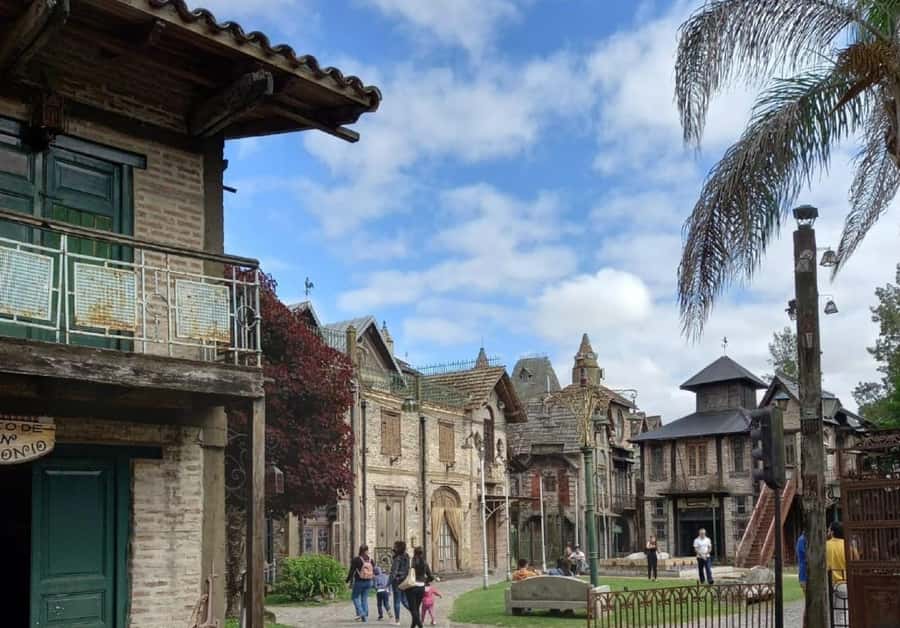
Campanópolis would be less interesting if it were simply a collection of decorative castles. Its appeal lies in the materials and the story behind them.
Old pieces from Buenos Aires were incorporated into the buildings. Among the notable examples are iron columns from the Galerías Pacífico, gates from the Palermo Hippodrome, and lights and clocks associated with Plaza de Mayo. These objects connect the strange village to the city you have already been exploring.
That connection gives the visit more meaning. You are not just looking at invented ruins. You are seeing pieces of Argentine urban life moved into a new setting. A familiar public object becomes part of a private architectural fantasy.
Campana’s work also reflects a strong instinct for reuse. Materials from auctions and demolitions were saved instead of discarded, then combined in ways that do not follow a standard architectural plan. You can admire the practical ingenuity even if the style is not to your taste.
The tour highlights Campana himself, including his determination to build the village without plans or architects. You will hear about the personal drive behind the project and his effort to preserve objects and memories through construction. That human story keeps the visit from feeling like a simple theme park.
Same city, an entirely different evening:
- Buenos Aires: Hop-On Hop-Off City Bus Tour
★ 4.2 · 1,855 reviews - Buenos Aires Hop-On Hop-Off Bus and Exclusive Benefits
★ 4.4 · 1,714 reviews - Buenos Aires: La Boca Guided Walking Tour in English
★ 4.8 · 1,587 reviews - Buenos Aires: 9-Course Argentine Meat Tasting at Fogón Asado
★ 4.9 · 826 reviews
Three small museums with very different textures
The visit includes the Museum of Wood, Iron Museum, and Caireles Museum. Their names tell you what to expect: collections arranged around materials and decorative architectural elements.
The Museum of Wood offers another way to look at the construction of Campanópolis. Wood is easy to overlook when you are focused on towers and gates, but it helps explain how the village’s interiors and details were assembled.
The Iron Museum fits naturally with the site’s strongest visual character. Iron columns, gates, fittings, and other metal pieces help give the buildings their old-world appearance. The displays also help you pay attention to the work involved in saving and adapting heavy architectural parts.
The Caireles Museum adds a more decorative note. Caireles are ornamental balusters, and the collection contributes to the fairy-tale feeling that runs through the village. These museums are not huge institutions with long formal exhibits. Think of them as focused collections that support the larger story of Campana’s construction.
Together, the museums make the tour more than an outdoor walk. They give you context for the materials you see in the courtyards and buildings. If you rush past them to take photographs, you will miss part of what makes Campanópolis distinctive.
The 12 stone houses and the Snow White mood
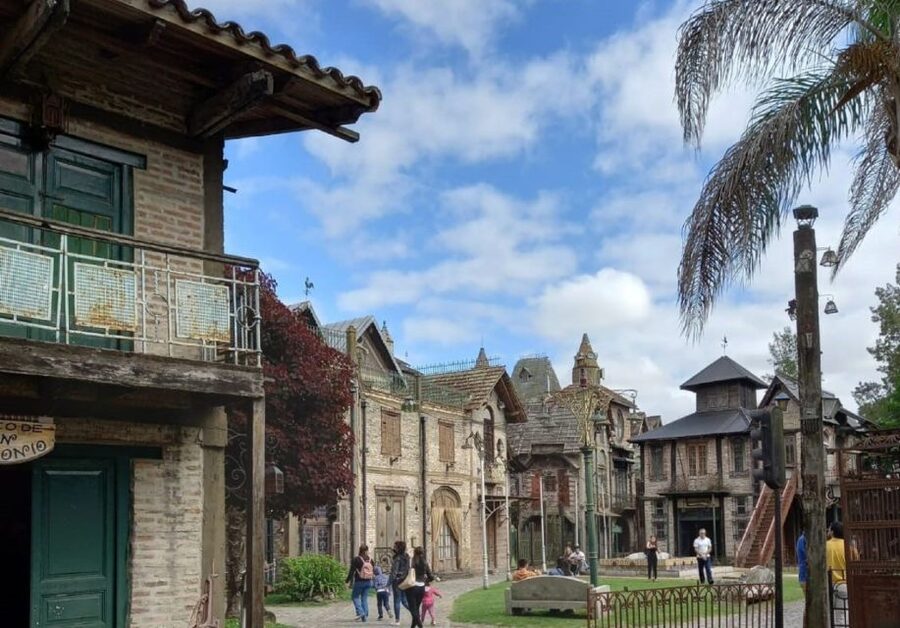
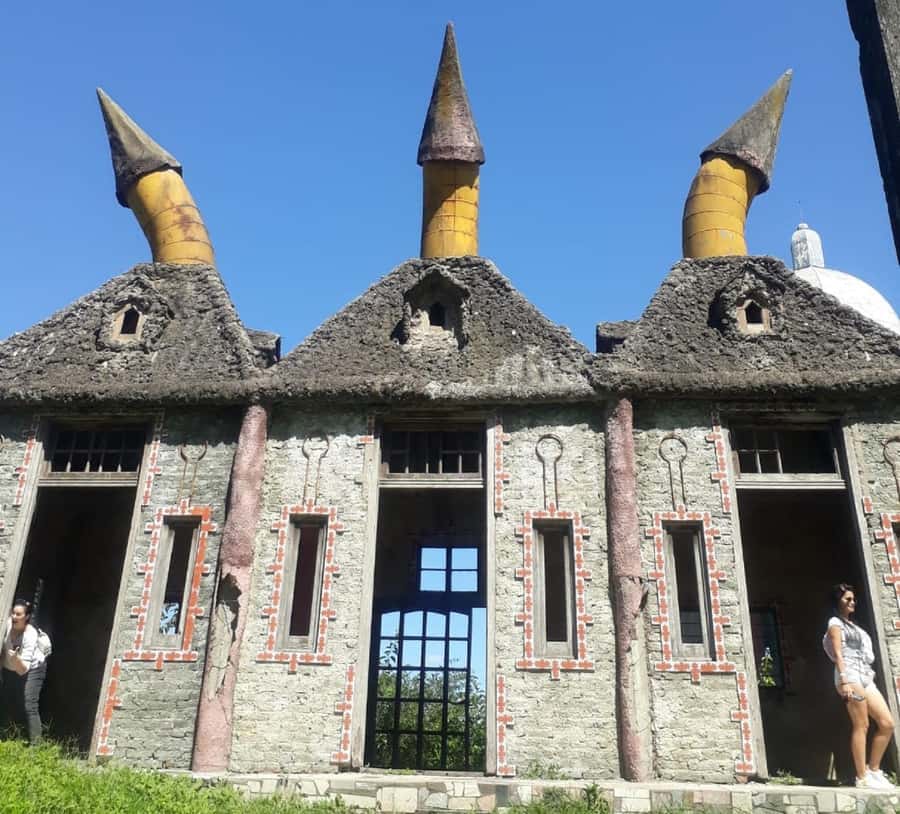
A particularly memorable section includes 12 houses made with stone, slag, and brick. Their compact forms and uneven materials create the Snow White quality often associated with Campanópolis.
The comparison is useful, but do not expect a polished children’s attraction. The village is strange, handmade, and slightly mysterious rather than neatly themed. Its charm comes from the mix of rough surfaces, old objects, and winding routes.
This area is also where the walking experience becomes clear. You are not simply standing in front of one monument while a guide speaks. You are moving from house to house, entering different visual spaces, and pausing for explanations and photographs.
For photographers, the stone houses may be among the best parts of the visit. For visitors who prefer a traditional museum with clear signs and a fixed route, the layout may feel less orderly. The guide helps tie the parts together, particularly if you understand Spanish or Portuguese.
The guide and the language question
The booking information lists Spanish, Portuguese, and English support, but the on-site guided visit is offered exclusively in Spanish and Portuguese. English-speaking visitors receive a general overview of Campanópolis and explanations of the main points.
This is the single most important practical issue to consider. If you speak Spanish or Portuguese, you can follow the full presentation and ask questions more easily. If you speak only English, you can still see the buildings, museums, houses, and collections, but the spoken interpretation will be more limited.
The English support appears to work best as an introduction and orientation rather than a full translation of every detail. Do not book this expecting an English-language lecture throughout the three-hour visit.
The operator, Grupo Summa, handles the transport and tour arrangements. Communication before the outing may take place by email or WhatsApp, and the transport has been described as comfortable. You should still confirm the language arrangement if it is central to your decision.
Food, water, and the long return ride
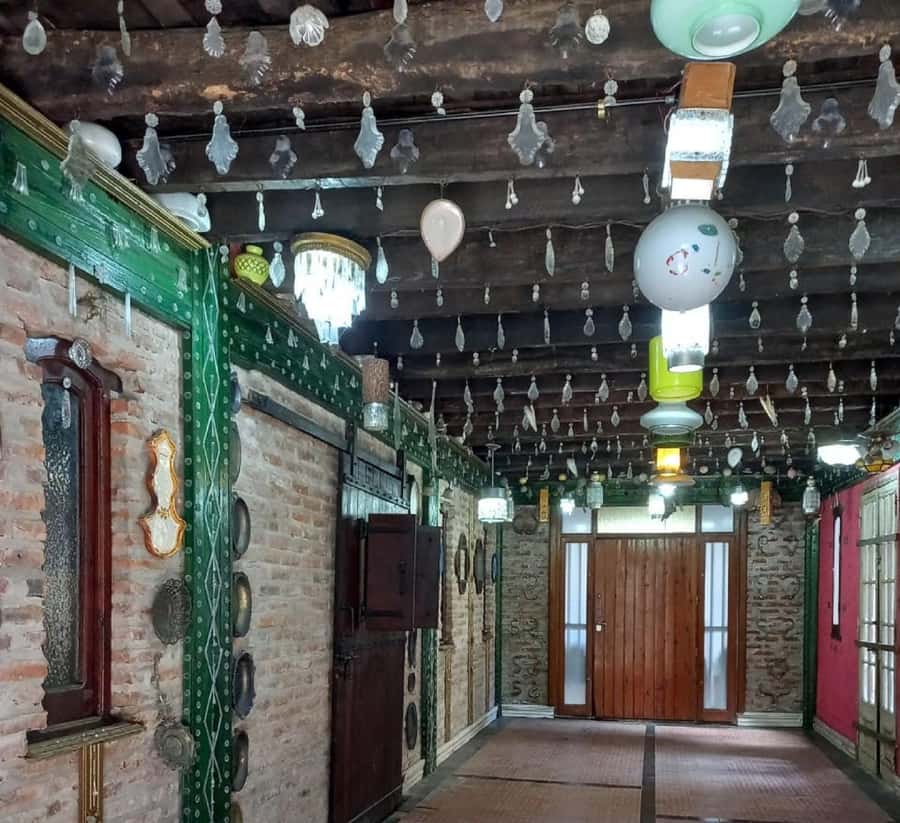
Food and drinks are not included. There is also limited food available at Campanópolis, so bring water and simple snacks such as protein bars or sandwiches. This is especially important on the early departures, when you may be away from central Buenos Aires through lunchtime.
The six-hour schedule includes about 150 minutes on the road, leaving roughly three hours at the village. That makes a small snack useful even if you plan to eat before leaving.
Wear practical shoes and expect to walk. The information provided does not specify a dress code or special equipment, but the route through alleys, buildings, and stone houses is more comfortable when you are prepared for an active visit rather than a seated museum tour.
After the guided portion, you have free time for more sightseeing and photographs. Use it to revisit the details you missed while listening. This is the sort of place where a second look at a doorway, clock, or iron fitting can be more rewarding than trying to see everything quickly.
Is the $52 price good value?
At $52 per person, the price includes admission to Campanópolis, round-trip transport from the central meeting point, and a guide. For a site outside Buenos Aires that takes about 75 minutes to reach each way, the included coach service is a meaningful part of the value.
Going independently could give you more control over your schedule, but it would require arranging your own transport and entrance. This tour makes the outing simple: meet near the Colón Theater, ride to the park, spend about three hours there, and return to the same central point.
The value is strongest if you want a planned half-day and do not speak Spanish or Portuguese well enough to arrange the trip yourself. The value is weaker if you expect a fully English-guided experience or prefer to explore at your own pace without a group timetable.
A rating around 4.6 from 150 bookings suggests the experience usually works well, especially for people attracted to unusual places and good photo settings. The praise centers on smooth organization, a comfortable coach, polite staff, a capable driver, and the originality of Campanópolis itself. The language limitation and limited food options are the main points that keep this from being an easy recommendation for everyone.
Free cancellation is available up to 24 hours before departure, and you can reserve while paying later. Those terms are useful if your Buenos Aires schedule is still shifting, but they do not change the central decision: you need to be comfortable with the language setup and the long ride.
Who should book Campanópolis?
I would choose this tour if you enjoy eccentric architecture, reused materials, photography, and personal creative projects. It is also a good fit if you have already seen central Buenos Aires and want an outing that feels entirely different from the city’s grand avenues and formal museums.
Portuguese speakers should find the language arrangement especially favorable. Spanish speakers can follow the local guided visit directly. English-only visitors can still enjoy the site, but should treat the English component as a general orientation rather than a complete translation.
I would think twice if you are traveling with very young children, dislike walking, need detailed English interpretation, or want a short excursion with no long transfer. The three-hour visit can feel tiring, and the route is more rewarding when you can listen, look carefully, and move at an unhurried pace.
Should you book this Buenos Aires day trip?
Book it if Campanópolis’s odd story appeals to you. The old gates, columns, clocks, lights, museums, and handmade stone houses offer something you will not find in a standard Buenos Aires sightseeing program.
Before paying, check your departure day, note the different start times, bring water and food, and confirm that the Spanish or Portuguese guided visit suits you. If those details work, the $52 price is fair for the transport, entrance, and unusual three-hour visit. If you need a full English tour, choose another activity.
FAQ
Where does the Campanópolis tour depart?
The meeting point is on the sidewalk at Cerrito 628, beside the Teatro Colón in Buenos Aires.
How long does the tour last?
The full activity lasts about six hours, including approximately 75 minutes by coach each way and about three hours at Campanópolis.
What time does the tour leave?
On Wednesdays, Thursdays, and Fridays, the meeting time is 11:30 AM. On Saturdays and Argentine public holidays, the meeting time is 8:00 AM.
What languages are available?
The activity lists Spanish, Portuguese, and English support. The guided tour inside Campanópolis is conducted in Spanish and Portuguese. English-speaking visitors receive a general overview and key points about the site.
What is included in the price?
The $52 price includes Campanópolis entrance, pickup and return from the Cerrito 628 meeting point, and a guide.
Is hotel pickup included?
No. Hotel pickup and drop-off are not included. You must reach the meeting point at Cerrito 628.
Are food and drinks included?
No. Food and drinks are not included, and food options at the park are limited. Bringing water and light snacks is recommended.
Can I cancel the booking?
You can cancel up to 24 hours in advance for a full refund. You can also reserve now and pay later.
Just added around Buenos Aires
- Tango Show at El Querandi with optional Dinner★ 4.2 · 3 reviews
- Wine Tasting in Buenos Aires★ 4.2 · 4 reviews
- Walking Tour: Buenos Aires bookstores★ 4.3 · 12 reviews
- Private Underground Tango Immersion★ 5.0 · 31 reviews
- Velez Sarsfield Football Match★ 5.0 · 3 reviews
- Unique Tigre and Delta Private Day Cruise Navegation★ 5.0 · 3 reviews
- Transfers from or to the airport In Argentina Your Best Choice★ 5.0 · 28 reviews
- Tour Buenos Aires in one day on Electric Scooters★ 5.0 · 33 reviews
Tours, compared.

Buenos Aires Hop-On Hop-Off Bus, Free Walking Tours & Discounts
Read our review →