
Reviewed · RECOLETA TOURS
Recoleta & Cemetery for curious people
Recoleta’s grandest lesson is not found in a single tomb. It is the story of how Buenos Aires tried to look like Paris, how landowners built fortunes, and how Argentina’s elite shaped the country’s past and present. This 150-minute walking tour connects those ideas through plazas, mansions, embassies, and Recoleta Cemetery.
I like the interactive format, which leaves room for questions and debate instead of rushing through dates. I also like the route’s variety, from the Kavanagh Building and Torre Monumental to the cemetery’s famous tombs. The main consideration is that cemetery admission costs extra, so the $34 price covers the guided walk, not every part of the outing.
Key points to know before booking
- A history walk with discussion: You are encouraged to ask questions and explore the subjects that interest you most.
- A carefully connected route: The walk links Plaza San Martín, elite residences, embassies, the Jockey Club, and Recoleta Cemetery.
- A look at Argentina’s Gilded Age: Expect plenty of attention to enormous fortunes, landowners, social power, and the ambition behind Buenos Aires architecture.
- The cemetery visit is optional: You can buy entry at the gate or online in advance, but admission is not included in the tour price.
- Strong guide feedback: Nicolas is praised for his humor, historical detail, and little-known stories, while Ignacio is described as an exceptional guide.
- Small or private groups: The experience can be booked as a private tour or in a small group, with Spanish, English, or French available.
Why this Buenos Aires walk is different
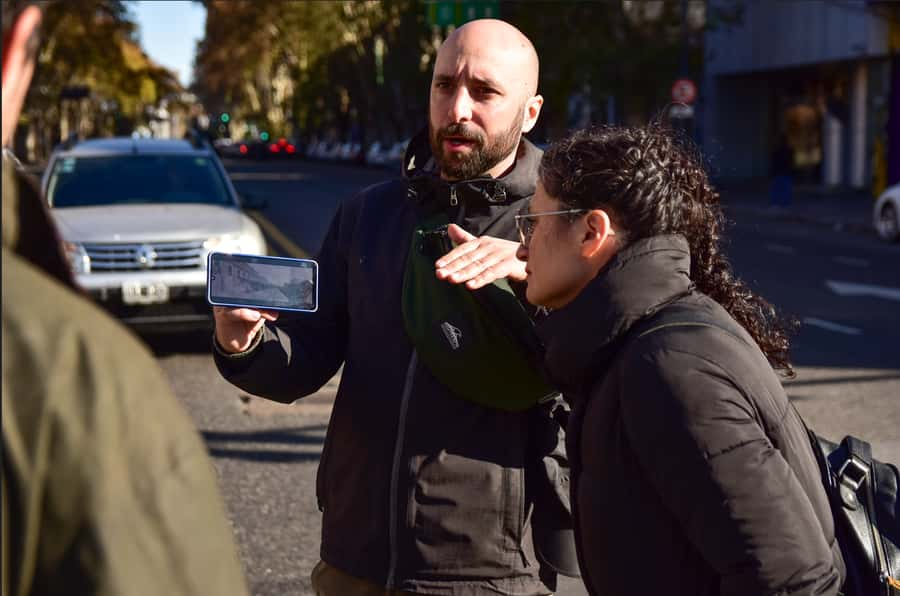
Many city walks point out impressive buildings and move on. This one asks you to consider why those buildings exist, who paid for them, and what their survival tells you about Argentina.
That approach matters in Recoleta. The neighborhood is often presented as a polished district of mansions, boutiques, hotels, and a famous cemetery. Here, you get a chance to read it as a record of social power. The architecture shows ambition. The cemetery shows memory. The conversation connects both to the country’s uneven rise and fall.
I especially like that the walk begins before the cemetery. By the time you reach the tombs, you have already seen the public face of wealth in Buenos Aires. You can then look at the cemetery with sharper questions: Who was celebrated? Who had the money to build a grand memorial? Who appears in the story, and who does not?
The guide is central to the experience. The activity uses a university degree guide, and the strongest feedback names Nicolas and Ignacio. Nicolas is praised for his historical knowledge, humor, and side stories, while Ignacio is singled out for making the visit a particularly effective way to understand Buenos Aires. You should expect a guide-led conversation rather than a fixed speech.
More Recoleta tours:
- Buenos Aires Bike Tour: North Districts, Recoleta and Palermo
★ 4.5 · 91 reviews - Recoleta Cemetery – Small Group Tour of History & Secrets
★ 5.0 · 53 reviews - Buenos Aires: Recoleta and Retiro Tip Based Walking Tour
★ 4.7 · 50 reviews
Starting at Rapa Nui and Plaza San Martín
The meeting point is the Rapa Nui store. From there, the route reaches Plaza General San Martín, where the formal part of the walk begins.
The plaza receives two short guided stops of about 10 minutes each. That may sound repetitive, but it gives the guide room to establish the setting and introduce the political and social forces behind the district. You will begin looking at Buenos Aires not just as a beautiful capital, but as a city shaped by competing ideas of status, national ambition, and public memory.
The walk’s central theme is the Parisian illusion. Buenos Aires gained a reputation for European style and grand avenues, and the tour examines the wealth behind that image. You will hear about the elite who wanted the capital to signal sophistication and power, along with the costs and contradictions of that project.
These opening stops also help set the pace. The route has many points of interest, but the short talks keep the walk moving. If you want to ask about Argentine politics, architecture, class, or the city’s future, this is a good time to raise it.
Kavanagh Building and Torre Monumental
The Edificio Kavanagh is the next major stop, with about 10 minutes of guided attention. Its presence on the route gives the walk a useful contrast. Recoleta and the surrounding districts are known for old money and grand residences, but the Kavanagh represents a different kind of urban statement: a major city building designed to command attention through height and scale.
The guide uses places like this to explore the changing face of Buenos Aires. The tour is not limited to colonial origins or cemetery legends. It considers how the capital developed, how its elite expressed power, and how later buildings changed the city’s image.
At Torre Monumental, you get another 10-minute stop. The tower adds an international and ceremonial note to the route. Together, these early buildings help you see Buenos Aires as a city that has repeatedly borrowed forms and ideas from Europe while creating its own political and social identity.
I would not choose this activity if you want a purely architectural tour with a long interior visit at every building. The stops are guided from the walking route, and the real value comes from the explanations and discussion. You are there to understand what the buildings represent, not simply to photograph their facades.
Mansión Estrugamou and the city’s private wealth
The walk continues to Mansión Estrugamou, also known as Casa Basavilbaso. This 10-minute stop brings the focus back to private wealth and the homes built by Buenos Aires’ upper class.
The tour’s Gilded Age theme becomes especially clear here. Huge residences were not only places to live. They were public statements about family standing, money, taste, and connections. Their scale tells you something about the fortunes available to a small part of Argentine society.
This is where the guide’s wider historical approach pays off. You are not simply told that a mansion is grand. You are asked to think about the people who could build it, the economic system that supported them, and the relationship between private luxury and national ambition.
The activity describes this period through the rise of vast landowners and Argentina’s hopes of becoming a world power. That makes the walk more useful than a simple parade of old buildings. You can compare the polished architecture with the country’s later struggles and consider why Argentina’s promise did not follow a straight line.
Same city, an entirely different evening:
- Buenos Aires Hop-On Hop-Off Bus, Free Walking Tours & Discounts
★ 4.5 · 2,218 reviews - Buenos Aires: Piazzolla Tango Show with Optional Dinner
★ 4.4 · 2,122 reviews - Buenos Aires: City Highlights Guided Tour with Transfer
★ 4.7 · 1,946 reviews - Buenos Aires: Hop-On Hop-Off City Bus Tour
★ 4.2 · 1,855 reviews
Palacio San Martín and the role of diplomacy
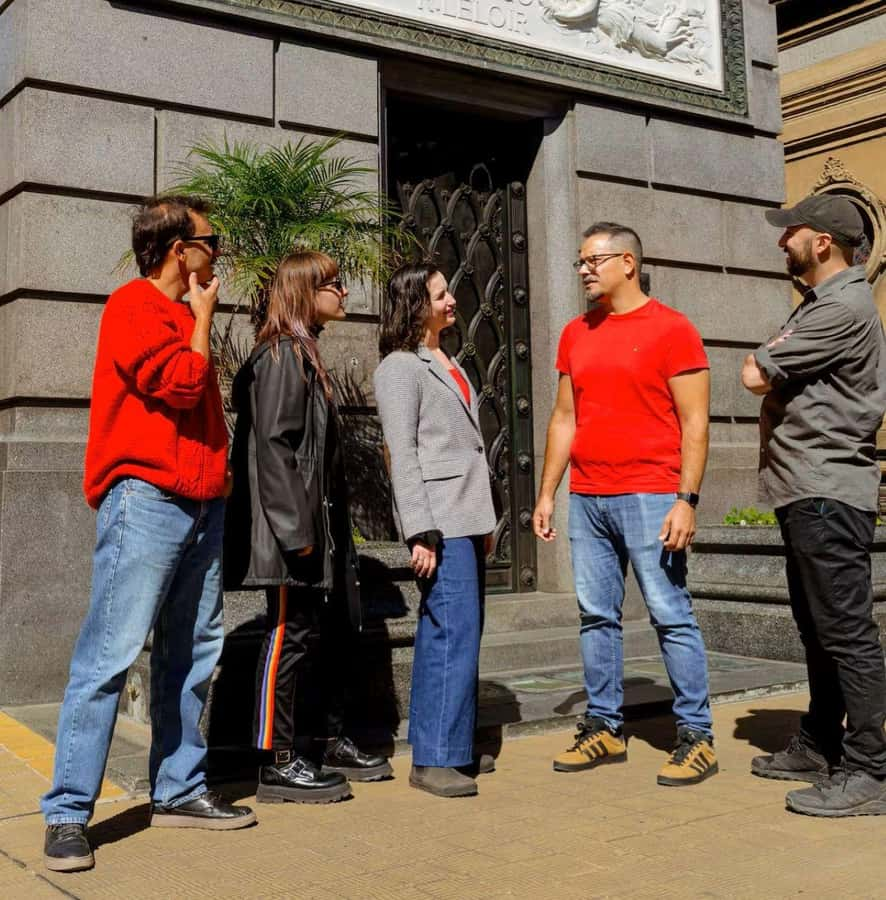
Palacio San Martín receives another 10-minute guided stop. Its place on the route broadens the story beyond wealthy families and residential architecture.
Here, the discussion can turn toward Argentina’s place in the world and the role of institutions in presenting the country abroad. The palace helps connect the private ambition of the mansions with the public ambition of the capital itself.
I like this part of the route because it gives the neighborhood a political frame. Buenos Aires was not trying to look European by accident. Its architecture, diplomatic buildings, clubs, and public spaces all helped create an image of power and refinement.
The guide may also use this section to connect the past with the present. One stated aim of the experience is to discuss the past, present, and future of Buenos Aires. That makes it a good fit if you want more than a backward-looking tour.
A short break before the grandest buildings
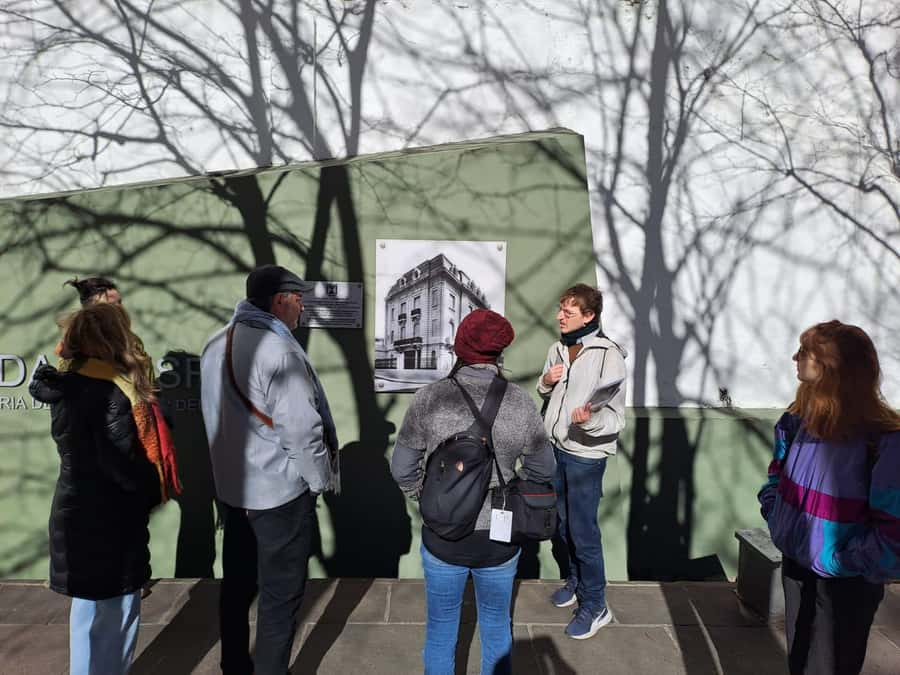
There is a five-minute break at a Carrefour Express. It is brief, but practical. You can pause, buy something small, and reset before the second half of the walk.
Do not treat this as a meal stop. The time is short, and the outing continues through several major sites. If you need water or a snack, it is sensible to plan around this break rather than count on a long rest.
The break also marks a useful shift. The first part introduces the city’s public image and elite institutions. Afterward, the route moves toward embassies, clubs, a luxury hotel, and finally the cemetery.
The French Embassy and the city’s European image
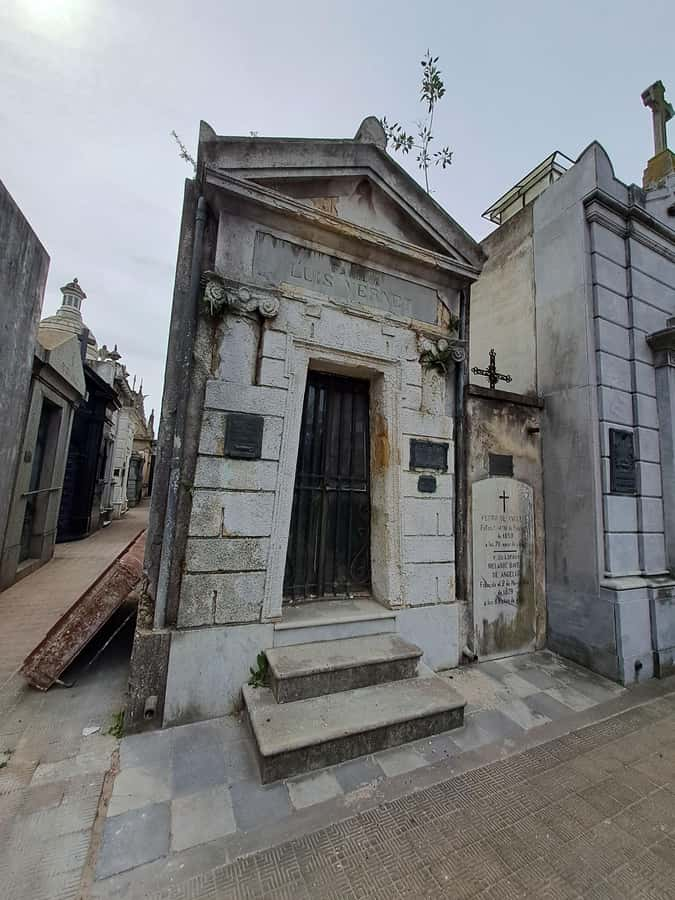
The Embassy of France in Buenos Aires gets about 10 minutes of guided attention. This is one of the clearest places to consider the connection between Buenos Aires and the European image it wanted to project.
The tour calls this ambition the Parisian illusion. That phrase captures both sides of the story. Buenos Aires could present itself as an elegant international capital, but the style was tied to money, social rank, and a selective version of national identity.
At this stop, I would listen for the details that explain how architecture becomes political. A facade, a residence, or a diplomatic building can express who a country wants to impress. It can also hide the unequal conditions that made such display possible.
That tension is one of the activity’s strengths. The tour appreciates the beauty of the neighborhood without treating old wealth as the whole story. You get the grandeur, but you also discuss what it meant and who benefited.
The Jockey Club and Palacio Duhau
The Jockey Club receives another 10-minute stop and offers a direct look at elite social life. Clubs such as this help explain how influence worked beyond government offices. They were places where powerful people could meet, build relationships, and reinforce a shared identity.
The stop fits neatly into the tour’s question about Argentina’s upper class. The guide can connect the club to the landowners and families who shaped the country during its most confident period. You will also be encouraged to consider the limits of that power and what happened as Argentina’s fortunes changed.
The route then reaches Palacio Duhau, now the Park Hyatt Buenos Aires, for about five minutes. This is a shorter stop, but it adds a strong present-day contrast. A former palace functioning as a luxury hotel shows how the city’s elite architecture has been preserved, repurposed, and placed within modern Buenos Aires.
The two stops work well together. The Jockey Club represents social organization among the elite. Palacio Duhau shows how that old world remains visible while its buildings take on new uses.
Entering Recoleta Cemetery
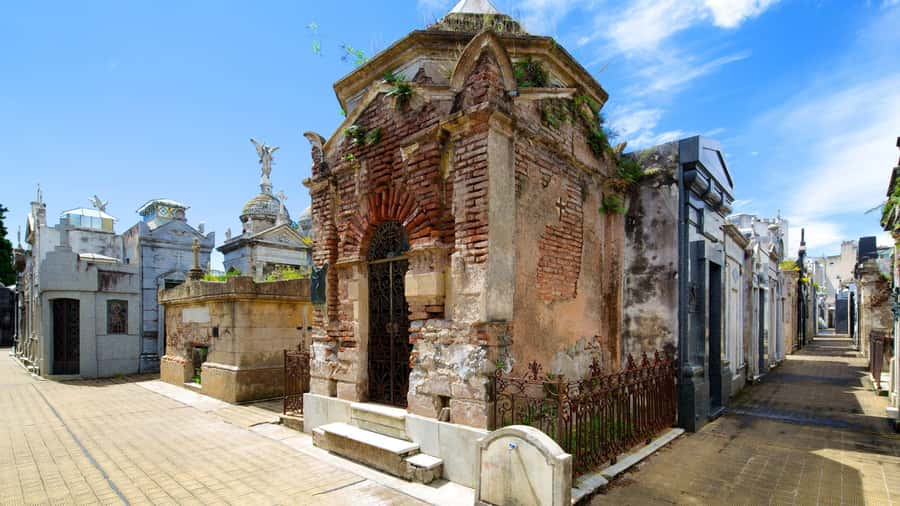
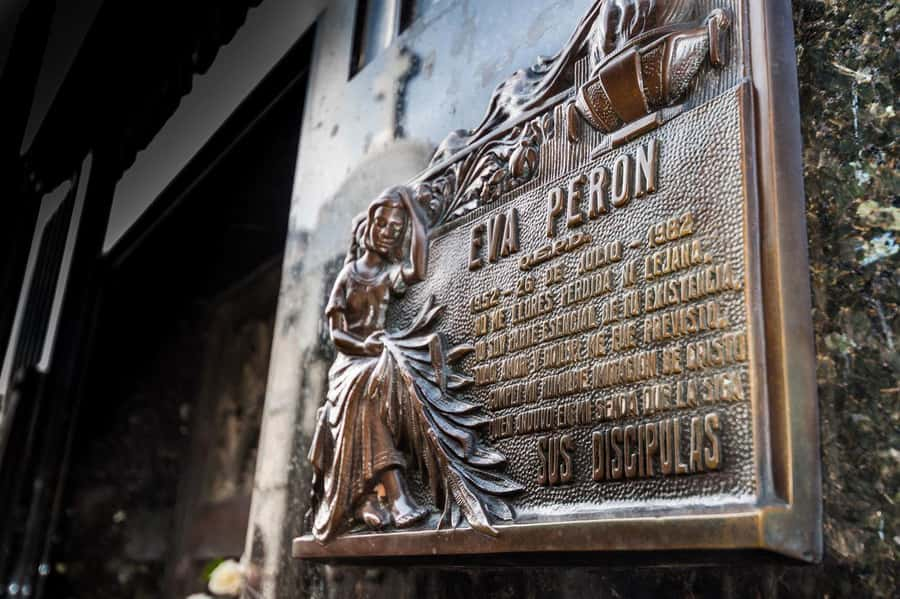
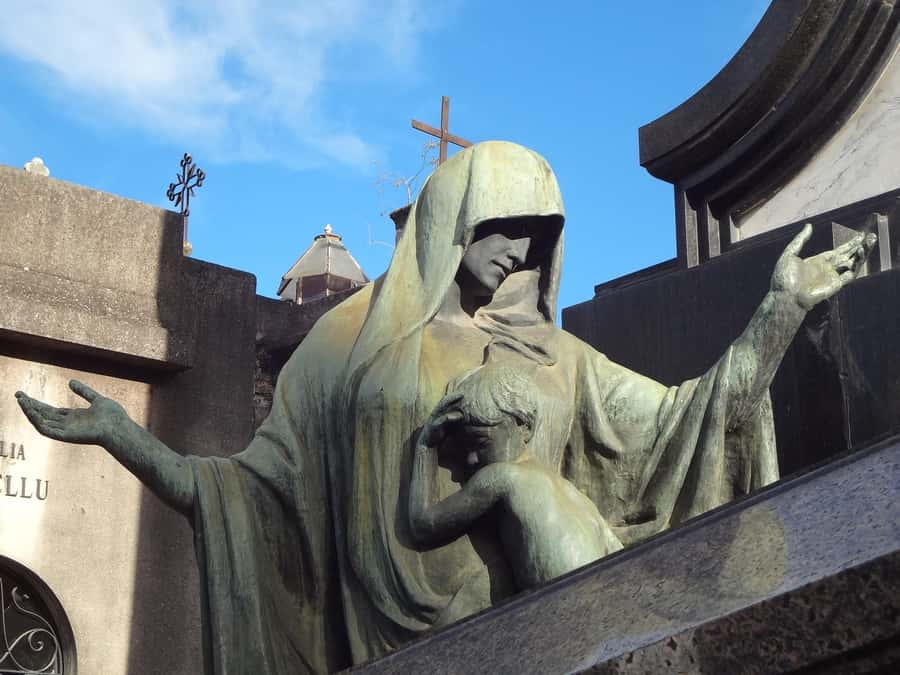
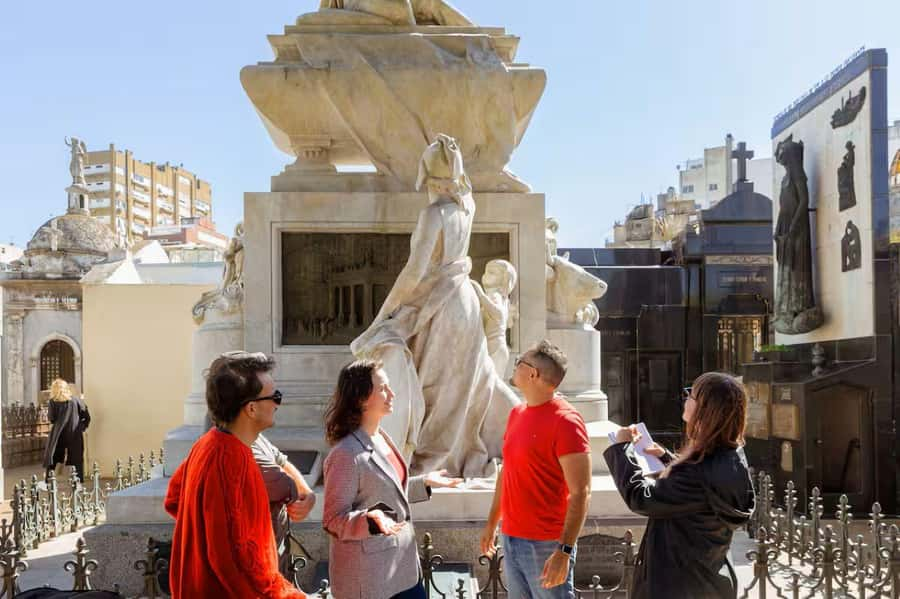
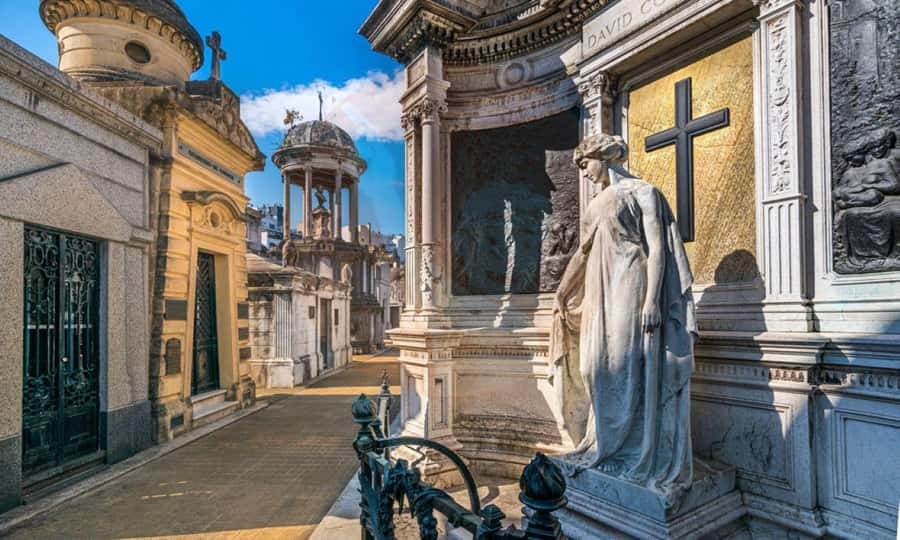
The final guided portion lasts about 45 minutes at La Recoleta Cemetery. This is the longest stop, and rightly so. The cemetery is not treated as a collection of famous names alone. It becomes a way to examine Argentine society through burial, memory, family power, and public reputation.
The cemetery visit is optional, and the admission ticket is not included. You can buy a ticket at the entrance or arrange it online in advance. If you decide to enter, allow for the additional cost and make sure your timing matches the tour’s starting schedule.
Inside, the guide focuses on the people buried there and the stories attached to their tombs. You can expect discussion of who is remembered, who is forgotten, and what the cemetery reveals about social rank. The grand mausoleums make the connection to the earlier stops clear: the same culture of wealth and display that shaped mansions and clubs also shaped memorials.
The cemetery also lets the tour move from architecture to human stories. A building can show wealth, but a tomb may show how a family wanted its name to survive. That makes this stop more personal and more unsettling than simply admiring a palace.
The tour’s anthropological angle is useful here. You are invited to think about burial places as mirrors of society. The cemetery can tell you what a country values, whose lives receive public attention, and how national stories are built around selected figures.
How much time and energy does the route require?
The advertised duration is 150 minutes. The route includes many stops, with most guided talks lasting 10 minutes, plus a five-minute break and a 45-minute cemetery segment.
You should be prepared for a substantial city walk. The activity is marked wheelchair accessible, but the supplied information does not describe the exact walking surface, restroom access, or cemetery conditions. If you use a wheelchair, confirm the practical route details before booking.
The tour can be private or small-group. That matters because the format depends on discussion. In a small group, you have a better chance to ask about a particular building, political period, or family story. A private version should suit you if you want the guide to adjust the pace or spend more time on one theme, though the exact private-group price is not provided.
Guiding is offered in Spanish, English, and French. The available guide may vary, but Nicolas and Ignacio are specifically named in the feedback. Nicolas is noted for answering individual questions and adding local anecdotes, while Ignacio is praised for making the experience a strong way to understand Buenos Aires.
Is $34 a fair price?
At $34 per person, the tour is good value if you want context rather than a basic orientation walk. You receive a 150-minute guided route through one of Buenos Aires’ most important districts, with a university degree guide and time for conversation.
The price becomes less attractive if you only want to see Recoleta Cemetery quickly. Since cemetery entry is extra, a short cemetery visit by itself may cost less through another arrangement. This activity earns its price by linking the cemetery to Plaza San Martín, the mansions, diplomatic buildings, elite clubs, and Argentina’s larger national story.
I would also consider the group type. A small or private group usually makes an interactive history walk more rewarding than a large group, especially when the subject includes politics, class, and national identity. You are paying for the guide’s interpretation and flexibility, not for entry to a long list of attractions.
Free cancellation up to 24 hours before the experience and the option to reserve now and pay later add useful flexibility. These policies are especially practical if your Buenos Aires schedule is still changing.
Who should book this experience?
I would recommend it to you if you enjoy asking why a city looks the way it does. It suits people who like architecture, politics, social history, and personal stories in equal measure.
It is also a good choice for a second or third day in Buenos Aires, when you already have some sense of the city and want to understand its power structure. The route gives you a strong framework for later visits to Recoleta, Palermo, or central Buenos Aires.
You may want something else if you prefer a fast, photo-focused tour, dislike walking, or want every attraction ticket included. The cemetery admission is separate, and the discussion format means the pace can feel slower than a simple point-to-point sightseeing walk.
Should you book the Recoleta and Cemetery walk?
Book it if you want Recoleta to make sense, not just look beautiful. The best reason to choose this experience is the way it connects grand buildings, social privilege, national ambition, and the cemetery’s memorial culture.
I would make the most of it by entering the cemetery, arriving ready with questions, and choosing a small or private group if conversation matters to you. Nicolas and Ignacio have received especially strong praise for humor, historical detail, and personal attention, though the guide assigned to your booking may differ.
Skip it if your main goal is independent cemetery sightseeing or if you want a tour with no added admission costs. For curious visitors who want the story behind Buenos Aires’ polished image, $34 is a sensible investment.
FAQ
How long does the tour last?
The experience lasts 150 minutes, or two and a half hours.
Is cemetery admission included?
No. Entry to Recoleta Cemetery is optional and must be paid separately. You can buy a ticket at the entrance or online in advance.
Where does the tour meet?
The meeting point is the Rapa Nui store.
Which languages are available?
The tour is available in Spanish, English, and French.
Is the activity wheelchair accessible?
Yes, the activity is listed as wheelchair accessible. The provided information does not specify detailed conditions inside every location.
Can I book a private group?
Yes. Private and small-group options are available.
Just added around Buenos Aires
- Tango Show at El Querandi with optional Dinner★ 4.2 · 3 reviews
- Wine Tasting in Buenos Aires★ 4.2 · 4 reviews
- Walking Tour: Buenos Aires bookstores★ 4.3 · 12 reviews
- Private Underground Tango Immersion★ 5.0 · 31 reviews
- Velez Sarsfield Football Match★ 5.0 · 3 reviews
- Unique Tigre and Delta Private Day Cruise Navegation★ 5.0 · 3 reviews
- Transfers from or to the airport In Argentina Your Best Choice★ 5.0 · 28 reviews
- Tour Buenos Aires in one day on Electric Scooters★ 5.0 · 33 reviews
Recoleta Tours, compared.
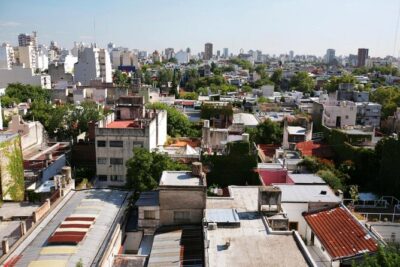
Buenos Aires Bike Tour: North Districts, Recoleta and Palermo
Read our review →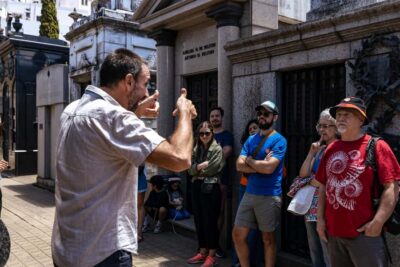
Recoleta Cemetery – Small Group Tour of History & Secrets
Read our review →

Cultural Experience by Bike around Palermo and Recoleta Max 6 ppl
Read our review →
Full Day City Tour Buenos Aires, Recoleta Cemetery and Tigre
Read our review →
Browse the lists this tour appears in