
Reviewed · BUENOS AIRES CITY TOURS
Semi Private City Tour of Buenos Aires
Buenos Aires is too large to understand from one plaza, but this three-hour city tour gives you a useful first map. You move by small bus between central neighborhoods, then step out at key sights for short walks and explanations. It is a quick lesson in the city’s politics, immigrant roots, football culture, grand avenues, and polished northern districts.
I like the hotel pickup and drop-off, especially if you are new to Buenos Aires or arriving after a long flight. I also like the guide-led storytelling. Guides such as Lionel, Loli, Emilia, Leandro, and Diana have helped make the tour more than a drive-by list of buildings. The catch is simple: three hours is tight, and pickup runs plus traffic can eat into sightseeing time. A few people have also found the minibus cramped, with poor views from the back.
Key points to know before booking
- You cover seven major areas in about three hours, including Plaza de Mayo, San Telmo, La Boca, Puerto Madero, Retiro, and Recoleta.
- Short walks break up the driving, with the most useful stops at Plaza de Mayo, Caminito, La Boca, and Recoleta.
- Hotel pickup and drop-off are included, so you do not need to find a central meeting point.
- Group size can reach 30, although several departures have had around 10 to 12 people in a small bus.
- The tour is best as an introduction, not as a detailed visit to museums, the Recoleta Cemetery, or Boca Juniors Stadium.
- The price is $36 per person, a fair deal if you want orientation, transport, and a guide in one half-day outing.
Why this short tour works as a first look at Buenos Aires
Buenos Aires is spread across distinct districts, and each one gives you a different version of the city. The old political center sits near historic neighborhoods, the southern districts show immigrant and working-class roots, and the northern areas bring grand architecture, parks, museums, and fashionable shops.
This tour lets you compare those parts without spending your first day working out buses, taxis, and directions. You hear background on Argentina while looking at the city itself. That matters here because a building or square often makes more sense once you know its role in national politics, immigration, football, or public life.
The strongest guides turn the drive into a running conversation. Lionel has been praised for an entertaining style and solid background in history. Leandro has led small groups with strong English and a useful mix of history and local detail. Emilia has handled the short schedule well, while Loli has offered practical ideas for what to do after the tour.
You should still keep your expectations in check. This is an overview. You will not have time for a long museum visit, a full meal, or a slow wander through every neighborhood. The tour works best when you use it to mark places for later exploration.
More city tours in Buenos Aires:
- Buenos Aires: City Highlights Guided Tour with Transfer
★ 4.7 · 1,946 reviews - Best of Buenos Aires: Guided Sightseeing City Tour
★ 4.0 · 402 reviews - Buenos Aires Private City Tour with Local Guide
★ 5.0 · 308 reviews
Plaza de Mayo sets the political stage
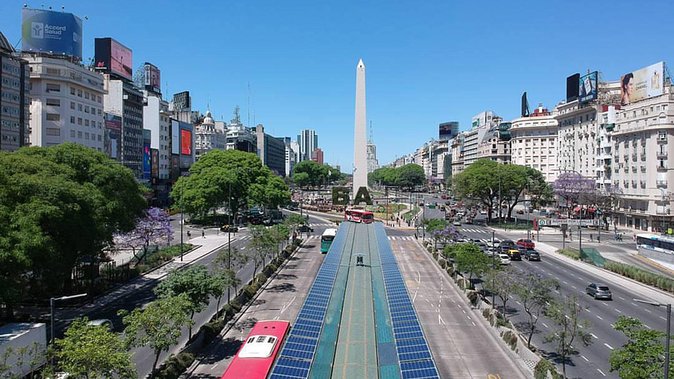
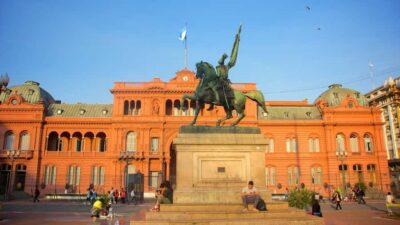
The tour usually begins its sightseeing in Plaza de Mayo, the city’s oldest and most important public square. It sits in Monserrat, in the central area connected with the early foundation of Buenos Aires.
The square takes its name from the May Revolution of 1810, when local citizens challenged Spanish colonial rule and formed a creole government. Since then, it has been the setting for major political and social events. Your guide can give this history a shape that a quick photograph cannot.
The stop lasts about 20 minutes, with no admission fee. That is enough time to look across the square, hear why it matters, and get your bearings in the central city. It is not enough for a detailed look at every surrounding building, so pay attention to the guide rather than trying to wander far.
This is one of the tour’s most useful stops because it explains Argentina’s public life. You are not just seeing a pretty open space. You are seeing the place where national arguments, celebrations, protests, and ceremonies have repeatedly played out.
San Telmo and the brief walk along Defensa
From the political center, the route moves toward San Telmo, one of Buenos Aires’ older districts. Calle Defensa cuts through the neighborhood, passing antique shops, restaurants, bars, temporary art spaces, and street murals.
The listed stop is only about five minutes, so do not expect a full San Telmo visit. If your schedule includes a Sunday departure, the area may have more street-market activity around Plaza Dorrego, along with performers and craft stalls. One departure included enough walking through San Telmo to see the Sunday market, but the exact balance can vary with traffic and timing.
San Telmo is a place where a short stroll can be more revealing than a bus window. Its old streets, changing storefronts, and art give you a feel for the district’s bohemian side. You may also hear about tango restaurants and the neighborhood’s evening scene.
I would treat this stop as a preview. If San Telmo interests you, return later with time to browse slowly. The tour gives you orientation, not a market afternoon.
Caminito brings color, art, and a touristy edge
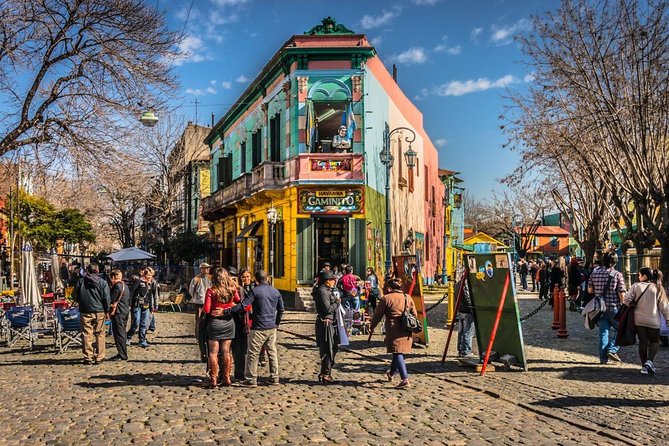
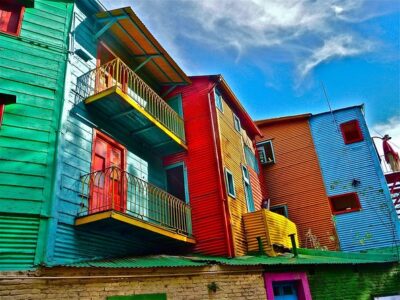
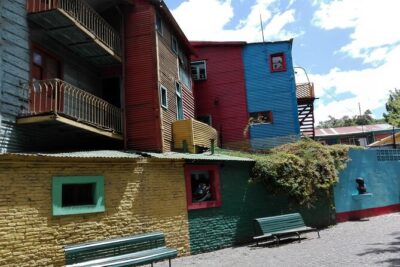
The stop at Caminito introduces you to the best-known corner of La Boca. This narrow lane is lined with brightly painted zinc houses, a reminder of the neighborhood’s immigrant past. Street artists, food stands, and performers give the area a lively public face.
You get about 20 minutes here, free of admission charges. That is enough to walk the main stretch, take in the colors, and hear why La Boca looks so different from Recoleta or Puerto Madero. It is also enough time to understand the tradeoff. Caminito is photogenic and memorable, but it is prepared for sightseeing, so the experience is not a quiet look at everyday Buenos Aires.
The guide’s role matters here. A good explanation can connect the painted homes with immigration, port work, neighborhood identity, and football. Diego, for example, has been especially attentive to visitors interested in Evita and major city landmarks. Other guides have mixed football, popular culture, and local history into the stop.
Keep your visit focused. With only 20 minutes, stay close to the meeting point and listen for instructions about where to rejoin the bus.
A few more Buenos Aires outings worth weighing up
- Buenos Aires: Private Tango Lesson
★ 4.9 · 244 reviews - Buenos Aires: Personalized 2 to 8-Hour Private Walking Tour
★ 4.7 · 149 reviews - Private Arrival Transfer: Ezeiza Airport to Buenos Aires Hotels
★ 4.0 · 136 reviews - Private transfer to or from Ezeiza Airport “EZE”
★ 5.0 · 118 reviews
La Boca adds football and the old port
The separate La Boca stop gives the southern district a little more attention. La Boca grew beside the Riachuelo and became associated with working families, immigrant communities, port activity, and Boca Juniors football.
The Bombonera, Boca Juniors’ stadium, is one of the district’s big symbols. On match days, the area takes on a different energy, though this sightseeing tour is not a match experience and does not include stadium admission. You may also hear about the Proa Foundation, a modern-art museum with temporary exhibitions and views toward the old docks.
Asadores, street artists, and colorful buildings shape the area around Caminito. The two 20-minute stops give you a reasonable first look, but they do not turn La Boca into a full neighborhood visit. If you want the stadium, museum, or more time away from the main lane, plan a separate outing.
I like this part of the route because it prevents Buenos Aires from becoming only grand boulevards and elegant cafes. La Boca gives the city a different voice. It also helps explain why football is not simply a sport here, but part of neighborhood identity and public conversation.
Puerto Madero shows the city remaking itself
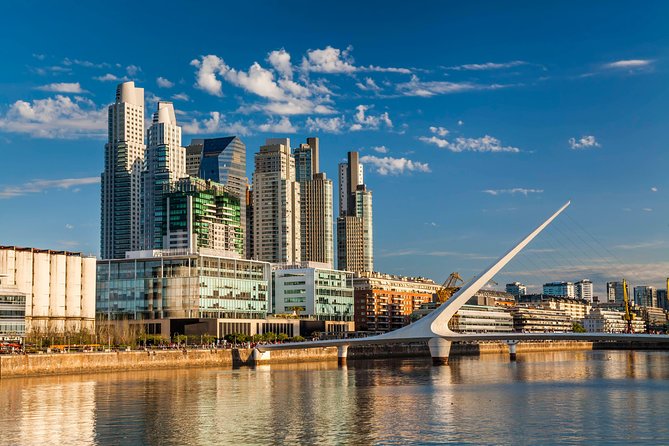
The route then crosses to Puerto Madero, a renovated waterfront district that feels far removed from La Boca. Redbrick port buildings now hold restaurants, while newer towers house offices and luxury apartments.
The Woman suspension bridge is the district’s signature sight. Nearby paths, lakes, and the Costanera Sur ecological reserve offer space for walkers, runners, and families. The area is a useful contrast to the older neighborhoods because it shows Buenos Aires looking forward rather than back.
The schedule does not give a separate admission stop or a detailed walking time here. Much of your experience may come from the bus, depending on traffic and the guide’s plan. That makes Puerto Madero more of a visual comparison than a full visit.
If modern architecture, waterfront dining, or the ecological reserve interests you, note the location for another day. This tour lets you see how close the polished waterfront is to the historic center, but it cannot explore the district in depth.
Retiro connects trains, parks, and grand city life
Retiro brings another change of mood. The neighborhood includes quiet streets, art galleries, cafes, the busy Retiro train station, and Plaza San Martín.
The station has a British-style appearance and sits near quick food stalls. Nearby, the Kavanagh building has an art deco tower, while Plaza San Martín offers lawns, jacaranda trees, and monuments. Florida pedestrian street is close by, with leather shops, souvenir stalls, and tango performers.
You may pass through more of Retiro than you walk through it. That is not a flaw if you understand the purpose of the stop. The guide is showing you how the city fits together and pointing out places you might return to, rather than giving you time to shop or sit in the park.
This is also one of the areas where a guide’s local advice can be useful. Several guides have offered suggestions for what to do after the tour, including places to revisit and practical advice about moving around after dark. Listen for those details, then make your own plans.
Recoleta brings the tour to Buenos Aires’ elegant north
The final named sightseeing stop is Recoleta, a district of grand homes, Parisian-style terraces, old palaces, museums, boutiques, and broad walking areas. It is a polished ending after the working-class character of La Boca and the older streets of San Telmo.
The Recoleta Cemetery is the main draw. Its ornate tombs include national figures such as Eva Perón. The National Museum of Fine Arts holds major works by Argentine artists, and the Recoleta Cultural Center presents temporary modern exhibitions. Plaza Francia has open lawns and a weekend craft market.
You get about 15 minutes here, and the cemetery admission is not included. That distinction matters. The tour can point out the district and explain the importance of the cemetery, but you should not expect a full cemetery visit during the scheduled stop.
Several people have wished for more time inside Recoleta Cemetery. I agree that it is one of the places most worth returning to. If you book this tour early in your stay, put the cemetery, the Fine Arts Museum, or the weekend market on your own list for later.
The small bus is convenient, but seat choice matters
Transportation is included from hotel pickup through drop-off, which is a major part of the value. You avoid finding a central meeting point, and you can finish close to your accommodation. This is especially handy after a red-eye flight or during the gap between arrival and hotel check-in.
The bus also makes it possible to cover districts that would take much longer on foot. You get short walks without having to arrange several taxis.
The main weakness is the driving time. One person found that the first hour and a half was spent collecting passengers, with traffic making the delay feel longer. Other departures have had around 10 to 12 people, but the maximum group size is 30, so the feeling of space can change.
If you sit near the back, your view through the windows may be limited. Some drive-by sights are hard to appreciate from a crowded seat. At $36, the transport remains useful, but do not confuse a small bus with a private car.
What $36 buys you
At $36 per person, this is reasonably priced for a guided introduction that includes transportation, a professional guide, hotel pickup, and hotel drop-off. You are paying for convenience as much as for sightseeing.
The value is strongest if you are staying only a short time, visiting Buenos Aires for the first time, or arriving without a clear plan. In three hours, you can see the city’s main contrasts and decide where to spend your free time.
The value is weaker if you already know the city or prefer slow, independent visits. You could spend the same half-day in one neighborhood and come away with a more detailed experience. Food and drinks are not included, and none of the stops includes a full attraction visit.
The tour has a 4.7 rating from 85 ratings, with 94 percent recommending it. More important than the number is the pattern behind it: strong praise goes to the guides’ storytelling, friendliness, history, humor, and practical advice. The lower ratings focus on cramped seating, traffic, and too little time outside the bus.
Who should book this Buenos Aires tour?
I would choose this tour if you want a fast city orientation with as little transport planning as possible. It suits first-time visitors, solo visitors, couples, families, and people arriving after a long flight. Children can join, but must be accompanied by an adult.
It also works well for cruise passengers when pickup arrangements are confirmed. One small group was collected directly from a cruise ship, but the standard details specify hotel pickup and drop-off, so do not assume every departure uses the same meeting arrangement.
You should choose another format if your priority is Recoleta Cemetery, the Boca Juniors stadium, San Telmo’s market, or a museum. Each deserves more time than this route allows.
Should you book it?
Book this tour if you want to get your bearings quickly and use the rest of your stay for deeper visits. The guide, transport, and wide route make it a practical first morning or afternoon, and the price is fair for the amount of ground covered.
Skip it if you dislike group transport, want long walks, or need a guaranteed private experience. Confirm the pickup details, expect traffic, and try to sit where you can see out. Used as an introduction rather than a complete Buenos Aires visit, it is a sensible and useful choice.
FAQ
How long does the Buenos Aires city tour last?
The tour lasts approximately three hours.
What areas does the tour visit?
The route includes Plaza de Mayo, Calle Defensa in San Telmo, Caminito and La Boca, Puerto Madero, Retiro, and Recoleta.
Is hotel transportation included?
Yes. Hotel pickup and drop-off are included, along with transportation during the tour.
Are food and drinks included?
No. Food and drinks are not included in the price.
Is admission to Recoleta Cemetery included?
No. The Recoleta stop does not include the cemetery admission fee.
How many people can join the tour?
The maximum group size is 30 people. Some departures have operated with smaller groups of about 10 to 12 people, but a small group is not guaranteed.
Just added around Buenos Aires
- Tango Show at El Querandi with optional Dinner★ 4.2 · 3 reviews
- Wine Tasting in Buenos Aires★ 4.2 · 4 reviews
- Walking Tour: Buenos Aires bookstores★ 4.3 · 12 reviews
- Private Underground Tango Immersion★ 5.0 · 31 reviews
- Velez Sarsfield Football Match★ 5.0 · 3 reviews
- Unique Tigre and Delta Private Day Cruise Navegation★ 5.0 · 3 reviews
- Transfers from or to the airport In Argentina Your Best Choice★ 5.0 · 28 reviews
- Tour Buenos Aires in one day on Electric Scooters★ 5.0 · 33 reviews
Buenos Aires City Tours, compared.
Best of Buenos Aires: Guided Sightseeing City Tour
Read our review →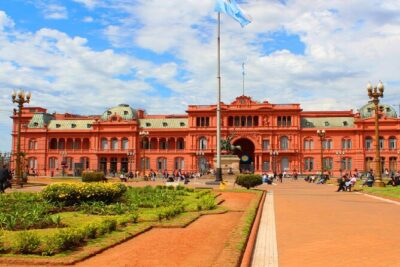
Classic City Tour of Buenos Aires: Neighborhoods and Emblems
Read our review →
Browse the lists this tour appears in