
Reviewed · BUENOS AIRES TANGO LESSONS
Tango Lesson in Buenos Aires with professional dancers
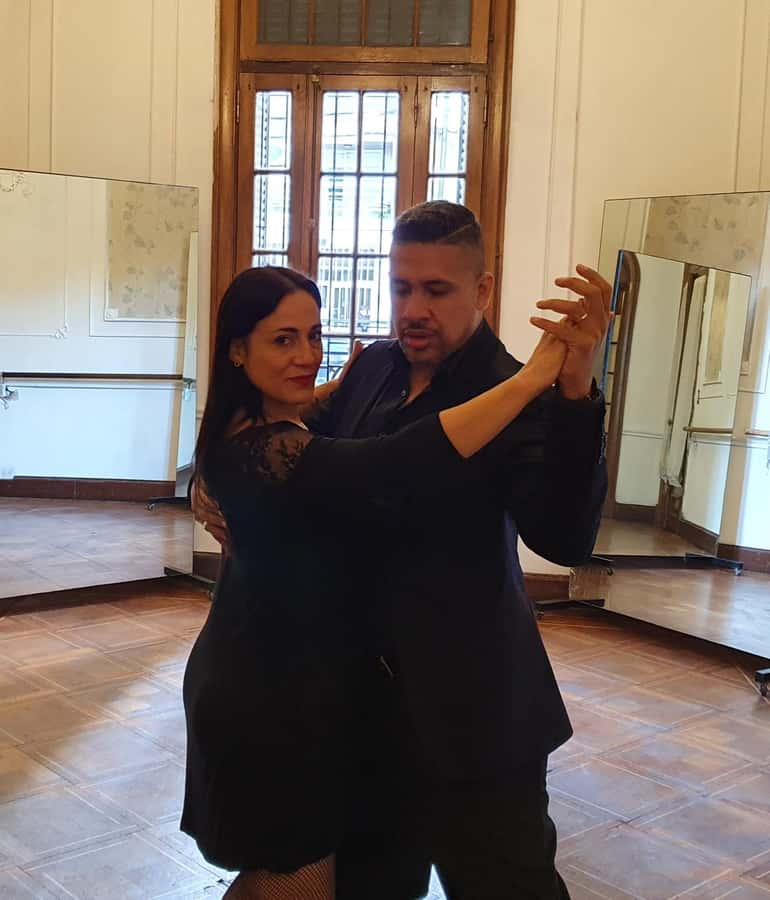
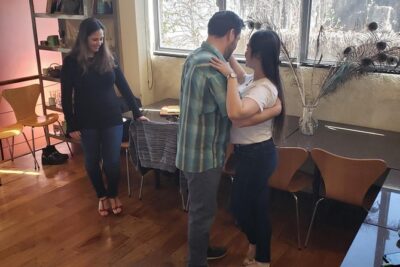
The lesson begins in an antique-styled house that has been adapted into a working tango school. Inside, a professional tango couple teaches you the embrace, the walk, and basic steps, then gives you a close look at the dance through a live exhibition. It is a friendly way to meet tango as a real social art, not just a stage performance.
I like the private format, since the instructors can slow down, repeat a movement, or give you and your partner more time with the tricky parts. I also like the setting: special dance halls in an old Buenos Aires house give the class a stronger sense of place than a generic studio. The main drawback is the short one-hour length. You can learn a foundation, but not become polished in a single session.
Key points
- Private class for up to two people: You receive direct attention from professional dancers rather than joining a large group.
- Tango basics are practical: The class covers the embrace, the walk, and the first steps with a partner.
- An old Buenos Aires house serves as the school: You ring the doorbell when you arrive.
- A live tango exhibition is part of the experience: It gives you a clear picture of how the basic movements develop into performance.
- Joana is praised for patient instruction: One verified review specifically notes her kindness, dancing ability, and care with beginners.
- Private transfers are optional: In-and-out transport is available for an additional cost, but it is not included in the class price.
Entering the old house that teaches tango
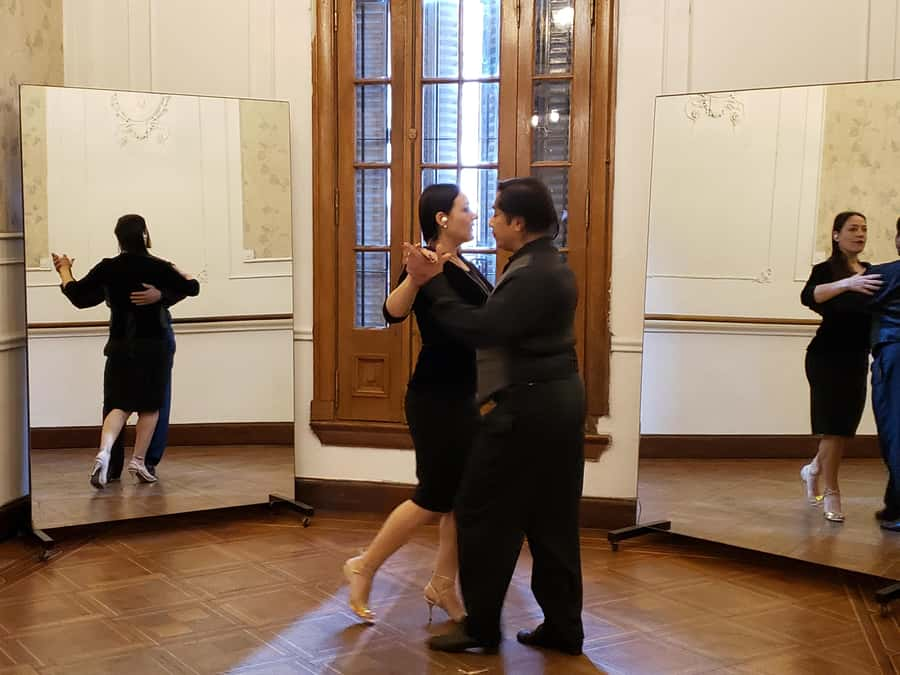
The meeting point is easy to recognize: an old house used as a tango school. When you arrive, ring the doorbell to meet your instructors. That small arrival detail matters in Buenos Aires, where a class may be held behind a traditional residential-style entrance rather than at a clearly marked tourist attraction.
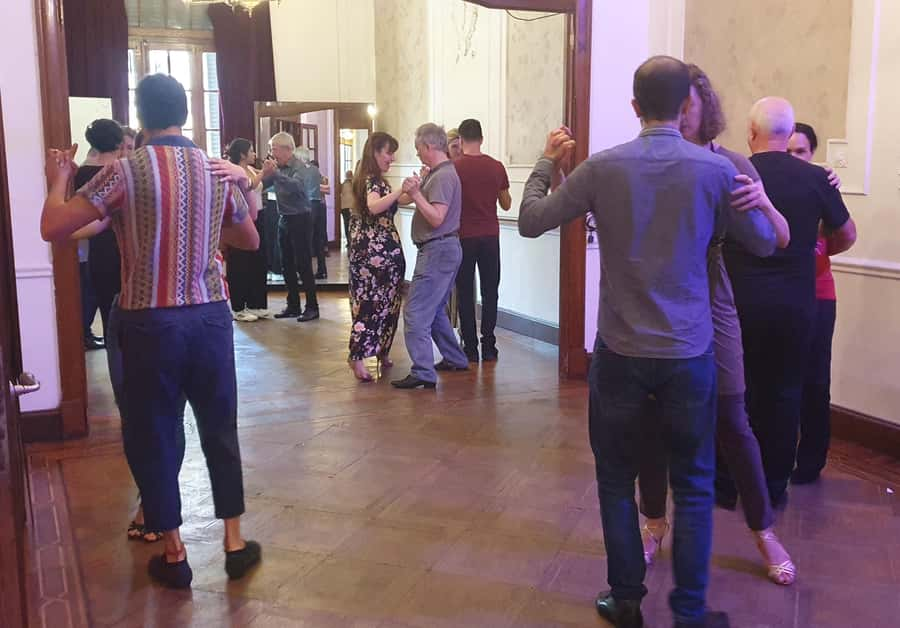
The house is adapted with special halls for dance classes. This gives you a proper floor and enough room to work with a partner, while the older surroundings help connect the class to the city’s tango culture. You are not simply watching a dance in a theater. You are entering a place built for learning and practice.
The setting also creates a useful contrast. Tango is often sold through grand evening shows, polished costumes, and dramatic music. Here, you first meet the dance at close range, in a school where the focus is on how bodies move together. That makes the experience a good choice for a first introduction.
More tango lessons in Buenos Aires:
- Buenos Aires: Private Tango Lesson
★ 4.9 · 244 reviews - Tango Porteño Show with Optional Dinner and Tango Lesson
★ 4.0 · 97 reviews - Buenos Aires – Private Tango lesson
★ 5.0 · 96 reviews
Meeting professional dancers for a private hour
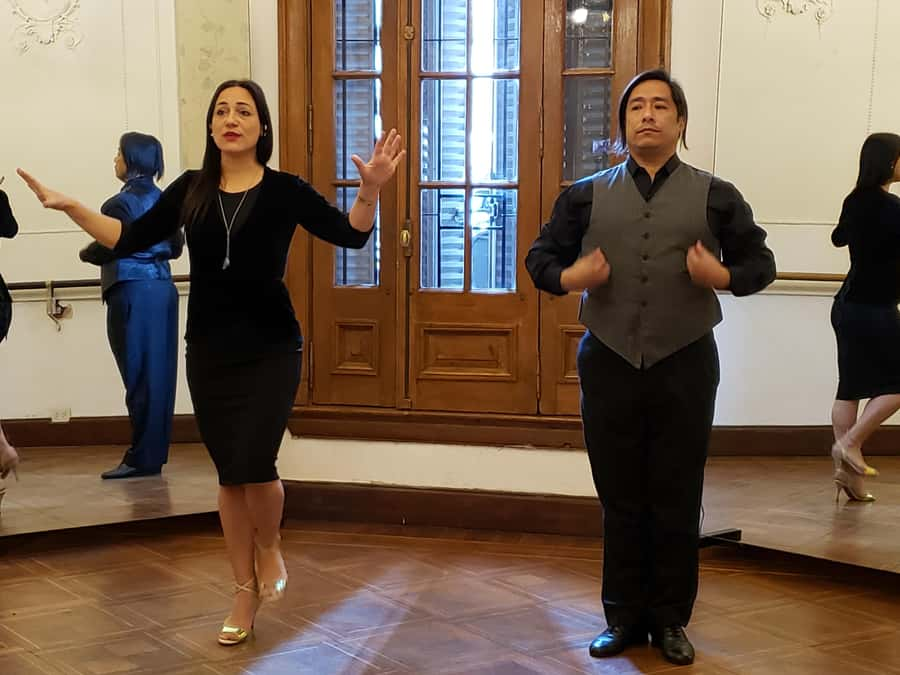
The class is led by a real-life professional tango couple. Instruction is available in English and Spanish, so you can ask questions and receive corrections in one of the two stated languages. The instructors teach in a simple, playful way, which is especially helpful if you arrive with no dance background.
The private group format is the strongest part of the booking. The price is $120 for a group of up to two people, not a per-person charge. For two people, that works out to $60 each, while a solo participant pays the same group price. That makes the class most appealing to a couple or two friends who want focused attention.
A private lesson also removes some of the pressure that can come with learning in front of strangers. If your feet get mixed up, you can stop and try again without holding up a larger class. If one movement makes sense quickly, the instructors can spend more time on another.
Still, keep the hour in perspective. Tango has its own posture, timing, embrace, and way of communicating through the body. In sixty minutes, you can learn the first building blocks and get a feel for the dance. You should not book this expecting a full dance course.
Learning the embrace, the walk, and the first steps
The lesson focuses on the parts that make tango recognizable. You learn how to hold your partner in the embrace, how to walk together, and how to begin the basic steps. These sound simple, but they require attention because both partners must respond to one another.
The embrace is more than a pose. It is the main point of contact between partners, and it helps the couple communicate direction and rhythm. A good instructor can make this less awkward for a beginner by breaking it into small adjustments rather than expecting you to copy a finished performance.
The walk is just as important. Tango depends on controlled movement and a shared sense of timing. Learning to walk together gives you something useful to practice even after the class ends, without needing to remember a long routine.
The instructors are described as teaching in a simple and fun way. That is valuable here because tango can look intimidating when you watch advanced dancers. The class is designed to bring the dance down to a manageable level, so you can focus on one movement at a time.
You do not need previous dance knowledge. Bring comfortable shoes and comfortable clothes. Those are practical requirements, since you will be moving for the full lesson and working closely with your partner. The activity does not specify a formal dress code, so comfort is the sensible choice.
Watching the live tango exhibition
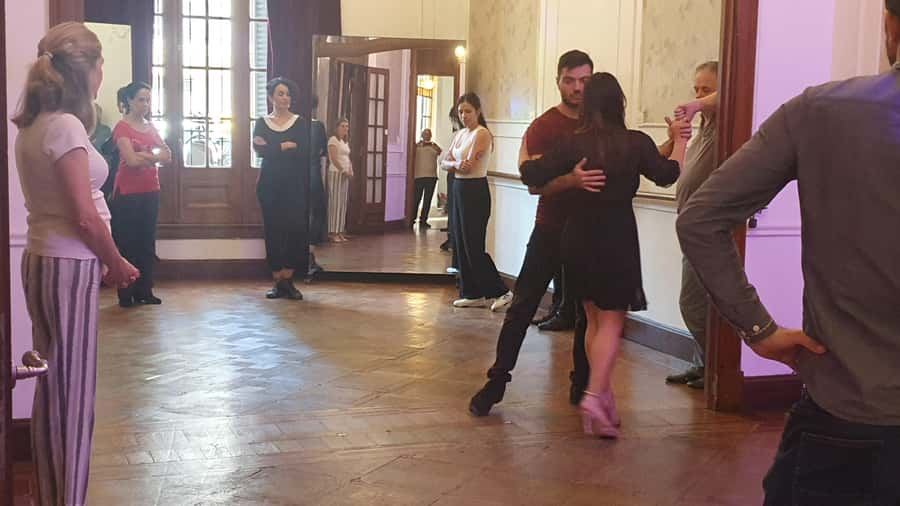
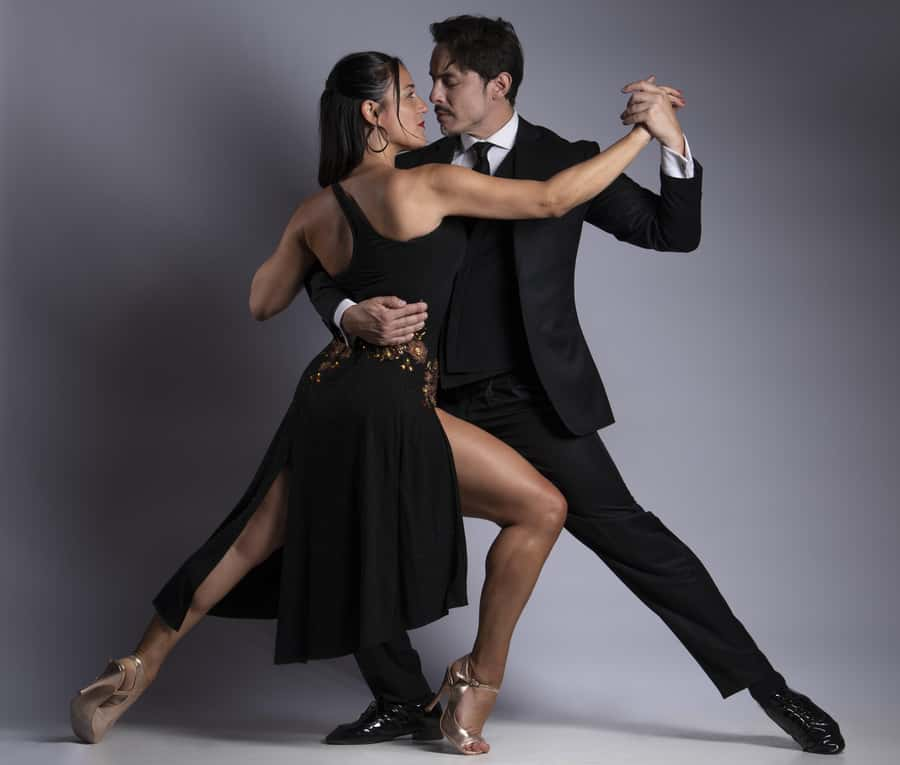
Along with the lesson, you can enjoy a live tango exhibition in the traditional school. This is a useful part of the hour because it shows where the basic exercises can lead. After working on the embrace and walk, you get to see professional dancers use those same ideas with more control and expression.
The exhibition also helps you understand tango as a living tradition. UNESCO has designated tango an Intangible Cultural Heritage of Humanity, and the class presents the dance as more than a set of tourist steps. You learn about the history that lives in each tango hall while seeing the form practiced by professionals.
The performance may also help you notice details that are hard to explain in a beginner lesson: the closeness of the embrace, the control of the walk, and the way partners communicate without stopping to discuss every movement. You should not expect the exhibition to replace a full tango show, since the experience lasts one hour and centers on a private class. Think of it as a close, useful demonstration within your introduction.
More classes and workshops in Buenos Aires:
- Buenos Aires: Empanadas and Alfajores Guided Cooking Class
★ 4.8 · 486 reviews - Buenos Aires: Empanada & Alfajor Cooking Lesson in Palermo
★ 4.6 · 186 reviews - Spanish Group Course in Buenos Aires, Argentina: 20 Lessons
★ 5.0 · 72 reviews - Buenos Aires: Group tango class with mate and snacks
★ 4.4 · 44 reviews
Why the private format is worth the $120 price
At first glance, $120 for one hour can seem high. The value depends on what you want. This is not a cheap group class where you stand in a line and receive only general instructions. It is a private session for up to two people with professional dancers, in a dedicated tango setting.
For two people, the cost is easier to justify because you share the private rate. You receive direct time with the instructors, and the lesson can be adjusted to your pace. That flexibility is the main reason to choose this over a larger introductory class.
For one person, the price is harder to compare favorably, since the group rate remains $120. A solo learner may still value the personal attention, but the financial advantage is strongest when two people book together.
The experience also includes something you cannot get from a short online lesson: a real tango school, professional guidance, a partner-based lesson, and a live exhibition. If tango is on your Buenos Aires wish list, this combines several first steps in one compact visit.
Private in-and-out transfer service is available for an additional cost. Since the transfer is not included, add it only if door-to-door convenience matters to you. The meeting point itself is the old tango school, and you are responsible for finding the entrance and ringing the bell.
What Joana’s teaching style may mean for beginners
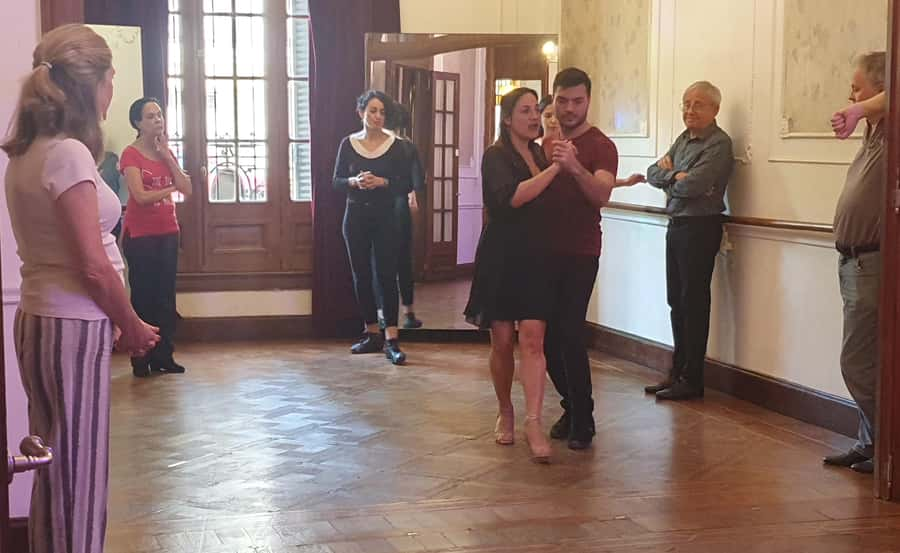
One verified five-star review singles out Joana as lovely, highly skilled, and patient while guiding a couple through the basics. That detail is useful for beginners because patience matters more than flashy dancing during a first lesson.
You want an instructor who can see why a step feels difficult, then explain it in a different way. The available feedback points to that kind of support from Joana. The provider is Milonga City, and the instructors speak English and Spanish.
The information does not promise that Joana will teach every scheduled class, so you should not book on the assumption that she will be your instructor. Still, her praise gives you a helpful picture of the teaching approach associated with this experience: personal guidance, professional dancing, and care with the first steps.
Another verified review simply calls the experience excellent. That is limited feedback, with four reviews and an overall rating of 5, so I would treat it as encouraging rather than proof that every lesson will suit every person. Your enjoyment will depend partly on comfort with close partner work and physical movement.
Practical limits and who should skip it
The experience is not suitable for children under 10. It is also listed as unsuitable for people with mobility impairments, wheelchair users, people with visual impairments, people with hearing impairments, and people with pre-existing medical conditions.
Those restrictions are important, since tango involves partner movement, balance, close positioning, and following spoken instruction. If any of these categories apply to you, do not assume the class can be adapted. Ask the provider before booking if you need a clear answer about your own situation.
Alcohol and drugs are not allowed. That is sensible for a partner-based activity where balance, awareness, and communication matter.
For everyone else, arrive in comfortable clothing and shoes. Since the class is only one hour, you do not need to set aside a full day. It fits well into a Buenos Aires schedule, especially if you want a focused cultural activity rather than a long evening program.
How to make the most of one hour
Arrive ready to move. Comfortable shoes will help you concentrate on the instructions instead of your feet. Clothing should allow normal movement and should not distract you during the embrace or walk.
Come with realistic goals. You can expect to learn the foundation of tango and understand how the dance works with a partner. You may leave able to repeat a few basic movements, but you will still need practice before your dancing looks like the professional exhibition.
If you are booking with a partner, decide in advance that you will both be patient. Tango asks two people to listen to each other through movement. A private class gives you room to make mistakes, but it cannot remove the need to practice.
Use the exhibition as a learning tool, not only as entertainment. Watch how the dancers connect through the embrace and how little wasted movement appears in their walk. Then try to carry one or two observations back into your own practice.
The one-hour limit can actually be useful. It gives you a clear introduction without committing you to a long course. If you find tango appealing, you can look for more lessons later. If it is not for you, you have spent a short, focused period finding out.
Should you book this Buenos Aires tango lesson?
Book it if you want a private, beginner-friendly introduction to tango and you value direct instruction over a large group setting. It is especially good for two people traveling together, since the $120 price covers a group of up to two and the lesson can move at your shared pace.
The antique house, professional couple, and live exhibition give the hour a strong sense of place. Joana’s praised patience is another reason beginners may feel comfortable, though the instructor is not guaranteed by the available details.
Skip it if you want a full evening show, a long dance course, or a low-cost group lesson. Also skip it if any of the stated suitability restrictions apply to you. For the right audience, this is a compact way to meet tango at its source, learn the first steps, and decide if the dance deserves more of your time in Buenos Aires.
FAQ
How long does the tango lesson last?
The private tango lesson lasts one hour.
How much does the experience cost?
The price is $120 for a private group of up to two people.
Do I need previous dance experience?
No. No dance knowledge is required.
What will I learn during the class?
You will learn the basic tango steps, the embrace, and the walk with your partner.
Is the class taught in English?
Yes. Instruction is available in English and Spanish.
Where do I meet the instructors?
You meet the instructors at the tango school, an old house adapted for classes. Ring the doorbell when you arrive.
Just added around Buenos Aires
- Tango Show at El Querandi with optional Dinner★ 4.2 · 3 reviews
- Wine Tasting in Buenos Aires★ 4.2 · 4 reviews
- Walking Tour: Buenos Aires bookstores★ 4.3 · 12 reviews
- Private Underground Tango Immersion★ 5.0 · 31 reviews
- Velez Sarsfield Football Match★ 5.0 · 3 reviews
- Unique Tigre and Delta Private Day Cruise Navegation★ 5.0 · 3 reviews
- Transfers from or to the airport In Argentina Your Best Choice★ 5.0 · 28 reviews
- Tour Buenos Aires in one day on Electric Scooters★ 5.0 · 33 reviews
Buenos Aires Tango Lessons, compared.

Tango Porteño Show with Optional Dinner and Tango Lesson
Read our review →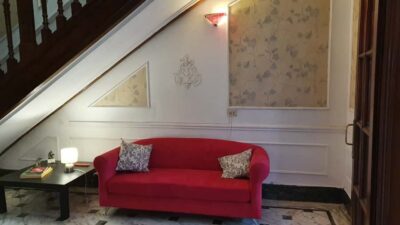
Private Argentine Cooking Class and Tango Lesson in Buenos Aires
Read our review →
Browse the lists this tour appears in