
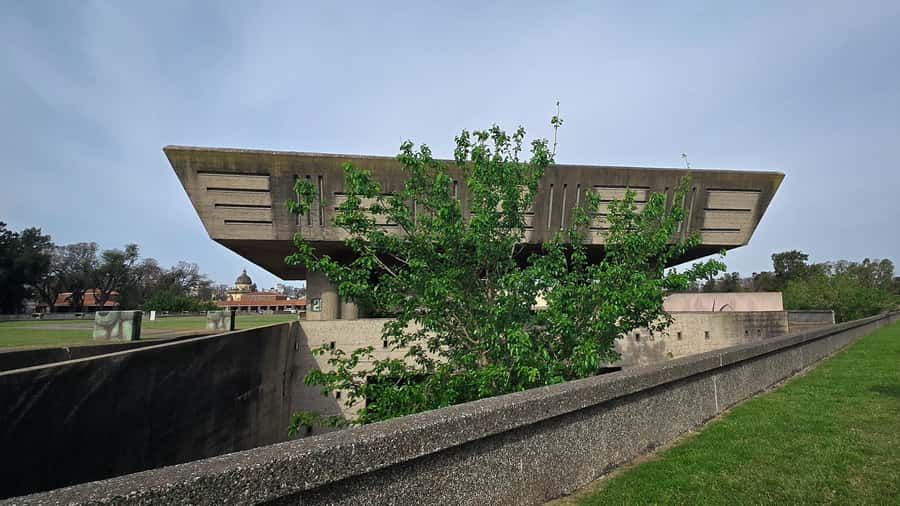
Reviewed · RECOLETA TOURS
Buenos Aires: Chacarita, The Largest Cemetery In Argentina
The most compelling part of this tour is its range. In three hours, you move from the grand avenues and mausoleums of Chacarita Cemetery to the quieter German and British grounds, meeting Argentina’s tango legends, musicians, actors, poets, and national heroes along the way. I like the focus on Carlos Gardel and Gustavo Cerati, and I like that the tour goes beyond celebrity graves to show religious buildings, national monuments, and distinct cemetery styles. The main drawback is simple: it is a walking tour with no wheelchair access, and the cemetery’s size means comfortable shoes, water, a hat, and sunscreen matter.
I also like the small group, limited to six people, and the personal approach offered by Miguel, the Spanish-speaking guide. He has been praised for his patience, clear explanations, and ability to speak slowly with people learning Spanish. If you want a polished English-language tour, this is not the right choice. If you can follow Spanish, even at a slower pace, it may give you a more direct connection to Buenos Aires culture.
Key points
- Carlos Gardel’s tomb: Visit the final resting place of tango’s defining voice.
- Gustavo Cerati and Gilda: See memorials connected to two major figures in Argentine popular music.
- Tango, film, poetry, and sport: The route includes Gardel, Luis Sandrini, Osvaldo Pugliese, Alfonsina Storni, Jorge Newbery, and others.
- Three cemetery traditions: Compare Chacarita with the German cemetery and Commonwealth War Graves Buenos Aires.
- Small Spanish-speaking group: The tour is limited to six people and guided by Miguel.
- A walking tour with limits: Expect three hours on foot, a short restroom pause, and no wheelchair access.
Why Chacarita Cemetery is worth your morning
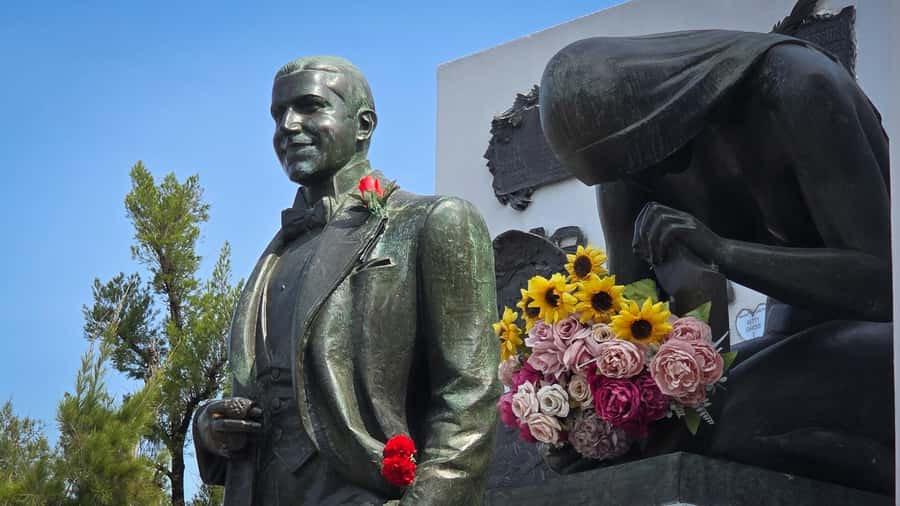
Buenos Aires has famous cemeteries, but Chacarita offers a different kind of cultural visit. It is Argentina’s largest cemetery, and its memorials connect you with the country’s music, film, poetry, sport, and public life.
I like the way this tour treats the cemetery as more than a collection of graves. You see architecture, sculpture, religious spaces, and national memorials. The names give the visit its hook, but the setting gives it weight. A stop at Gardel’s tomb is familiar to anyone interested in tango. A visit to the German and British cemeteries adds another layer, showing how different communities marked death and remembrance in Buenos Aires.
The route also has a useful local focus. Instead of offering only a broad explanation of Argentine culture, it points you toward people whose work still shapes the city. You may know Gardel, Cerati, or Gilda already. Others, such as actor Luis Sandrini, composer Osvaldo Pugliese, poet Alfonsina Storni, and aviator Jorge Newbery, give you new names to look up after the walk.
More Recoleta tours:
- Buenos Aires Bike Tour: North Districts, Recoleta and Palermo
★ 4.5 · 91 reviews - Recoleta Cemetery – Small Group Tour of History & Secrets
★ 5.0 · 53 reviews - Buenos Aires: Recoleta and Retiro Tip Based Walking Tour
★ 4.7 · 50 reviews
Meeting Miguel at the cemetery entrance
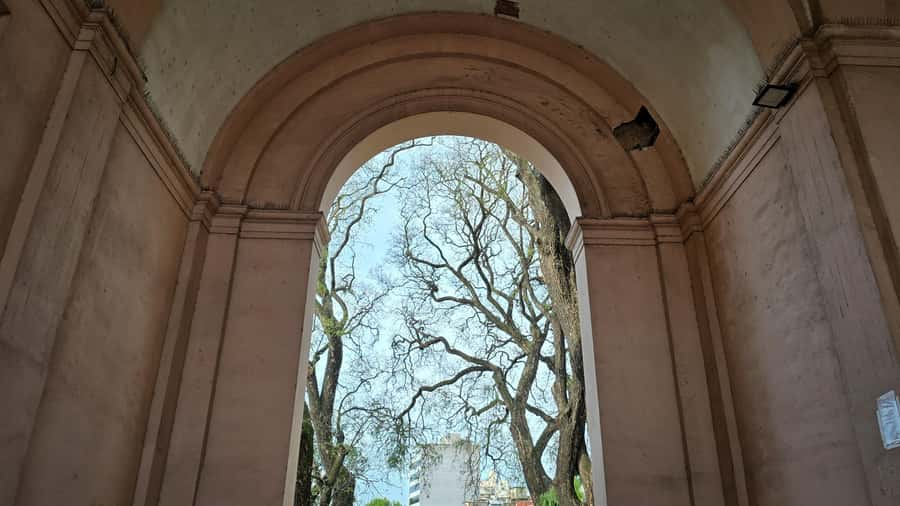
You meet at the main door of Chacarita Cemetery. The tour lasts three hours and includes a 10-minute pause for the restroom. The group is capped at six people, which matters in a cemetery this large. A small party makes it easier to hear Spanish explanations, ask questions, and stay close to the guide without turning the walk into a crowd exercise.
Miguel is the guide identified for this experience. His strongest quality is patience. He has handled questions carefully, kept the full tour to its advertised length, and adjusted his Spanish for a person who was still learning the language. That makes this a good option if you understand some Spanish but need a slower pace.
The language is Spanish only. You should not book this expecting an English tour with occasional Spanish. Still, a small group and patient guide can make the experience workable for intermediate Spanish speakers. If you know only a few words, the tombs and visual details will still offer something, but you will miss much of the value, since the stories are the reason to take a guided walk.
The first Chacarita stops, from Gardel to Newbery
The route begins with a general visit to Chacarita Cemetery, followed by several mausoleums. The first formal stop at the cemetery lasts about 10 minutes, enough to set the scene and explain what you are seeing before the tour turns to individual figures.
Carlos Gardel is the headline stop. His mausoleum is one of the tour’s strongest draws because Gardel is closely tied to the identity of tango. You get a place to pay respects to the singer often treated as the quintessential voice of the genre, while Miguel provides the cultural setting around his importance.
The stop is listed for about 10 minutes, so expect a focused visit rather than a long lecture. You will have time for photographs and questions, but the route keeps moving. That rhythm works well here. Chacarita has much more to show, and spending the entire morning at one tomb would undercut the variety.
Next comes the mausoleum of Jorge Newbery. His inclusion widens the tour beyond music. The visit helps show how Chacarita remembers public figures from different parts of Argentine life, not just entertainers. The stop also gives you another example of the cemetery’s memorial architecture and the way an individual’s public identity carries into a final resting place.
Sandrini, Storni, and the people behind the famous names
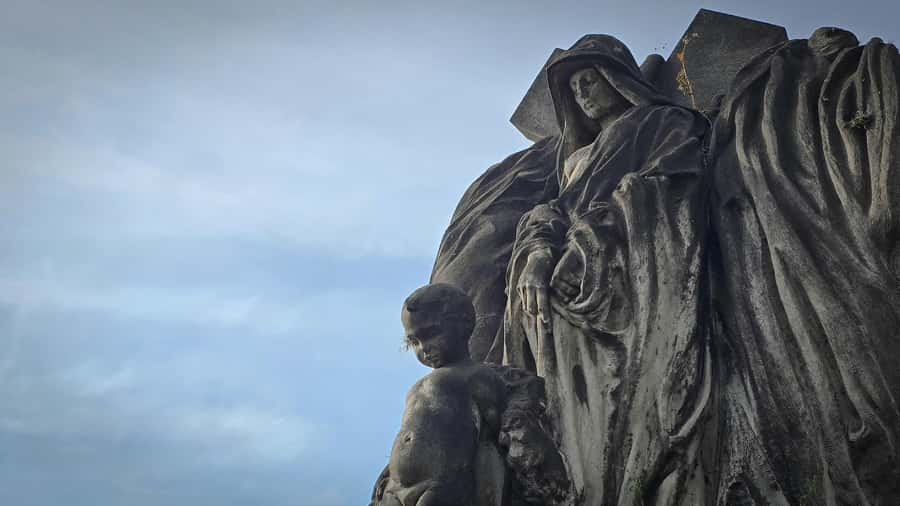
The itinerary includes the mausoleum of María Salomé Loredo de Subiza, followed by stops associated with other celebrated Argentine figures. These shorter visits are useful because the guide can connect people from different fields without asking you to memorize a long list.
Luis Sandrini represents Argentine film and comedy. His career reached generations of Argentines, and his memorial adds a more personal, popular side to the tour. You are not just looking at the grave of a performer. You are being introduced to someone remembered for making people laugh and cry.
Osvaldo Pugliese brings the route back to tango, but from a different angle than Gardel. Pugliese was a major composer and orchestra director, so his place in the tour shows how tango depends on more than singers. If Gardel gives you the voice of tango, Pugliese points toward its composers, arrangers, and bandleaders.
Alfonsina Storni adds poetry and a more solemn tone. Her life and death are part of the emotional thread of the tour, and her presence reminds you that Chacarita holds literary figures as well as musicians and actors. The guide’s role is important here. The names alone may mean little if you do not know Argentine culture, but a clear explanation can turn a simple grave into a meaningful stop.
Same city, an entirely different evening:
- Buenos Aires Hop-On Hop-Off Bus, Free Walking Tours & Discounts
★ 4.5 · 2,218 reviews - Buenos Aires: Piazzolla Tango Show with Optional Dinner
★ 4.4 · 2,122 reviews - Buenos Aires: City Highlights Guided Tour with Transfer
★ 4.7 · 1,946 reviews - Buenos Aires: Hop-On Hop-Off City Bus Tour
★ 4.2 · 1,855 reviews
Cerati and Gilda, Argentina’s modern music shrines
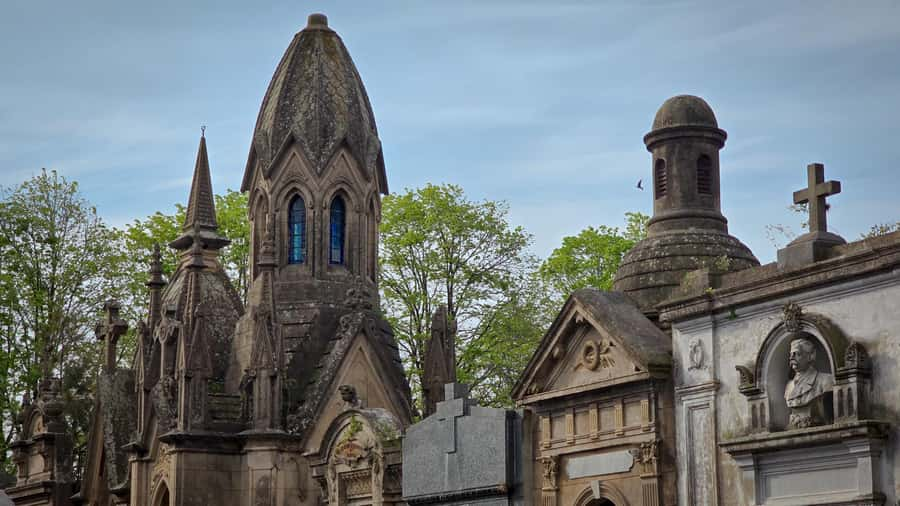
The tour then moves toward more recent musical memory with Gustavo Cerati and Gilda. The Cerati mausoleum receives about 15 minutes, giving it slightly more time than some of the earlier stops.
Cerati is a major figure for anyone interested in Argentine rock and Latin American music. His memorial gives the tour a modern counterpoint to Gardel’s tango. You move from one era of popular music to another, seeing how different generations create their own cultural icons.
The stop at Gilda also lasts about 15 minutes. Her memorial reflects another branch of Argentine popular music and shows how personal a cemetery visit can become for local fans. The tour does not limit itself to official national figures. It includes people who remain important in everyday cultural memory.
These stops are especially useful if you already know Cerati or Gilda’s music. If you do not, listen to a few songs before booking. A little preparation will help you understand why these memorials matter, just as knowing a few Gardel tangos will make his stop more rewarding.
The chapel and Panteón VI
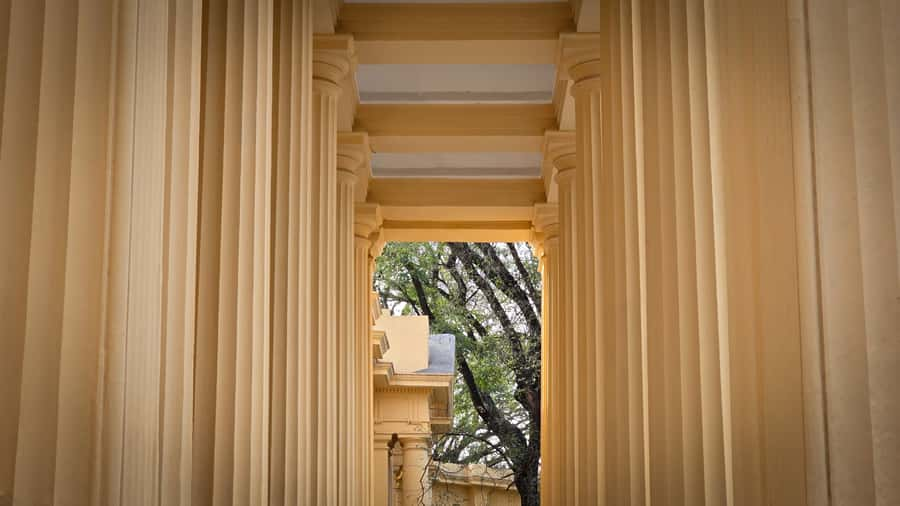
The chapel of Chacarita Cemetery gives the walk a change of pace. After several individual mausoleums, you see a religious space connected to the cemetery as a whole. The visit lasts about 10 minutes and helps explain the spiritual side of the site without turning the tour into a religious service.
Panteón VI receives the longest stop, about 30 minutes. That length suggests a more detailed explanation of its architecture, memorial purpose, or notable people. You should expect this to be one of the central sections of the Chacarita portion, with time for photographs and questions.
The value of these stops is easy to miss if you visit alone. A self-guided walk can show you impressive structures, but it may not explain why one building deserves more attention than another. Miguel’s job is to provide that order and context, so the large cemetery becomes a readable place rather than a long succession of names.
The British and German cemeteries
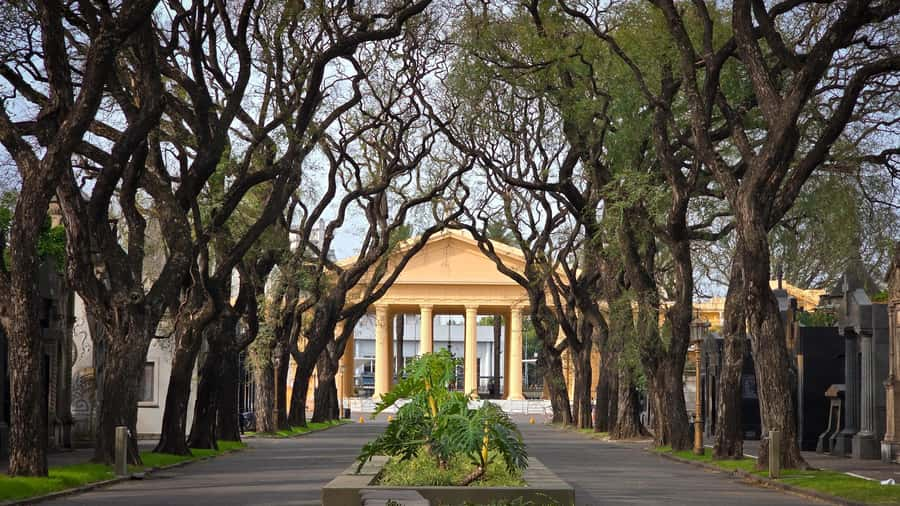
The tour leaves the main Chacarita grounds for the Commonwealth War Graves Buenos Aires and the German Cemetery. This is one of the most interesting features of the experience because it changes the visual and cultural frame.
At the Commonwealth War Graves site, the guide discusses a British connection to Buenos Aires and the people remembered there. The stop lasts about 15 minutes. You also visit the German cemetery, where the tour highlights its distinct style, religious temples, national historical monuments, and notable figures.
I like this section because it adds comparison. You are not seeing only one cemetery tradition repeated across a large site. You are looking at different communities and the ways they created places of remembrance in the same city. The tour does not provide every detail in the booking information, so you should expect the guide to shape the explanation on the day rather than follow a fixed museum-style display.
This portion also keeps the experience from feeling like a celebrity-grave checklist. Famous names draw you in, but the German and British grounds remind you that cemeteries also record migration, identity, faith, and national ties.
Elcano Park and the final part of the walk
The final listed stop is Elcano Park, with about 10 minutes for a guided visit and sightseeing. Its place at the end gives the tour a brief outdoor change before it finishes.
The supplied details do not explain a specific monument or feature at the park, so I would treat this as a closing stop rather than book the tour for the park itself. Its value lies in rounding out the route and giving you another point of local orientation after the cemetery visits.
The tour covers many stops in three hours. That is a full schedule, but not an exhausting attempt to linger everywhere. You get short visits at several mausoleums and more time at Panteón VI, Cerati’s mausoleum, Gilda’s tomb, and the wider cemetery sections. If you prefer long periods of quiet reflection at each grave, the pace may feel brisk. If you want a broad introduction to Chacarita, the timing makes sense.
What the $20 price gives you
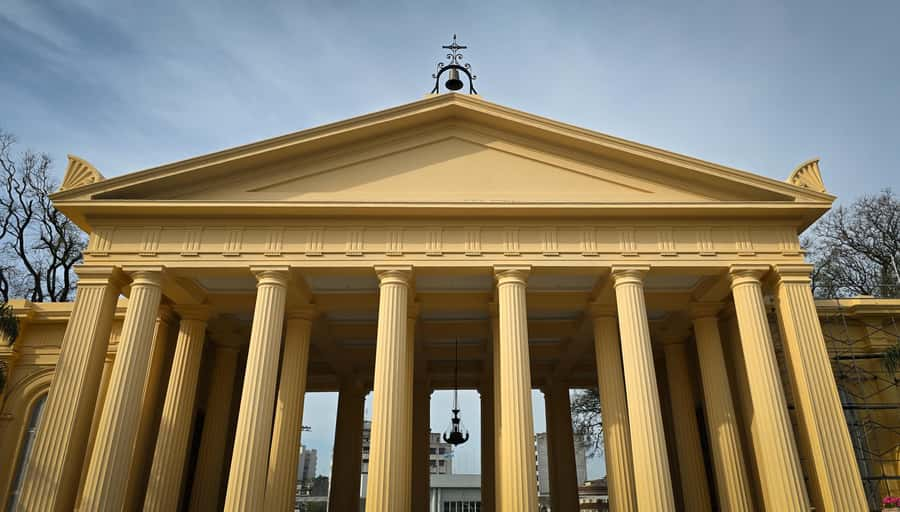
At $20 per person, this tour offers good value if you want interpretation rather than just access to a cemetery. The price covers a three-hour guided walk, a small group, and a route that includes the main Chacarita grounds plus German and British sites.
The strongest part of the value is the range of subjects. You are not paying for one famous tomb and a short explanation. You are getting tango, rock, film, poetry, military remembrance, religious architecture, and cemetery design in one outing.
I would compare this cost with the alternative of visiting on your own. Walking alone costs less, but you would need to identify the relevant mausoleums, understand the cultural importance of each figure, and find the German and British cemeteries. If those details matter to you, the guide earns the fee.
The price is less attractive if you do not speak Spanish or have little interest in Argentine culture. The tour’s value comes from the stories, and those stories are delivered in Spanish. The small group helps, but it does not change the language of the experience.
Practical advice for a comfortable visit
Wear comfortable shoes. This is a three-hour walking tour, and the route includes several cemetery areas and outdoor stops. Bring water, a hat, and sunscreen, especially since the schedule includes time outside and there is only a short planned restroom pause.
Rain does not automatically ruin the experience. Miguel has continued the tour in light rain while keeping the visit on schedule, but you should dress sensibly and protect anything you need for photographs. The tour information does not promise indoor shelter throughout the route.
The activity is not suitable for wheelchair users or people with mobility impairments. That is not a minor footnote. The walking time, cemetery grounds, and number of stops make mobility an important booking decision.
Free cancellation is available up to 24 hours before the tour for a full refund, and you can reserve now and pay later. Starting times vary, so you need to check availability when choosing a date.
Who should book this Chacarita cemetery tour?
I would recommend it to anyone interested in tango, Argentine rock, film, poetry, or the cultural figures who shaped Buenos Aires. It also suits people who like architecture and memorial art but want more context than a self-guided visit provides.
Spanish learners may find it particularly useful. Miguel has shown patience with people learning Spanish and can speak slowly, which turns the tour into both a cultural outing and a listening exercise.
I would hesitate to recommend it to anyone seeking an English-language explanation, a relaxed sightseeing walk with little standing or walking, or a fully accessible route. The schedule is active, the group is small but Spanish-only, and the cemetery setting requires appropriate footwear and mobility.
Should you book it?
Book this tour if you want to understand why Chacarita matters to Argentine culture, not simply photograph a famous grave. The combination of Gardel, Cerati, Gilda, Pugliese, Storni, Sandrini, the chapel, Panteón VI, and the German and British cemeteries gives you a broad look at Buenos Aires remembrance.
Skip it if you need English, wheelchair access, or a slow visit focused on just one or two figures. For Spanish speakers and Spanish learners who can manage three hours on foot, the $20 price is fair, the small group is a real advantage, and Miguel’s patient style makes the experience easier to follow.
FAQ
Where does the tour meet?
You meet at the main door of Chacarita Cemetery.
How long does the tour last?
The guided walking tour lasts three hours and includes a 10-minute pause for using the restroom.
What language is the tour in?
The tour is conducted in Spanish.
How large is the group?
The group is limited to six participants.
Which famous graves are included?
The route includes Carlos Gardel, Gustavo Cerati, Gilda, Jorge Newbery, Luis Sandrini, Osvaldo Pugliese, Alfonsina Storni, and other notable Argentine figures.
Does the tour visit other cemeteries?
Yes. It includes Commonwealth War Graves Buenos Aires and the German Cemetery, in addition to Chacarita Cemetery.
Is the tour suitable for wheelchair users?
No. The experience is not suitable for wheelchair users or people with mobility impairments.
Just added around Buenos Aires
- Tango Show at El Querandi with optional Dinner★ 4.2 · 3 reviews
- Wine Tasting in Buenos Aires★ 4.2 · 4 reviews
- Walking Tour: Buenos Aires bookstores★ 4.3 · 12 reviews
- Private Underground Tango Immersion★ 5.0 · 31 reviews
- Velez Sarsfield Football Match★ 5.0 · 3 reviews
- Unique Tigre and Delta Private Day Cruise Navegation★ 5.0 · 3 reviews
- Transfers from or to the airport In Argentina Your Best Choice★ 5.0 · 28 reviews
- Tour Buenos Aires in one day on Electric Scooters★ 5.0 · 33 reviews
Recoleta Tours, compared.

Buenos Aires Bike Tour: North Districts, Recoleta and Palermo
Read our review →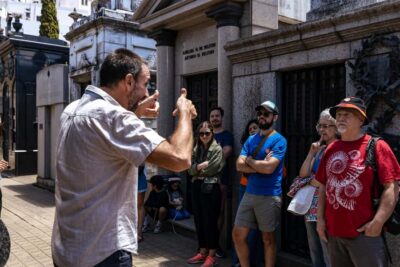
Recoleta Cemetery – Small Group Tour of History & Secrets
Read our review →

Cultural Experience by Bike around Palermo and Recoleta Max 6 ppl
Read our review →
Full Day City Tour Buenos Aires, Recoleta Cemetery and Tigre
Read our review →Browse the lists this tour appears in