Reviewed · PRIVATE
Jewish Buenos Aires Private Tour
Buenos Aires reveals its Jewish story in Once, the city’s old Jewish quarter and garment district. Here, kosher shops, Jewish schools, institutions, Sephardic businesses, Ashkenazi congregations, and non-Jewish neighbors share the same crowded streets. The tour connects that daily life with the 1994 AMIA bombing, historic synagogues, and the Jewish Museum.
I like the private format, which lets you shape the visit around your interests and ask direct questions. I also like the mix of walking and driving: you get time on foot in Once, but hotel, Airbnb, or cruise-terminal pickup keeps the four-hour outing easy on your legs.
The main consideration is price. At $280 per person, this is a serious spend, and the museum and synagogue admissions cost extra. It makes the most sense for visitors who want Jewish history explained by a guide with ties to the local community, not for anyone seeking a quick sightseeing loop.
Key points to know before booking
- Once is the heart of the tour: Explore kosher markets, Jewish institutions, Orthodox congregations, and the garment district on foot.
- You visit two important synagogues: Gran Templo Paso costs $10, while the Jewish Museum ticket includes access to Libertad Synagogue for $15.
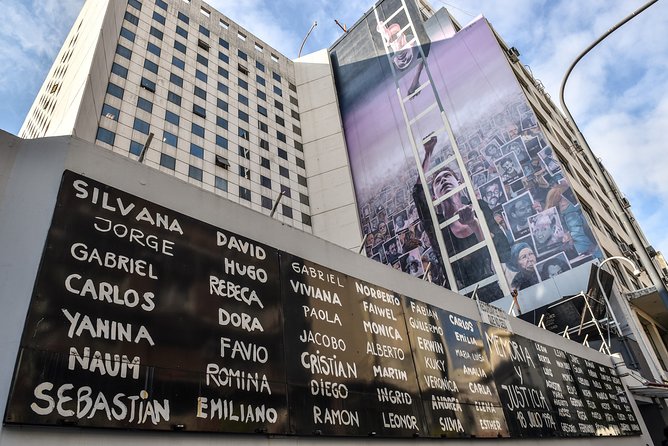
- The AMIA attack is treated with care: See the federation building from outside and a memorial mural recalling the 1994 terrorist attack.
- Your guide shapes the experience: Guides have included Matías, Elan, Ariel, Ariela, Gabriel, Claudia, and others connected with the local Jewish community.
- A comfortable car fills the gaps: Hotel, Airbnb, and cruise-terminal pickup and drop-off are included with a professional driver.
- Allow extra time for questions: The strongest part of this tour is often the conversation about Jewish life, Argentine politics, immigration, and memory.
Why Jewish Buenos Aires is best understood in Once
Once is not a polished museum district. It is a working commercial neighborhood in the center of Buenos Aires, known especially for clothing shops and wholesale trade. That makes it useful for understanding Jewish life as something active and ordinary, not just a subject preserved behind glass.
Your walking section takes you past kosher shops and markets, Jewish institutions, and Orthodox congregations. The neighborhood is home to both Sephardic and Ashkenazi Jews, and the tour helps you see how those traditions fit into the wider city.
I would pay close attention to the small details here. A shop selling kosher food, a congregation serving a particular Jewish tradition, or a reference to immigrant communities can say more about present-day life than a long list of dates. The pace is also manageable: the walking portion is described as a small walk, while the vehicle handles the longer stretches.
If you visit on a Friday afternoon, the area may offer a particularly useful setting for understanding preparations before Shabbat. That timing was specifically praised as an added benefit, but it is worth confirming with the operator before booking because the tour schedule and synagogue access can vary.
A few more Buenos Aires outings worth weighing up
- Buenos Aires Private City Tour with Local Guide
★ 5.0 · 308 reviews - Buenos Aires: Private Tango Lesson
★ 4.9 · 244 reviews - Buenos Aires: Personalized 2 to 8-Hour Private Walking Tour
★ 4.7 · 149 reviews
Gran Templo Paso and the older synagogue tradition
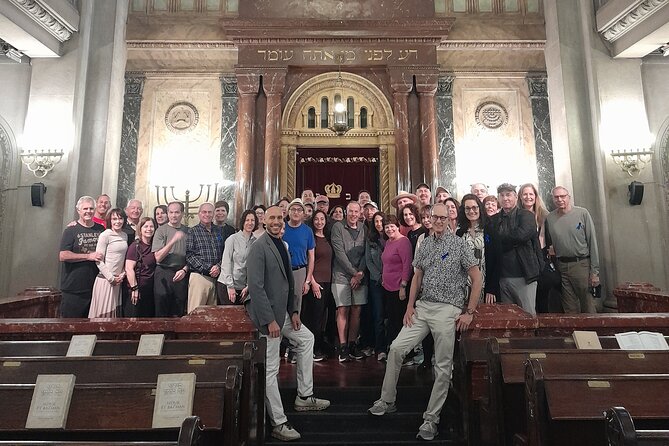
Gran Templo Paso is described as the oldest synagogue visited on the tour. It gives the itinerary a strong architectural and religious focus after the street-level introduction to Once.
Admission is not included, so set aside $10 per person. That extra charge is modest compared with the total tour price, but you should know about it before you arrive. The synagogue visit may be especially meaningful if you want to compare Orthodox Jewish life with the Reform setting associated with Libertad Synagogue.
The private format helps here. A guide can explain what you are seeing, answer questions about worship and community life, and adjust the level of detail to your group. Several guides have been praised for clear English, an easy pace, and a friendly manner, which matters in a religious setting where a rushed explanation would miss much of the point.
Access to religious buildings can depend on operating hours and local arrangements. The tour confirms the visit as part of the plan, but I would still ask at booking if Gran Templo Paso will be open for entry on your chosen date.
The AMIA building and a difficult chapter
The tour includes an exterior look at the Jewish Federation building, known as AMIA, and the mural on its side wall. The mural remembers the 1994 terrorist attack against the federation, one of the most painful events in Argentina’s recent Jewish history.
This is not a light sightseeing stop. The value comes from placing the event in the setting of the community it affected. You see the building, learn what happened, and connect the attack to the institutions, families, and religious life around it.
The tour also addresses the 1992 attack against the Israeli Embassy, according to the experiences described by past participants. Ask your guide how that subject fits into your route and how much time is available. The guides are also noted for discussing Argentina’s military dictatorship, Peronism, and later political events, so the conversation can reach beyond Jewish sites into the country’s wider modern story.
I appreciate that this material is not treated as a detached footnote. The AMIA stop gives the tour moral weight, but it may feel heavy if you are looking only for architecture or food. Give yourself room for a thoughtful conversation rather than expecting nonstop sightseeing.
The Jewish Museum and Libertad Synagogue
The Jewish Museum of Buenos Aires opened in 1967 and sits next to Libertad Synagogue. Its displays cover Jewish immigrants, Jewish colonies in Argentina, and traditions practiced by the community.
The museum admission is $15 per person, and that ticket also gives you access to Libertad Synagogue. This combined entry makes the stop more valuable than paying for a museum alone, especially if you want both historical context and a functioning religious landmark.
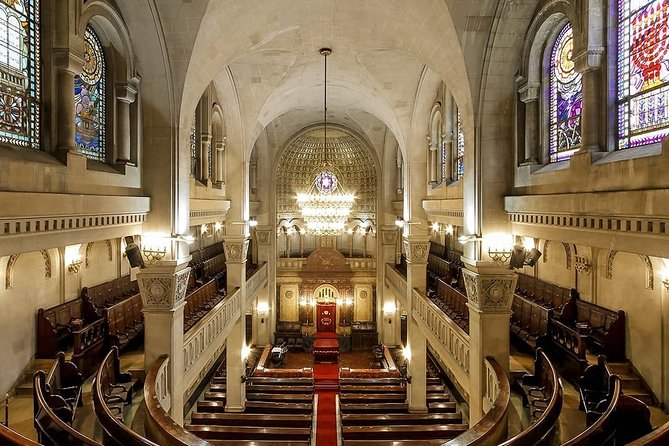
Libertad Synagogue was built in 1932 and belongs to CIRA, the Israeli Congregation of the Argentine Republic. CIRA was founded in 1862 as the first Jewish institution in Argentina. Those dates help place the building within the longer story of Jewish settlement and community organization in the country.
The museum is likely to work best for you after visiting Once. First, you see Jewish life in a real neighborhood. Then, the museum gives names and context to immigration, customs, and institutions. Your guide can also lead the museum visit, which turns the exhibits into a conversation rather than a silent walk past display cases.
One limitation is that the tour does not promise access to a large number of synagogues. One past participant wanted to see more. If synagogue architecture is your main interest, ask what is open and what can be added before you confirm the booking.
Same city, an entirely different evening:
- Buenos Aires Hop-On Hop-Off Bus, Free Walking Tours & Discounts
★ 4.5 · 2,218 reviews - Buenos Aires: Piazzolla Tango Show with Optional Dinner
★ 4.4 · 2,122 reviews - Buenos Aires: City Highlights Guided Tour with Transfer
★ 4.7 · 1,946 reviews - Buenos Aires: Hop-On Hop-Off City Bus Tour
★ 4.2 · 1,855 reviews
A quiet memorial inside Argentina’s main cathedral
The final listed stop is Catedral Primada, Argentina’s main cathedral. Inside, you see a memorial to Holocaust victims and to those affected by the AMIA terrorist attack.
The setting creates a striking contrast. A memorial to Jewish suffering inside the country’s leading Catholic cathedral points to a broader public act of remembrance. It also keeps the tour from presenting Jewish Buenos Aires as a separate island. The community’s story is tied to the civic and religious life of the city as a whole.
The stop lasts about 20 minutes and admission is free. It is short, but it gives the day a reflective ending after the movement of Once, the museum, and the synagogue visits.
What the private guide adds
The guide is the main reason to choose this experience over a standard city tour. Your guide specializes in Jewish history and is an active member of the local Jewish community, according to the tour details. That does not mean every guide will offer the same perspective, so it is sensible to request a particular focus when booking.
Guides named in past experiences include Matías, Elan, Ilan, Ariel, Ariela, Gabriel, Claudia, and Matthew. Matías received repeated praise for his clear explanations and ability to connect Jewish Buenos Aires with Argentine politics and national history. Elan and Ilan were also singled out for explaining Jewish life from the nineteenth century to the present, while Ariela was praised for balancing Jewish sites with broader Argentine history.
The names appear with different spellings in the supplied information, so do not assume a particular guide is guaranteed. You can request a guide if someone’s language skills, background, or subject interests match your needs, but confirmation depends on availability.
The tour is also well suited to questions. You can ask about Sephardic and Ashkenazi traditions, Jewish immigration, the AMIA attack, religious practice, or the effect of Argentina’s political past on Jewish life. That flexibility is much harder to get on a large group outing.
Transport, walking, and pace
The experience lasts about four hours. A modern vehicle with a professional driver handles transportation, while the Once section includes walking. Pickup and drop-off are provided at your hotel, Airbnb, or cruise ship terminal.
That arrangement is useful in Buenos Aires, where the Jewish sites are spread across different parts of the city. You do not have to work out each transfer, and you can spend your attention on the guide rather than on directions.
Most people can take part, and the tour is near public transportation, though the included vehicle makes that less important. The pace has worked well for older couples, including people in their late seventies, but you should still tell the operator about walking limits when you customize the itinerary.
Because this is a private activity, only your group participates. You can ask for a slower walk, more time in the museum, more political context, or greater attention to religious architecture. The tradeoff is that a private tour costs more than a shared group excursion.
Is $280 per person a fair value?
At $280 per person, this is not a bargain tour. Admission adds another $25 per person if you visit both the Jewish Museum and Gran Templo Paso, bringing the known total to $305 per person before any other personal spending.
The price does include private transportation, a professional driver, hotel or cruise-terminal pickup and drop-off, a private guide, and a customized four-hour schedule. For a couple or family that wants a focused Jewish heritage experience, those costs can add up quickly if arranged separately.
I see the value mainly in the guide’s access to local context and the ability to ask questions. You are paying for interpretation, not just a ride between buildings. If you already know the history and only want to see the exteriors, the price will feel high.
The tour is booked an average of 54 days ahead, which suggests that planning early is sensible. Confirmation is issued within 48 hours of booking, subject to availability. The cancellation policy is strict: the experience is non-refundable and cannot be changed for any reason, so do not book until your schedule is firm.
Who should book this Jewish Buenos Aires tour?
I would choose this tour if you want a focused introduction to Jewish Buenos Aires and prefer a guide who can link buildings and memorials to living community life. It suits first-time visitors who want more than a general city tour, Jewish visitors tracing heritage, and anyone interested in Argentina’s political and social history.
It is also a good fit for families and couples who value a calm pace and private vehicle. The itinerary has enough variety to keep the four hours moving: a neighborhood walk, two synagogue-related visits, a museum, and memorials.
I would think twice if you want a broad overview of Buenos Aires, a low-cost group tour, or a packed list of many synagogues. This is a specialized history and culture experience, and the AMIA and Holocaust memorials give it a serious tone.
Final verdict: book it for context, not just sightseeing
Book the Jewish Buenos Aires Private Tour if you want to understand how immigration, worship, commerce, memory, and politics have shaped the city’s Jewish community. The strongest features are the walk through Once, the access to Gran Templo Paso and Libertad Synagogue, and the chance to talk at length with a guide such as Matías, Elan, Ariel, or Ariela.
Before paying, ask which guide is available, confirm the synagogue visits, and decide how much time you want for the museum or political history. If those details match your interests, the private format can justify the high price. If not, you may be better off visiting the Jewish Museum independently and using the rest of your Buenos Aires budget elsewhere.
FAQ
How long does the Jewish Buenos Aires Private Tour last?
The tour lasts approximately four hours.
What neighborhoods and sites are included?
The route includes Once, the Jewish Museum of Buenos Aires, Libertad Synagogue, Gran Templo Paso, the AMIA building and mural from outside, and Catedral Primada.
Is hotel pickup included?
Yes. Pickup and drop-off are included from your hotel, Airbnb, or cruise ship terminal.
How much do the synagogue and museum admissions cost?
The Jewish Museum and Libertad Synagogue ticket costs $15 per person. Gran Templo Paso costs $10 per person. These admissions are not included in the tour price.
Is the tour private?
Yes. Only your group participates, and the itinerary can be customized to your interests and schedule.
Who guides the tour?
The tour is led by a guide specializing in Jewish history and connected with the local Jewish community. Guides named in the supplied information include Matías, Elan, Ilan, Ariel, Ariela, Gabriel, Claudia, and Matthew, subject to availability.
Is transportation provided during the tour?
Yes. You travel in a modern vehicle with a professional driver, with walking included in the Once neighborhood.
Can the tour be canceled for a refund?
No. The experience is non-refundable and cannot be changed for any reason once booked. Confirmation is sent within 48 hours, subject to availability.
Just added around Buenos Aires
- Wine Tasting in Buenos Aires★ 4.2 · 4 reviews
- Tango Show at El Querandi with optional Dinner★ 4.2 · 3 reviews
- Walking Tour: Buenos Aires bookstores★ 4.3 · 12 reviews
- Private Underground Tango Immersion★ 5.0 · 31 reviews
- Velez Sarsfield Football Match★ 5.0 · 3 reviews
- Unique Tigre and Delta Private Day Cruise Navegation★ 5.0 · 3 reviews
- Transfers from or to the airport In Argentina Your Best Choice★ 5.0 · 28 reviews
- Tour Buenos Aires in one day on Electric Scooters★ 5.0 · 33 reviews
Private, compared.