
Reviewed · BUENOS AIRES COOKING CLASSES
Buenos Aires: Empanadas and Alfajores Guided Cooking Class
Buenos Aires is a city you can taste in a home kitchen. This three-hour class at Paseo Colon 1355 in San Telmo brings you inside an Argentine household to make empanadas, alfajores, and mate with hosts such as Thomas, Sophia, Maria, and Stella. I especially like the small group of up to eight and the chance to learn the twisted empanada seal, or repulgue, by hand.
I also like that you eat what you prepare, rather than watching a demonstration and leaving hungry. The class offers a friendly way to meet people from several countries, though some steps can be hard to see from the far end of the table, and the recipe handoff has not always been as direct as it should be.
Key points at a glance
- A real home in San Telmo: You cook in a household rather than a formal culinary school.
- Three Argentine staples: Make savory empanadas, corn-starch alfajores with dulce de leche, and traditional mate.
- Small, social group: The class is limited to eight people, which gives you hands-on time and easy conversation.
- Vegetarian option: You can prepare a vegetable filling alongside the classic meat version.
- Meal included: Your cooking becomes dinner, with water and mate provided. Wine costs extra.
- Useful for families: Children and teenagers have taken part successfully, and no advanced cooking skill is required.
A Buenos Aires kitchen instead of a cooking studio
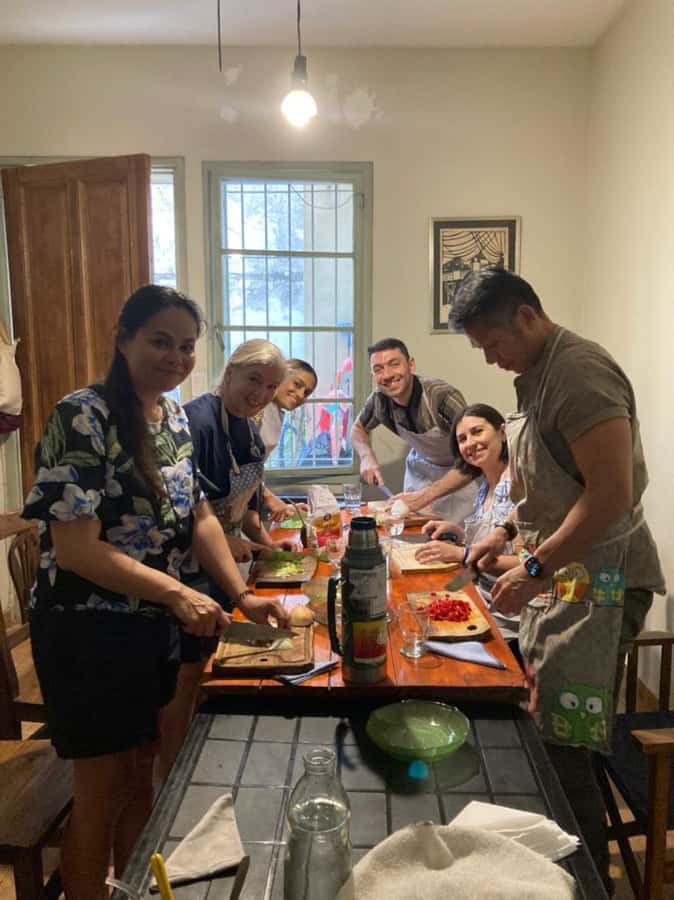
The appeal begins at the front door. You ring the bell at Paseo Colon 1355 in San Telmo and enter a real home, sometimes described as more than a century old. That setting changes the feel of the class at once. You are not lined up at separate workstations under bright commercial lights. You are gathered around a household table, cooking together and talking as you go.
That home setting is especially useful if you want more than a recipe. The hosts explain how food fits into daily Argentine life, along with bits of local history and customs. Sophia is also a guide, so she can add practical ideas about Buenos Aires beyond the meal itself. Thomas brings a relaxed, humorous teaching style, while Maria and Stella have also been praised for creating a warm, well-run evening.
The exact host team can vary, but the format stays personal. You may be welcomed by one person, taught by another, and helped along by a family member who keeps the table organized. It feels closer to being invited over for dinner than attending a polished tourist production.
More cooking classes in Buenos Aires:
- Buenos Aires: Empanada & Alfajor Cooking Lesson in Palermo
★ 4.6 · 186 reviews - Buenos Aires Food Tour: Local Dishes, Steak, Empanada & More
★ 5.0 · 118 reviews - BA: Empanadas and Alfajores Cooking Experience in Palermo
★ 5.0 · 112 reviews
Making empanadas by hand
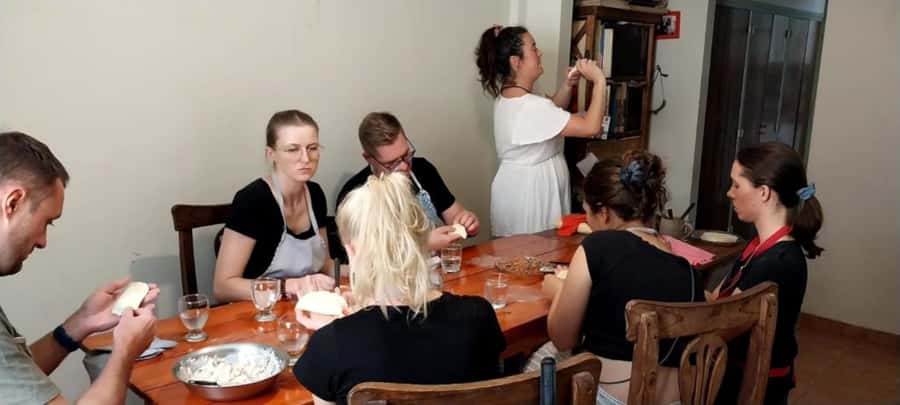
Empanadas are the main event, and the class treats them as a skill rather than a quick snack. You work through the dough and filling step by step, then learn how to place the filling, fold the pastry, and create the classic repulgue. This twisted edge is both decorative and practical: it seals the empanada and helps identify the cook’s handiwork.
The fillings include a traditional meat option and a vegetarian alternative. That is good news for mixed groups, since you do not need to arrange a separate meal for someone who does not eat meat. One point to keep in mind is that the class may repeat the same meat filling rather than offering several different savory choices. If you are hoping to compare beef, cheese, and vegetable empanadas, this may feel limited.
You should expect to do the work yourself. The point is not simply to watch a host make perfect pastries while you take notes. You help prepare ingredients, shape the dough, and seal the empanadas. This hands-on approach is valuable because the repulgue is easier to understand through your fingers than from a photograph.
The instruction is friendly and accessible for most skill levels, but it is not a private lesson. In a group of eight, some people will move faster than others. A few participants have found that explanations could be clearer for complete beginners, so do not be shy about asking the host to repeat a step or demonstrate it again.
Learning the Argentine mate ritual
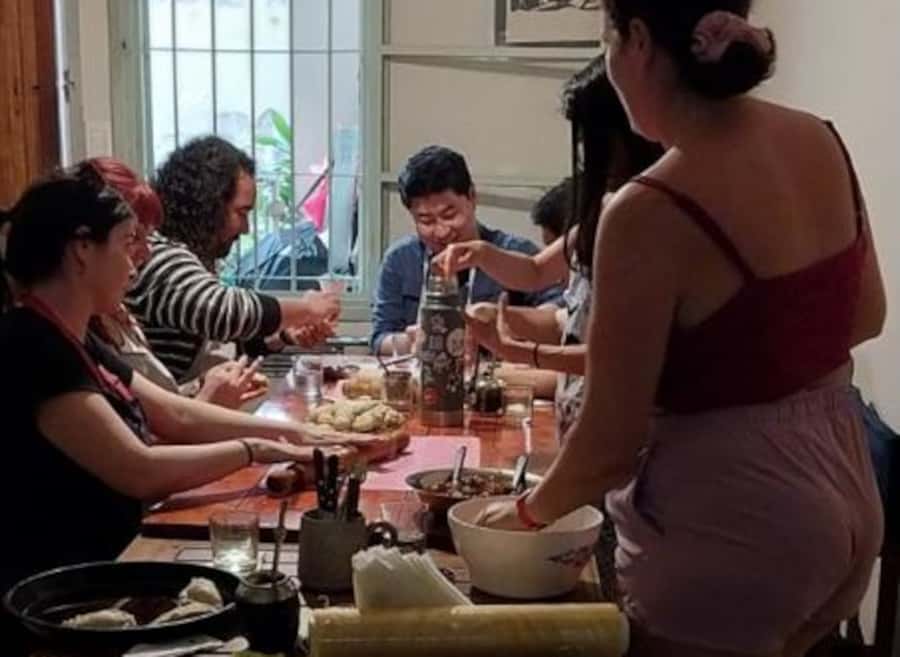
While the empanadas come together, you learn how mate is prepared and shared. Mate is a traditional herbal drink served in a gourd with a metal straw, and the preparation has its own customs. Here, the focus is not only on tasting it but also on understanding the traditional method.
This part gives the class a useful cultural layer. You learn why mate is more than a hot drink and how it fits into social life in Argentina. Sharing it at the table also helps strangers begin talking, which is one reason the small group works so well.
Mate has a strong, herbal flavor that may be new to you. The experience is about trying a local custom, not ordering a sweet café drink. Water is included, so you do not need to worry about going thirsty while the food is being prepared.
Rolling alfajores with dulce de leche
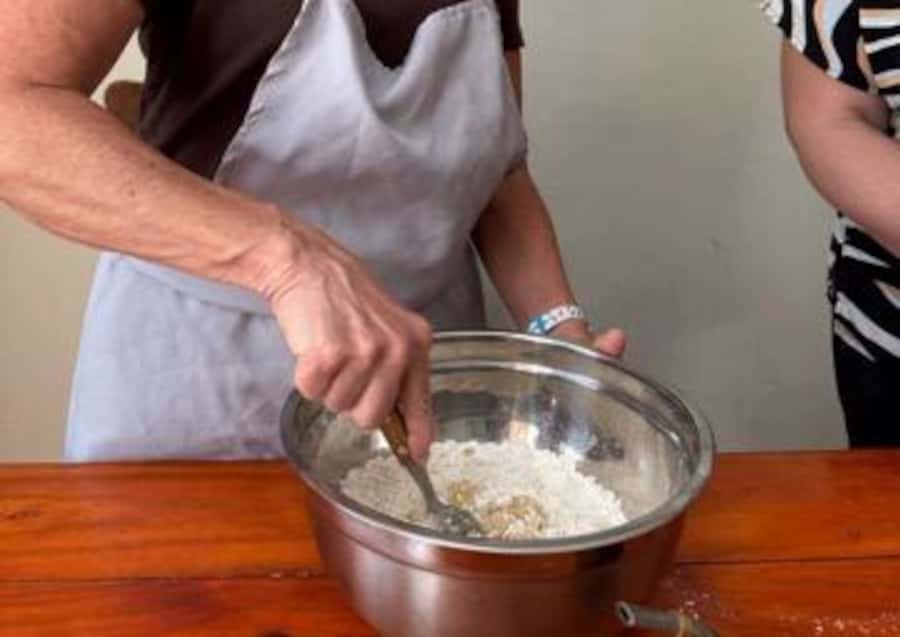
The second cooking project is alfajores, a beloved Argentine pastry. In this class, you make the cookie with corn starch and fill it with dulce de leche, the thick, creamy caramel-like spread that appears in many Argentine desserts.
The alfajores provide a pleasant change of pace after the savory empanadas. You work with a softer, sweeter dough, prepare the cookie shapes, and add the filling before eating the finished pastries. Because you make both the pastry and the main course, the class feels like a full meal with dessert rather than a single-recipe demonstration.
Dulce de leche is essential here, and it gives the alfajores their familiar sweetness. If you have a serious sweet tooth, this may be your favorite part. If you prefer savory food, the empanadas still make the class worthwhile, and the final meal includes plenty of what you have prepared.
The class is also useful for anyone who wants to recreate Argentine food at home. Several participants have left eager to try the recipes in their own kitchens. Make sure you receive the recipes before leaving, though. Some people have needed to request them afterward, and the process has not always been automatic.
Same city, an entirely different evening:
- Buenos Aires Hop-On Hop-Off Bus, Free Walking Tours & Discounts
★ 4.5 · 2,218 reviews - Buenos Aires: Piazzolla Tango Show with Optional Dinner
★ 4.4 · 2,122 reviews - Buenos Aires: City Highlights Guided Tour with Transfer
★ 4.7 · 1,946 reviews - Buenos Aires: Hop-On Hop-Off City Bus Tour
★ 4.2 · 1,855 reviews
Dinner, conversation, and a generous amount of food
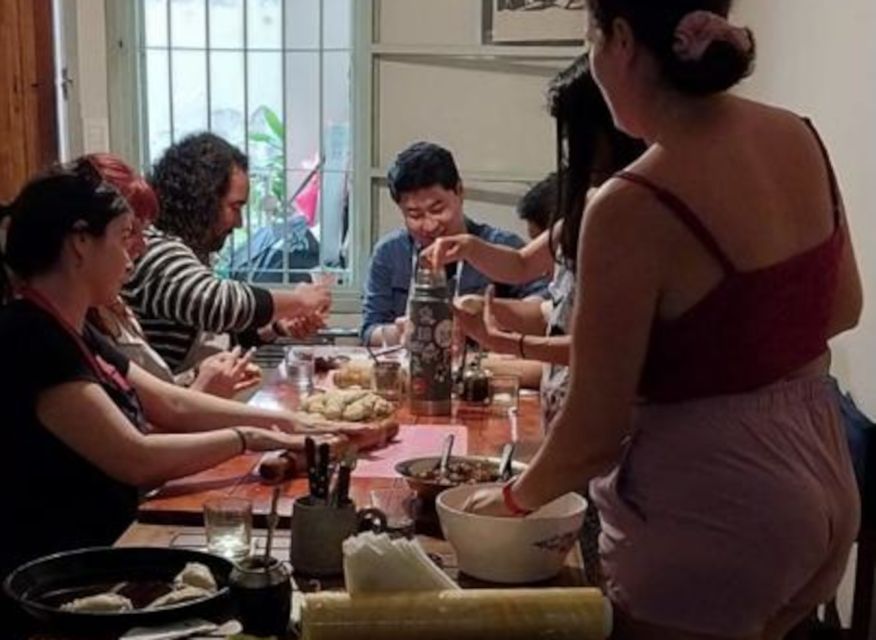
Once the cooking is finished, you sit down and eat the results. The meal includes the empanadas and alfajores you made, along with mate and water. Wine is available to purchase separately, so budget for that only if you want a glass with dinner.
The social side is a major part of the experience. You may be seated with people from several countries, and the shared work gives everyone an easy subject to discuss. Instead of making small talk from scratch, you can compare folds, fillings, cooking attempts, and favorite foods.
The hosts continue talking about Argentina and Buenos Aires during the meal. That makes the class feel broader than a standard cooking lesson. You get food culture, family hospitality, and practical city conversation in one sitting.
There are a few modest comforts to expect rather than restaurant service. One person would have preferred small plates instead of napkins, and the space can feel close when everyone is working. These are minor points, but they matter if you expect a formal dinner table.
Why the eight-person limit matters
The maximum group size is eight, and that is one of the best features of the class. A small group gives you a real chance to handle the dough, ask questions, and speak with the hosts. It also helps the gathering feel social without becoming noisy or impersonal.
There is a tradeoff. A compact home kitchen does not give everyone a perfect view of every demonstration. If you are seated at the end of the table, you may need to move closer when the host shows a filling or folding technique.
The class could also benefit from a quick introduction at the start. You will likely learn who people are as you cook, but an opening round would make it easier to connect quickly. If you are traveling alone, take the first step and introduce yourself early.
Is the $37 price good value?
At $37 per person, the class offers a lot for a three-hour activity. Ingredients, instruction, mate, water, and the meal are included. You are paying for a hands-on class, dinner, and an evening of cultural exchange, not only for a plate of empanadas.
The value is strongest if you enjoy participation. If you only want to eat Argentine food, a restaurant may give you more menu choice. Here, part of the price covers the time spent preparing dough, fillings, and dessert, plus the chance to ask questions in a private home.
It is also a practical choice for families. Teenagers and children have taken part, and the process gives younger cooks clear jobs to do. Older children may particularly enjoy shaping the empanadas and eating the results. The class is wheelchair accessible, adding another practical advantage.
Wine is not included, but that is easy to account for. You can simply enjoy the mate and water, or buy wine if you want it with dinner.
Who will enjoy this class most?
I would recommend it to you if food is one of the main ways you understand a place. You will learn a recipe, but you will also see how an Argentine household welcomes people, shares mate, and turns cooking into a social occasion.
It suits couples, solo visitors, families, and small groups of friends. Families with children or teenagers can take part together, and the three-hour length is long enough to feel substantial without taking up an entire day.
It is also a good match for beginners. You do not need professional kitchen skills, and the hosts guide you through the process. Still, you should be willing to ask questions and accept that your first empanada may look less tidy than the host’s.
You may want to choose another activity if you need a highly structured lesson, several different empanada fillings, or a formal restaurant-style meal. The class is warm and personal, but the home setting means the seating, visibility, and pace are less polished than at a culinary school.
Practical details before you book
The meeting point is Paseo Colon 1355 in San Telmo. Go to the address at the starting time and ring the bell. The activity lasts three hours, and you can check available start times when booking.
Instruction is offered in English and Portuguese. The class is limited to eight participants and is wheelchair accessible. You can cancel up to 24 hours before the start for a full refund, and the reserve-now, pay-later option lets you hold a place without paying immediately.
I would arrive ready to participate rather than simply observe. Wear something comfortable for kitchen work, listen carefully during the sealing demonstration, and ask for the recipe before you leave. If you are seated far from the center of the table, move closer when a key technique is shown.
Should you book it?
Book this class if you want an evening that combines Argentine food, a real home, and easy conversation with people from elsewhere. The strongest reasons are the small group, the welcoming hosts, the included meal, and the chance to learn three genuinely local traditions in one visit.
Skip it if you want a restaurant tasting menu or a broad tour of many empanada flavors. For most visitors, though, the $37 price buys more than dinner. It gives you a recipe you can try again, a new understanding of mate, and a personal look at Buenos Aires through the people who cook there.
FAQ
Where does the cooking class meet?
Meet at Paseo Colon 1355 in San Telmo at the class starting time. Ring the bell when you arrive.
How long does the experience last?
The cooking class lasts three hours.
How much does the class cost?
The listed price is $37 per person.
What food do I make?
You make Argentine empanadas with savory fillings and alfajores made with corn starch and dulce de leche.
Is a vegetarian filling available?
Yes. A vegetarian filling is available alongside the traditional meat option.
Do I eat the food I prepare?
Yes. The meal is included, and you eat the empanadas and alfajores prepared during the class.
Is mate included?
Yes. Mate, the traditional Argentine herbal drink, is included, and the host explains how to prepare it in the traditional style.
Is wine included?
No. Wine is available for purchase separately.
What languages are spoken?
The class is offered in English and Portuguese.
How many people can join the class?
The class is a small group limited to eight participants.
Is the activity wheelchair accessible?
Yes, the activity is listed as wheelchair accessible.
Can I cancel the booking?
You can cancel up to 24 hours in advance for a full refund. A reserve-now, pay-later option is also available.
More Classes and Workshops in Buenos Aires
- Buenos Aires: Private Tango Lesson
★ 4.9 · 244 reviews - Tango Porteño Show with Optional Dinner and Tango Lesson
★ 4.0 · 97 reviews - Buenos Aires – Private Tango lesson
★ 5.0 · 96 reviews - Spanish Group Course in Buenos Aires, Argentina: 20 Lessons
★ 5.0 · 72 reviews
Just added around Buenos Aires
- Tango Show at El Querandi with optional Dinner★ 4.2 · 3 reviews
- Wine Tasting in Buenos Aires★ 4.2 · 4 reviews
- Walking Tour: Buenos Aires bookstores★ 4.3 · 12 reviews
- Private Underground Tango Immersion★ 5.0 · 31 reviews
- Velez Sarsfield Football Match★ 5.0 · 3 reviews
- Unique Tigre and Delta Private Day Cruise Navegation★ 5.0 · 3 reviews
- Transfers from or to the airport In Argentina Your Best Choice★ 5.0 · 28 reviews
- Tour Buenos Aires in one day on Electric Scooters★ 5.0 · 33 reviews
Buenos Aires Cooking Classes, compared.
Buenos Aires Food Tour: Local Dishes, Steak, Empanada & More
Read our review →
Empanadas and Alfajores Cooking Experience in Palermo
Read our review →
Argentinian Empanadas Cooking Experience in Palermo, Bs As
Read our review →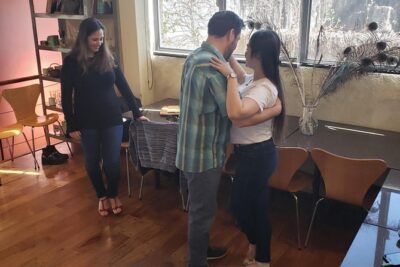
Private Argentine Cooking Class and Tango Lesson in Buenos Aires
Read our review →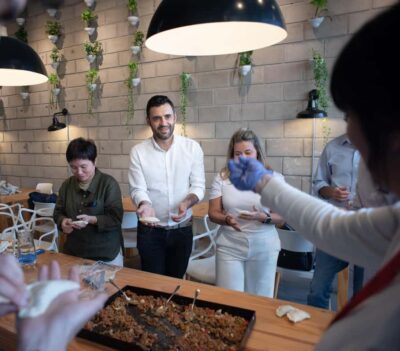
Premium Empanadas Cooking Class & Wine Tasting Experience
Read our review →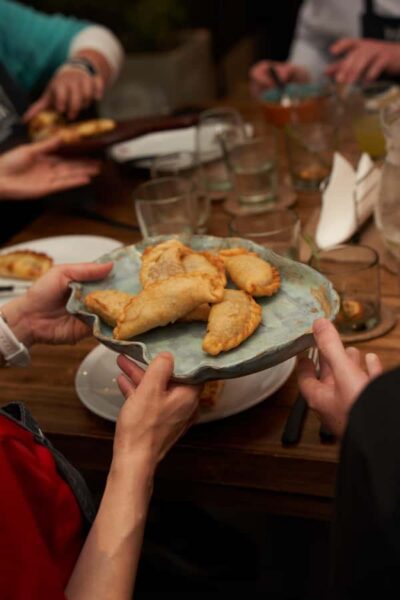
Pachamama – Argentine Cooking Experience in Buenos Aires
Read our review →Browse the lists this tour appears in