
Reviewed · LA BOCA & CAMINITO TOURS
Buenos Aires: La Boca Art and History Walking Tour
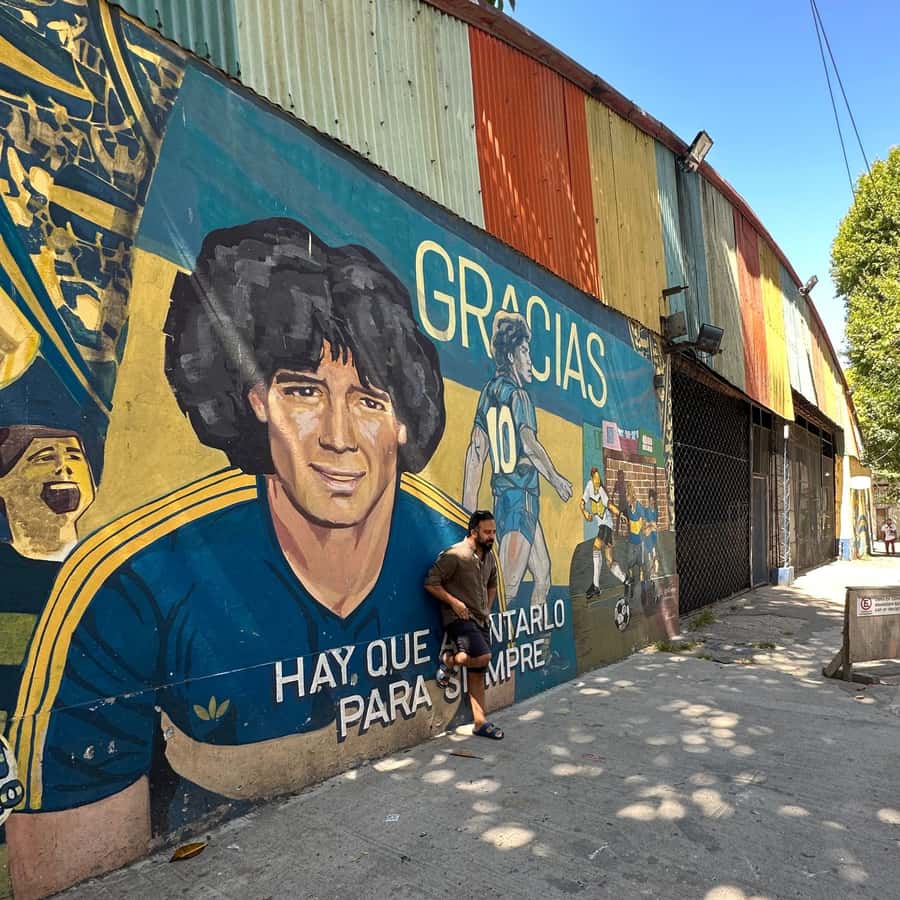
La Boca is much more than colorful walls and tango poses. This 150-minute walk connects its working-class roots, immigrant story, art movement, and fierce football culture, with Benito Quinquela Martín as the central figure. I like the way the tour gives La Boca a human story instead of treating it as a photo backdrop.
I also like the mix of stops: La Bombonera brings in the passion of Boca Juniors, while the Quinquela Martín Museum explains why art matters so much here. Guides including Facundo, Laura, Dani, and Frani have earned praise for clear storytelling and easy English. The main drawback is that $46 is a little steep for a short walking tour if you are mainly after street photos, and you must confirm availability at least 24 hours ahead.
Key points at a glance
- Benito Quinquela Martín’s La Boca: Learn how one local artist shaped the neighborhood’s public image and supported its cultural life.
- Football at La Bombonera: Stop outside the Boca Juniors stadium for photos and a look at Argentina’s intense football culture.
- A real neighborhood story: Hear about immigration, working-class life, art, and social change rather than just seeing painted buildings.
- Three small cultural stops: Visit Conventillo El Rincon de Lucia and the Benito Quinquela Martín Museum, with two extras chosen from three options.
- Strong guide service: Guides such as Facundo, Juan, Rafa, Laura, Francisco, Loli, and Ludmila have been praised for clear explanations and friendly help.
- Practical format: The tour lasts 150 minutes, is offered in Spanish, English, and Portuguese, and is wheelchair accessible.
Why La Boca needs more than a quick photo stop
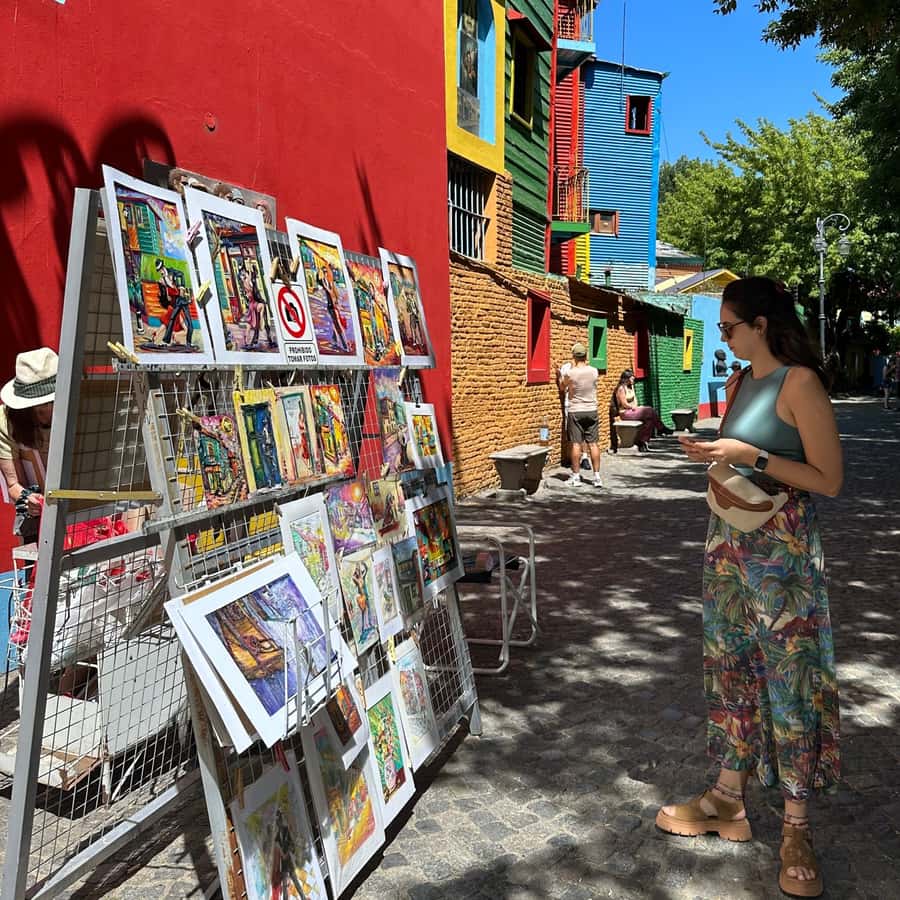
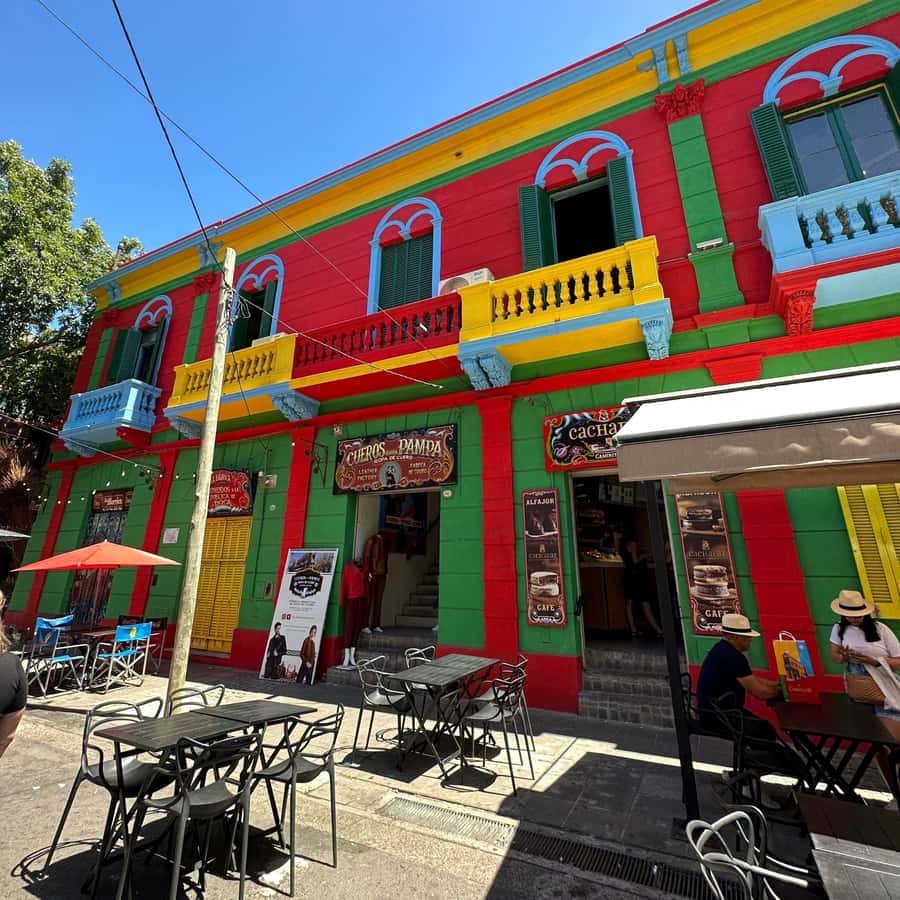
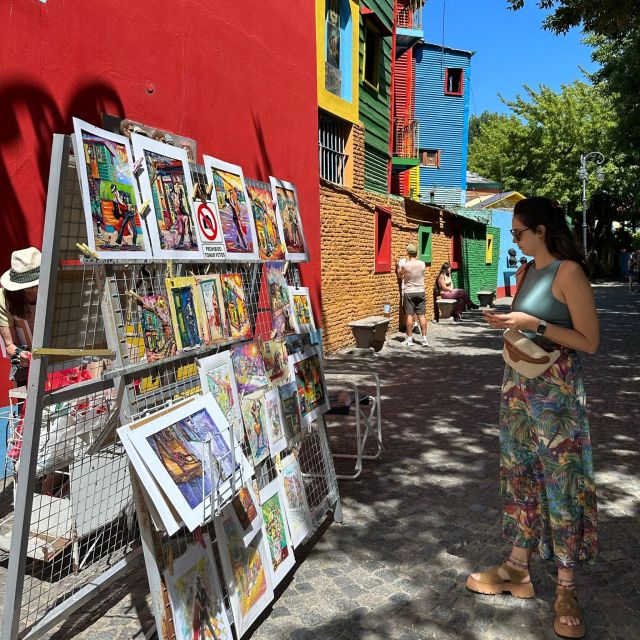
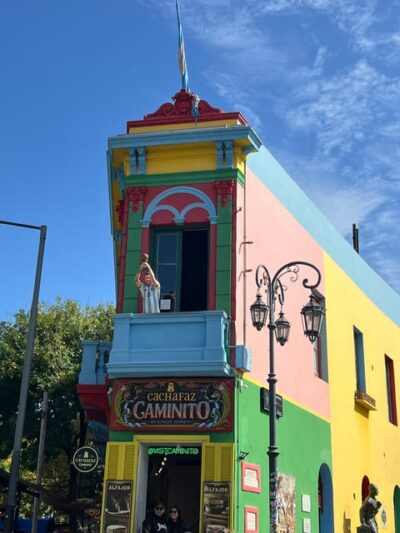
La Boca is often introduced through its bright houses, tango figures, football shirts, and tourist shops. Those sights are part of the neighborhood, but they do not explain why La Boca looks and feels the way it does.
This tour gives you that missing context. You walk through an area shaped by immigration, working-class life, art, and sport. The guide links the streets to the people who lived there and to artists who helped define its public identity.
That matters because La Boca can be easy to misunderstand. A quick visit may leave you with colorful photographs but little sense of the neighborhood’s social importance. Here, you get an explanation of the Riachuelo Art movement and Benito Quinquela Martín’s role in it.
The route is also compact. It begins at the Benito Quinquela statue at Av. Don Pedro de Mendoza 1921 and ends nearby at Av. Don Pedro de Mendoza 1835. You are not committing half a day to a large city tour. Instead, you spend two and a half hours focused on one distinctive part of Buenos Aires.
More architecture and history tours in Buenos Aires:
- Nazis in Buenos Aires: a historical walking tour
★ 4.9 · 193 reviews - San Telmo: Historical Guided Tour with Street Food & Drinks
★ 5.0 · 87 reviews - Recoleta Cemetery – Small Group Tour of History & Secrets
★ 5.0 · 53 reviews
Meeting Benito Quinquela Martín at the center of the tour
The Benito Quinquela statue is more than a convenient meeting point. It sets up the main artistic thread of the walk.
Quinquela Martín is presented as an artist and philanthropist whose work helped shape La Boca’s identity. You learn about his connection to the area and his impact on its art scene. The tour also explains the Riachuelo Art movement, giving you a way to read the neighborhood beyond its paint colors.
I like this focus because it gives the walk a clear backbone. Instead of moving from one unrelated sight to another, the guide can return to a central question: how did art help express and preserve the character of La Boca?
The tour’s treatment of Quinquela Martín is especially useful if you plan to visit the museum afterward or choose museum entry as one of your included extras. You will have a better sense of what to look for in the paintings and why the artist matters locally.
Guides bring different personalities to the same subject. Facundo has been praised for warm, clear English and an approachable manner. Juan is noted for his local art knowledge and also speaks Italian. Frani is especially strong on La Boca and Argentina as a whole. That range is helpful for an art-centered tour, since the quality of the explanation matters as much as the stop itself.
Walking through immigration and working-class La Boca
The walking section is the heart of the experience. You move through La Boca while the guide explains immigration, labor, social life, and the area’s working-class roots.
The supplied information does not give a street-by-street route, so you should not expect a fixed list of every corner or building. What you can expect is a guided walk linking streets and landmarks to the neighborhood’s past. You are not simply pointed toward a colorful wall and told to take a picture.
That distinction is important. La Boca’s visual appeal can make it tempting to focus only on decoration. The guide adds the background that turns painted houses and narrow streets into part of a larger story about Buenos Aires.
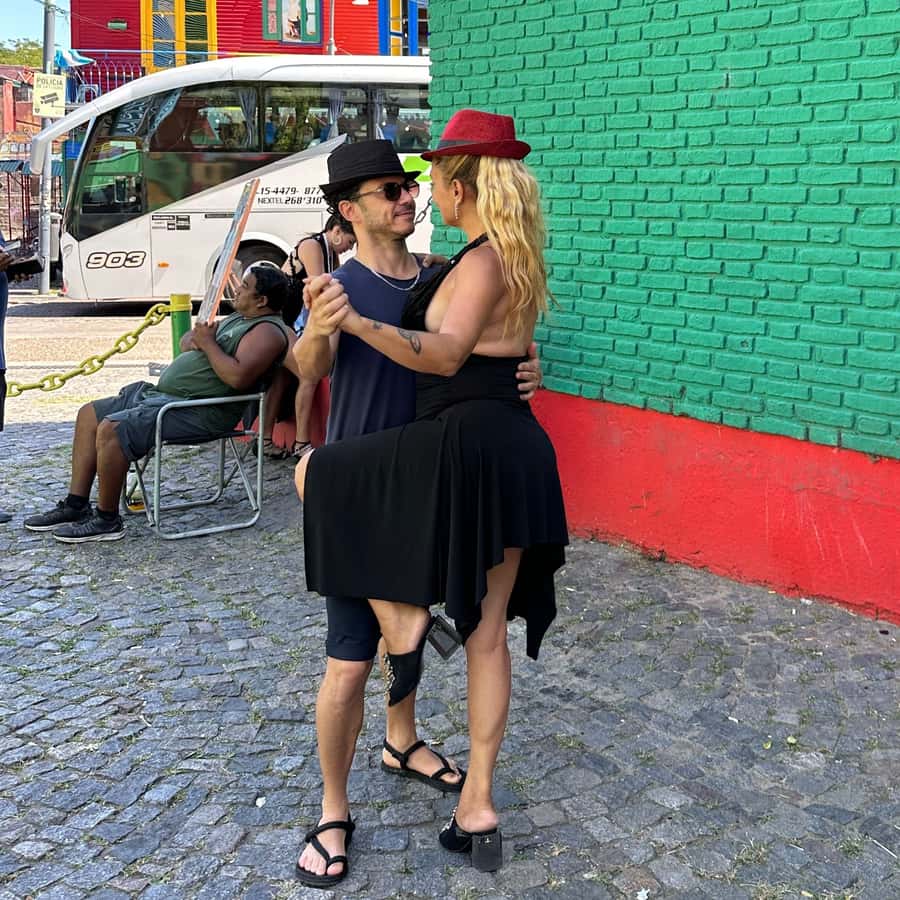
The route also includes tango. You will hear about the dance as part of La Boca’s cultural image and see how movement, music, and street life connect with the neighborhood. The highlight is not listed as a tango performance, so you should book this for cultural explanation rather than a full dance show.
The tour should suit you if you enjoy walking at a steady pace and stopping often for stories. It may be less satisfying if you want a museum-heavy outing with long indoor visits or a formal tango performance.
La Bombonera and the passion of Boca Juniors
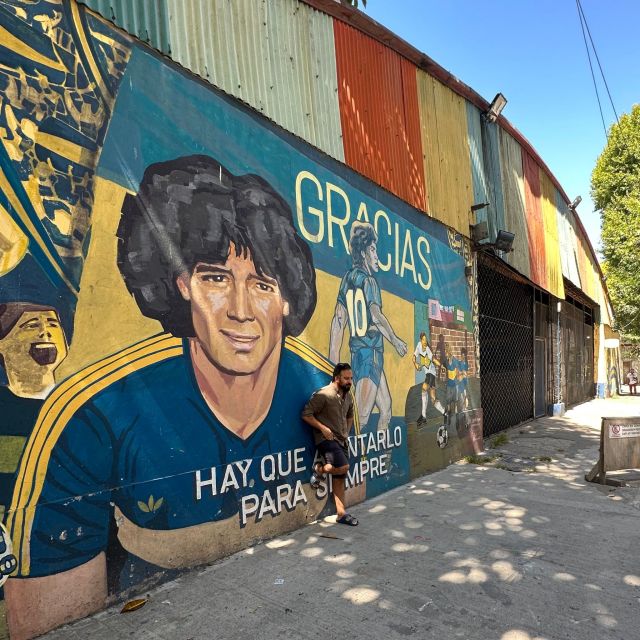
A photo stop at La Bombonera adds a very different note to the tour. The stadium is tied to Boca Juniors, one of the strongest symbols of Buenos Aires football culture.
You visit for sightseeing and photographs. The information provided does not promise a stadium interior tour, match tickets, or access to the pitch, so keep your expectations focused on the exterior and the guide’s explanation.
This stop works well because it shows that La Boca’s identity is not only artistic. Football is a major part of how the neighborhood is understood, and the guide puts that passion into local context.
Rafa, one of the guides, has been praised for sharing useful stories about people, places, and soccer. That combination should help you see La Bombonera as more than a stadium facade. It becomes a window into the emotional side of the neighborhood.
If football means little to you, this section may feel less important than the art stops. Still, it breaks up the cultural discussion and gives the walk a lively change of subject. If you follow Boca Juniors or enjoy learning how sport shapes a city, this may be one of the tour’s most memorable moments.
More La Boca and Caminito tours:
- Buenos Aires: La Boca Guided Walking Tour in English
★ 4.8 · 1,587 reviews - Buenos Aires: Navigation from Pto. Madero to La Boca
★ 4.1 · 147 reviews - Buenos Aires Bike Tour: San Telmo and La Boca Districts
★ 4.5 · 74 reviews - La Boca, a collective creation: Port, immigrants, arts and football
★ 5.0 · 58 reviews
Inside Conventillo El Rincon de Lucia
The visit to Museo Conventillo El Rincon de Lucia gives the tour an indoor cultural stop connected to La Boca’s colorful residential image.
The word conventillo refers to a type of communal housing associated with immigrant life in Buenos Aires. The supplied details do not specify every room or display you will see, so the guide’s explanation will be important here. Expect a guided visit rather than a long independent museum session.
This stop is valuable because it moves the story from public streets into the kind of shared living environment linked to immigration and working-class life. The tour’s wider focus on social history gains a more tangible setting here.
It is also a useful pause during a walking route. You can see how the area’s famous visual style relates to homes, community, and daily life. If you are primarily interested in architecture, ask the guide to point out what is original, reconstructed, or presented as part of the museum visit. The available information does not promise that level of detail, but it is a sensible question to ask on site.
The Benito Quinquela Martín Museum visit
The museum is the tour’s clearest art stop and the place where the Quinquela Martín story comes into focus.
You receive a guided visit, and museum entry is one of the three possible extras included in the experience. The other two are a free wine tasting and a dulce de leche tasting. You receive two of these three options, so check with Baires Experience before booking if the museum is your priority.
For most people choosing this tour, I would favor the museum entry over one of the tastings. The museum gives you the best chance to understand the artist’s work and his connection to La Boca. Wine and dulce de leche are pleasant local touches, but they do not replace the visual and historical context offered by the museum.
That said, the tastings can make sense if you have already visited the museum or prefer a lighter cultural outing. The tour is designed to combine art, food, and drink, not to force every participant into the same version of the experience.
The museum visit also gives the walking tour some balance. You begin with streets, landmarks, football, and tango, then spend time with the art that helps explain La Boca’s public character. I would pay attention to the guide’s links between the museum, the statue, and the Riachuelo Art movement.
What the guide service adds
The guide is a major part of the value here. The route itself is compact, and many of La Boca’s main sights can be found without a tour. You are paying for interpretation, local framing, and help connecting separate parts of the neighborhood.
The guide team includes Spanish, English, and Portuguese speakers. Several guides have received praise for making the experience feel personal without losing the historical thread. Laura is described as friendly and strong on immigration, Quinquela Martín, and the colorful houses. Francisco is praised for well-timed explanations that kept the group engaged. Loli is noted for her strong knowledge of La Boca and Buenos Aires.
English service appears to be a particular strength. Facundo’s English is described as excellent, and Laura is also praised for clear English. That is useful when a tour includes art terms, immigration stories, and social history, all of which can be harder to follow through basic translation.
Rafa also deserves practical credit for contacting a solo participant and helping with the meeting place. If you are traveling alone, confirm availability directly with Baires Experience before or after booking. Solo bookings require that extra check.
Is $46 a fair price?
At $46 per person, this is not the cheapest way to walk around La Boca. You can see some colorful streets and take photographs without paying for a guide.
The value depends on what you want from the visit. You are paying for 150 minutes with a live guide, guided access to the Conventillo museum, a guided museum visit, a stop at La Bombonera, and two extras chosen from museum entry, wine tasting, and dulce de leche tasting. The exact combination of extras matters, so confirm what you will receive.
I think the price makes the most sense for first-time visitors who want context. If you already know La Boca well, speak Spanish comfortably, and plan to visit the museums independently, the cost may feel high. If you want clear explanations in English, Portuguese, or Spanish and prefer not to piece the neighborhood together alone, the price is easier to justify.
The tour also saves planning time. You get a defined meeting point, a short route, cultural stops, and a guide who handles the connections. That is useful during a packed Buenos Aires schedule.
Practical details before you book
Meet your guide at the Benito Quinquela statue at Av. Don Pedro de Mendoza 1921. The walk finishes at Av. Don Pedro de Mendoza 1835, so the start and finish are close together.
Bring your passport or ID card. The tour is wheelchair accessible, which is useful, although the supplied information does not explain the exact street or museum conditions. If you use a wheelchair, confirm any specific access needs with the provider before the date.
Bookings must be made at least 24 hours in advance. You should also contact Baires Experience by email or WhatsApp to confirm that the tour operates on your chosen date. This is especially important for solo participants.
The tour offers free cancellation up to 24 hours before the start, and you can reserve now and pay later. Check the available starting times when booking, since the start time is not fixed in the information provided.
Who should choose this La Boca walk?
I would choose this tour if you want La Boca explained through several lenses: art, immigration, football, tango, and local social life. It is a good fit for a first visit, especially if you want a guide rather than a self-guided photo walk.
It also suits couples, families with older children, and solo visitors who prefer company and a planned route. The language choice is a real advantage, and the guide’s role becomes more valuable when you want detailed explanations in English or Portuguese.
You may want a different experience if your main goal is a football stadium tour, a full tango show, or a long museum visit. La Bombonera is a photo stop, and the tango element is part of the neighborhood story rather than a separate performance.
Should you book it?
Book this tour if you want to understand why La Boca matters, not just photograph its colorful streets. The strongest parts are the guide-led history, the Quinquela Martín focus, the museum visit, and the link between art, immigration, and football.
Before paying $46, confirm which two extras are included and make sure the date is operating. If museum entry is included, the value improves. If you are only after quick photographs, the tour is probably more than you need. If you want the stories behind the colors, La Bombonera, and the neighborhood’s artistic identity, it is a sensible way to spend two and a half hours.
FAQ
How long does the La Boca walking tour last?
The tour lasts 150 minutes, or two and a half hours.
Where does the tour begin?
Meet the guide at the Benito Quinquela statue at Av. Don Pedro de Mendoza 1921.
Where does the tour finish?
The tour finishes at Av. Don Pedro de Mendoza 1835.
Which languages are available?
The tour is offered in Spanish, English, and Portuguese.
Is the tour wheelchair accessible?
Yes, the activity is listed as wheelchair accessible.
Is entry to the Benito Quinquela Martín Museum included?
Museum entry is one of three possible included options. You receive two of the three options: museum entry, free wine tasting, or dulce de leche tasting. Confirm the exact combination before booking.
Is hotel pickup included?
No. Hotel pickup and drop-off are not included.
Do I need to bring identification?
Yes. Bring your passport or ID card.
Can solo visitors book the tour?
Solo travelers must confirm availability directly with Baires Experience before or after booking.
How far in advance should I book?
Bookings are accepted only when scheduled at least 24 hours in advance. Contact the provider by email or WhatsApp to confirm that the tour operates on your chosen date.
More Walking Tours in Buenos Aires
- Buenos Aires Hop-On Hop-Off Bus, Free Walking Tours & Discounts
★ 4.5 · 2,218 reviews - Buenos Aires: Personalized 2 to 8-Hour Private Walking Tour
★ 4.7 · 149 reviews - Buenos Aires: San Telmo and Market Guided Walking Tour
★ 4.8 · 102 reviews - Buenos Aires Walking Tour with Local Guide and Optional Rooftop
★ 4.5 · 87 reviews
Just added around Buenos Aires
- Tango Show at El Querandi with optional Dinner★ 4.2 · 3 reviews
- Wine Tasting in Buenos Aires★ 4.2 · 4 reviews
- Walking Tour: Buenos Aires bookstores★ 4.3 · 12 reviews
- Private Underground Tango Immersion★ 5.0 · 31 reviews
- Velez Sarsfield Football Match★ 5.0 · 3 reviews
- Unique Tigre and Delta Private Day Cruise Navegation★ 5.0 · 3 reviews
- Transfers from or to the airport In Argentina Your Best Choice★ 5.0 · 28 reviews
- Tour Buenos Aires in one day on Electric Scooters★ 5.0 · 33 reviews
La Boca & Caminito Tours, compared.
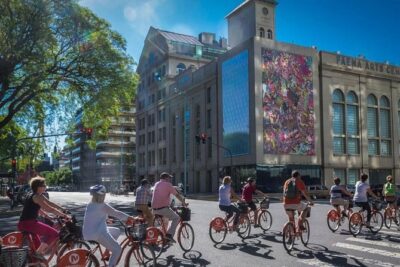
Buenos Aires Bike Tour: San Telmo and La Boca Districts
Read our review →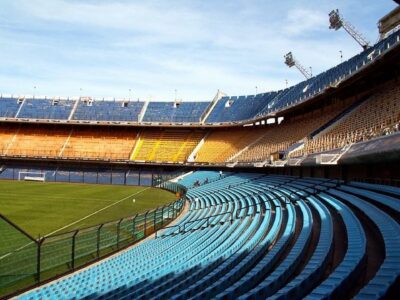
La Boca, a collective creation: Port, immigrants, arts and football
Read our review →
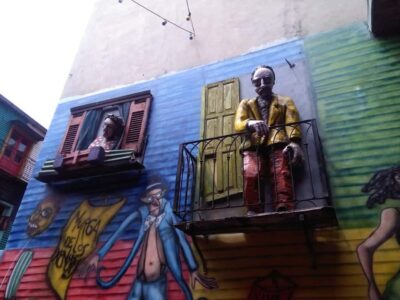
Walking Tour of San Telmo and La Boca with local food
Read our review →Browse the lists this tour appears in