
Reviewed · BUENOS AIRES WALKING TOURS
Buenos Aires Walking Tour with Local Guide and Optional Rooftop
Buenos Aires reveals itself neighborhood by neighborhood on this long, active city tour. You begin among San Telmo’s cobblestones and antique stalls, then cross town by local bus and subway to see La Boca, Puerto Madero, Plaza de Mayo, the Obelisk, and Recoleta Cemetery. It is a useful way to connect places that are too far apart for one ordinary walking tour.
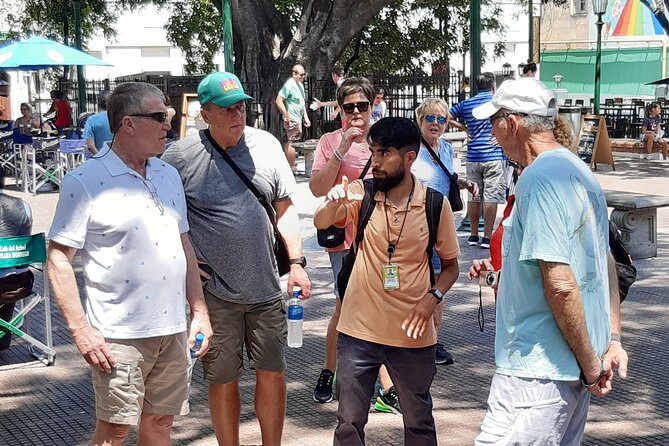
I like the small-group limit of 15 people, which makes it easier to hear the guide and ask questions. I also like the use of public buses and the subway. You are not just looking at Buenos Aires through a vehicle window, you are learning how the city works.
The tradeoff is simple: this is a demanding day, not a gentle stroll. You may walk roughly eight miles, stand while the guide talks, and spend time in traffic. The $111 price is reasonable if you value a personal guide and broad coverage, but it may feel high if you prefer slow visits to fewer sights.
Key things to know before booking
- San Telmo begins the day with empanadas, market stalls, and old Buenos Aires atmosphere.
- Local buses and the subway connect several far-flung neighborhoods.
- The tour covers many major sights, but some stops are brief photo visits.
- Guides such as Victor, Carlos, Gabi, Gabriel, and Silvia have been praised for clear explanations and friendly service.
- The optional Wednesday Palacio Barolo rooftop visit includes a cocktail and adds about an hour.
- Comfortable shoes, water, and a moderate level of fitness are important.
San Telmo starts the tour with old streets and empanadas
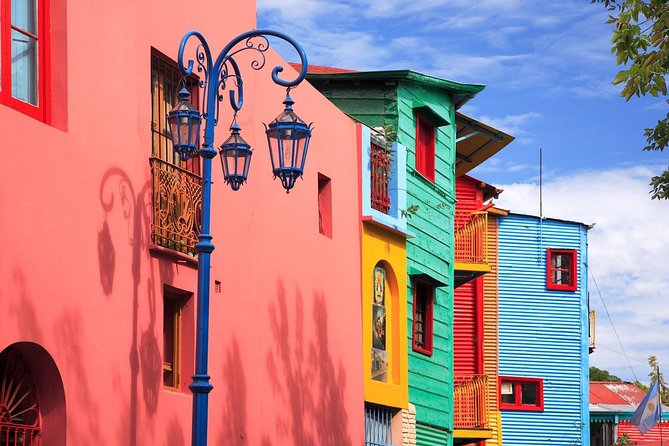
Meet at the Tangol office at Defensa 831 at noon. The day opens on Calle Defensa in San Telmo, one of the oldest parts of Buenos Aires. Cobblestones, old buildings, antique shops, decorative street lamps called faroles, and tango-related art give the neighborhood a distinct look.
The first half-hour is a good introduction to the city’s older face. Your guide can explain how San Telmo developed and how its antique trade, tango culture, and immigrant influences shaped the area. On Sundays, the famous San Telmo street market can make the walk even more interesting, though the regular tour information does not promise a Sunday departure or market stop.
At Mercado San Telmo, you enter a covered market opened in 1897. It was built to serve the large wave of immigrants arriving in Buenos Aires at the time. Parts of the market still sell groceries, meat, and vegetables, while other stalls focus on Argentine food and dishes from elsewhere.
Three empanadas and one soft drink are included. Fillings can include beef, chicken, ham and cheese, or vegetables. This is a practical food stop rather than a long restaurant meal, and it gives you a quick taste of a local staple before the tour moves on toward Plaza Dorrego.
The food arrangement deserves a small warning. If you are vegan, do not assume the included meal will work for you. One past guest had difficulty finding a suitable substitute and had to pay extra for an unsatisfying replacement. Ask about dietary needs before booking.
More walking tours in Buenos Aires:
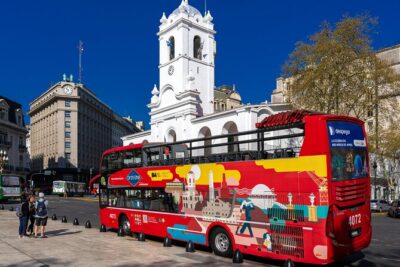
- Buenos Aires Hop-On Hop-Off Bus, Free Walking Tours & Discounts
★ 4.5 · 2,218 reviews - Buenos Aires: La Boca Guided Walking Tour in English
★ 4.8 · 1,587 reviews - Nazis in Buenos Aires: a historical walking tour
★ 4.9 · 193 reviews
La Boca brings color, tango, and soccer
From San Telmo, you take a public bus to La Boca. The ride is part of the experience, but it can also be affected by traffic. The tour is designed to show you several parts of a huge city, so the transfers are necessary. Still, you should not expect constant walking or a quick taxi between stops.
The main La Boca visit centers on Caminito, the brightly painted street known for its tango performances and connection to Boca Juniors football. Your guide explains how immigration, tango, and soccer helped shape the neighborhood’s identity.
You have about an hour here. That is enough time to look around, take photographs, and watch the street performances included in the normal rhythm of the area. It may not be enough if you want to shop slowly or explore every side street. If you hope to buy souvenirs, manage your expectations, since the schedule leaves little unstructured time.
La Boca is also one of the stops where the quality of the guide matters most. The colorful façades are easy to photograph, but the background makes the visit worthwhile. A guide who can connect the neighborhood to immigration and Argentine culture adds much more than a series of quick snapshots.
Puerto Madero offers a short modern contrast
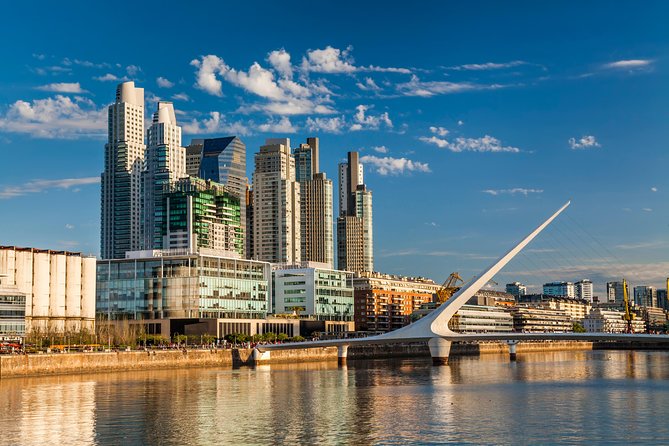
Another bus takes you toward Puerto Madero, Buenos Aires’ modern waterfront district. The stop at Puente de la Mujer lasts about five minutes, so treat it as a photo pause rather than a full neighborhood visit.
The bridge, designed by Santiago Calatrava, has an asymmetrical form meant to suggest a couple dancing tango. It gives you a sharp contrast with San Telmo and La Boca: modern towers, open water, and recent architecture replace old market halls and colorful working-class streets.
The brief timing is both useful and limiting. You get a quick look at an important modern landmark without adding another long walking section, but you will not have time to explore Puerto Madero in detail. If contemporary architecture is a major interest, plan a separate visit.
Plaza de Mayo concentrates the country’s story
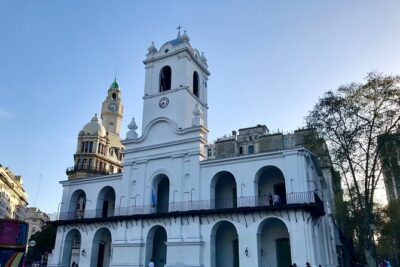
At Plaza de Mayo, the tour slows down for one of its most valuable historical sections. You see the Casa Rosada, the Cabildo, and the Metropolitan Cathedral while walking through the political heart of Argentina.
The itinerary divides this area into two short stops, with about 15 minutes around Casa Rosada and another 30 minutes in the square. Your guide can place the buildings in the context of Argentine government, public life, and major events. Several people who took the tour especially valued the explanations here, and this is likely one of the places where a strong guide makes the greatest difference.
The Metropolitan Cathedral is another important stop. It is not simply a photograph from outside, since the tour includes a visit. The Cabildo gives you another link to the country’s colonial period, while Casa Rosada represents the modern national government.
Expect some standing while the guide speaks. One useful piece of advice is to stay close enough to hear clearly, especially if the group is using more than one language. The tour may be operated by a multilingual guide, and one past participant found that sharing the day with another language group reduced the amount of information in English.
Same city, an entirely different evening:
- Buenos Aires: Piazzolla Tango Show with Optional Dinner
★ 4.4 · 2,122 reviews - Buenos Aires: City Highlights Guided Tour with Transfer
★ 4.7 · 1,946 reviews - Buenos Aires: Hop-On Hop-Off City Bus Tour
★ 4.2 · 1,855 reviews - Buenos Aires Hop-On Hop-Off Bus and Exclusive Benefits
★ 4.4 · 1,714 reviews
The Obelisk and 9 de Julio show daily Buenos Aires
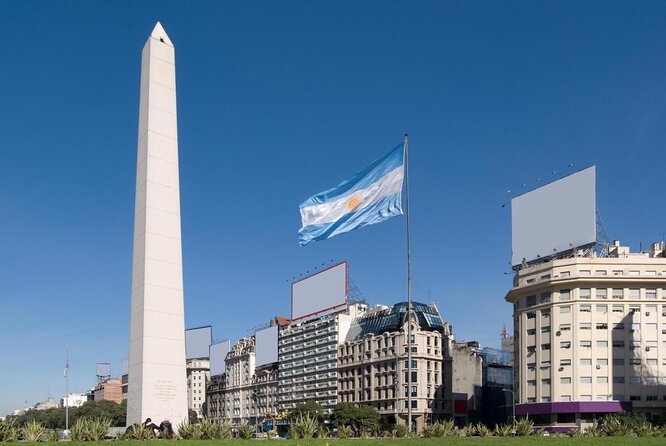
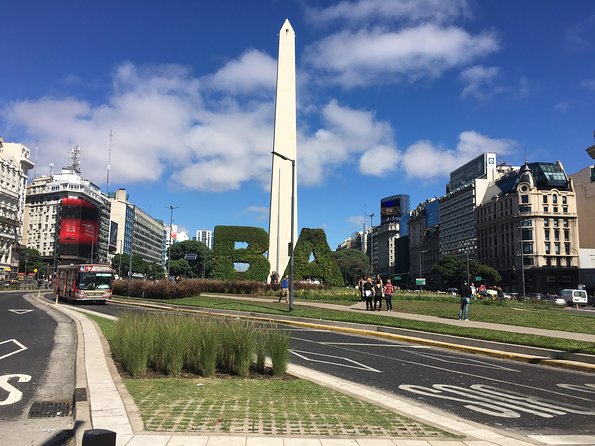
After Plaza de Mayo, you continue to the Obelisk, one of the city’s best-known symbols. The stop lasts about 30 minutes and gives you a sense of Buenos Aires as a working capital rather than only a collection of historic sights.
You then walk along 9 de Julio Avenue, often described as the widest avenue in the world. The visit is short, about 15 minutes, so you will not make a detailed architectural study of the whole boulevard. Instead, you get a quick look at the scale of the city, its monuments, traffic, and major avenues.
This portion can feel rushed compared with Plaza de Mayo. It works best as an orientation stop. If you want to understand how the city’s major roads fit together, the guide’s commentary helps. If you prefer time for photographs or cafés, you may wish for more freedom here.
Recoleta Cemetery gives the day a strong finish
The group reaches Recoleta by subway, another chance to learn the local transport system. The surrounding neighborhood is known for museums, cafés, restaurants, upscale avenues, and shopping areas, though the scheduled visit focuses on Recoleta Cemetery.
The cemetery is one of the tour’s strongest stops. Its elaborate tombs and narrow paths provide a very different setting from the wide avenues and modern towers seen earlier. It is the burial place of prominent Argentine families and historical figures, including Eva Duarte Perón, commonly known as Evita.
You have about 30 minutes inside. That is enough for an introduction and the main highlights, but not for every corner. A guide can help you understand why the cemetery matters and point out figures you might otherwise miss. Carlos and Gabi have been praised for making this kind of historical explanation clear and personal, while other guides named in feedback include Victor, Gabriel, Denise, Rosita, and Silvia.
The tour ends at Junín 1760, at Recoleta Cemetery. There is no hotel pickup or drop-off, so arrange your own way back. The location is near public transportation, which makes continuing your sightseeing fairly practical.
The Wednesday Palacio Barolo option adds a special finale
If you choose the rooftop option, the day continues to Palacio Barolo on Wednesday. This building opened in 1923 and is protected as a National Historic Monument. Its design includes references to Dante Alighieri’s Divine Comedy, giving the visit a symbolic layer beyond its striking appearance.
The rooftop visit lasts about an hour and includes a cocktail. This option adds a more atmospheric finish to an already full day, but it also makes the tour longer. Since the main tour can take five to seven hours, you should only add it if you are comfortable with a late and active afternoon.
The rooftop is not included in the standard price unless you select that option. Check the chosen package carefully when booking. If you like architecture and city views, the extra cost may be worthwhile. If you mainly want an introduction to Buenos Aires’ neighborhoods, the main tour already provides plenty.
How much walking and public transport should you expect?
Despite its name, this is not a walking-only tour. You walk through the individual neighborhoods and use public buses and the subway to connect them. That format lets you cover much more ground than a single-area stroll, but it also brings traffic, crowded vehicles, and occasional waiting.
Past experiences range from a comfortable five-hour day to a strenuous seven-hour outing covering about eight miles. Weather does not cancel the tour, including rain, so come prepared. Buenos Aires can also be hot, and one person found the walking difficult on a day around 30 degrees Celsius.
Wear shoes you can use all day. Bring water, sun protection, and a rain layer if the forecast calls for it. The stated fitness requirement is moderate, but the combination of walking, standing, stairs, and public transport is more demanding than the word moderate may suggest.
The group maximum is 15 people. Some departures may be much smaller, which can make the day feel almost private. A small group also helps when the guide is explaining details beside a busy avenue or inside a crowded market.
The guides are central to the value
This tour depends heavily on the person leading it. Guides named in past experiences include Victor, Carlos, Gabi, Gabriel, Silvia, Denise, and Rosita. Victor was praised for using old photographs, magazines, and articles to explain the places along the route. Silvia, an English teacher, was described as passionate and able to give a personal view of Argentina.
Strong English is not guaranteed for every departure, since the tour can use a multilingual guide. That does not mean the tour will be poor, but it is a point to consider if detailed English commentary is essential. The group may include people speaking different languages, and the amount of explanation in each language can affect the rhythm.
The best guides do more than recite dates. They explain how immigration, food, soccer, tango, politics, and daily transport fit together. The weakest version of the tour can feel like standing around while someone gives a long lecture, so your enjoyment will depend on the guide’s energy as much as the route.
Is $111 a fair price?
At $111 per person, the tour costs more than a free city walk or a self-guided day using a map. You are paying for five to seven hours of guiding, a small group, three empanadas, a drink, coffee or tea, public transport during the tour, and admission to Recoleta Cemetery. The rooftop package adds Palacio Barolo and a cocktail.
The value is strongest if you are visiting Buenos Aires for the first time and want a fast orientation. In one day, you see old San Telmo, colorful La Boca, modern Puerto Madero, the political center, the Obelisk, 9 de Julio Avenue, and Recoleta. You also learn the bus and subway system, which can help you explore independently afterward.
The value is weaker if you prefer to linger. La Boca, Puerto Madero, the Obelisk, and 9 de Julio receive limited time, and traffic can eat into the schedule. You may get more from two slower neighborhood visits, especially if you already know Buenos Aires.
Who should book this Buenos Aires tour?
I would choose this experience if I had one full day to get oriented, wanted a local guide, and did not mind walking several miles. It suits solo visitors, couples, and families who like moving through a city rather than staying on a sightseeing bus.
It is also a good fit if you want context for places that can seem disconnected on a map. The tour shows how the old port districts, government center, modern waterfront, grand avenues, and Recoleta relate to one another.
I would look elsewhere if you need a relaxed pace, have limited mobility, dislike public transport, or want long blocks of free time. The tour does not promise hotel transportation, and the full day can be tiring in hot or wet weather.
Should you book it?
Book this tour if your priority is breadth, local transport, and clear city orientation. The route covers more of Buenos Aires than most walking tours, and guides such as Victor, Carlos, Gabi, and Silvia have shown how much personality and useful context can add.
Skip it if you would rather spend half a day in San Telmo or Recoleta alone. For most first-time visitors with moderate fitness, the tour offers a practical introduction, provided you accept the traffic, the walking, and the short stops. Select the Palacio Barolo option on Wednesday only if architecture and rooftop views are worth extending an already long day.
FAQ
How long does the Buenos Aires walking tour last?
The tour lasts approximately five to seven hours. The optional Palacio Barolo rooftop visit adds about one hour.
Where does the tour begin?
The meeting point is the Tangol office at Defensa 831 in San Telmo. The scheduled start time is noon.
Where does the tour end?
The tour ends at Recoleta Cemetery, at Junín 1760.
Is transportation included?
Yes. The tour includes transport by public bus and subway between neighborhoods. Hotel pickup and drop-off are not included.
What food and drinks are included?
You receive three empanadas with a choice of fillings, one soft drink, and coffee or tea. Dietary substitutions are not guaranteed, so ask about special requirements before booking.
Is Palacio Barolo included?
Palacio Barolo is included only when you select the Wednesday rooftop option. That option includes rooftop access and a cocktail.
Just added around Buenos Aires
- Wine Tasting in Buenos Aires★ 4.2 · 4 reviews
- Tango Show at El Querandi with optional Dinner★ 4.2 · 3 reviews
- Walking Tour: Buenos Aires bookstores★ 4.3 · 12 reviews
- Private Underground Tango Immersion★ 5.0 · 31 reviews
- Velez Sarsfield Football Match★ 5.0 · 3 reviews
- Unique Tigre and Delta Private Day Cruise Navegation★ 5.0 · 3 reviews
- Transfers from or to the airport In Argentina Your Best Choice★ 5.0 · 28 reviews
- Tour Buenos Aires in one day on Electric Scooters★ 5.0 · 33 reviews
Buenos Aires Walking Tours, compared.
Buenos Aires Hop-On Hop-Off Bus, Free Walking Tours & Discounts
Read our review →
Nazis in Buenos Aires: a historical walking tour
Read our review →
Full Day Private Walking Tour of Buenos Aires Neighborhoods
Read our review →Browse the lists this tour appears in