
Reviewed · LA BOCA & CAMINITO TOURS
Buenos Aires: Montserrat, San Telmo, La Boca, and Puerto …
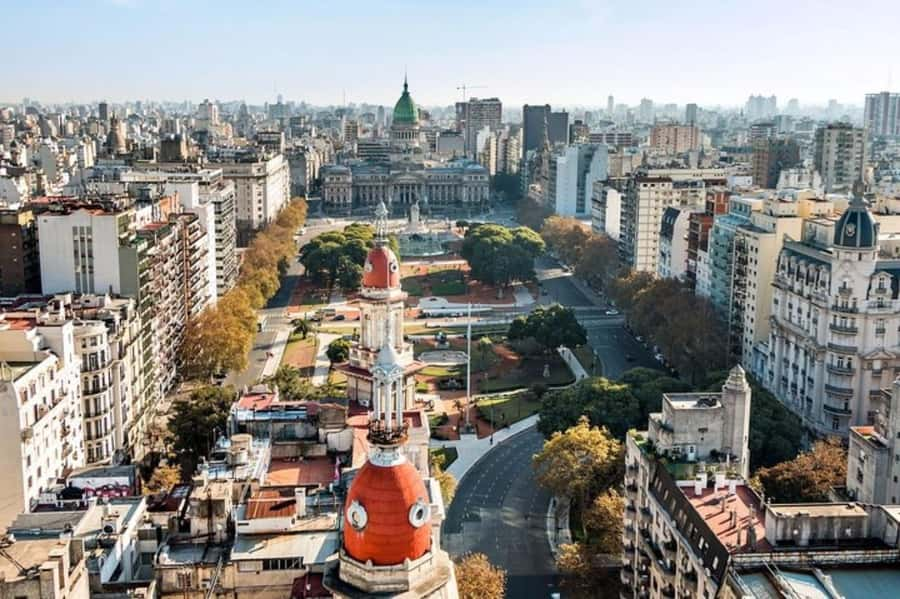
Buenos Aires reveals itself in layers on this four-hour route. You move from the political center at Plaza de Mayo, through old San Telmo and colorful La Boca, then finish beside the sleek waterfront of Puerto Madero. It is a brisk way to see how one city can feel Spanish, Italian, tango-driven, football-mad, and modern within a few miles.
I like the mix of small details and major sights: the oldest bookstore, church, and pharmacy, plus the city’s smallest house, are more memorable than a simple monument checklist. I also like the human stories about sailors, immigrants, slaves, and urban legends, along with the chance to see Boca Juniors Stadium and Caminito. The drawback is pace. Four neighborhoods in four hours leaves little time for long visits, meals, or relaxed shopping, and Café Tortoni depends on availability.
Key points at a glance
- Start at Buenos Aires Cathedral: Begin beside Plaza de Mayo, the city’s oldest central square and political heart.
- Find old Buenos Aires on Defensa Street: See historic shops and buildings, the smallest house, Mafalda, and San Telmo Market.
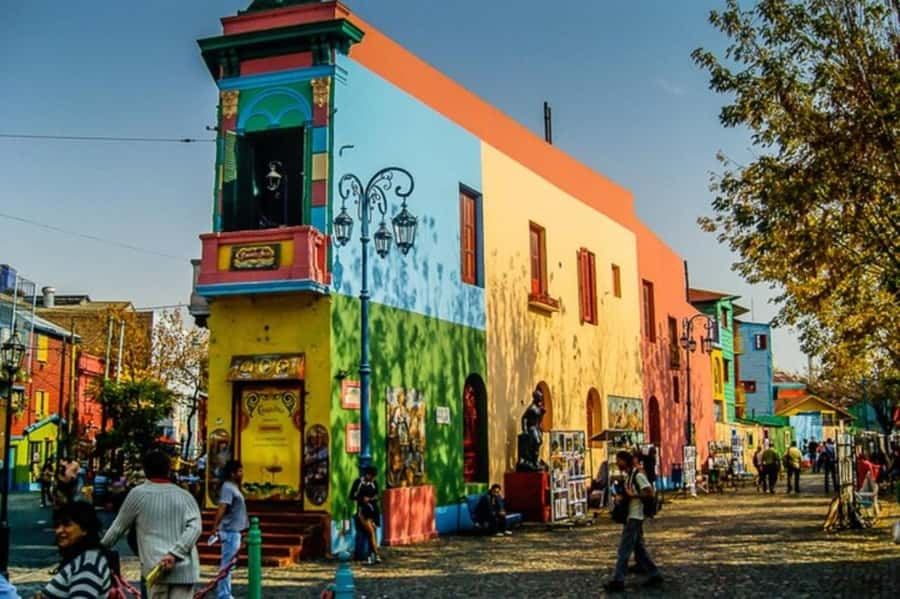
- Meet the city’s football and tango icons: Visit the Boca Juniors area and colorful Caminito in La Boca.
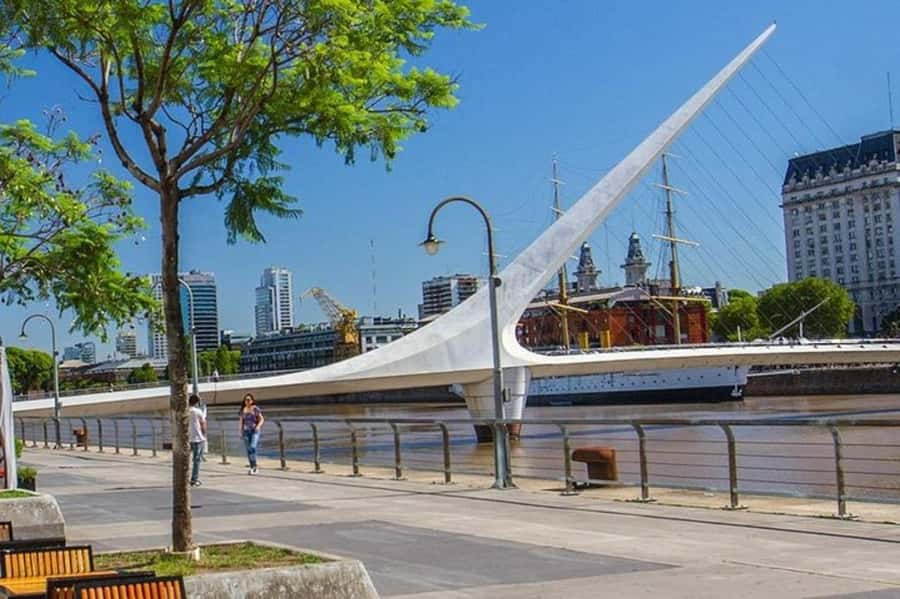
- Finish in modern Puerto Madero: See Puente de la Mujer, the Sarmiento, and the Uruguay.
- Hear local stories, not just dates: The route includes tales of immigrants, sailors, slaves, and city legends.
- Plan for a walking-heavy morning or afternoon: Comfortable shoes matter, and the tour is not suitable for wheelchair users.
Four neighborhoods, one fast lesson in Buenos Aires
This is a city orientation tour with a strong historical thread. You begin in Montserrat, walk through San Telmo, transfer to La Boca, and then transfer again to Puerto Madero. Each stop has roughly an hour, with about ten minutes of transfer time between the latter neighborhoods.
That structure works well if you are new to Buenos Aires and want to understand its layout quickly. You will see the old civic core, the antique-and-market district, the port neighborhood tied to football and tango, and the redeveloped waterfront. You will not have time to explore any one area in great depth, so think of this as a guided introduction rather than a slow neighborhood stroll.
The live guide is available in English, Spanish, and Portuguese. Alejandra receives particular praise for her friendly storytelling, while Ale is also noted for giving the right amount of information. Sebastian helped with the arrangements and kept the outing running smoothly. If you value a guide who can explain culture without burying you in dates, this experience has a promising track record.
More La Boca and Caminito tours:
- Buenos Aires: La Boca Guided Walking Tour in English
★ 4.8 · 1,587 reviews - Buenos Aires: Navigation from Pto. Madero to La Boca
★ 4.1 · 147 reviews - Buenos Aires Bike Tour: San Telmo and La Boca Districts
★ 4.5 · 74 reviews
Starting at Plaza de Mayo and Buenos Aires Cathedral
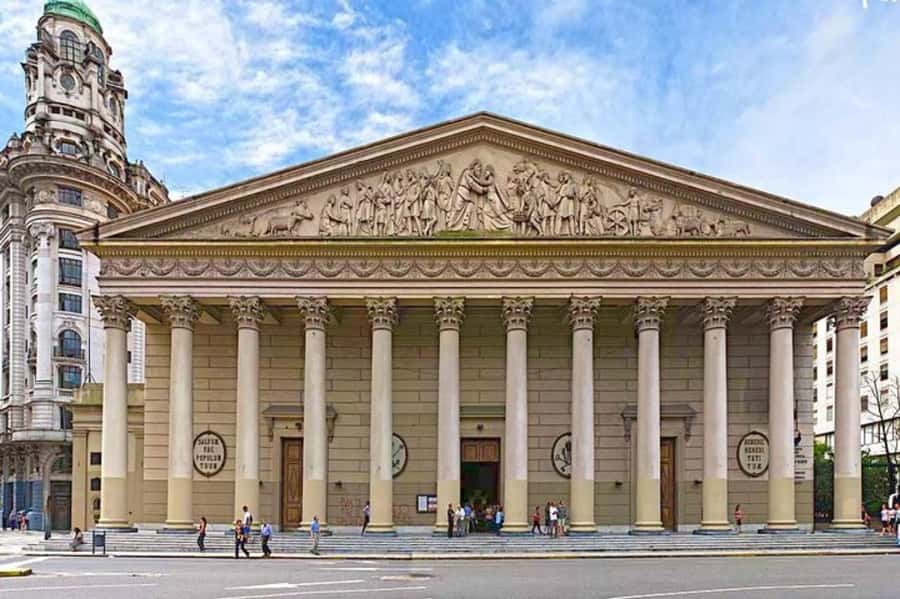
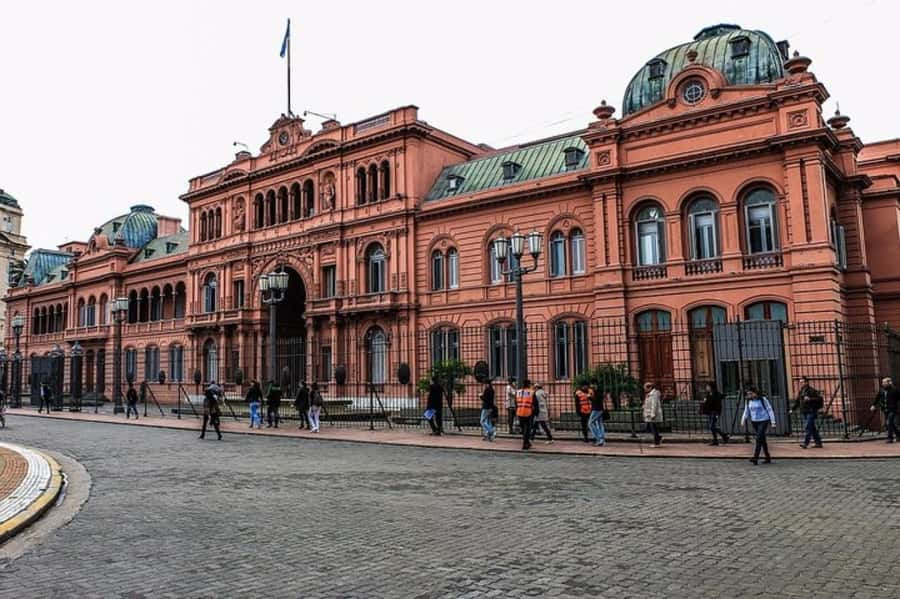
The tour begins at the Metropolitan Cathedral, facing Plaza de Mayo. This is the right place to start because the square links several of the city’s most important civic and religious buildings. Around you are the Casa Rosada, the Cabildo, the cathedral, and ministries connected with the country’s government.
The square is described as Buenos Aires’ oldest and most important public heart. Your guide can help you read the space as more than an open plaza. It is where executive power, religious life, colonial administration, and modern public events meet.
The Casa Rosada is the Executive Office, while the Cabildo recalls the city’s colonial government. The Metropolitan Cathedral adds a major religious landmark to the same view. Even if you spend only part of the hour here, the setting gives you useful bearings for the rest of the city.
From the western side of the plaza, Avenida de Mayo begins. It was the city’s first boulevard and the first avenue in South America. The avenue links the National Congress with the Casa Rosada, creating a direct route between the legislative and executive branches.
Café Tortoni is the famous stop along this avenue. It is the oldest café in Argentina and South America, and it has long been associated with Buenos Aires’ café culture. The tour includes the landmark when availability allows, but you should not treat entry as guaranteed. If seeing the interior matters to you, ask your guide at the start how the visit is being handled that day.
Montserrat’s small firsts and old Calle Defensa
Montserrat is where the tour becomes more intimate. Along historic Calle Defensa, you look for the city’s oldest bookstore, church, and pharmacy, as well as its first two-story building. The appeal is not only the age of these places. It is the way ordinary businesses and buildings preserve the shape of an older Buenos Aires.
A walking route like this gives you a better sense of scale than a drive past monuments. You can pause to look at façades, shopfronts, and street details while the guide explains what made each site important. Because the tour includes several claims of being the first or oldest, listen for the context behind them rather than trying to rush from one landmark to the next.
This part also suits visitors who like stories with a touch of mystery. The guide introduces tales connected to sailors, immigrants, slaves, and local urban legends. Those accounts add texture to the city’s past, though the pace means you may need to choose which details you want to remember and which to let go.
San Telmo Market and the Mafalda stop
San Telmo is Buenos Aires’ second-oldest neighborhood, and Calle Defensa continues to be the main thread. One of the easiest landmarks to spot is the statue of Mafalda, the beloved Argentine comic character. She is more than a photo stop. Mafalda is a cultural figure, and the statue offers a light, local break from the formal monuments in Montserrat.
The San Telmo Market dates to 1897. It has changed over time and now combines antique shops, small restaurants, and traditional fruit and vegetable stalls. That mix makes it useful for observing how an old market district continues to serve both local life and tourism.
You should keep your expectations practical. The market is included as part of the walk, but the tour gives you about an hour in San Telmo overall, not an open-ended market visit. If you want to browse antiques slowly, eat, or inspect every stall, you may feel hurried. If you want a first look and a guide to the neighborhood’s character, the timing is more sensible.
Before reaching San Juan Avenue, the route takes in Plaza Dorrego, the city’s second-oldest square. Nearby is Ezeiza’s house, and the French Passage provides a particularly photogenic setting. This is also one of the better places to plan a meal after the tour, since food is not included and the schedule may not leave much room to sit down.
The important thing here is contrast. Plaza Dorrego and the market show an older, lower-rise Buenos Aires, while the cafés, antique shops, and street activity make the area feel social and lived-in. You get a sense of the district without needing a separate full-day San Telmo visit.
More San Telmo tours:
- Buenos Aires: San Telmo and Market Guided Walking Tour
★ 4.8 · 102 reviews - San Telmo: Historical Guided Tour with Street Food & Drinks
★ 5.0 · 87 reviews - BA Flavors Food Tour in San Telmo and Boca With Local Guide
★ 5.0 · 67 reviews - Experience The Essence of Buenos Aires in San Telmo
★ 5.0 · 51 reviews
La Boca, Boca Juniors, and Caminito
After San Telmo, there is a transfer of about ten minutes to La Boca. The neighborhood is closely tied to Boca Juniors, one of Argentina’s best-known football clubs. The tour includes a look at the club’s iconic stadium, which gives football fans a strong reason to choose this route.
The stadium stop is best understood as an exterior or neighborhood highlight unless your guide confirms access to a particular area. The provided details do not promise a stadium tour or museum entry. You can still appreciate the importance of the club from the setting and the guide’s explanation of its place in Buenos Aires culture.
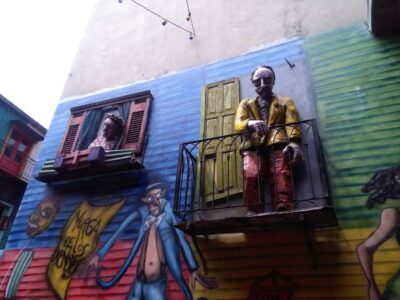
Caminito is the visual center of this part of the experience. Its brightly painted buildings and open-air art setting make it one of the city’s most recognizable streets. The area is also linked with tango, so you may see dancers performing in traditional restaurants. The route gives you time to look around, take photographs, and browse for distinctive souvenirs.
La Boca can be intense compared with the quieter old streets of Montserrat and San Telmo. Color, football, tango, restaurant performances, and souvenir stalls all compete for your attention. That energy is part of its appeal, but it also means you should stay close to the guide and keep your belongings secure in crowded areas.
I like this stop because it connects three parts of Buenos Aires identity in one place: working-port roots, football loyalty, and tango performance. It is also the point where the tour becomes most visual. If you prefer quiet museums and long architectural discussions, La Boca may feel noisy and commercial. If you want recognizable Buenos Aires scenes, it delivers.
Puerto Madero and the Puente de la Mujer finish
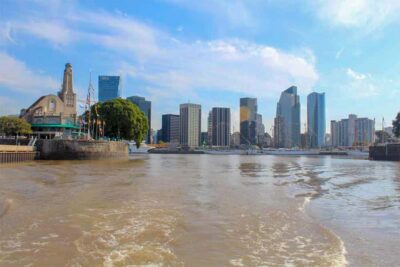
A second transfer, also about ten minutes, takes you to Puerto Madero. The district began as an abandoned port project and has since become a modern waterfront area with tall buildings, bars, restaurants, and a riverside promenade.
The change from La Boca to Puerto Madero is one of the tour’s most useful comparisons. In La Boca, the focus is colorful streets and older port culture. In Puerto Madero, the emphasis is redevelopment, contemporary architecture, and open waterfront space. You see two very different ways the city relates to its river and port past.
The main finishing point is Puente de la Mujer, designed by Santiago Calatrava. Its sweeping form gives you a strong final photograph and a clear architectural counterpoint to the colonial buildings seen earlier in the day.
Puerto Madero also preserves maritime history through the frigate Sarmiento and the corvette Uruguay. The tour points out these vessels and their stories, although the supplied details do not state that museum entry is included. If you want to board them, confirm the arrangements and opening conditions separately.
The tour ends at Puente de la Mujer rather than returning you to the starting cathedral. That matters when planning the rest of your day. You finish in an area with restaurants and bars, so it is convenient for a meal, but you should arrange your onward plans from the bridge rather than assuming a return transfer.
Is $100 a fair price for four hours?
At $100 per person, this is not the cheapest way to see central Buenos Aires. Its value depends on how much you would otherwise spend arranging separate transport and finding context for four different neighborhoods.
You are paying for a live guide, a planned route, and the convenience of moving from Montserrat to San Telmo, La Boca, and Puerto Madero in one outing. The route also gathers several hard-to-connect details: the first boulevard, old businesses, Mafalda, the 1897 market, Boca Juniors, Caminito, and Calatrava’s bridge.
The price is easier to justify if you have limited time in Buenos Aires, prefer guided sightseeing, or want help understanding the links between politics, immigration, tango, football, and port development. It is harder to justify if you are happy using public transport, exploring independently, and spending only a few minutes at each major sight.
Meals, drinks, and personal purchases are not included. You may want to budget for food around Plaza Dorrego, San Telmo, or Puerto Madero, but do not count on a long meal during the four-hour route. Café Tortoni access also depends on availability, so the price should not be based on that stop alone.
Walking, timing, and who will enjoy it most
Wear comfortable shoes. Even with the two short transfers, this is a walking-focused experience with several neighborhoods and outdoor stops. Check the weather before setting out and dress for the conditions, since much of the sightseeing takes place on streets and open public spaces.
The tour is not suitable for wheelchair users. That is important because old sidewalks, historic streets, market areas, and the number of stops may make the route difficult even if some individual locations are accessible.
I would recommend it most strongly for:
- First-time visitors who want a broad introduction in half a day
- People who enjoy local stories more than a simple photo route
- Football fans interested in Boca Juniors
- Visitors who want to combine old neighborhoods with modern Puerto Madero
- Anyone comfortable with a brisk pace and several walking sections
You may want a different plan if you want extended time inside museums, a long market visit, a full meal, or a dedicated tango performance. This route gives you a taste of each area rather than a deep visit to one.
The small review sample is consistently positive, with top scores praising Alejandra’s friendly, clear explanations and Ale’s ability to give the right amount of information. That matches the tour’s main strength: the guide helps connect scattered sights into a readable story. The main limitation remains time, not a lack of things to see.
Should you book this Buenos Aires tour?
Book it if you want a guided snapshot of Buenos Aires and value stories, orientation, and variety over leisurely time in one neighborhood. The combination of Plaza de Mayo, San Telmo Market, Boca Juniors, Caminito, and Puente de la Mujer covers a remarkable range of the city.
Skip it if you already know these districts well or want to explore slowly. At $100, the experience needs to earn its price through the guide and the convenience of the route. For a first visit, especially with only a few days in town, the four-hour sweep can be a useful starting point. Save your favorite neighborhood for a separate return visit, when you can walk at your own speed.
FAQ
How long does the tour last?
The tour lasts four hours.
Where does the tour begin?
It begins at the Metropolitan Cathedral of Buenos Aires.
Where does the tour finish?
The tour finishes at Puente de la Mujer in Puerto Madero.
Which neighborhoods are included?
The route includes Montserrat, San Telmo, La Boca, and Puerto Madero.
What languages are available?
The live guide is available in English, Spanish, and Portuguese.
Is Café Tortoni guaranteed?
No. A visit to Café Tortoni depends on availability.
Are meals and drinks included?
No. Meals, drinks, and other personal expenditures are not included.
Is the tour suitable for wheelchair users?
No. The experience is listed as not suitable for wheelchair users.
What should I wear?
Wear comfortable shoes for walking, check the weather forecast, and dress appropriately for the conditions.
Just added around Buenos Aires
- Tango Show at El Querandi with optional Dinner★ 4.2 · 3 reviews
- Wine Tasting in Buenos Aires★ 4.2 · 4 reviews
- Walking Tour: Buenos Aires bookstores★ 4.3 · 12 reviews
- Private Underground Tango Immersion★ 5.0 · 31 reviews
- Velez Sarsfield Football Match★ 5.0 · 3 reviews
- Unique Tigre and Delta Private Day Cruise Navegation★ 5.0 · 3 reviews
- Transfers from or to the airport In Argentina Your Best Choice★ 5.0 · 28 reviews
- Tour Buenos Aires in one day on Electric Scooters★ 5.0 · 33 reviews
La Boca & Caminito Tours, compared.
Buenos Aires Bike Tour: San Telmo and La Boca Districts
Read our review →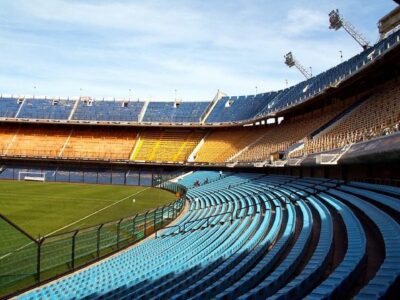
La Boca, a collective creation: Port, immigrants, arts and football
Read our review →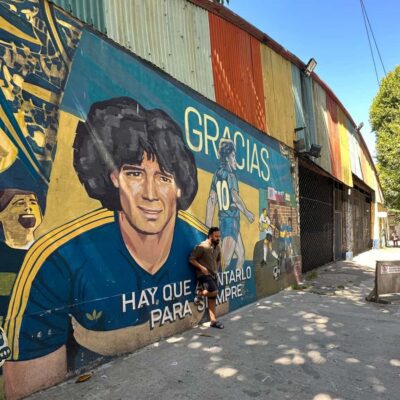

Browse the lists this tour appears in