
Reviewed · BUENOS AIRES WALKING TOURS
Buenos Aires: 7 Hour Small Group “BA 101” Walk
Buenos Aires reveals itself best on foot, and this seven-hour small-group walk gives you a smart first look at the city from Barrio Norte to San Telmo. You will see grand avenues, an opera house, Evita’s tomb, the Casa Rosada, and a 19th-century market, while moving between neighborhoods by subway and local transit.
I like the tiny group size, capped at seven, and the way coffee, lunch, transport, water, and the Recoleta Cemetery entrance fee are built in. The main drawback is the pace: seven hours on city streets is a lot of walking, and the tour is not suitable for children under 10, wheelchair users, or anyone with a cold.
Key points at a glance
- Start with Buenos Aires literary flair: Enter El Ateneo Grand Splendid, a former theater turned bookstore.
- See Evita’s final resting place: Recoleta Cemetery brings Argentina’s political and social story into a maze of ornate tombs.
- Cover four contrasting areas: Barrio Norte, Recoleta, the city center, Monserrat, and San Telmo all feel different.
- Use the city like a local: Coffee, subway or bus rides, lunch, and a walk down Florida Street break up the sightseeing.
- Finish in old San Telmo: Plaza Dorrego, the indoor market, and Defensa Street give the tour a relaxed final chapter.
- Hear stories from a real guide: Tracy and Chris have led this experience, answering questions and adding local history, language, and personal detail.
Why this seven-hour walk works as a Buenos Aires introduction
Buenos Aires can feel scattered at first. The sights are spread across large neighborhoods, and the city’s history is layered over several centuries. This walk solves that problem by linking the main sights into one north-to-south route.
You begin near Avenida Santa Fe and Avenida Callao at 10am. From there, the route moves through Barrio Norte and Recoleta before heading toward San Nicolás, the central districts, Monserrat, and San Telmo. You finish around 5pm near restaurants, shops, and bars.
That route matters. You are not simply checking off isolated monuments. You see how the city shifts from elegant residential streets to government buildings, grand theaters, busy shopping lanes, and cobbled old quarters.
The group limit of seven should make the experience feel more like a guided walk with room for questions than a formal procession. Dale from Australia specifically valued how Tracy’s local history, language skills, and friendly manner added more than he would have found alone. Dinah from the United States appreciated Chris’s history lessons, architecture details, and lively stories.
The format suits you best if this is your first full day in Buenos Aires. It also works well on a short visit, since the route gives you enough information to decide where you want to return later.
More walking tours in Buenos Aires:
- Buenos Aires Hop-On Hop-Off Bus, Free Walking Tours & Discounts
★ 4.5 · 2,218 reviews - Buenos Aires: La Boca Guided Walking Tour in English
★ 4.8 · 1,587 reviews - Nazis in Buenos Aires: a historical walking tour
★ 4.9 · 193 reviews
Barrio Norte begins with books, gardens, and a surprising palace
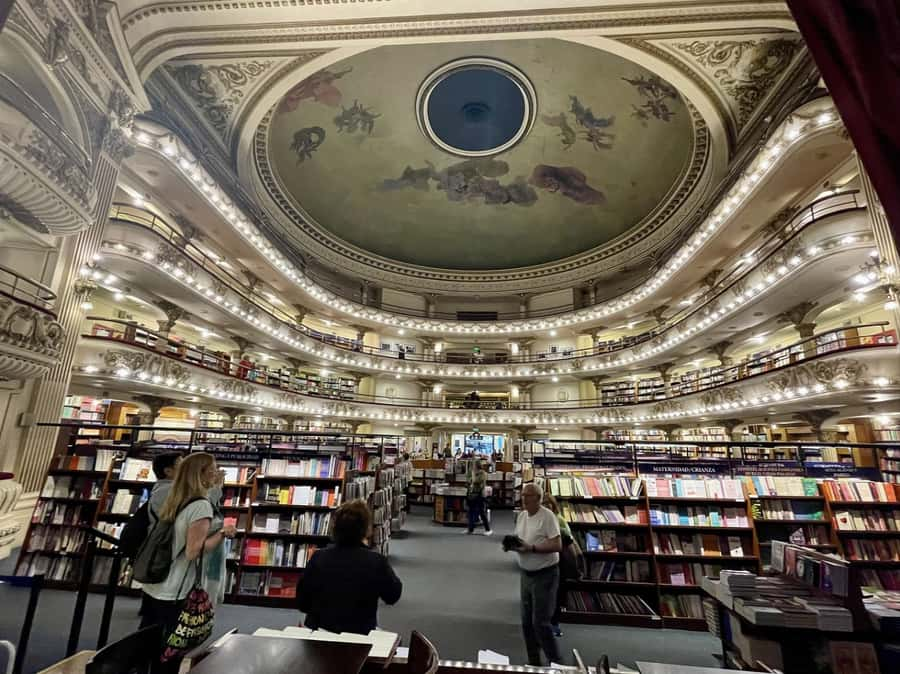
The first stop, El Ateneo Grand Splendid, is one of Buenos Aires’ most memorable interiors. It occupies a former theater, so the building has a theatrical layout rather than the plain rows of a normal bookshop. Even if you are not shopping for a Spanish-language novel, the setting gives you an immediate sense of the city’s love of literature, music, and old architecture.
Next comes leafy Plaza Rodriguez Peña and the Palacio Sarmiento, home to Argentina’s Ministry of Education. This early section is a useful contrast to the large monuments later in the day. You get a feel for the city as a place of formal public buildings, shaded squares, and daily civic life.
The Palacio de Aguas Corrientes is another strong stop. Its decorated exterior can catch you off guard because it looks far more ornate than a utility building. The guide explains the story behind it, turning a quick photo stop into a lesson in how Buenos Aires once presented even practical infrastructure with grand ambition.
This part of the walk is not about famous names alone. It helps you notice facades, public spaces, and small design choices that are easy to miss when you move around by car.
Recoleta Cemetery puts Evita into a city of tombs
Recoleta Cemetery is the emotional center of the morning. Entry is included, which is important because the stated admission value is at least US$15 per person. You enter a compact city of mausoleums, narrow passages, elaborate stonework, and family names tied to Argentina’s past.
The most famous stop is the tomb of Eva Perón, known as Evita. Her grave is not housed in a giant monument. It is found in the Duarte family mausoleum, which makes the search itself part of the experience. Your guide can place Evita’s public image and political importance within the larger story of Argentina.
The cemetery is also worth seeing for its architecture. The tombs range from restrained to highly decorative, and the close-packed layout creates a striking sense of another city inside the modern one. You will want time to look upward, read names, and notice the changing styles.
This is not a quiet, empty garden. It is a major attraction, and the walkways can feel crowded. The ground may also be uneven in places. Comfortable shoes are essential, and you should expect to stand and walk for much of the visit.
After the cemetery, the route continues to Plaza Francia and the Our Lady of Pilar Church. The church is one of the city’s best-preserved colonial buildings. Its simpler age and religious setting provide a useful counterpoint to the cemetery’s grand family monuments.
From Teatro Colón to the Obelisk
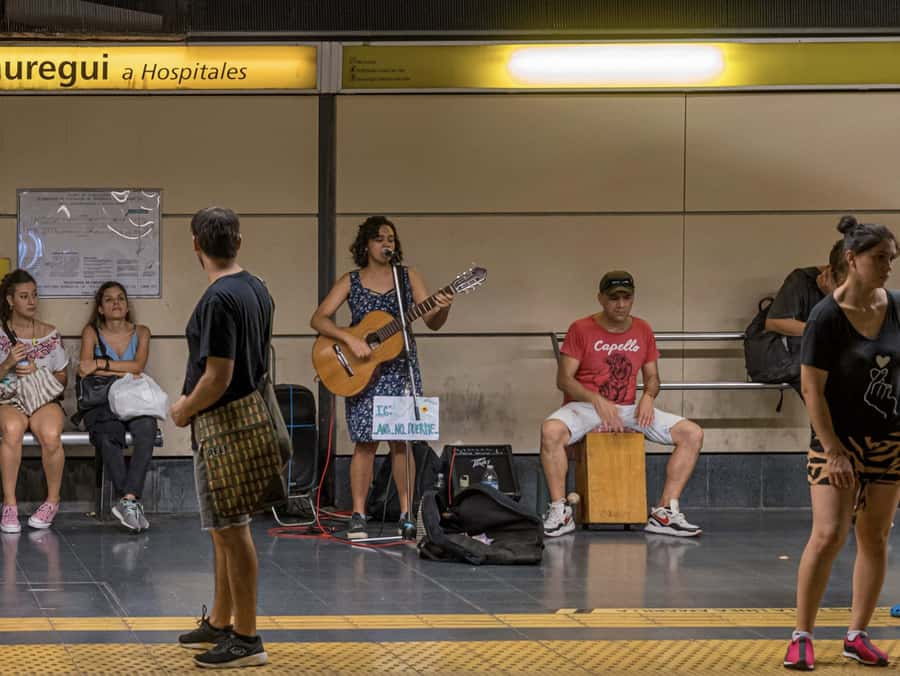
The tour then shifts toward San Nicolás, one of the central areas of Buenos Aires. Teatro Colón is a major cultural landmark and one of the world’s best-known opera houses. On this walk, you see the building from outside rather than taking a dedicated interior tour, but the stop still helps explain the city’s long connection to opera, theater, and European-style culture.
Plaza Lavalle brings in another layer of public life. The Palacio de Justicia de la Nación, home to Argentina’s Supreme Court, faces the square. This is a good place to ask questions about Argentina’s government and institutions, since the guide is there to explain more than just what the building looks like.
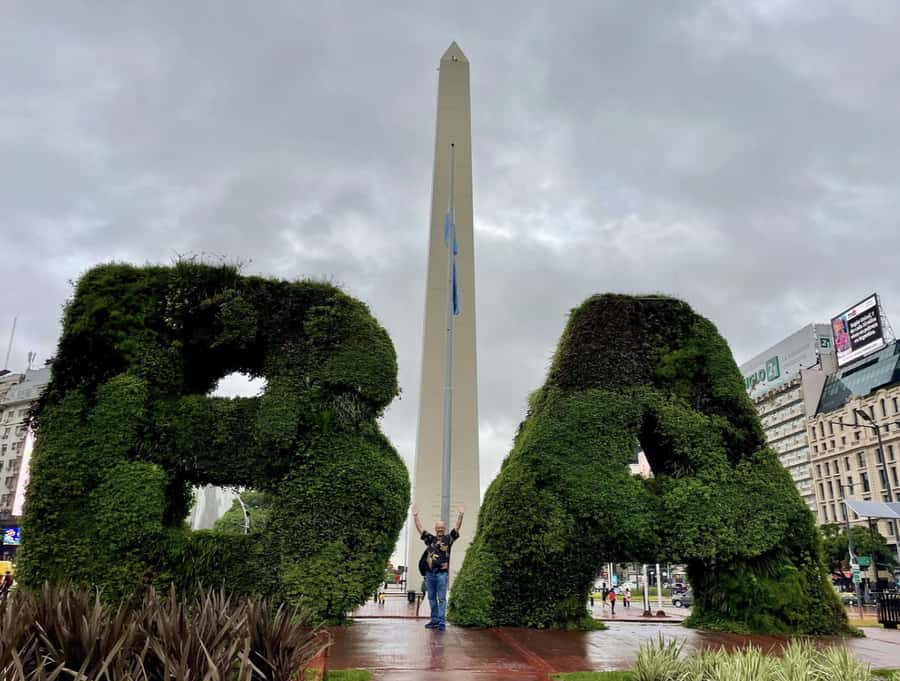
Then comes Avenida 9 de Julio and the Obelisco. The avenue is famously described as the widest in the world, and crossing or viewing it gives you a clear idea of Buenos Aires’ oversized urban design. The Obelisk has become the city’s main visual marker and a common gathering point for celebrations and demonstrations.
The green BA sign offers a simple photo stop. It may not be the deepest cultural moment of the day, but it gives you a chance to pause, take a picture, and reset before the next stretch of walking.
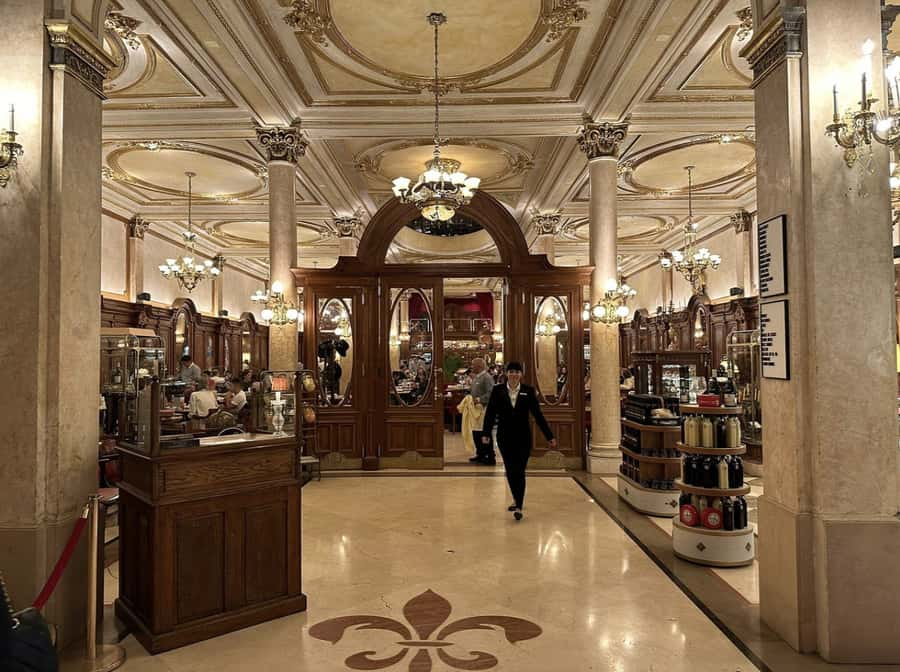
Avenida Corrientes follows. Locals call it the street that never sleeps, and the route passes Confitería La Ideal, a beautifully restored historic cafe. The cafe helps you picture the old Buenos Aires of coffee, pastries, conversation, and late-night city life.
Same city, an entirely different evening:
- Buenos Aires: Piazzolla Tango Show with Optional Dinner
★ 4.4 · 2,122 reviews - Buenos Aires: City Highlights Guided Tour with Transfer
★ 4.7 · 1,946 reviews - Buenos Aires: Hop-On Hop-Off City Bus Tour
★ 4.2 · 1,855 reviews - Buenos Aires Hop-On Hop-Off Bus and Exclusive Benefits
★ 4.4 · 1,714 reviews
Florida Street connects shopping with the historic center
Florida Street is Buenos Aires’ main pedestrian shopping area. It is a livelier, more commercial part of the route, with stores, street activity, and the grand Galería Güemes. The gallery is worth looking up for its architecture, especially if you enjoy historic commercial buildings.
This is also where the tour’s practical rhythm becomes clear. You are not walking past one museum after another. You are using the city’s streets as the main attraction, with shops, cafes, offices, and public spaces forming the background.
The group takes local public transport during the day, using a bus or subway as needed. Those rides are included in the price. This can save you the hassle of figuring out fares and routes while also showing you how Buenos Aires connects its districts.
The transport is not a sightseeing ride, so do not expect a guided city tour from a bus window. Its value is practical. It gives your feet a short break and moves the group efficiently to the next district.
Plaza de Mayo explains the city’s power and past
The historical center in Monserrat leads to Plaza de Mayo, the city’s main square. Buenos Aires was successfully founded here in 1580, and the square remains the political heart of the city.
The Casa Rosada, or Pink House, faces the plaza. It houses Argentina’s executive government and is famous for the balcony used by Juan and Eva Perón when addressing crowds. The building’s color and location make it one of the easiest Buenos Aires sights to recognize, but the guide’s context is what gives it weight.
You also see Buenos Aires Cathedral, associated with Pope Francis, who gave mass there before becoming pope. It is also the burial place of José de San Martín, a central hero of Argentina’s independence. The cathedral therefore connects religious history with the country’s national story.
This section includes some of the city’s oldest sites, including the first church, street, and business. You also hear about the oldest subway line in the Southern Hemisphere. These details are useful because they show Buenos Aires as an old capital with a modern, working core, not just a collection of preserved monuments.
Plaza de Mayo can be noisy and exposed, particularly in strong sun. Bring water, use the supplied bottle, and keep your hat or sunscreen handy. The tour provides water, but you may want to carry anything else you normally need for a long day outside.
San Telmo ends the day with market character
The final neighborhood is San Telmo, one of the most atmospheric parts of the route. Plaza Dorrego is among Buenos Aires’ oldest and most popular squares, lined with bars and restaurants and used by craft sellers. It is a good place to slow down after the more formal government and cemetery stops.
The San Telmo Indoor Market adds a different kind of history. Built in 1897, the iron structure now contains antiques, souvenirs, restaurants, fresh food, and local market stalls. You can browse, eat, and watch the neighborhood shift between everyday shopping and old-city atmosphere.
Defensa Street cuts through the heart of San Telmo. Its cobblestones, antique dealers, and original Spanish and Italian architecture make it a fitting final walk. The route ends near places to eat, drink, and shop, so you can continue exploring after 5pm without needing to cross the city again.
San Telmo is not polished in the same way as Recoleta. That is part of its appeal, but it also means uneven paving and a less predictable walking surface. If you have foot or balance problems, take the length of the route seriously.
What the US$160 price includes
At US$160 per person, this is not a budget walking tour. The value depends on how much structure and explanation you want during your first day in Buenos Aires.
You receive a seven-hour guided route, entrance to Recoleta Cemetery, coffee or a similar-priced drink, a local lunch with a main course and beverage, public transport during the tour, and bottled water. The cemetery entrance alone represents a stated value of US$15 or more.
A small group also changes the math. With no more than seven people, you have a better chance of asking about food, history, language, or neighborhoods without waiting behind a large group. If your time is limited, the ability to connect major sights in one day may be worth more than the cost of separate taxis and admission fees.
Lunch is a main course and beverage, not an open-ended food tour. Additional food and drinks are not included, so bring extra money if you want snacks, dessert, or more than the included meal.
You must arrange your own transport to the meeting point and from the ending point. The walk begins near Avenida Santa Fe and Avenida Callao, then ends in San Telmo. That one-way design is useful for sightseeing, but plan your onward route from the southern end.
Who should book this walk
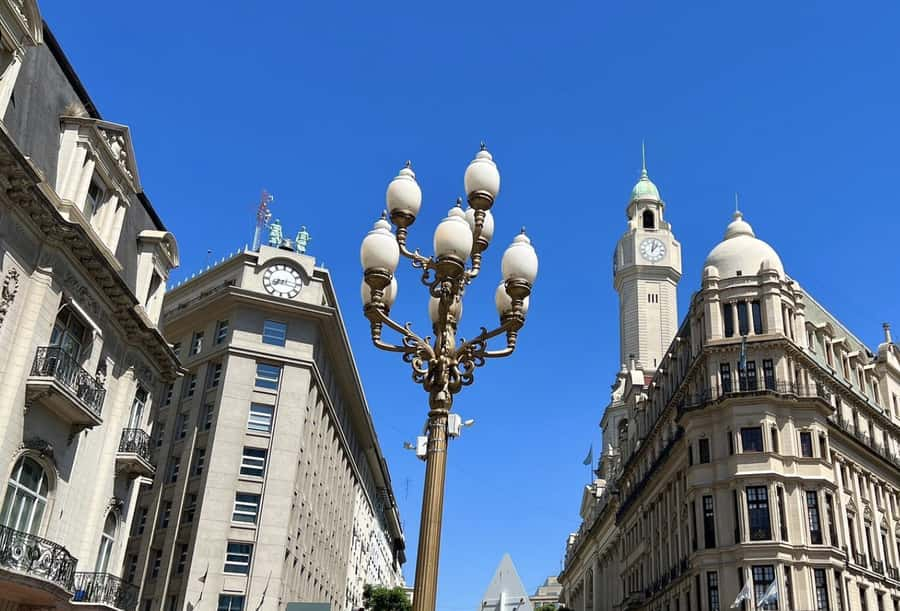
I would choose this tour if you have one free day in Buenos Aires and want a strong orientation before exploring alone. It is also a good fit if you enjoy architecture, political history, public squares, old cafes, markets, and neighborhood changes more than long museum visits.
It suits solo visitors and couples who want company without joining a large group. The English-speaking guide format is especially helpful if you want to ask detailed questions as you go. Guides such as Tracy and Chris have been praised for answering questions and adding local stories rather than simply naming buildings.
I would think twice if you dislike extended walks, need frequent rest periods, or want a slow visit inside each attraction. This is a broad city overview, not a deep visit to Teatro Colón, the Casa Rosada, or every market stall.
The activity is not suitable for children under 10, wheelchair users, people with a cold, or people over 95. Smoking is not allowed. Wear comfortable shoes, since the day combines sidewalks, plazas, cemetery paths, cobblestones, and public transport.
You can cancel up to 24 hours before the start for a full refund, and the reserve-now, pay-later option keeps the booking flexible. Those policies are useful, but the bigger planning point is the seven-hour commitment. Make sure you want a full day on foot.
Should you book the BuenosTours BA 101 walk?
Book it if you want one well-organized day that connects the major Buenos Aires districts and explains what you are seeing along the way. The combination of Recoleta Cemetery, Evita, Plaza de Mayo, the Obelisk, San Telmo Market, local lunch, coffee, and public transport gives you a lot for a single outing.
Skip it if you prefer to move at your own pace, spend hours inside one attraction, or avoid long walks. For everyone else, this is a practical first-day choice, especially if you have limited time and want the city to make sense before you set off on your own.
FAQ
How long does the Buenos Aires BA 101 walk last?
The experience lasts seven hours, beginning at 10am and ending around 5pm.
Where does the tour begin?
It begins in the Recoleta or Barrio Norte area near the corner of Avenida Santa Fe and Avenida Callao. Exact meeting instructions are sent in the confirmation email.
Where does the tour end?
The walk ends in San Telmo, near places to eat, drink, and shop.
How large is the group?
The group is limited to seven participants.
Is the tour conducted in English?
Yes. The tour has a live English-speaking guide.
Are public transport costs included?
Yes. Local public transport, such as a bus or subway used during the tour, is included.
Is lunch included?
Yes. The price includes a local lunch with one main course and a beverage.
Is coffee included?
Yes. Coffee or a drink of equivalent price is included.
Is entry to Recoleta Cemetery included?
Yes. Entrance fees to historical sites, including Recoleta Cemetery, are included.
What should I bring?
Bring comfortable shoes. A bottle of water is provided, and additional food or drinks beyond the listed inclusions are your responsibility.
Just added around Buenos Aires
- Tango Show at El Querandi with optional Dinner★ 4.2 · 3 reviews
- Wine Tasting in Buenos Aires★ 4.2 · 4 reviews
- Walking Tour: Buenos Aires bookstores★ 4.3 · 12 reviews
- Private Underground Tango Immersion★ 5.0 · 31 reviews
- Velez Sarsfield Football Match★ 5.0 · 3 reviews
- Unique Tigre and Delta Private Day Cruise Navegation★ 5.0 · 3 reviews
- Tour Buenos Aires in one day on Electric Scooters★ 5.0 · 33 reviews
- Transfers from or to the airport In Argentina Your Best Choice★ 5.0 · 28 reviews
Buenos Aires Walking Tours, compared.
Buenos Aires Hop-On Hop-Off Bus, Free Walking Tours & Discounts
Read our review →
Nazis in Buenos Aires: a historical walking tour
Read our review →
Buenos Aires Walking Tour with Local Guide and Optional Rooftop
Read our review →
Browse the lists this tour appears in