
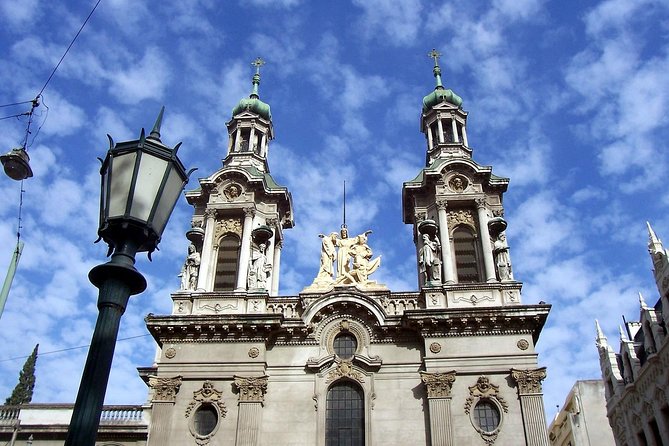
Reviewed · BUENOS AIRES WALKING TOURS
Buenos Aires in One Day Private Walking Tour
Buenos Aires reveals itself best at street level, and this long private walk covers a remarkable sweep of the city. You move from the presidential Casa Rosada and the Cathedral to San Telmo’s colonial streets, Recoleta’s ornate cemetery, Palermo’s monuments, and the old British docklands of Puerto Madero. The stories connect architecture, immigration, politics, religion, and daily life.
I like the serious historical focus, especially the explanations of Plaza de Mayo, the British invasions, slavery, immigration, and Argentina’s turbulent politics. I also like the chance to see the city with guides such as Carlos, Soledad, Clemencia, or Eilat, rather than simply ticking off sights from a bus.
The main caution is simple: this is a true walking tour. You may walk six or seven hours, take one taxi at your own cost, and spend a long stretch in Recoleta Cemetery. The advertised price is $199 per person, so you should want close personal guidance, not just a quick look at the landmarks.
Key points to know before booking
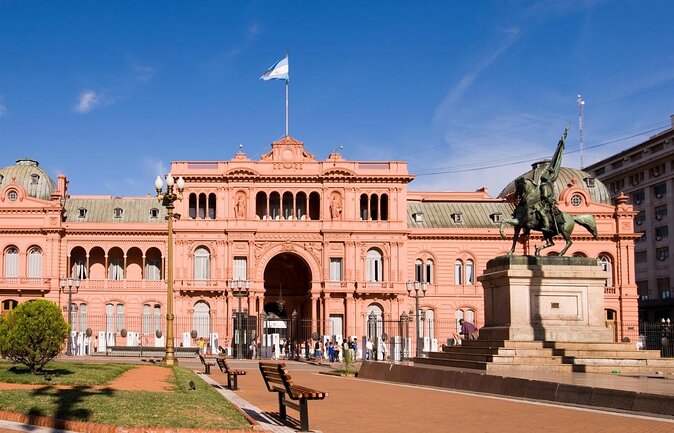
- A full city walk, not a drive-by tour: You cover Retiro, Recoleta, Palermo, downtown, San Telmo, Puerto Madero, and possibly La Boca.
- The history is the main attraction: Guides explain architecture, British influence, immigration, military rule, slavery, Evita, and the Mothers of the Disappeared.
- Recoleta Cemetery gets real attention: Allow about 45 minutes for Eva Perón’s tomb, grand mausoleums, and other famous graves.
- Plan for a long day on foot: Comfortable shoes, water, sun protection, and a little flexibility will help.
- Food and transport cost extra: The coffee or lunch break is at your expense, as is one taxi ride of about $5 to $7.
- The tour ends in San Telmo: You finish at Plaza Dorrego, a useful spot for cafes, antique shops, and further exploring.
A six-hour introduction to Buenos Aires at street level
This experience is built for people who want the city explained, not merely displayed. You meet outside Florida Garden at 10:00 a.m., near the corner with Paraguay Street. Look for a guide carrying or wearing a small BA Walking Tours sign.
The tour is private, so only your group participates. That matters here because the route is packed with context. You can ask about a building, pause over a political question, or shape the conversation around your own interests. The strongest guides, including Carlos, Soledad, Clemencia, and Eilat, are praised for clear English and a strong command of local history and daily life.
The price is $199 per person. That is not a bargain for a city walk, but it buys personal attention, cemetery admission, and a broad route that would take careful planning to reproduce alone. If you have only one day in Buenos Aires, the value improves. If you enjoy finding landmarks independently and mainly want photographs, the price may feel high.
More walking tours in Buenos Aires:
- Buenos Aires Hop-On Hop-Off Bus, Free Walking Tours & Discounts
★ 4.5 · 2,218 reviews - Buenos Aires: La Boca Guided Walking Tour in English
★ 4.8 · 1,587 reviews - Nazis in Buenos Aires: a historical walking tour
★ 4.9 · 193 reviews
Retiro shows Buenos Aires as the Paris of the South
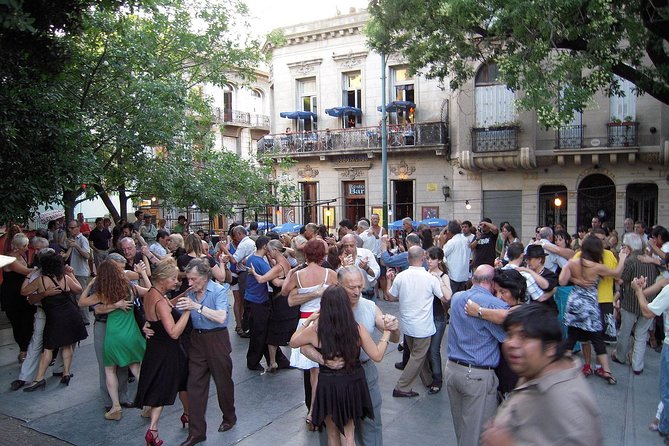
The first substantial stop is Retiro, where the city’s grand European image comes into view. Plaza San Martín has served several different roles, including an early military position, a bullring, and a slave market. The guide uses this one square to show how Buenos Aires changed as the city grew.
You see the Paz Palace, a grand Belle Époque mansion, along with the Kavanagh Building, the Santísimo Sacramento Church, the British Clock Tower, and the railway stations. These are not random photo stops. Together, they show the influence of British finance, French design, military power, Catholic life, and Argentina’s expanding rail network.
General San Martín’s monument adds the national story. Your guide explains how Argentina became a nation and why this military leader remains central to the country’s public memory.
I like this early section because it gives you a working key to the city. You begin to notice how Buenos Aires mixes old wealth, imported styles, ambitious public buildings, and political symbols within a few blocks.
Avenida Alvear turns architecture into social history
Avenida Alvear and Barrio Norte bring you past some of the city’s most polished streets. The route includes Arroyo Street, art galleries, the French Embassy in Palacio Ortiz-Basualdo, Alzaga-Unzué Manor, the Vatican nunciature, the Duhau Mansion, Hume Mansion, and Alvear Palace.
The buildings tell a story about Argentina’s old elite and the country’s strong French and Italian influence. Your guide also links the mansions to Catholicism, Judaism, immigration, and the wealth created by ranching and trade.
This is one place where the tour’s slow pace pays off. On your own, you might admire the facades and keep walking. With a guide, you get an explanation of why these styles appeared, who commissioned the buildings, and how the city’s social structure shaped its streets.
The limitation is that much of this section is viewed from outside. The tour does not promise broad interior access to the palaces, embassies, or private buildings. If you need to enter every major landmark, this walk may leave you wanting more.
Recoleta Cemetery is the tour’s dramatic centerpiece
Recoleta is one of the most important stops, and the cemetery receives about 45 minutes of focused attention. This is not a quick pass through a famous gate. You walk among elaborate family mausoleums and hear stories connected to Argentina’s political, military, artistic, and cultural figures.
Eva Perón’s burial place is the best-known stop. The guide explains Evita’s life, public role, death, and place in Argentina’s memory. You also visit the Nuestra Señora del Pilar Church and see the surrounding Recoleta area, the Buenos Aires Exhibition Center, Palais de Glace, and the Buenos Aires Design Center.
The cemetery is especially useful with a guide because its stories are not obvious from the stonework. The monuments are impressive, but the names, family links, and national conflicts can blur together without explanation. Several guides receive their strongest praise for this part of the tour.
Still, the cemetery can feel long if you have little interest in tombs or national figures. One past itinerary ran close to seven hours, and Recoleta was the place where the pace felt slowest for some people. You can make the most of it by telling your guide early how much detail you want.
More city tours in Buenos Aires:
- Buenos Aires: City Highlights Guided Tour with Transfer
★ 4.7 · 1,946 reviews - Best of Buenos Aires: Guided Sightseeing City Tour
★ 4.0 · 402 reviews - Buenos Aires Private City Tour with Local Guide
★ 5.0 · 308 reviews - Classic City Tour of Buenos Aires: Neighborhoods and Emblems
★ 3.8 · 282 reviews
Palermo brings monuments and everyday city life
The Palermo section shifts the mood. You see the National Gallery of Art, Peynot’s grand monument, the Floralis Genérica, Eva Perón’s monument, and the National Library building.
The Floralis monument, a giant metal flower, is one of the city’s most recognizable modern landmarks. The Evita monument adds a political and personal layer, while the National Library offers a striking piece of modern architecture.
This neighborhood also gives you a sense of ordinary Buenos Aires beyond the ceremonial center. You are not only looking at government buildings and grand cemeteries. You are moving through a large residential and cultural district where people live, work, shop, and meet.
The route can feel geographically wide at this point. One taxi ride is required between attractions, and the fare is not included. Budget about $5 to $7, though the exact amount can vary. Bring local cash or a payment method your guide accepts.
Downtown ties the city’s symbols together
The downtown portion includes Florida Street, Galerías Pacífico, the former Harrods building, the Centro Naval, Teatro Colón, the Obelisk, the banking district, and the house linked to Mariquita Sánchez, associated with Argentina’s national anthem.
Florida Street is a useful place to discuss how Buenos Aires developed. Galerías Pacífico adds a visual treat: the former British railway offices now house a grand shopping center known for its mural paintings. The Centro Naval and nearby buildings show how ranch wealth and military influence shaped the capital.
Teatro Colón is one of the city’s major cultural landmarks. The tour focuses on its place in Buenos Aires rather than promising a full performance or extensive interior visit. The Obelisk, meanwhile, becomes a lesson in national identity and the way Buenos Aires uses large public symbols.
This section is also where the tour explains recent economic and political history. That can be valuable if you want more than old buildings, though the conversation may move quickly because the route covers so much ground.
Plaza de Mayo is where the national story comes into focus
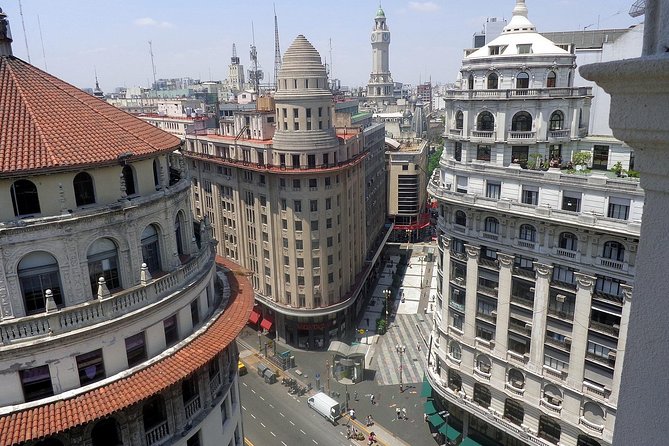
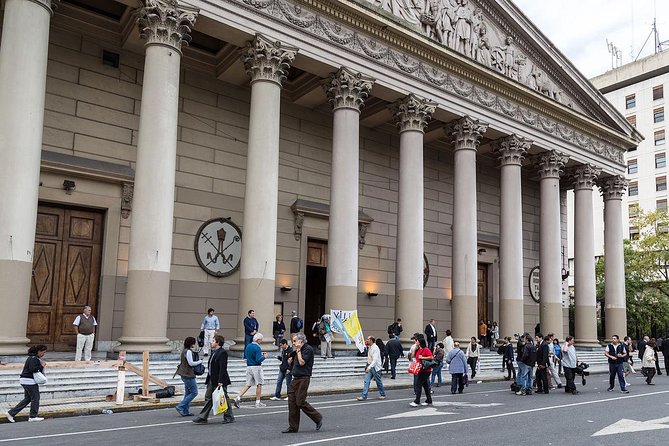
Plaza de Mayo brings several major sights into one powerful setting. You see the Casa Rosada, the Metropolitan Cathedral, the Cabildo, the Pirámide de Mayo, and the area associated with the Mothers of the Disappeared.
The Casa Rosada is the president’s office and the country’s best-known seat of government. The Cabildo, once the old city hall, helps explain the colonial period and the birth of modern Argentina. The Cathedral is also important because Pope Francis worked there before becoming pope, and it contains the guarded tomb of General San Martín.
The guide connects the plaza to military rule, public protest, national independence, and Argentina’s painful recent past. This is one of the places where local knowledge matters most. A photograph of the pink government house only tells you so much. The surrounding square carries layers of power, grief, ceremony, and public memory.
Expect to spend around 30 minutes in the plaza, plus shorter visits to the Cathedral and Casa Rosada. The listed experience does not promise entry into every building, so consider this primarily an exterior and historical tour.
San Telmo leads to the finish at Plaza Dorrego
San Telmo is the oldest neighborhood on the route and one of its most atmospheric sections. You pass colonial-style houses, old churches, narrow streets, the Manzana de las Luces, Defensa Street, the Saint Dominic Convent, and remnants of the early city limits.
Defensa Street provides the setting for stories about the British invasions of 1806 and 1807. The guide also points out a tiny house connected to a freed slave, using it to explain slavery in Buenos Aires. Other stops include the old market, the Belén Church, the Viceroy Liniers house, and the Minimal House.
The tour ends at Plaza Dorrego, the center of the San Telmo antiques market. The square is surrounded by cafes and antique shops, making it a practical place to continue your afternoon. You can stop for a drink, browse the market, or stay in the neighborhood for dinner.
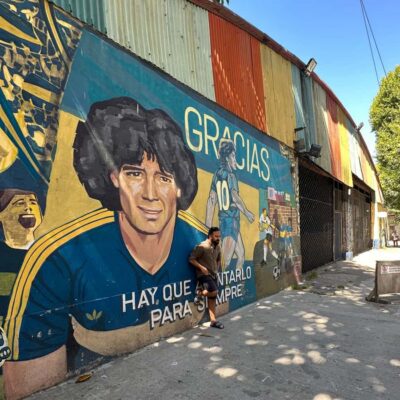
The route also offers an optional extension to La Boca, about 45 additional minutes with a taxi ride. It is not included in the tour, and the added cost is yours. La Boca brings a different story, centered on Italian immigrants, sailors, dock workers, and colorful metal houses. Ask about this option early if it interests you, since the standard walk already covers a lot.
Puerto Madero adds the city’s newest chapter
Puerto Madero provides a sharp contrast to San Telmo. This newer district grew outward over the old British dockyards and extends the city toward the water.
The stop is brief, about 15 minutes, but it gives you a clear lesson in urban change. Buenos Aires has not stayed fixed in its colonial center or grand nineteenth-century neighborhoods. The city has repeatedly rebuilt itself around trade, transport, immigration, and changing ideas about waterfront space.
Because the visit is short, you should think of Puerto Madero as a snapshot rather than a full neighborhood tour. If you want restaurants or a longer waterfront walk, the tour may not leave enough free time before the final San Telmo stop.
Food, pace, and practical planning
A coffee and lunch break is included in the day, but you pay for your own food and drinks. The break is useful because the walking is demanding, and it gives you a chance to ask questions away from the street.
Wear supportive shoes. The itinerary includes long stretches between neighborhoods, uneven historic streets, cemetery paths, and plenty of standing. The tour operates rain or shine, so carry weather protection and dress for the forecast.
The advertised duration is about six hours, but the actual day can run longer. One reported experience lasted close to seven hours, and the listed stop times add up to a very full schedule. Do not book a tight evening reservation, airport transfer, or theater ticket immediately afterward.
The meeting point is Florida Garden, Florida 899. The end point is Plaza Dorrego, not the original meeting place. That detail matters. One person had trouble finding the way back to the hotel after being left in the old part of town, so arrange your onward route before the final stop.
Who should book this private Buenos Aires walk?
You should consider it if you have one free day, want a strong historical foundation, and prefer asking questions as you go. It is also a good fit if you care about architecture, political history, immigration, Evita, the British influence, and the changing shape of Buenos Aires.
It suits active adults and families with older children. Children eight and under are free when accompanied by a paying adult, but you should decide honestly if they can handle several hours on foot. The route is not designed as a light sightseeing stroll.
You may want another option if you dislike long walks, want extensive building interiors, or prefer a relaxed visit to just two or three neighborhoods. Some people find the route too drawn out, particularly around Recoleta, and one person felt that not enough sights were entered. Those are fair concerns.
Should you book it?
Book this tour if understanding Buenos Aires matters more to you than collecting quick photographs. Its best qualities are the private format, the wide city coverage, the strong historical commentary, and the detailed treatment of Recoleta Cemetery and Plaza de Mayo.
Skip it if $199 feels steep for a walking tour, if you want free time built into the day, or if six to seven hours on foot sounds tiring. For a first day in Buenos Aires, though, it gives you a useful map of the city and enough context to explore San Telmo, Recoleta, Palermo, and the center with greater purpose afterward.
FAQ
How long does the Buenos Aires walking tour last?
The stated duration is approximately six hours. Depending on timing, weather, city conditions, and the pace of the group, it may last longer. One experience lasted close to seven hours.
Where does the tour start?
You meet at Florida Garden, Florida 899, in Buenos Aires, at 10:00 a.m. Look outside the cafe’s corner door near Paraguay Street for a guide carrying or wearing a small BA Walking Tours sign.
Where does the tour end?
The standard tour ends at Plaza Dorrego in San Telmo, at Humberto 1º 400. The square has cafes, antique shops, and the San Telmo antiques market.
Is this a private tour?
Yes. Only your group participates in the private activity.
Is transportation included?
No. You need to take one taxi during the tour to get between attractions. The taxi fare is not included and is estimated at about $5 to $7.
Are meals included?
No. The coffee and lunch break takes place at your own expense.
Is admission to Recoleta Cemetery included?
Yes. Cemetery admission is included. Other listed stops are generally viewed from public areas, and no general building admission is promised.
Can children join the tour?
Yes. Children eight and under are free when accompanied by a paying adult.
What happens if it rains?
The tour operates rain or shine. The full route can also change because of weather, strikes, repairs, riots, timing, or other city conditions.
More 1-Day Tours in Buenos Aires
- Gaucho Day Trip from Buenos Aires: Santa Susana Ranch
★ 4.0 · 272 reviews - Gaucho Experience: A Day Trip to Don Silvano Ranch
★ 4.0 · 148 reviews - Colonia del Sacramento: Small-Group Day Trip
★ 4.5 · 48 reviews - Iguazu Falls Private Day Trip from Buenos Aires with Airfare
★ 4.5 · 35 reviews
Just added around Buenos Aires
- Tango Show at El Querandi with optional Dinner★ 4.2 · 3 reviews
- Wine Tasting in Buenos Aires★ 4.2 · 4 reviews
- Walking Tour: Buenos Aires bookstores★ 4.3 · 12 reviews
- Private Underground Tango Immersion★ 5.0 · 31 reviews
- Velez Sarsfield Football Match★ 5.0 · 3 reviews
- Unique Tigre and Delta Private Day Cruise Navegation★ 5.0 · 3 reviews
- Transfers from or to the airport In Argentina Your Best Choice★ 5.0 · 28 reviews
- Tour Buenos Aires in one day on Electric Scooters★ 5.0 · 33 reviews
Buenos Aires Walking Tours, compared.
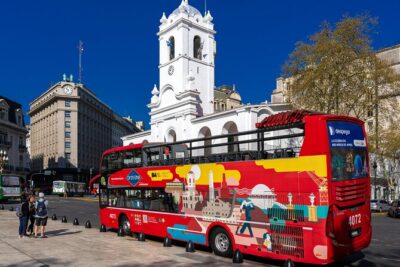
Buenos Aires Hop-On Hop-Off Bus, Free Walking Tours & Discounts
Read our review →
Nazis in Buenos Aires: a historical walking tour
Read our review →
Buenos Aires Walking Tour with Local Guide and Optional Rooftop
Read our review →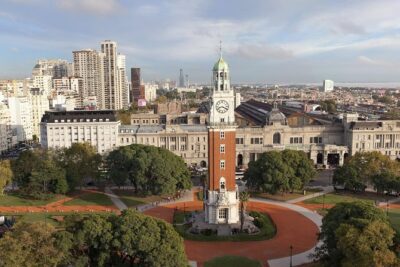
Browse the lists this tour appears in