
Reviewed · BUENOS AIRES ARCHITECTURE & HISTORY TOURS
Buenos Aires: Historic Buenos Aires Landmarks & Icons Tour
Buenos Aires’ political heart is compact enough to explore on foot, yet packed with layers of Argentine history. This 150-minute walk takes you from Plaza de Mayo to Casa Rosada, the Cathedral, Cabildo, Manzana de las Luces and several less obvious stops, including the former convent that now houses the Central Bank.
I like the tour’s strong historical focus and the way it links grand buildings with the events that shaped the city. I also like the value: for $20, you get a live guide and a concentrated introduction to central Buenos Aires without spending half a day on transport.
The main drawback is clear: this is a Spanish-language walking tour, and there is a fair amount of time on foot. One English-speaking participant said Miguel adapted well, but you should book only if you can follow Spanish or have confirmed your language needs in advance.
Key points before you book
- A fast introduction to Buenos Aires: You see many of the city center’s major landmarks in 150 minutes.
- Miguel is the guide to look for: His explanations, warmth, flexibility and personal attention receive especially strong praise.
- Plaza de Mayo is the anchor: Casa Rosada, the Cathedral, Cabildo and the City Legislature all connect from this central square.
- The route goes beyond the usual photo stops: You visit the Bicentennial Museum and Manzana de las Luces, plus historic civic buildings.
- Spanish is the stated tour language: One guide adapted to English for a participant, but that should not be treated as the normal arrangement.
- Prepare for outdoor walking: Bring comfortable shoes, water, a hat and sunscreen. The tour is not suitable for wheelchair users or people with mobility impairments.
Why this short walk works well in Buenos Aires
Buenos Aires can feel sprawling when you first arrive. Its neighborhoods have different personalities, and the city’s most important buildings are spread across a broad urban area. This tour solves one early-trip problem: it gives you a firm sense of the historic center before you start exploring on your own.
The route begins at Plaza de Mayo, the city’s main civic square. From there, you can reach several major sights without needing a taxi or a complicated public transport plan. You’ll also get the basic political and architectural context that makes the center easier to read later.
I see this as an orientation walk rather than a complete Buenos Aires tour. It does not attempt to cover San Telmo, Recoleta, Palermo or the city’s food scene. Instead, it concentrates on the buildings and plazas that explain the capital’s public life.
The 150-minute duration is a useful middle ground. It is long enough to include several guided visits, but short enough to fit before lunch, after arriving in the city or alongside another afternoon plan. The pace may feel full, though, especially if you stop often for photographs or need more time inside each site.
More architecture and history tours in Buenos Aires:
- Nazis in Buenos Aires: a historical walking tour
★ 4.9 · 193 reviews - San Telmo: Historical Guided Tour with Street Food & Drinks
★ 5.0 · 87 reviews - Buenos Aires: La Boca Art and History Walking Tour
★ 4.8 · 55 reviews
Meeting Miguel at Plaza de Mayo
You meet the guide near the flagpole at Plaza de Mayo. This is a practical meeting point, but the square can feel open and busy, so arrive with the meeting instructions ready on your phone and give yourself a few minutes to locate the flagpole.
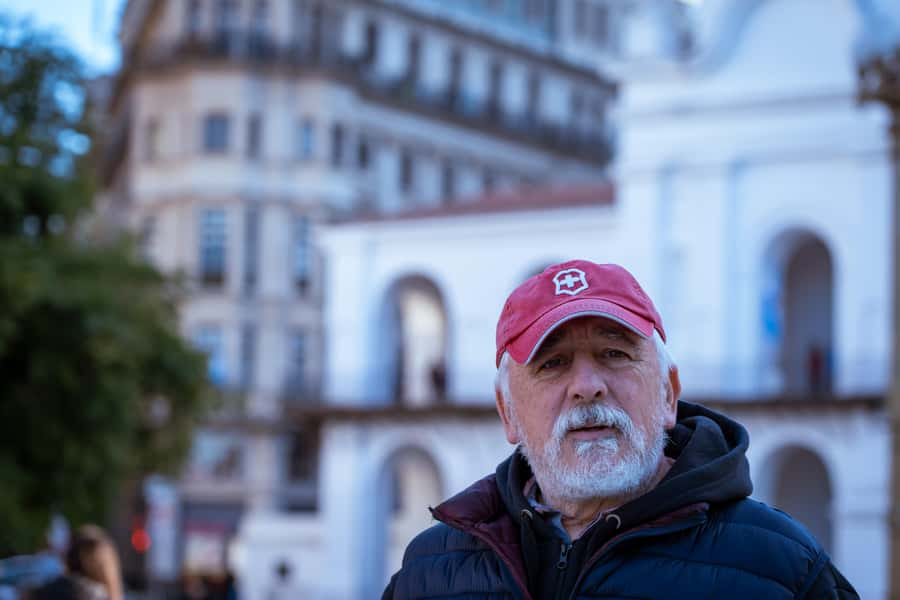
Miguel is the guide most closely associated with this experience. His approach seems to be especially strong on explanation and personal attention. He has been praised for making complex history easy to follow, answering questions, adapting to the group and even showing visitors how to drink mate.
That last detail gives the tour a more personal touch than a standard building-by-building walk. You are not simply moving from one facade to the next. You can expect the guide to connect the landmarks with Argentine customs, public life and stories about the city.
The tour is offered in Spanish. A participant who accidentally booked the Spanish option said Miguel switched to English, and another person with limited Spanish found that he adjusted his pace and explanations. Those are encouraging signs, but the official language remains Spanish, so fluent English should not be assumed.
Casa Rosada and the power of Plaza de Mayo
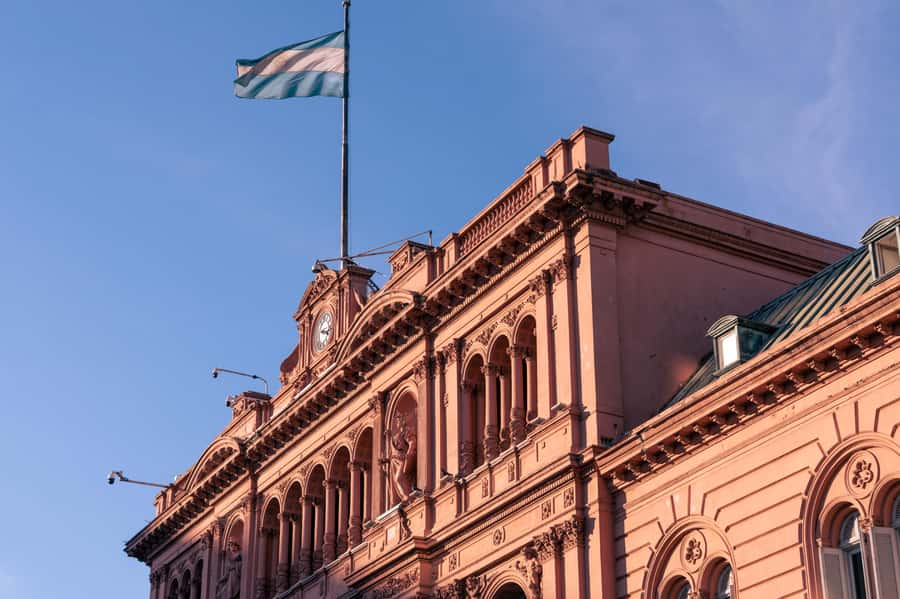
Casa Rosada is one of the tour’s main photo stops. Its pink exterior is instantly recognizable, but the building matters for more than its color. It faces Plaza de Mayo, the country’s most significant public square, and remains closely tied to Argentina’s national government and political history.
You receive a guided explanation and have time for photographs, with about 10 minutes listed for this portion. That is enough for an introduction and exterior views, but not a long exploration of every architectural detail.
The square itself helps put the rest of the route in place. From here, you can see how government, religion, commerce and public protest have all gathered around one urban space. The tour’s value is not just ticking off Casa Rosada. It is showing you why this particular square became the center of national life.
You should keep your expectations realistic. The schedule does not promise an extended interior visit to Casa Rosada. Think of this stop as a guided exterior encounter and a chance to understand the setting.
Garay Monument and the city’s second founding
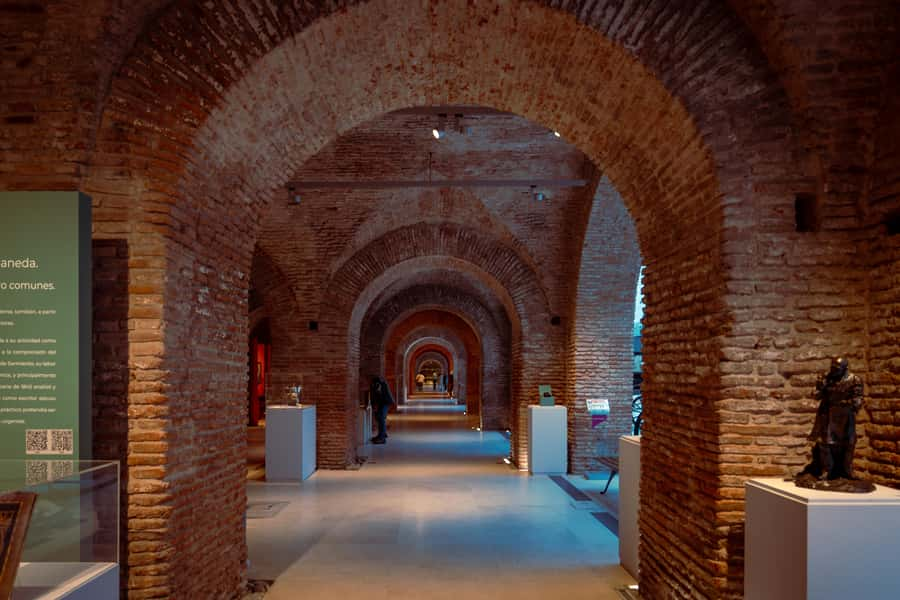
The Monument to Juan de Garay offers a different angle on Buenos Aires. The site marks the city’s second founding, and it gives the guide a chance to explain how the city’s beginnings unfolded.
This stop is also noted for its view toward the historic center. That makes it useful for orientation. Instead of seeing the buildings as isolated attractions, you begin to understand their relationship to one another.
The visit is scheduled for about 10 minutes, including a photo stop and explanation. It is brief, but the monument adds a founding story to the political history introduced at Plaza de Mayo.
I appreciate this kind of stop because it breaks up the standard sequence of government building, church, museum. A monument in an urban setting can seem easy to pass without a second glance. With a guide, it becomes part of the city’s larger story.
Same city, an entirely different evening:
- Buenos Aires Hop-On Hop-Off Bus, Free Walking Tours & Discounts
★ 4.5 · 2,218 reviews - Buenos Aires: Piazzolla Tango Show with Optional Dinner
★ 4.4 · 2,122 reviews - Buenos Aires: City Highlights Guided Tour with Transfer
★ 4.7 · 1,946 reviews - Buenos Aires: Hop-On Hop-Off City Bus Tour
★ 4.2 · 1,855 reviews
The Bicentennial Museum and Argentina’s presidents
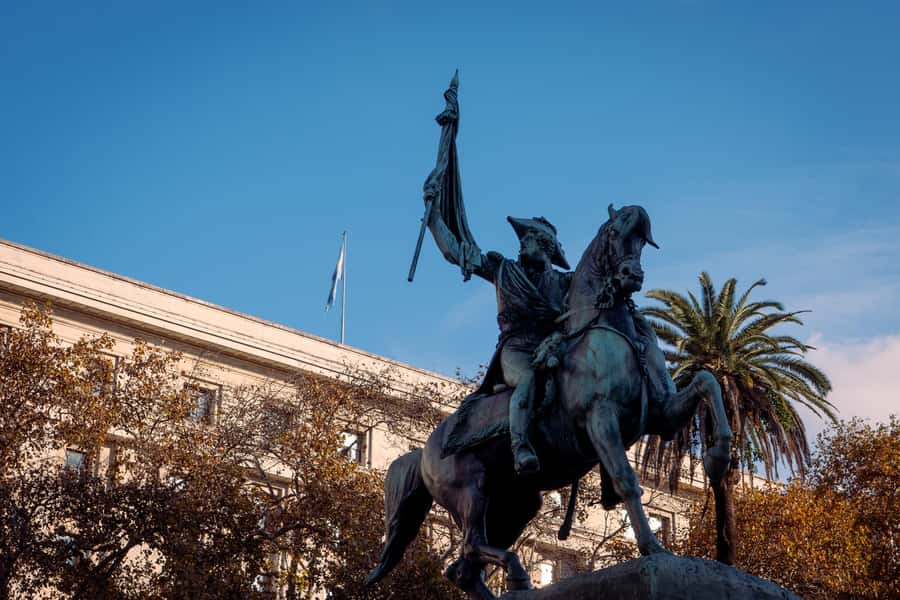
The Bicentennial Museum is one of the more substantial stops. You spend about 20 minutes here, with time to visit, see exhibits and hear the guide’s explanation.
The museum holds relics connected to past presidents and notable works of art. That gives you a chance to move from architecture into objects and political memory. A building can tell you how a government wanted to look. Museum pieces can show how that government and its leaders were remembered.
The museum is particularly useful if you are new to Argentine history. You may not know the names, political periods or disputes behind every object, so Miguel’s role matters here. His strongest quality is his ability to make historical material sound connected rather than like a list of dates.
Twenty minutes is not enough for a detailed museum visit. You will get an introduction, not a full museum study session. If a particular exhibit interests you, you may want to return independently, assuming opening arrangements allow it. The tour gives you the framework; it does not replace a longer museum visit.
The Metropolitan Cathedral and Cabildo
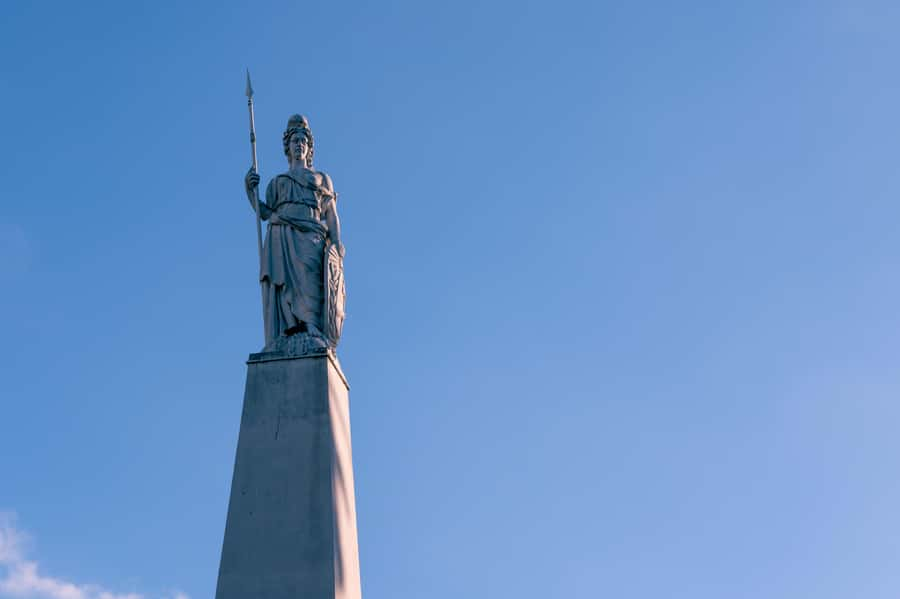
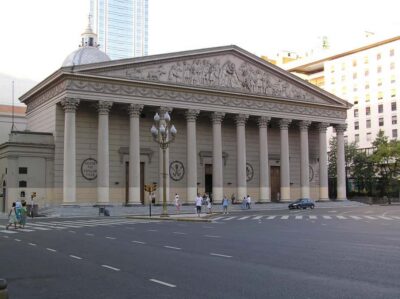
The Buenos Aires Metropolitan Cathedral is another major stop, with about 20 minutes for a visit, guided explanation and photographs. Its importance goes beyond religious architecture. It is part of the institutional cluster around Plaza de Mayo, where national, civic and religious power meet.
The Cathedral gives the route a different mood after the political focus of Casa Rosada. You can look at the building as a place of worship, but also as part of the public history of the square. The guide’s commentary helps explain why this church belongs in a tour of national landmarks rather than only a religious sightseeing list.
The Cabildo is nearby and preserves the story of the city and nation through its museum. This is one of the most useful stops for understanding Buenos Aires before and during the formation of modern Argentina.
You have about 20 minutes for the Cabildo as well. That is enough to see the building, enter for a guided visit and gain a clear outline of its role. It is not enough to examine every room or display at length, so listen closely to the guide and ask about anything you want to revisit later.
I like the pairing of the Cathedral and Cabildo. Together, they show how the square functioned as more than a scenic plaza. You see the religious center, the colonial civic center and the modern government setting within a short walk.
The former convent, post office palace and civic architecture
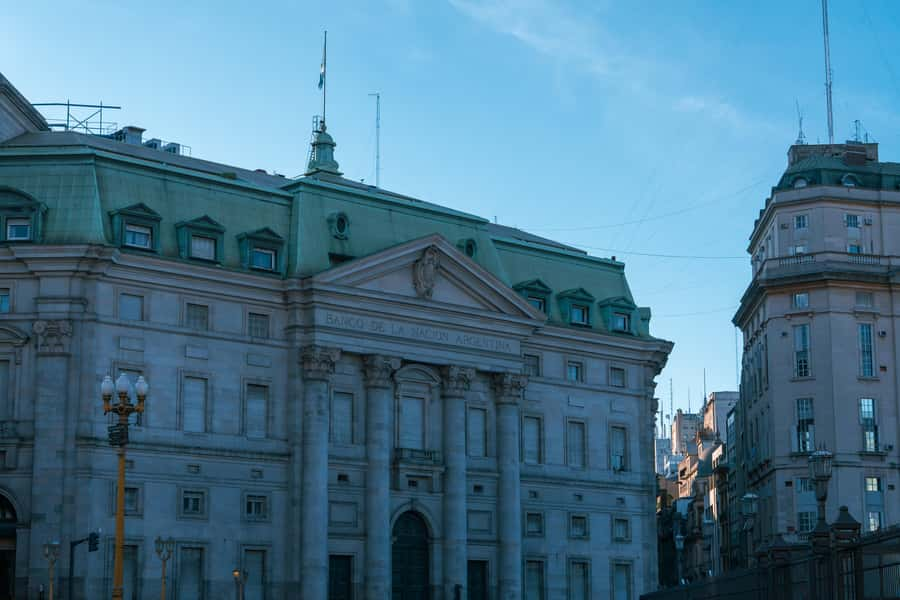
The route also introduces buildings that are easy to miss if you explore only through photographs. The Central Bank of the Argentine Republic occupies the former San Ramón Nonato Convent, giving the building an older identity beneath its present institutional use.
That kind of change is one of the pleasures of central Buenos Aires. Buildings do not always tell you what they used to be. A guide can point out how a convent became part of the city’s financial structure and help you read the layers behind the facade.
You also see the Cultural Center, once a grand post office palace. The site is linked to the second founding of Buenos Aires and is marked by the Garay Monument. It offers a broad view toward the historic center, so this is both a history stop and a useful visual pause.
The Bank of the Argentine Nation building is another major civic landmark along the route. You can expect to see and discuss its imposing exterior as part of the concentration of state and financial institutions around the square.
The City Legislature adds architectural variety. It is known for combining different styles and for its tall clock tower. That makes it a good reminder that central Buenos Aires is not built in one clean period. You will see changing tastes, changing functions and buildings that reflect different stages of the country’s development.
Manzana de las Luces and the final landmarks
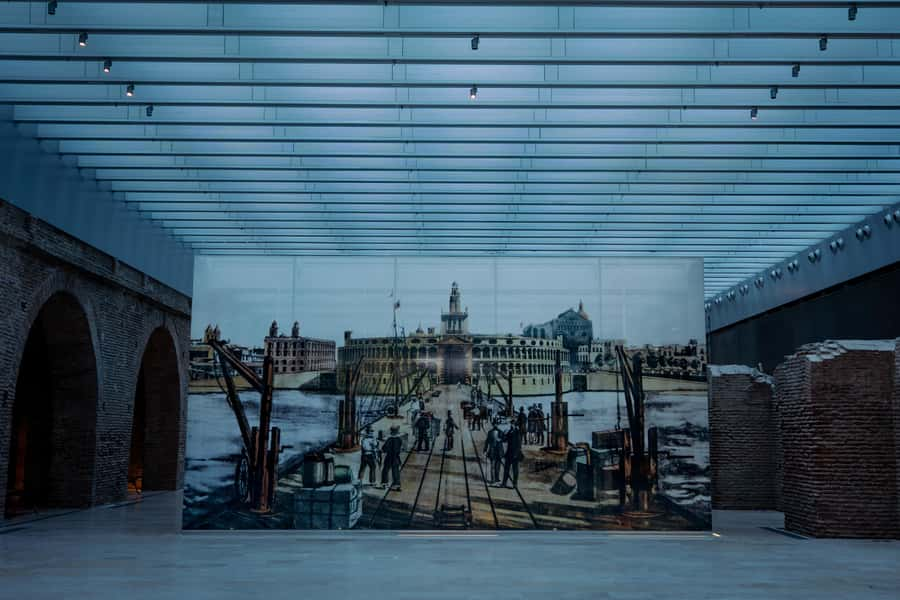
Manzana de las Luces is one of the tour’s more atmospheric historic stops. Its name refers to a block associated with learning and intellectual life, and the site gives the route a different emphasis from the government buildings around Plaza de Mayo.
The stop is scheduled for about 20 minutes, including a guided visit and photographs. That is enough to understand why the block matters, though you should not expect an exhaustive examination of every structure.
The tour also takes in the Ministry of Defense building, noted for its great size and views. Large government buildings can be hard to appreciate from a quick passing glance. A guide helps you notice their scale and understand why they occupy such prominent positions in the city.
Near the end, you see the National Customs House and the Comic Strip Plaza. These stops widen the tour beyond the formal monuments of Plaza de Mayo. Customs connects the center to commerce and administration, while Comic Strip Plaza brings a lighter cultural note to the walk.
The exact balance of time at each site can depend on the group, the guide and the day’s conditions. The listed schedule gives you a good idea of the major stops, but this is a walking tour, not a timed museum circuit with long independent visits.
What $20 gets you
At $20 per person, the main value is the guide. You are paying for a compact historical route, explanations at several major sites and help connecting landmarks that might otherwise feel unrelated.
The price is especially fair if you are visiting Buenos Aires for the first time and want a quick foundation. A self-guided walk costs less, of course, but it also leaves you to work out the chronology and significance on your own. If Miguel is leading your group, his preparation and ability to answer questions are central to what makes the fee worthwhile.
Food, drinks and hotel pickup are not included. You meet at Plaza de Mayo and finish in the central area, so you need to arrange your own way to and from the tour. This is not a door-to-door sightseeing service.
The tour also offers free cancellation up to 24 hours before the start and a reserve-now, pay-later option. Those terms give you some flexibility when planning a larger Buenos Aires schedule.
Walking demands and the best time to go
Wear proper walking shoes. The route includes a significant amount of walking, outdoor stops and visits in the historic center. Comfortable footwear will matter more than looking polished.
Bring water, especially on hot days, along with a hat and sunscreen. Check the forecast and dress for the conditions because much of the experience takes place outdoors. You will move between buildings rather than spend the entire 150 minutes inside.
The experience is not suitable for people with mobility impairments or wheelchair users. The supplied information does not describe step-free access or alternative arrangements, so contact the provider before booking if access is important to you.
The tour suits first-time visitors, history fans and anyone who wants to understand the center before exploring more widely. It also works for visitors with only a short window in Buenos Aires. It is less suited to you if you dislike guided history, need a slow pace or want a tour conducted in English.
Should you book this Buenos Aires walk?
Book it if you want a focused introduction to the city’s political and historic center, especially if Spanish is comfortable for you. You will see Casa Rosada, Plaza de Mayo, the Cathedral, Cabildo, Bicentennial Museum, Manzana de las Luces and several civic buildings without spending time planning the route yourself.
Miguel is a major reason to choose it. His warmth, patience, historical command and flexibility have made a strong impression, and his ability to respond to questions adds value to a short tour.
Skip it if you need wheelchair access, dislike walking or want a full interior tour of every landmark. For most able-bodied visitors who want context, good orientation and a modest price, this is a smart first-day activity in Buenos Aires.
FAQ
Where does the tour begin?
The meeting point is near the flagpole at Plaza de Mayo.
How long does the tour last?
The tour lasts 150 minutes, or two and a half hours.
What language is the tour conducted in?
The stated tour language is Spanish.
Who is the guide?
The guide associated with this experience is Miguel.
What landmarks are included?
The route includes Casa Rosada, the Monument to Juan de Garay, the Bicentennial Museum, Buenos Aires Metropolitan Cathedral, Cabildo of Buenos Aires and Manzana de las Luces. It also covers Plaza de Mayo and other central civic buildings.
Is hotel pickup included?
No. Hotel pickup and drop-off are not included.
Are food and drinks provided?
No. Food and drinks are not included.
What should I bring?
Bring comfortable walking shoes, a hat, sunscreen and water.
Is the tour suitable for wheelchair users?
No. The experience is not suitable for wheelchair users or people with mobility impairments.
Can I cancel for a full refund?
Yes. You can cancel up to 24 hours in advance for a full refund.
Just added around Buenos Aires
- Tango Show at El Querandi with optional Dinner★ 4.2 · 3 reviews
- Wine Tasting in Buenos Aires★ 4.2 · 4 reviews
- Walking Tour: Buenos Aires bookstores★ 4.3 · 12 reviews
- Private Underground Tango Immersion★ 5.0 · 31 reviews
- Velez Sarsfield Football Match★ 5.0 · 3 reviews
- Unique Tigre and Delta Private Day Cruise Navegation★ 5.0 · 3 reviews
- Transfers from or to the airport In Argentina Your Best Choice★ 5.0 · 28 reviews
- Tour Buenos Aires in one day on Electric Scooters★ 5.0 · 33 reviews
Buenos Aires Architecture & History Tours, compared.
Nazis in Buenos Aires: a historical walking tour
Read our review →
Historical Guided Tour with Street Food & Drinks
Read our review →
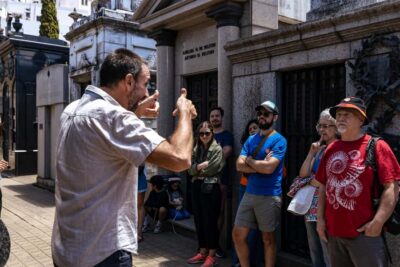
Recoleta Cemetery – Small Group Tour of History & Secrets
Read our review →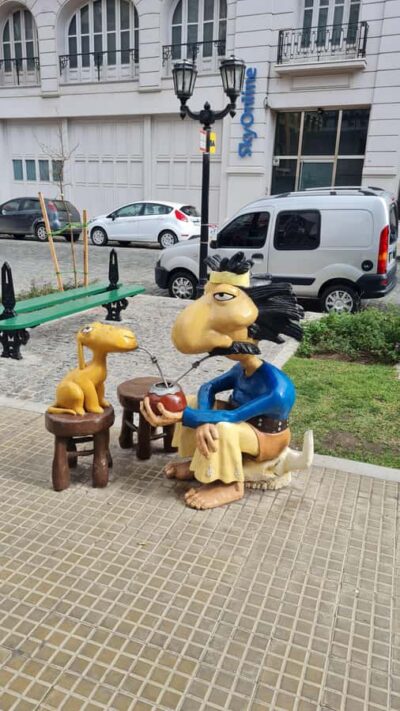
Buenos Aires 3-Hour Small Group Pope Francis Tour
Read our review →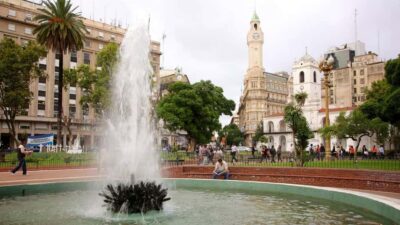
Browse the lists this tour appears in