
Reviewed · BUENOS AIRES ARCHITECTURE & HISTORY TOURS
Buenos Aires: Historic District Private Guided Walking Tour
Buenos Aires tells its story in grand squares, government buildings, old cafés, and church doors. This private two-hour walking tour brings those pieces together in the city center, beginning outside Café Tortoni and moving through Plaza de Mayo, the Cabildo, Casa Rosada, and the Metropolitan Cathedral.
I like the compact route and the chance to ask questions as you go. I also like that admission to the Cathedral and Cabildo is included, so the walk is more than an outside look at famous buildings. The main caution is the meeting point: one past booking went badly after the operator changed locations by email shortly before the start, so check your messages and have internet access ready.
Key points to know before booking
- Café Tortoni is the starting point: Meet outside one of Buenos Aires’ best-known cafés and hear about the historical figures who used it as a gathering place.
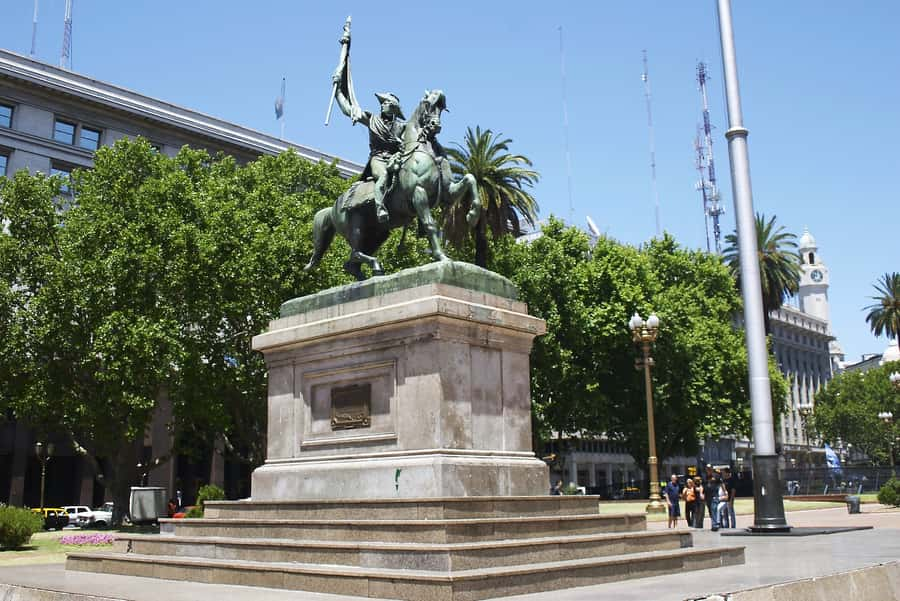
- Plaza de Mayo anchors the walk: This is the square where Buenos Aires was founded in 1580 and where the city’s major civic buildings come together.
- You enter two important buildings: The price includes the Metropolitan Cathedral and Cabildo, not just a street-level viewing.
- The tour is private: You can ask your guide to explain the independence movement, local traditions, or architecture at your own pace.
- Guides can include Juan Manuel Sanchez and Juan Miguel: Past bookings praised their clear English, warm manner, and strong command of Argentine history.
- Bring comfortable shoes and internet access: The route is on foot, and online contact may matter if meeting arrangements change.
Starting at Café Tortoni in central Buenos Aires
Café Tortoni gives the tour a fitting start. You meet your guide outside this famous Buenos Aires café, then begin with the place’s role in the city’s social and cultural life. The tour explains which well-known figures from Argentine history used the café as a meeting place.
That opening matters because it gives you a human entry into the city. Instead of beginning with a list of dates, you start with a café tied to conversations, politics, and public life. I like that approach. It helps you see Buenos Aires as a city shaped not only by presidents and institutions, but also by the people who gathered in its cafés.
The meeting point is easy to identify, but you should arrive with the location saved on your phone. The operator asks you to have internet access, and that is practical advice rather than a minor detail. One booking ended with the group waiting at Café Tortoni after a last-minute meeting-point change was sent by email and WhatsApp. The guide never arrived at the original spot, and the guests could not complete the messaging setup because they lacked access to their phone number while abroad.
That appears to be an isolated but serious logistics problem. I would check your email on the morning of the tour, keep mobile data or Wi-Fi available, and make sure your booking phone can receive messages if needed.
More architecture and history tours in Buenos Aires:
- Nazis in Buenos Aires: a historical walking tour
★ 4.9 · 193 reviews - San Telmo: Historical Guided Tour with Street Food & Drinks
★ 5.0 · 87 reviews - Buenos Aires: La Boca Art and History Walking Tour
★ 4.8 · 55 reviews
Plaza de Mayo, the city’s civic center
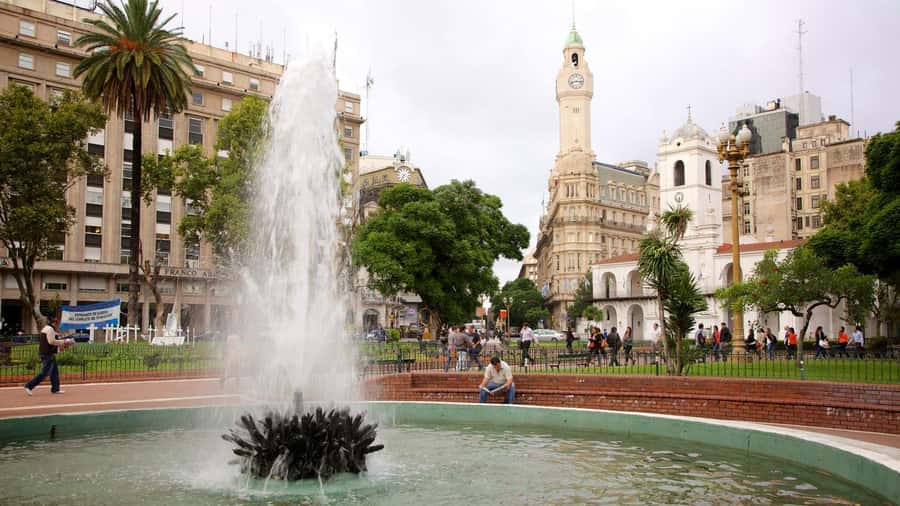
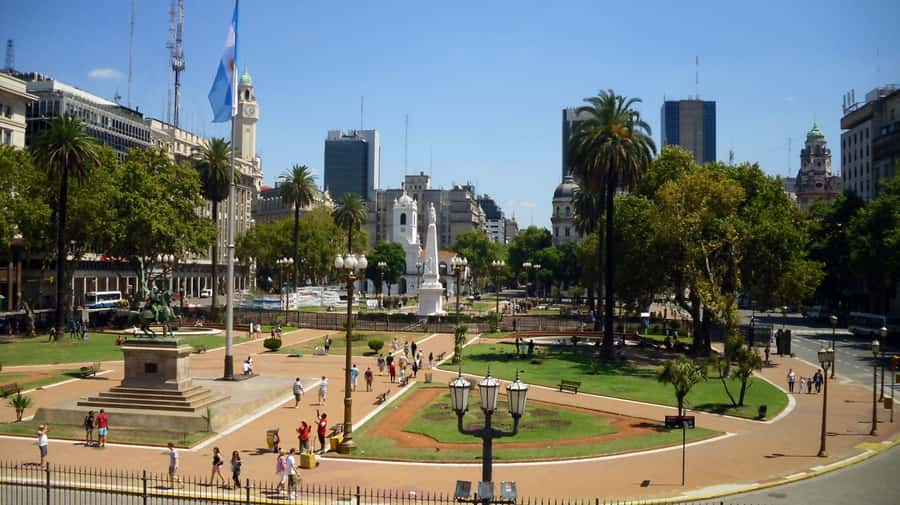
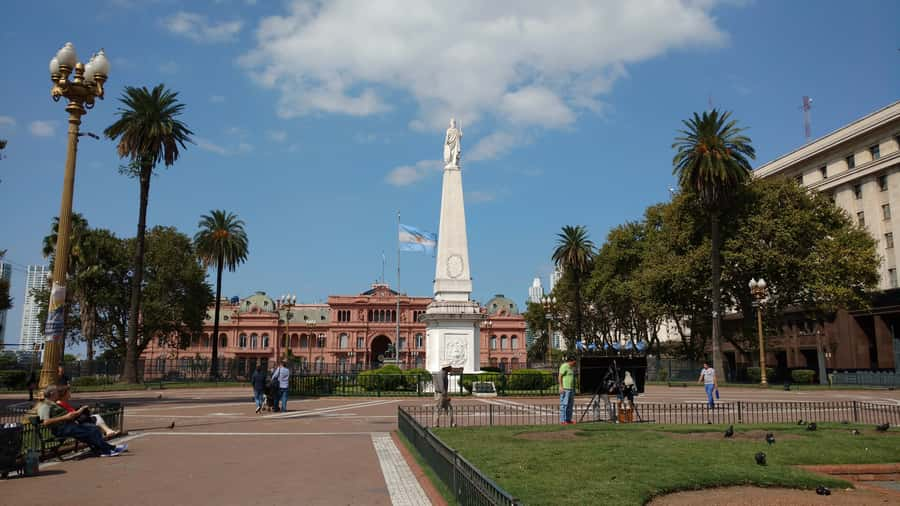
From Café Tortoni, the walk heads toward Plaza de Mayo. This is the key stop on the route and the place where Buenos Aires was founded in 1580. It is also the square where the city’s political story is easiest to read, with major buildings gathered around an open public space.
Your guide discusses Argentina’s independence, national traditions, and the people who shaped the country. The value here is not simply seeing a famous plaza. A good explanation helps you understand why this square has mattered for so long and why it remains central to public life.
You get time to look across the square toward the surrounding institutional buildings. The setting gives you broad city views and a useful sense of how Buenos Aires developed around its political center. If this is your first visit, Plaza de Mayo is a strong place to get your bearings in the central city.
The square itself is open and public, but the tour’s private format gives you a better chance to stop and ask questions. Past guide feedback specifically praised Juan Manuel Sanchez for speaking clear, easy-to-follow English and for answering questions in a personable way. Another booking praised Juan Miguel for explaining basic Argentine history while walking through the city’s major squares and government buildings.
That kind of guide matters here. Plaza de Mayo can look like a collection of grand façades if you do not know what you are seeing. With context, it becomes a place where colonial rule, independence, government, and Argentine identity meet.
Casa Rosada and the symbols of national power
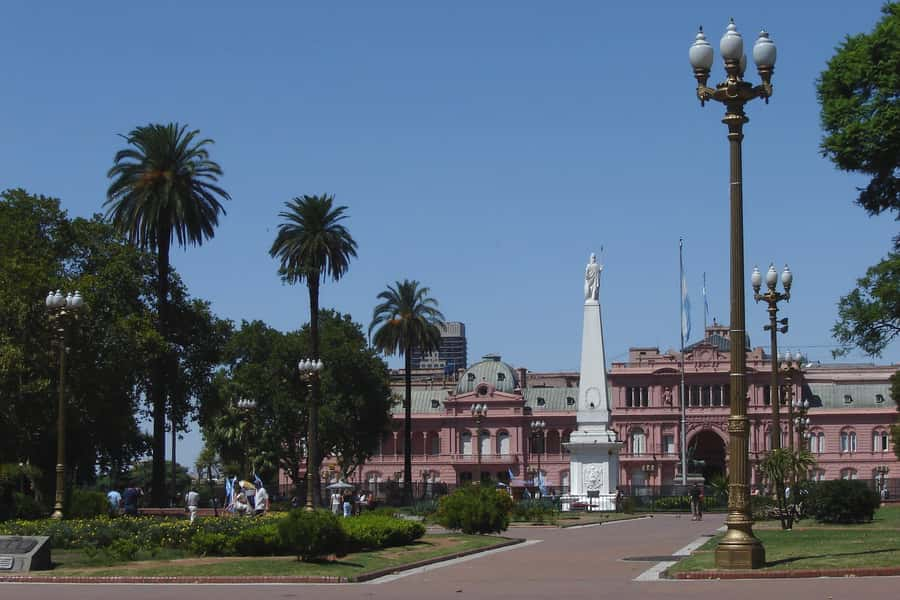
The next important sight is Casa Rosada, the pink government building that houses the Argentine president’s office. The tour gives you a chance to see it as part of the wider civic setting rather than as an isolated photo stop.
The building’s location opposite the square makes the connection between government and public space clear. You can look at the architecture, hear about the office’s role, and place the building within Argentina’s political story.
The supplied description calls the building Casa Robada, but the familiar name is Casa Rosada. Your guide should help clarify the building’s name and role as you view it from the square.
This part of the tour is likely to appeal to you if you enjoy understanding how a city works. It is not a palace tour or a presidential residence visit. Instead, it is an outside look at one of Argentina’s most important government buildings, paired with a broader explanation of independence and national history.
The Cabildo and Buenos Aires under colonial rule
The Cabildo offers a different perspective. This historic building served as the town council during the colonial period, before Argentina became an independent nation. Its role helps explain how Buenos Aires was governed when Spain controlled the region.
The contrast with Casa Rosada is useful. One building represents modern national government, while the Cabildo points back to colonial administration. In a short walk, you move from the city’s present political authority to the institutions that came before independence.
Admission to the Cabildo is included, which improves the value of the tour. You are not left outside looking at a façade and trying to imagine its past. The visit gives your guide a chance to explain the building more directly and connect it to the story of Argentina’s break from colonial rule.
The Cabildo is also where the tour’s emphasis on colonial architecture comes into focus. You will see an older style of civic building among the larger and more formal structures of the modern city center. Architecture here is not treated as decoration. It is evidence of how Buenos Aires changed over time.
More walking tours in Buenos Aires:
- Buenos Aires Hop-On Hop-Off Bus, Free Walking Tours & Discounts
★ 4.5 · 2,218 reviews - Buenos Aires: La Boca Guided Walking Tour in English
★ 4.8 · 1,587 reviews - Buenos Aires: Personalized 2 to 8-Hour Private Walking Tour
★ 4.7 · 149 reviews - Buenos Aires: San Telmo and Market Guided Walking Tour
★ 4.8 · 102 reviews
Inside the Metropolitan Cathedral
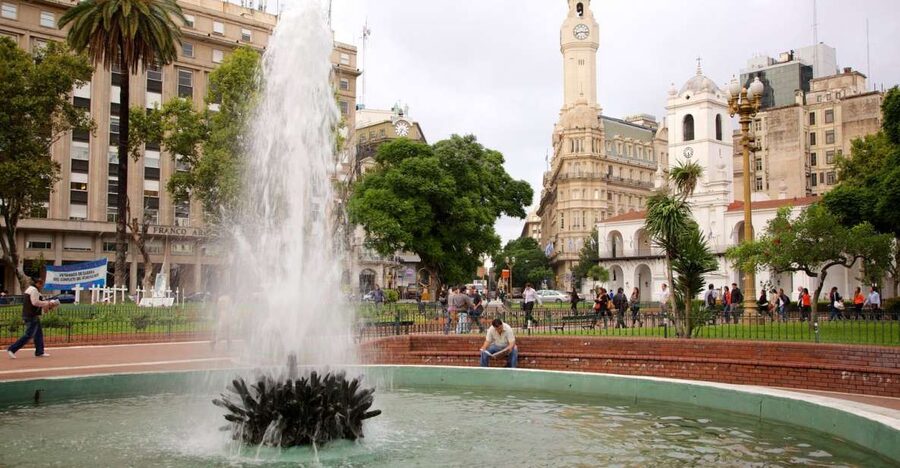
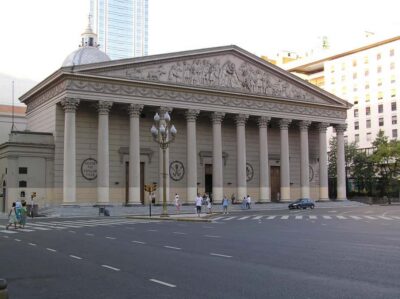
The Metropolitan Cathedral provides one of the tour’s most distinctive architectural stops. Its neoclassical design is unusual enough to deserve close attention, especially when seen beside the civic buildings around Plaza de Mayo.
The outside has a formal, almost temple-like appearance, while the building’s religious role connects it to the traditions and public life of Argentina. Your guide explains the cathedral as part of the city’s history, not merely as another landmark on the route.
Entrance is included, and that is important. The interior gives you a fuller experience than a quick photograph from the square. You can look more closely at the building’s design and consider how it fits into this very political part of Buenos Aires.
The cathedral is near the Plaza de Mayo subway station, so this portion of the walk also shows how older monuments sit beside the city’s everyday transport system. Buenos Aires does not separate its past from its present. You see historic churches, government offices, public squares, and subway access in the same small area.
The first subway station and the city beneath your feet
Near the cathedral, you can see the Plaza de Mayo subway station. This is where Buenos Aires’ subway system began, adding a modern transportation layer to a district filled with colonial and neoclassical buildings.
It is a small detail, but it gives the walk a broader reach. The tour is not only about independence and old buildings. It also shows how the capital grew into a modern city with underground transport linking its central districts.
Do not expect a subway ride to be part of the experience. The information provided describes seeing the station, not traveling on the system. Still, the stop helps you understand the changing city around you and gives the route a nice final contrast with the Cabildo and cathedral.
What two hours feels like on this route
Two hours is enough for a focused introduction to the Historic District, but not enough for a slow, all-day exploration of central Buenos Aires. That is both the strength and the limit of the experience.
I like the short format if you want an orientation early in your visit. You can see several major landmarks, enter two historic buildings, and learn the basic story of Argentina without spending half a day on your feet. The compact schedule also works well if your time in Buenos Aires is limited.
You should expect walking between stops and time standing in public squares and inside historic buildings. Comfortable shoes are specifically recommended. The tour is listed as wheelchair accessible, which makes it more practical for many visitors, though you may still want to confirm current route conditions when booking.
Because the group is private, you are not locked into a fixed discussion. You can ask about Argentine independence, colonial rule, traditions, architecture, or the famous people linked to Café Tortoni. That flexibility is one of the main reasons to choose this tour instead of a large group walk.
The listed guide languages are English, Portuguese, and Samoan. Past English-language bookings singled out Juan Manuel Sanchez and Juan Miguel for clear explanations, professionalism, and a friendly approach. Guide assignment is not guaranteed, so treat those names as examples rather than a promise.
Is $52 per person a fair price?
At $52 per person, this is not the cheapest way to see Plaza de Mayo. You can walk through the square and view several buildings without paying for a guide. The question is what you want from the visit.
The price includes a private guide, a two-hour walking tour, and admission to the Metropolitan Cathedral and Cabildo. For a couple or small private party that wants direct attention and the freedom to ask questions, the cost can make sense. You are paying for interpretation and convenience, not just entry to a set of landmarks.
The value is strongest if Argentine history is new to you. A guide can connect the colonial Cabildo, the independence story, Casa Rosada, the cathedral, and the first subway station into one readable sequence. Without that explanation, you may see attractive buildings but miss the reason they matter.
The value is weaker if you prefer to explore alone, already know the history, or want a longer visit inside each site. Two hours gives you an overview, not an exhaustive study. You may want a separate visit to other Buenos Aires neighborhoods after the tour.
Practical booking advice for this private walk
You should wear comfortable shoes and keep your phone connected to the internet. The meeting point is outside Café Tortoni, but check for any updated instructions before leaving your hotel.
The activity allows cancellation up to 24 hours before the start for a full refund. You can also reserve now and pay later, which helps if your Buenos Aires schedule is still changing.
Skip-the-line access is listed, but the experience remains a walking tour rather than a museum-heavy visit. The included entries are the Metropolitan Cathedral and Cabildo. Hotel pickup and drop-off are not included, so you need to reach Café Tortoni on your own.
The private format is best for couples, families, or friends who want a shared guide rather than a large group. It also suits anyone who wants a calm first look at the city’s central institutions. If you need a tour in a language other than English, Portuguese, or Samoan, this option may not fit.
Should you book this Buenos Aires Historic District tour?
Book it if you want a short, private introduction to Buenos Aires’ political and colonial center, with a guide who can explain the meaning behind the buildings. The combination of Plaza de Mayo, Casa Rosada, the Cabildo, the Metropolitan Cathedral, Café Tortoni, and the first subway station gives you a clear starting point for understanding the city.
I would especially recommend it for first-time visitors, history-minded travelers, and anyone who values being able to ask questions. The strongest guide feedback centers on clear English, strong historical explanations, and a warm, professional manner from guides including Juan Manuel Sanchez and Juan Miguel.
Think twice if you want extensive interior visits, a full-day walk, or a completely self-guided outing. Also take the meeting instructions seriously. Check your messages, keep internet access available, and confirm the starting point before you leave.
FAQ
Where does the tour meet?
The meeting point is outside Café Tortoni in Buenos Aires.
How long does the walking tour last?
The tour lasts two hours.
Which sights are included?
The route includes Café Tortoni, Plaza de Mayo, Casa Rosada, the Cabildo, the Metropolitan Cathedral, and the nearby Plaza de Mayo subway station.
Are entrance fees included?
Yes. Entrance to the Metropolitan Cathedral and Cabildo is included.
What languages are available?
The listed tour languages are English, Portuguese, and Samoan.
Is the tour private and wheelchair accessible?
Yes. It is offered as a private group and is listed as wheelchair accessible.
Just added around Buenos Aires
- Wine Tasting in Buenos Aires★ 4.2 · 4 reviews
- Tango Show at El Querandi with optional Dinner★ 4.2 · 3 reviews
- Walking Tour: Buenos Aires bookstores★ 4.3 · 12 reviews
- Private Underground Tango Immersion★ 5.0 · 31 reviews
- Velez Sarsfield Football Match★ 5.0 · 3 reviews
- Unique Tigre and Delta Private Day Cruise Navegation★ 5.0 · 3 reviews
- Transfers from or to the airport In Argentina Your Best Choice★ 5.0 · 28 reviews
- Tour Buenos Aires in one day on Electric Scooters★ 5.0 · 33 reviews
Buenos Aires Architecture & History Tours, compared.
Nazis in Buenos Aires: a historical walking tour
Read our review →
Historical Guided Tour with Street Food & Drinks
Read our review →
Recoleta Cemetery – Small Group Tour of History & Secrets
Read our review →
Buenos Aires 3-Hour Small Group Pope Francis Tour
Read our review →
Browse the lists this tour appears in