
Reviewed · BUENOS AIRES ARCHITECTURE & HISTORY TOURS
From Colonialism to Eclecticism, Buenos Aires arquitectonica
Buenos Aires reveals itself through its buildings, and this small walking tour makes that idea the main event. With Juan and Loli, you move from the colonial Cabildo and Casa Rosada to the sharp Brutalist facade of Banco Hipotecario, the grand theaters on Corrientes Avenue, and the symbolic Obelisk. The buildings are the map, but Argentine culture gives the walk its flavor.
I like the way the tour connects famous sights with less obvious architecture, rather than simply ticking off Plaza de Mayo and the Obelisk. I also like the mate tasting and traditional snack, which turn a design walk into a more personal introduction to daily life in Argentina.
The main consideration is pace. Three hours on foot, mostly through central Buenos Aires, requires comfortable shoes and some tolerance for city traffic and busy streets. The route is also best for people who enjoy explanations and visual details, not for anyone looking only for quick photo stops.
Key points to know before booking
- See several architectural eras in one compact walk: Colonial, Neoclassical, Art Deco, Brutalist, and modern styles appear along the route.
- Meet Juan and Loli in a very small group: The group is limited to four participants, allowing room for questions and some adjustment to your interests.
- Look beyond the standard postcard sights: Banco Hipotecario, the CCK facade, and the Julio Argentino Roca School add less familiar stops.
- Taste mate as part of the tour: You learn how the drink fits Argentine culture instead of simply being handed a sample.
- Expect a city-center walk, not an interior museum tour: The route focuses mainly on exteriors, with Teatro Colón entry available separately.
- Budget $25 per person for three hours: That is fair value if you want a guide-led introduction to architecture, urban history, and local customs in one outing.
Why this Buenos Aires architecture walk feels different
Many city walks in Buenos Aires follow the familiar line from Plaza de Mayo to the Obelisk. This one uses that route as a framework, then pays attention to the buildings most people pass without a second look.
That difference matters. Buenos Aires can seem visually scattered at first. One block may offer a colonial remnant, a French-influenced civic building, a bold 20th-century office facade, and a theater built for a very different era. Juan brings detailed information about architects and architectural periods, while Loli adds stories tied to Argentina and South America. The result should suit you if you want to understand why the city looks the way it does, not just photograph it.
The small group size, limited to four people, is another real advantage. You can ask why a building uses a particular material, how a theater changed over time, or what a local custom means without waiting behind a large crowd. The guides can also adapt the emphasis to your tastes and interests.
The tour is offered in English or Spanish and costs $25 per person. For three hours of guiding, a mate tasting, water, and a traditional Argentine snack, the price is reasonable. It is especially good value if this is your first close look at Buenos Aires architecture and you want context that a guidebook cannot provide while you walk.
More architecture and history tours in Buenos Aires:
- Nazis in Buenos Aires: a historical walking tour
★ 4.9 · 193 reviews - San Telmo: Historical Guided Tour with Street Food & Drinks
★ 5.0 · 87 reviews - Buenos Aires: La Boca Art and History Walking Tour
★ 4.8 · 55 reviews
Plaza de Mayo puts colonial Buenos Aires first
The meeting point is at Plaza de Mayo, at the corner of Bolívar and Avenida de Mayo, with the listed starting address at Bolívar 65. This is a useful place to begin because several major buildings sit close together.
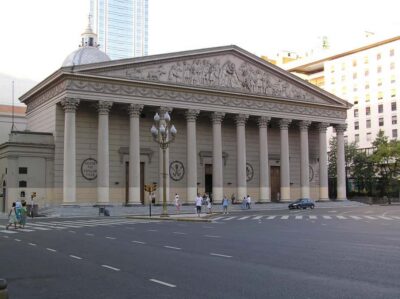
The Cabildo gives you the clearest starting point for the city’s colonial story. Its facade recalls the period when Buenos Aires was governed under Spanish rule, though the building has changed over time. Nearby, the Metropolitan Cathedral brings a different visual language, with a formal exterior that rewards a slow look at its columns and entrance.
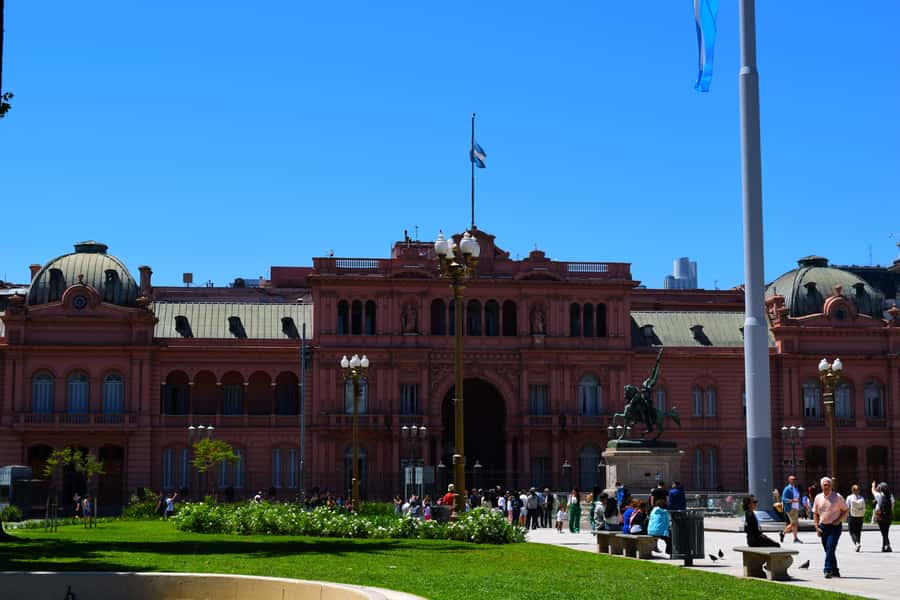
Casa Rosada provides the political center of the opening section. Across the plaza, Banco Nación adds another layer to the city’s institutional architecture. These are not isolated monuments. Together, they show how political power, religion, administration, and finance gathered around one public square.
I would use the first part of the walk to get your bearings and listen for the contrasts. The value is not just seeing four well-known buildings. It is learning how their different functions shaped the city center.
Reconquista Street and the surprising Banco Hipotecario
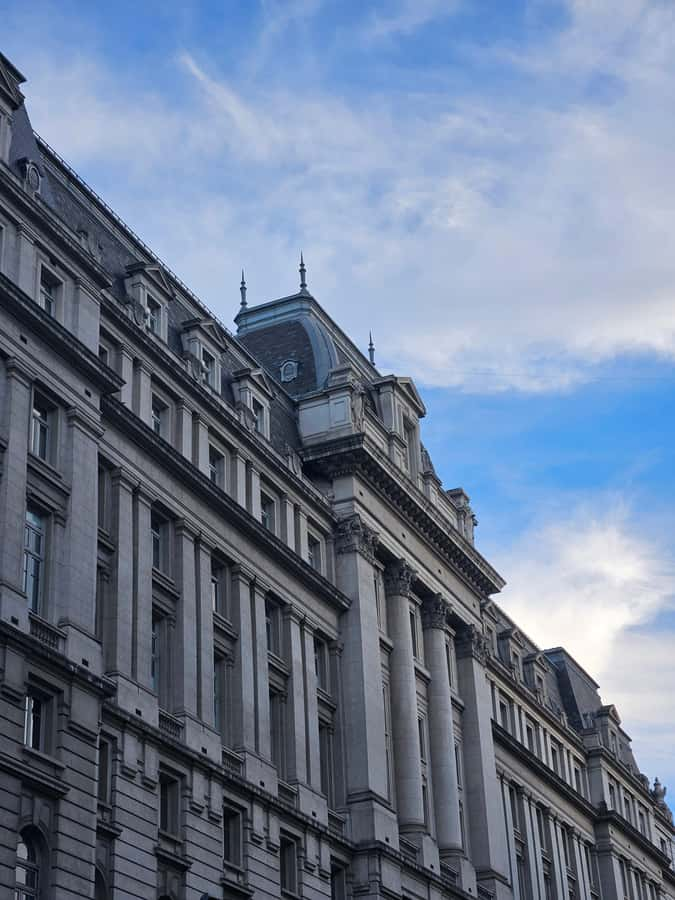
From Plaza de Mayo, the route heads north through Reconquista Street. This shift takes you away from the most formal view of the city and into the dense Microcentro, where different periods and design choices sit side by side.
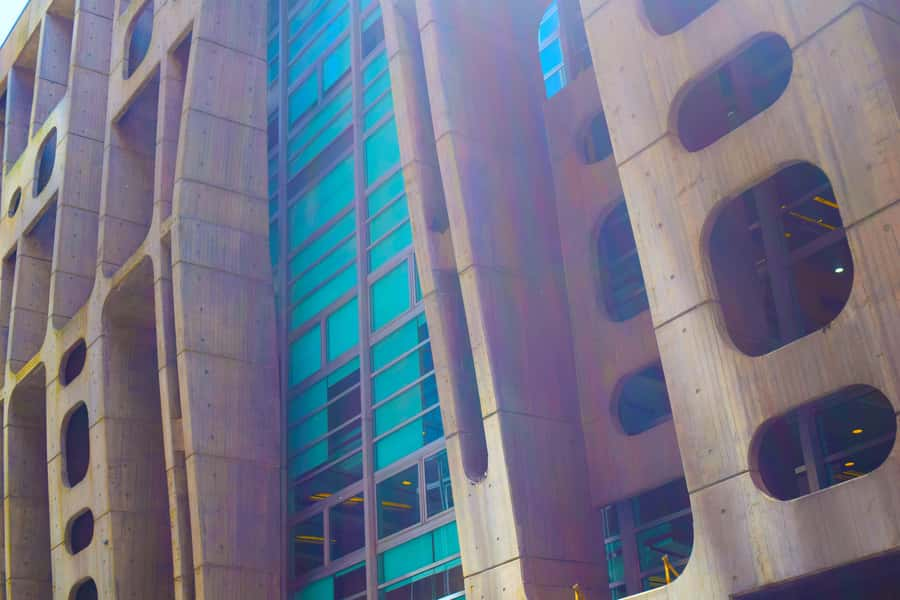
The key stop is Banco Hipotecario. Its Brutalist facade is a sharp change from the older civic buildings around Plaza de Mayo. Brutalist architecture often uses strong geometric forms and exposed-looking materials, and the building gives you a chance to see how Buenos Aires embraced a much harder, more modern visual style.
This is one of the tour’s best ideas. A standard sightseeing route might bring you to the city’s icons, but it may not explain the office buildings that reveal how Buenos Aires changed in the 20th century. Here, you get to compare the weight and ornament of older buildings with the direct, forceful character of Brutalism.
The stop also shows why a guide helps. Architectural labels can sound abstract until you see the features in front of you. Juan’s focus on architects, periods, and details gives you a way to read the building rather than simply decide if you like its appearance.
The CCK connects communication, culture, and changing use
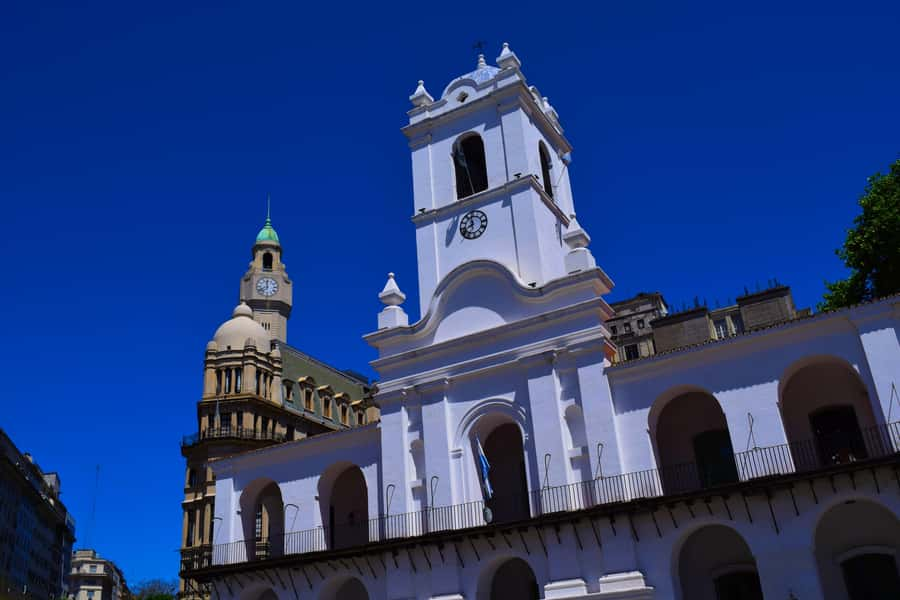
The walk continues to the CCK, the Centro Cultural Kirchner. The building was formerly the Palacio de Correos y Telégrafos, or Post and Telegraph Palace. Its earlier purpose is important because it links architecture to the way people once communicated across the country.
The stop focuses on the exterior and the building’s history. You should not expect this section to be a full museum visit or an interior tour. Instead, it is a chance to see how a former government communications building now functions as a cultural center.
That change of use gives the stop extra interest. Buildings are not frozen in the period when they were built. A postal and telegraph palace can later become a public arts venue, while its facade still carries the authority of its original role.
If you enjoy adaptive reuse and civic buildings, this part will likely hold your attention. If you prefer interiors and exhibitions, you may find the exterior stop brief, but it fits the larger purpose of the walk: reading the city through its architecture.
Same city, an entirely different evening:
- Buenos Aires Hop-On Hop-Off Bus, Free Walking Tours & Discounts
★ 4.5 · 2,218 reviews - Buenos Aires: Piazzolla Tango Show with Optional Dinner
★ 4.4 · 2,122 reviews - Buenos Aires: City Highlights Guided Tour with Transfer
★ 4.7 · 1,946 reviews - Buenos Aires: Hop-On Hop-Off City Bus Tour
★ 4.2 · 1,855 reviews
Corrientes Avenue brings Buenos Aires to the theater
The route then reaches Corrientes Avenue, one of the city’s major streets for nightlife and culture. The mood shifts here. The avenue is associated with shows, late-night activity, and the public life of Buenos Aires, so the buildings are connected to entertainment as much as design.
Two theaters receive special attention: the Gran Rex and the Opera. Both are important landmarks on Corrientes Avenue, and both once enjoyed a major heyday. They remain places where people gather for performances and events.
The useful point is that the tour does not treat these theaters as pretty facades only. Their importance comes from the role they played, and continue to play, in the city’s cultural life. You can look at the scale of the entrances, the design choices, and the way the theaters face one of Buenos Aires’ best-known avenues.
This part should appeal to anyone interested in how architecture supports public life. It also adds variety after the government buildings and banks. The walk moves from political power and finance to music, cinema, theater, and night culture.
The Obelisk shows Buenos Aires at full scale
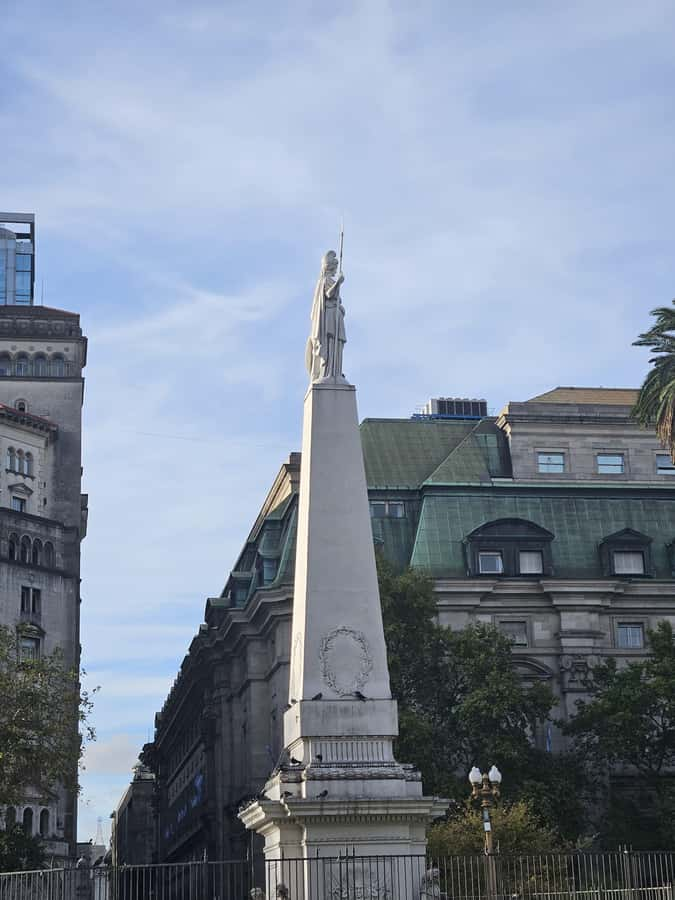
The first major section ends at the Obelisk and Plaza de la República. This is one of the city’s most recognizable symbols, but the guide gives it more meaning than a quick photograph can offer.
The Obelisk is tied to the political and social life of Argentina. Its location at the meeting of major avenues makes it both a monument and a marker of public gatherings. You see it against the broad traffic corridor of Avenida 9 de Julio and Corrientes, where the scale of Buenos Aires becomes hard to miss.
The route includes a photo stop, and this is a good point to pause. The Obelisk can look familiar from photographs, but standing near it helps you understand its relationship to the surrounding streets. The city is not just a collection of facades here. It is a system of avenues, public space, monuments, and crowds.
The tour also includes a short pause at the Obelisk staircase, described as a panoramic point. From there, you get views toward one of the busiest intersections in the city. Bring sunglasses and a hat if you are sensitive to strong sun, and wear shoes that can handle several hours of pavement.
Diagonal Norte leads to Plaza Lavalle
After the Obelisk, the walk continues along Diagonal Norte. This section keeps you in central Buenos Aires but changes the view again. Instead of looking only at individual landmarks, you see how the street plan creates long visual corridors between important civic buildings.
The next major area is Plaza Lavalle. Two buildings receive attention here: the Palace of the Courts and the Julio Argentino Roca School, located across from it. Their pairing gives you another chance to compare institutional architecture with the design of an educational building.
The Courts Palace carries obvious civic weight. The school across the square adds a different angle, showing how public education fits into the same urban center as the legal system. A stop like this is useful because it encourages you to look at buildings according to their purpose, not only their age or decoration.
This is also a section where the ability to customize the tour may matter. If you have a strong interest in schools, government buildings, architects, or urban planning, tell the guides early. The group is small enough that your questions can help shape the conversation.
Mate makes the history personal
Near the final part of the walk, you have a mate tasting and a chance to learn about the drink’s place in Argentine culture. This is more than a refreshment break. Mate is tied to social habits and shared time, so it gives the architecture tour a direct link to everyday Argentina.
Water and a traditional Argentine snack are included as well. The snack and mate offer a welcome pause after walking through the city center, but the larger value is cultural. You learn why mate matters and how it fits into Argentine life rather than treating it as an exotic sample.
This was one of the strongest elements for me because it keeps the tour from becoming too academic. Juan and Loli are not only pointing out facades. They are connecting buildings, history, and ordinary customs. The personal approach is also reflected in the way they respond to questions and share local stories.
Do not expect a full meal. Lunch is not included, and the snack is a small addition rather than a substitute for one. Plan to eat before or after the tour if you need something substantial.
Teatro Colón is the grand finish
The walking route finishes at Teatro Colón, one of Buenos Aires’ most important performance buildings. After the practical scale of banks, offices, schools, and government structures, the theater provides a fitting final look at the city’s love of formal public architecture and the arts.
The tour does not include admission to the theater. You have the option to stay and take a guided interior visit separately, which is useful if you want to continue the subject beyond the street facade. Since entry is not part of the $25 price, check the timing and cost before booking if seeing the inside is a priority.
There is one practical point to clarify. The route description finishes at Teatro Colón, while the meeting information also says the activity ends back at the meeting point. Confirm the exact end location when you reserve, especially if you have a timed theater visit or another booking afterward.
Timing, comfort, and group size
The tour lasts three hours, with starting times based on availability. Because the route covers several central neighborhoods on foot, comfortable shoes are essential. Sunglasses, a hat, sunscreen, and light, comfortable clothing are sensible choices.
The group limit of four is a major benefit for this particular subject. Architecture tours work best when you can stop, look up, ask a question, and hear the answer without a large group spreading across the sidewalk. It also gives Juan and Loli room to adjust the conversation to your interests.
The walk is conducted in English or Spanish. It includes a live guide, water, a traditional snack, and mate tasting. It does not include lunch or entry to Teatro Colón.
You can cancel up to 24 hours ahead for a full refund, and the reserve-now, pay-later option keeps your plans flexible. Those details are useful if your Buenos Aires schedule is still changing.
Who should book this $25 experience?
I would choose this tour if you enjoy buildings, city stories, and local customs in equal measure. It is especially suitable for a first visit, when you want a clear introduction to central Buenos Aires, or for a return visit, when the famous sights no longer need much explanation and you want to notice what you previously walked past.
It also suits curious photographers, architecture students, design fans, and anyone who likes asking why a city looks the way it does. The Brutalist Banco Hipotecario, the former post and telegraph palace, the theaters on Corrientes, and the school opposite the Courts Palace give you plenty of visual variety.
I would think twice if you dislike walking, want a large sightseeing bus, or expect extensive indoor visits. Most of the experience is on city streets, and the architecture is viewed from outside. Teatro Colón entry is optional and extra.
Should you book the Buenos Aires architecture tour?
Book it if you want a compact, personal walk through Buenos Aires that goes beyond the standard monument checklist. The strongest reasons are the small group, the mix of famous and less familiar buildings, Juan’s detailed architectural knowledge, Loli’s cultural stories, and the mate tasting that gives the tour a human touch.
At $25, it offers solid value for three hours, especially if you want both design and local context. Confirm the ending point and any Teatro Colón visit before you reserve. If those details suit your plans, this is a smart way to see central Buenos Aires with sharper eyes.
FAQ
Where does the tour start?
It starts in Plaza de Mayo at the intersection of Bolívar and Avenida de Mayo. The listed starting location is Bolívar 65.
How long does the architecture tour last?
The tour lasts three hours. Starting times depend on availability.
What languages are available?
The live tour guide is available in English and Spanish.
How many people are in the group?
The tour is limited to four participants.
What buildings are included?
The route includes the Cabildo, Metropolitan Cathedral, Casa Rosada, Banco Nación, Banco Hipotecario, the CCK, Gran Rex, Opera, the Obelisk, the Palace of the Courts, Julio Argentino Roca School, and Teatro Colón.
Is Teatro Colón admission included?
No. Entry to Teatro Colón is not included, but you have the option to stay and take a guided visit inside.
Is food included?
Water and a traditional Argentine snack are included. Lunch is not included.
Is mate tasting included?
Yes. The tour includes a mate tasting and an explanation of mate’s history and importance in Argentine culture.
Can I cancel for a refund?
Yes. You can cancel up to 24 hours in advance for a full refund. You can also reserve now and pay later.
Just added around Buenos Aires
- Tango Show at El Querandi with optional Dinner★ 4.2 · 3 reviews
- Wine Tasting in Buenos Aires★ 4.2 · 4 reviews
- Walking Tour: Buenos Aires bookstores★ 4.3 · 12 reviews
- Velez Sarsfield Football Match★ 5.0 · 3 reviews
- Private Underground Tango Immersion★ 5.0 · 31 reviews
- Unique Tigre and Delta Private Day Cruise Navegation★ 5.0 · 3 reviews
- Transfers from or to the airport In Argentina Your Best Choice★ 5.0 · 28 reviews
- Tour Buenos Aires in one day on Electric Scooters★ 5.0 · 33 reviews
Buenos Aires Architecture & History Tours, compared.
Nazis in Buenos Aires: a historical walking tour
Read our review →
Historical Guided Tour with Street Food & Drinks
Read our review →
Recoleta Cemetery – Small Group Tour of History & Secrets
Read our review →
Buenos Aires 3-Hour Small Group Pope Francis Tour
Read our review →
Browse the lists this tour appears in