
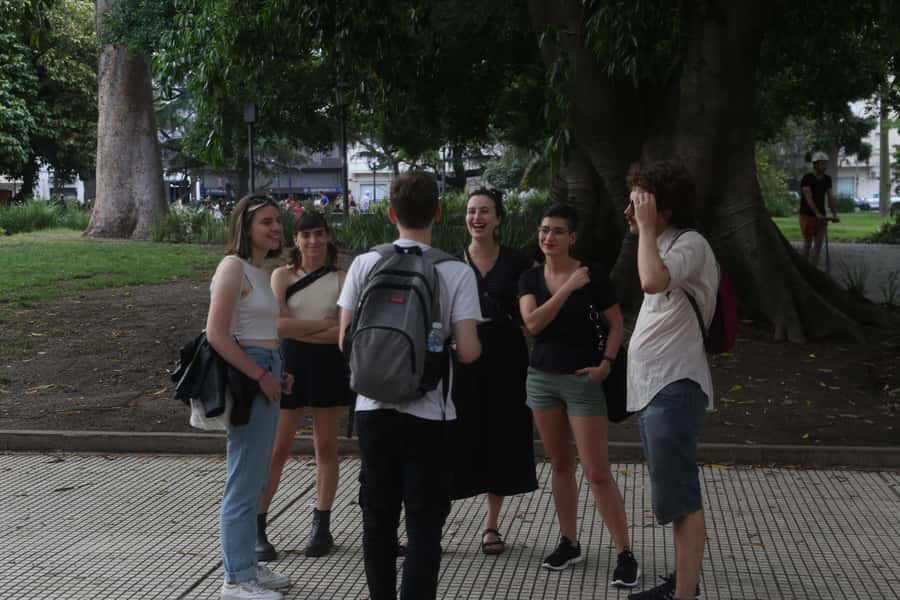
Reviewed · BUENOS AIRES ARCHITECTURE & HISTORY TOURS
Nazis in Buenos Aires: a historical walking tour
The most striking part of this Buenos Aires walk is the way ordinary city streets become evidence in a difficult historical investigation. You’ll stand outside a working theater that once hosted a 15,000-seat Nazi meeting, hear how Adolf Eichmann was identified in Argentina, and finish at the memorial for the former Israeli embassy.
I like two things especially: Max’s careful, source-based approach and the way each stop adds a new piece to the argument about Argentina’s role after World War II. I also like that the tour connects Nazi fugitives with the Jewish community, Peronism, terrorism, and modern Argentine politics instead of treating the subject as an isolated wartime footnote.
The main consideration is that this is a serious, discussion-heavy walk, not a light sightseeing stroll. You’ll need comfortable shoes, water, and a basic grasp of World War II and the Holocaust. Children under 10 and wheelchair users cannot take part, and some stops are viewed from outside.
Key points at a glance
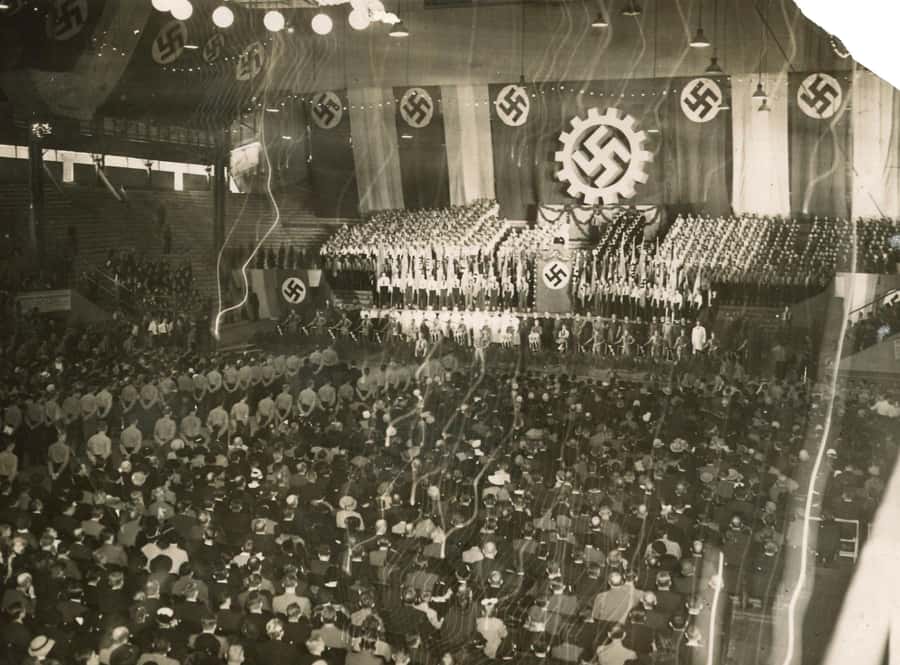
- Adolf Eichmann’s Buenos Aires connection: Learn how the Nazi war criminal was located and captured after living under an assumed identity in Argentina.
- A 15,000-seat Nazi gathering: See Luna Park, a still-operating stadium tied to one of the most striking public displays of Nazism in Buenos Aires.
- The Israeli embassy memorial: End at the site of the 1992 attack, described as the worst terrorist attack in Latin America.
- A guide who teaches, not just points: Max uses photographs, graphics, questions, and historical sources to build the story step by step.
- A wider Argentine history lesson: The walk examines Juan Domingo Perón, postwar immigration, government policy, and the experience of Buenos Aires’s Jewish community.
- Good value for serious history fans: At $25 for about two and a half hours, the tour offers a focused class in the streets at a modest price.
Why this walk matters in Buenos Aires
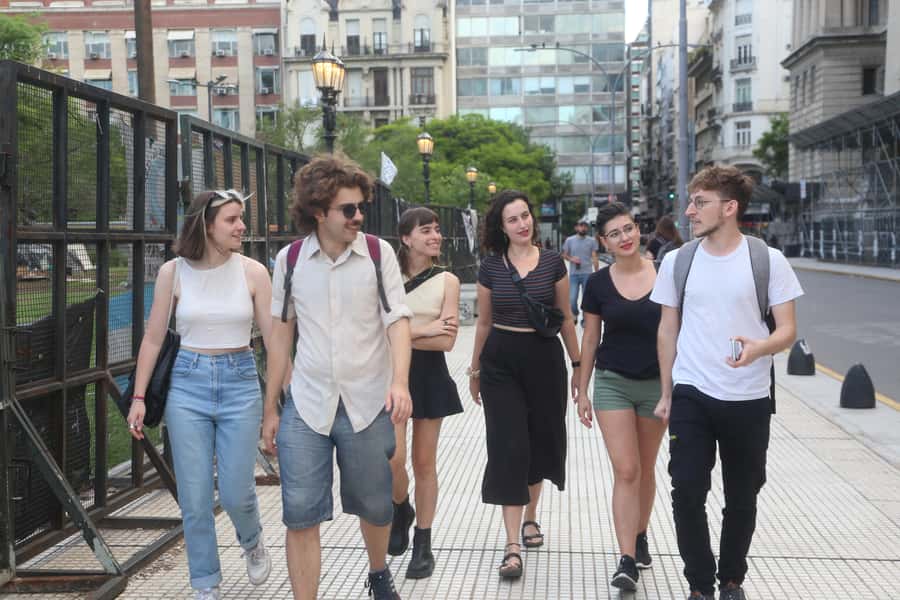
The question behind the tour is simple but loaded: Was Argentina a refuge for Nazi war criminals after 1945, and if so, who knew about it?
The answer is not presented as a neat slogan. Instead, you’ll examine how Nazi fugitives reached South America, what Argentine authorities may have known, and how President Juan Domingo Perón fits into the debate. That matters because the subject is often reduced to a few famous names and sensational stories. This walk tries to show the surrounding politics and the limits of what can be proven.
That careful tone is one of the experience’s strengths. Max is described as a history teacher from the University of Buenos Aires, and his style is built around evidence, context, and open questions. He is willing to separate firm facts from disputed claims, which is important when discussing government records, intelligence operations, and people who spent years hiding their past.
You’ll also hear about Buenos Aires’s Jewish population, the second largest Jewish community in the Americas. The story therefore moves beyond the men who escaped Europe. It asks what happened to the people who built their lives in Argentina, how they responded to postwar politics, and how later violence affected the community.
More architecture and history tours in Buenos Aires:
- San Telmo: Historical Guided Tour with Street Food & Drinks
★ 5.0 · 87 reviews - Buenos Aires: La Boca Art and History Walking Tour
★ 4.8 · 55 reviews - Recoleta Cemetery – Small Group Tour of History & Secrets
★ 5.0 · 53 reviews
Starting beside the Monument to Juana Azurduy
The meeting point is a few meters from the Monument to Juana Azurduy, on the benches facing the Palacio Libertad, formerly known as the CCK. Max wears a black cap, which should make him easier to spot.
This opening location places you near several major civic and cultural buildings, but the tour is not mainly about architecture. The monument and the palace provide a practical place to gather before Max sets the historical scene. Expect the first part to establish the basic timeline: World War II, the Holocaust, the postwar escape routes, and Argentina’s political setting.
That introduction is useful if your knowledge of the subject is basic. The tour asks for some familiarity with World War II and the Holocaust, but you do not need to arrive as a specialist. Max is prepared to answer questions about Nazism, Judaism, the war, and Argentine history.
Wear shoes suited to a long city walk. The advertised duration is two and a half hours, and there is a 10-minute restroom break. That pause helps, but this is still a substantial amount of time on foot.
Luna Park and the public face of Nazism
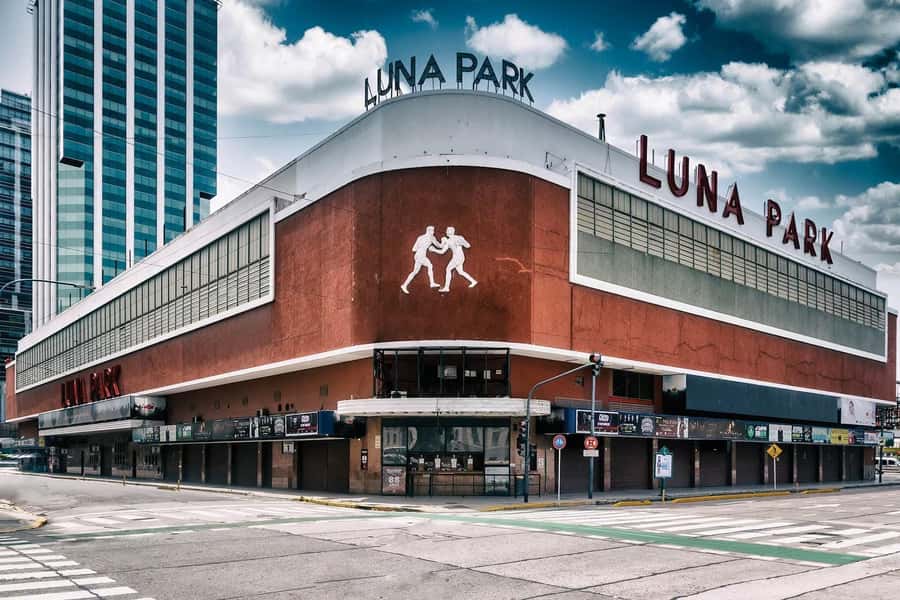
The first major stop is Luna Park, where you spend about 20 minutes. The stadium is still in use, which gives this part of the tour an especially unsettling quality. A familiar sports and entertainment venue also carries the memory of a huge Nazi gathering.
The scale matters. This was not a small private meeting hidden from public view. The tour discusses a Nazi event attended by around 15,000 people, forcing you to consider how political movements can present themselves openly and attract public support. The building becomes a backdrop for questions about Argentine society before and during the war.
You may not enter Luna Park. Admission to the stadium is not included, so expect the explanation to take place from the street unless access is available separately. That is worth knowing if you prefer tours built around indoor visits. Here, the value comes from Max’s account and the setting rather than a museum display.
I find this a strong early stop because it challenges the idea that Nazi activity in Buenos Aires was only about secret fugitives after 1945. It introduces the public political atmosphere before the story turns to escape networks, intelligence, and hidden identities.
ABC Restaurant and the ordinary places of a secret life
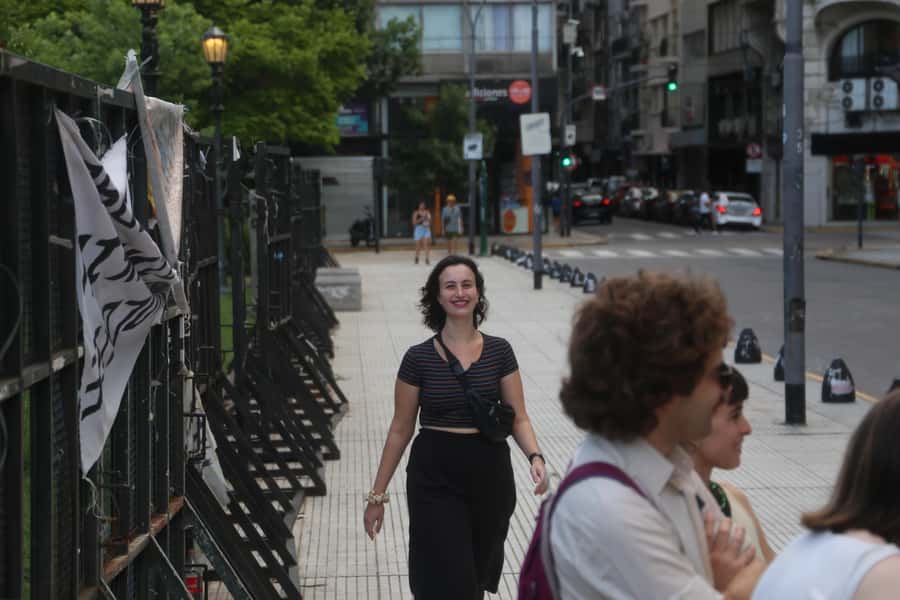
The tour then visits ABC Restaurant for about 20 minutes. This stop connects the large political story with the ordinary routines of people living under false names or moving through the city unnoticed.
One of the tour’s most memorable details is tied to Adolf Eichmann. You’ll learn about the place where he sat for a cup of coffee. That detail may sound small, but it gives the larger story a human scale in the most uncomfortable way. Eichmann was not a distant figure from a textbook. He lived in a city, used public places, and passed through daily life while authorities and investigators tried to establish who he really was.
The tour also explains the spy-like process of identifying and capturing him. This is a point where the walk seems to shift from political history toward detective story, but the subject remains serious. You are not simply following an adventure plot. You are considering how information was gathered, how an identity was confirmed, and how a war criminal could live in Argentina after 1945.
As with Luna Park, the stop should be understood as a street-level visit rather than a guaranteed restaurant experience. The importance lies in the location and the account given there.
More walking tours in Buenos Aires:
- Buenos Aires Hop-On Hop-Off Bus, Free Walking Tours & Discounts
★ 4.5 · 2,218 reviews - Buenos Aires: La Boca Guided Walking Tour in English
★ 4.8 · 1,587 reviews - Buenos Aires: Personalized 2 to 8-Hour Private Walking Tour
★ 4.7 · 149 reviews - Buenos Aires: San Telmo and Market Guided Walking Tour
★ 4.8 · 102 reviews
Museo de Armas and the machinery behind the story
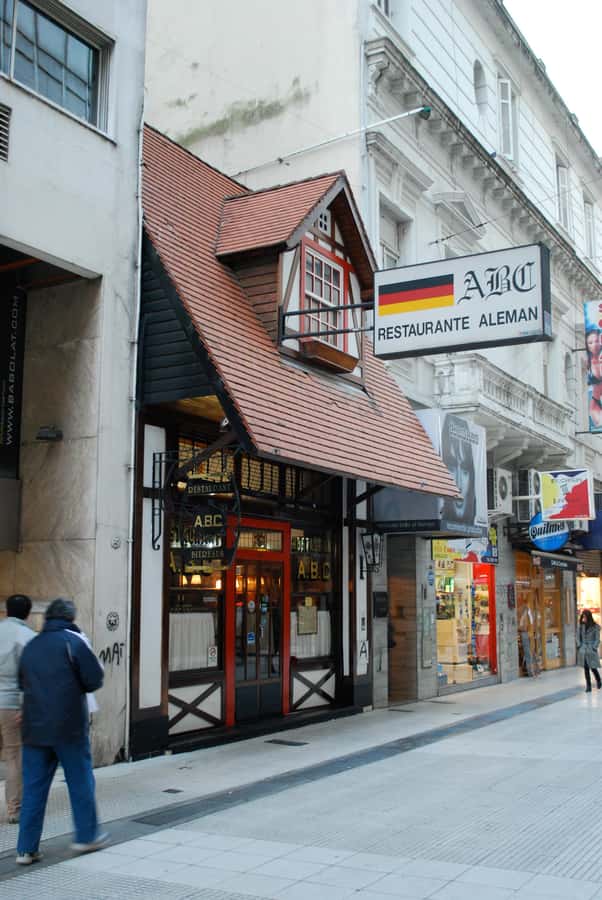
The Museo de Armas de La Nación Tte. Gral. Pablo Riccheri receives about 20 minutes. Even without entering the museum, the setting helps shift the discussion toward military power, weapons, intelligence, and the institutions that shaped Argentina’s postwar position.
Entry to the museum is not listed as included, so you should not assume you will tour its galleries. The guide uses the location as part of a wider historical explanation. This may suit you if you like connecting places to political structures. If you want a museum-heavy experience with time to study objects and displays, this tour will feel different.
The stop is also a reminder that the Nazi escape story did not unfold in a vacuum. Argentina’s military and political life, its relationship with Europe, and the decisions of its leaders all matter when asking how fugitives were able to settle in the country.
Max’s method is useful here. He reportedly supports explanations with photographs and graphics, rather than asking you to remember a long list of names and dates. That visual material can make the connections easier to follow, especially when the walk moves between European events and Argentine institutions.
Palacio San Martín and the politics of Perón
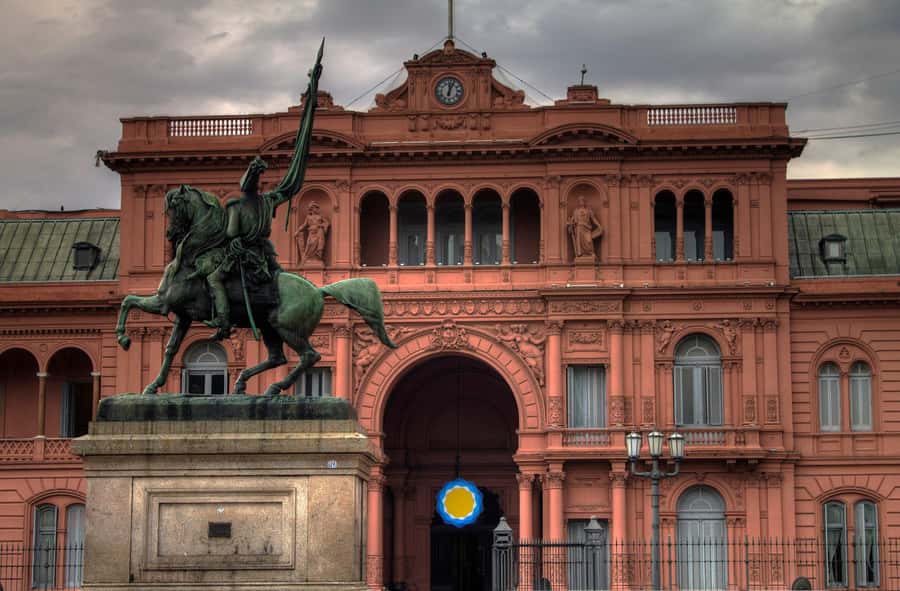
At Palacio San Martín, another 20-minute stop, the tour turns more directly to Argentine diplomacy and government. This is where the question of official responsibility becomes harder and more interesting.
You’ll examine debates surrounding Juan Domingo Perón, arguably the most important political figure in twentieth-century Argentina. Perón’s presidency cannot be treated as a simple answer to every question about Nazi immigration. The tour looks at competing interpretations and the political conditions that shaped Argentina after the war.
This broader section is one reason to book the walk even if you already know the basic story of Eichmann. The experience is not limited to Nazi fugitives on the run. It asks how national governments respond to immigration, ideology, international pressure, and the changing balance of power after a global conflict.
Some people may find this section less immediately dramatic than the Eichmann story. One piece of feedback specifically wanted more time on Nazis in hiding and less on the political situation. That is a fair expectation to consider. If your sole interest is escape routes and captured war criminals, you may prefer a narrower tour. If you want to understand why Argentina became part of the story, the political material is essential.
Italian Circle and the city’s European ties
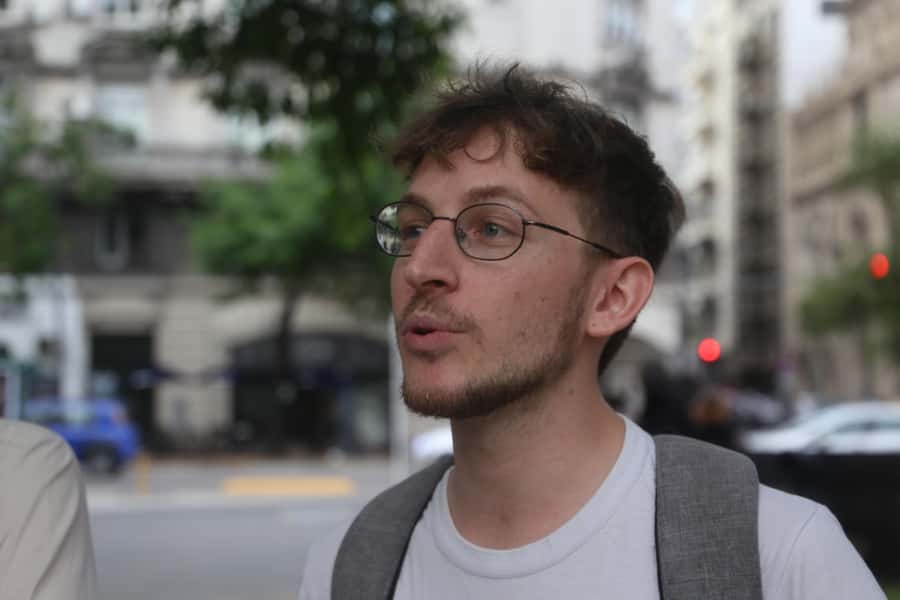
The Italian Circle of Buenos Aires is another 20-minute stop. This part of the route helps place Argentina’s European connections in a social and cultural setting.
The experience repeatedly returns to a key point: Argentina was not detached from Europe after 1945. Migration, politics, diplomacy, and personal networks linked Buenos Aires to the events and ideologies of the old continent. A site associated with European community life gives Max a chance to explain those ties without turning the walk into a collection of unrelated addresses.
You can expect the tour to move between local history and international history. That is its appeal, but also its demand. You will need to keep track of several threads: Nazi fugitives, Argentina’s government, Peronism, Jewish life, and later acts of terrorism.
The guide’s teaching background helps with that structure. He begins with the setting, then adds detail at each stop, using questions and answers to keep the group involved. The walk has been described as closer to a university seminar held in the places where events occurred than to a standard point-and-name city tour. That description fits the format well, though you should be comfortable listening for long stretches.
The Israeli embassy memorial and a painful final chapter
The route ends at Plaza Embajada de Israel, the memorial site of the former Israeli embassy. The 1992 bombing is described as the worst terrorist attack in Latin American history, and the final section connects the Holocaust era to later violence against Buenos Aires’s Jewish community.
This ending gives the tour a modern edge. The history does not stop in 1945, and the city’s Jewish story is not treated as a closed chapter. The memorial asks you to think about how antisemitism, international conflict, terrorism, and memory continue to shape public life.
The final stop can be emotionally difficult. That is not a flaw, but it is useful to know before booking. The experience aims to make the past feel connected to the present, and the final discussion may be especially relevant when current world events are in the news.
There is a small point to clarify before you reserve. The route information names Plaza Embajada de Israel as the finish, while the meeting details say the activity ends back at the meeting point. Confirm the exact ending with Klio Tours when you book, especially if you have a timed reservation or transport plans afterward.
What makes Max an effective guide
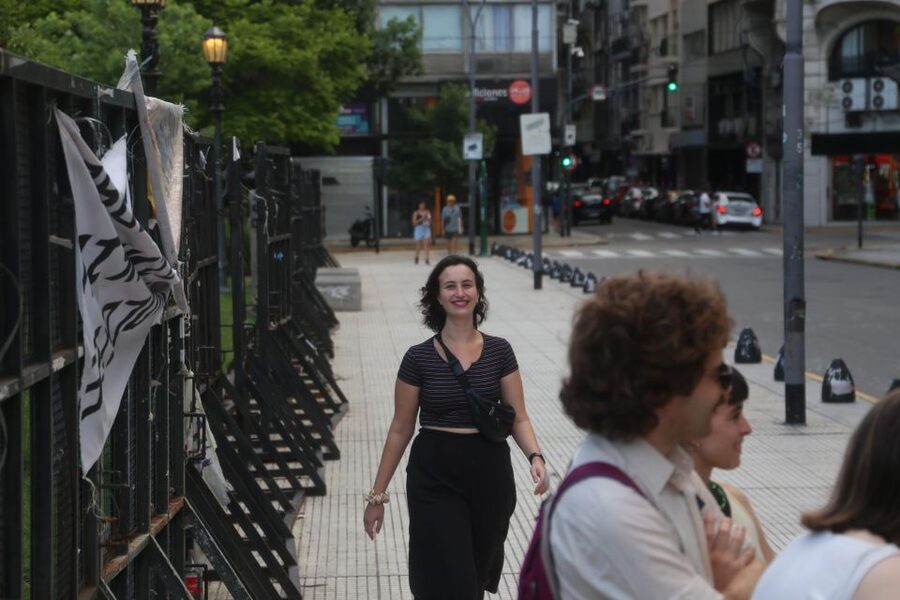
The strongest praise for this experience centers on Max’s delivery. He is repeatedly described as friendly, passionate, well prepared, and clear in English. Those qualities matter here because the topic is dense and emotionally charged.
A good guide for this subject must do more than recite facts. Max appears to explain where the evidence is solid, where historians disagree, and where he cannot be certain. That honesty helps prevent the usual problem with controversial history tours, where dramatic claims can outrun the records.
You can also expect questions to be welcomed. The group may discuss Judaism, Nazism, the war, Argentine politics, and the Perón era. Max’s teaching experience should help him handle people with different levels of background knowledge, including younger participants such as a 14-year-old who joined one reported group.
His use of images and graphics is another practical advantage. Since many stops are viewed from public streets, photographs can show you the people, buildings, and events connected to the place. The material also gives the group something concrete to study while standing outside.
Is $25 good value?
At $25 per person, this is a strong value if you want a focused historical experience in English. You receive roughly two and a half hours with a specialist guide, a carefully linked route, visual material, and access to a subject that is difficult to understand through casual sightseeing alone.
The price does not include entry to Casa Rosada, Libertad Synagogue, or Luna Park Stadium. In the supplied details, those places are listed as exclusions, although the main route description does not make them central indoor visits. Budget-conscious visitors should treat this as an outdoor walking tour with explanations, not as a package of attraction admissions.
The value also depends on your interests. You are paying for interpretation, not simply distance covered. If you enjoy history, politics, and difficult questions, $25 buys a substantial lesson. If you want famous monuments, interior access, or a relaxed overview of Buenos Aires, another tour may suit you better.
Free cancellation up to 24 hours before the start and the option to reserve now and pay later make planning easier. The tour is offered in English and lasts 2.5 hours, with starting times shown when you check availability.
Who should book this Buenos Aires walk?
I would recommend it to:
- History fans who want more than the usual Buenos Aires highlights.
- Visitors interested in World War II, the Holocaust, Jewish history, or Nazi escape networks.
- People who want a clearer understanding of Perón and twentieth-century Argentine politics.
- Curious adults and older children who can handle a serious subject and a long walking discussion.
- Anyone who values evidence, nuance, and a guide willing to admit uncertainty.
I would hesitate to recommend it to young children, wheelchair users, or anyone looking for a short, easy city stroll. It is also not the right pick if you want a tour focused only on Nazis who fled Europe. The Argentine political context takes a meaningful share of the time.
Practical tips before you go
Wear comfortable shoes and bring water. Allow the full two and a half hours, plus time to reach your next activity after the tour, since the exact ending point should be confirmed.
Arrive at the Monument to Juana Azurduy and look for Max in a black cap near the benches facing Palacio Libertad. A basic understanding of World War II and the Holocaust will help you follow the discussion, but Max can answer questions and explain the background.
Most importantly, come ready to listen. The tour deals with mass murder, antisemitism, terrorism, political responsibility, and the long afterlife of war. It is not entertainment, though the storytelling and city setting keep it engaging.
Should you book it?
Book this tour if you want a serious, carefully argued look at one of Buenos Aires’s most disputed chapters. The combination of Adolf Eichmann’s story, the 15,000-seat Nazi meeting, Perón-era politics, Jewish community history, and the Israeli embassy memorial gives you far more than a single-topic walk.
Skip it if you want a light introduction to the city or a tour built around entering major attractions. For the right audience, though, $25 is a fair price for a thoughtful English-language history lesson led by Max, with the streets of Buenos Aires serving as the classroom.
FAQ
How long is the Nazis in Buenos Aires walking tour?
The activity lasts about two and a half hours. There is also a 10-minute pause for restroom use.
What language is the tour offered in?
The tour is conducted in English by a live guide.
Where does the tour begin?
It begins a few meters from the Monument to Juana Azurduy, near the benches facing Palacio Libertad, formerly known as the CCK. Max wears a black cap.
Where does the tour end?
The route information names Plaza Embajada de Israel as the final stop. The meeting details also say the activity ends back at the meeting point, so confirm the exact ending location when booking.
Are attraction admissions included?
No. Entry to Casa Rosada, Libertad Synagogue, and Luna Park Stadium is not included. The tour price covers the walking tour and guide.
Is the tour suitable for children or wheelchair users?
The activity is not suitable for children under 10 or wheelchair users. Comfortable shoes and water are recommended.
Just added around Buenos Aires
- Tango Show at El Querandi with optional Dinner★ 4.2 · 3 reviews
- Wine Tasting in Buenos Aires★ 4.2 · 4 reviews
- Walking Tour: Buenos Aires bookstores★ 4.3 · 12 reviews
- Private Underground Tango Immersion★ 5.0 · 31 reviews
- Velez Sarsfield Football Match★ 5.0 · 3 reviews
- Unique Tigre and Delta Private Day Cruise Navegation★ 5.0 · 3 reviews
- Transfers from or to the airport In Argentina Your Best Choice★ 5.0 · 28 reviews
- Tour Buenos Aires in one day on Electric Scooters★ 5.0 · 33 reviews
Buenos Aires Architecture & History Tours, compared.
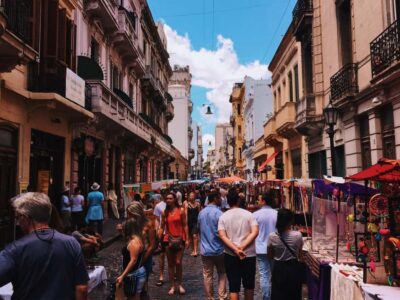
Historical Guided Tour with Street Food & Drinks
Read our review →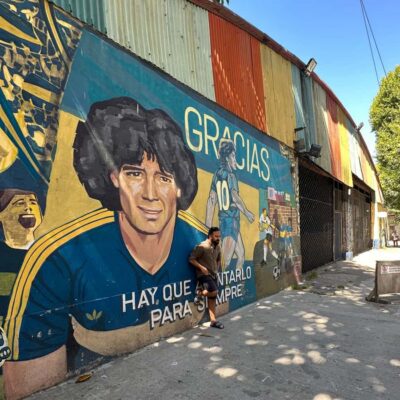
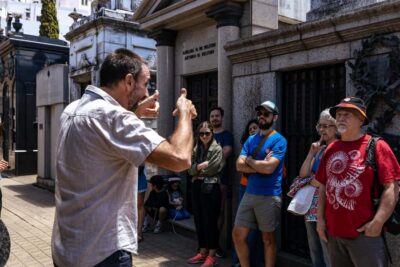
Recoleta Cemetery – Small Group Tour of History & Secrets
Read our review →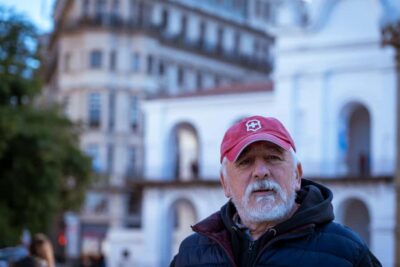
Buenos Aires 3-Hour Small Group Pope Francis Tour
Read our review →
Browse the lists this tour appears in